
Editor’s Note (China Coffee Network): Yunnan coffee is shifting from the raw-material hinterland of international brands to a flavour home ground for domestic brands. This article traces the revaluation of beans grown along the Tropic of Cancer through varietal endowment, upgraded processing and brand building.
More than a decade ago, if someone asked whether China produced good coffee, most people would probably have shaken their heads. Back then, coffee cherries from the mountains of Yunnan were mostly loaded into sacks, labelled as raw material, shipped overseas, roasted and blended by international brands, and finally returned to the Chinese market under someone else’s name. Today that story is being rewritten: when you order a pour-over at a specialty cafe, the menu may well say “Yunnan, Pu’er, natural”; when you open a domestic drip bag, the origin line may read “Baoshan, Lujiangba”. A coffee bean from the Tropic of Cancer is completing the transformation from “someone else’s raw material” to “our own flavour”. Behind this lies an industrial chain whose value was long underestimated, and which is now being repriced.
Part One: The Chinese Element in a Cup of Coffee
China is one of the fastest-growing coffee consumer markets in the world. Public industry data show that domestic coffee consumption has expanded continuously over the past decade, with compound annual growth staying in the double-digit range for a long period, while freshly brewed coffee, ready-to-drink coffee and specialty shops have all grown in parallel. More important is the upgrading of the consumption structure: from the early “stay-awake need” dominated by instant powder to a “flavour need” represented by freshly ground coffee, pour-over and signature drinks. Only when consumers begin to ask which mountain a bean comes from, how it was processed and at what altitude it was grown does the value of the origin truly get a chance to be seen.
On China’s coffee map, Yunnan is almost the sole centre of gravity. A figure widely cited in the industry is that Yunnan accounts for more than 90 percent, indeed nearly all, of the country’s coffee acreage and output. Five core producing areas — Pu’er, Baoshan, Lincang, Dehong and Xishuangbanna — stretch along the Hengduan Mountains and the Lancang River basin, forming what is genuinely China’s “main producing corridor”. In other words, to talk about Chinese coffee is essentially to talk about Yunnan coffee; and to talk about the revaluation of Yunnan coffee is to talk about the future ceiling of China’s coffee industry.
Part Two: Natural Endowment on the Tropic of Cancer: Why Yunnan Can Grow Good Coffee
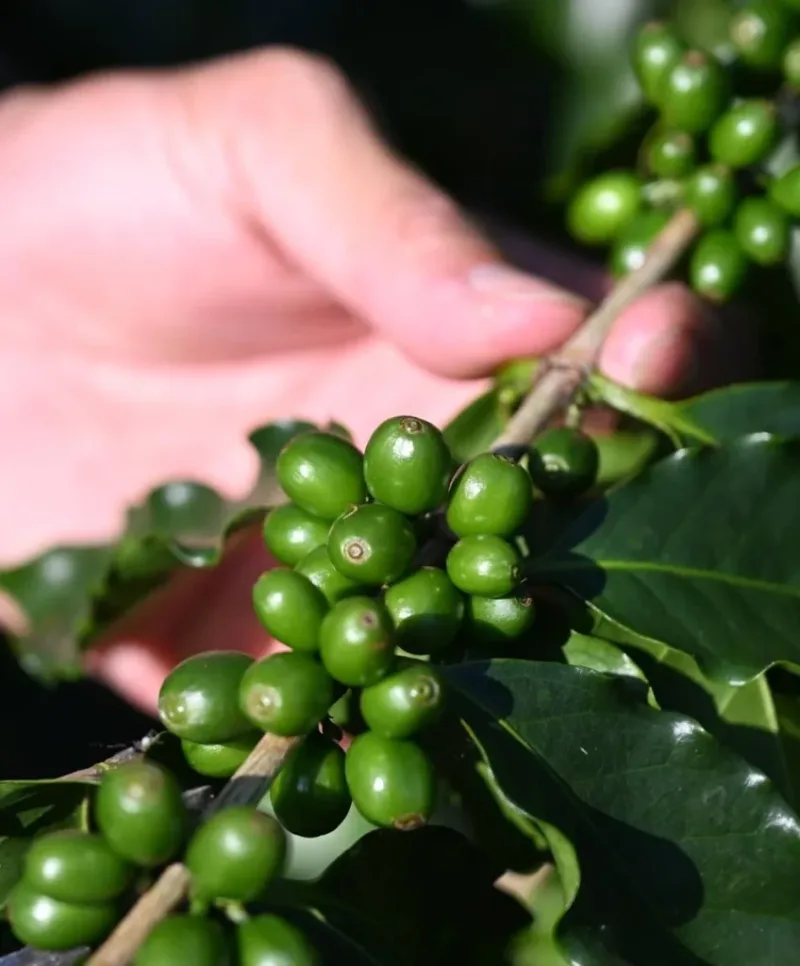
Coffee cannot be grown just anywhere. It needs a subtropical mountain climate, ample but gentle sunshine, a marked difference between day and night temperatures, and well-drained sloping soils. The globally recognised coffee belt lies roughly between 25 degrees north and 25 degrees south latitude. Yunnan is crossed by the Tropic of Cancer and sits on a low-latitude plateau, with elevations mostly between 800 and 1,800 metres, large diurnal temperature swings, abundant sunshine and little frost — conditions that share much with traditional renowned origins such as Colombia and Kenya.
Even more decisive is the variety. Yunnan mainly grows small-bean coffee, that is, Arabica. Arabica offers richer flavour layers and more elegant acidity, and is the mainstream of the international specialty market; Robusta, by contrast, is disease-resistant and high-yielding but coarse in flavour, and is used mostly for instant coffee and blends. From the introduction of the crop in the last century, Yunnan started on the starting line of a “good variety”, and the clean cup and bright acidity brought by the highland microclimate make this land naturally suited to producing coffee that is “good to drink”, not merely coffee that “can be produced”.
But natural endowment is not the same as output value. For a long time Yunnan coffee’s embarrassment was that it grew good beans without getting a good price. The problem lay in its position in the chain: we remained upstream, “selling fresh cherries and green beans”, while the richest brand premium, roasting premium and retail premium were captured downstream by international giants. The value of a bean was essentially fixed the moment it left Yunnan.
Part Three: From Nestlé’s Beans to Our Own Brands: Three Decades of Reinventing an Identity
Looking back at the modernisation of Yunnan coffee, Nestlé is a name that cannot be avoided. As early as the late 1980s, Nestlé promoted coffee cultivation in Yunnan, supplying seedlings, techniques and management standards, and organising scattered smallholders into an industrial supply chain. Objectively, Nestlé’s arrival enabled Yunnan coffee to leap from “scattered trial planting” to “large-scale bases”, and laid the agronomic foundation for the entire industry that followed. The other side of the coin, however, is that in that period Yunnan coffee was largely the “raw-material hinterland” of an international giant — meeting quality standards was enough, while brand, pricing and narrative had nothing to do with the locality.
The turning point came after the consumer side took off. As domestic demand for coffee surged and “national trends” and “local flavour” became consumption keywords, Yunnan beans ceased to be merely an export raw material and entered the field of vision of domestic brands. A group of local companies and estates grew up: some extended from green-bean trading upstream into cultivation, building their own estates and processing stations; some started as roasteries and printed “Yunnan” directly on the front of the pack; others used e-commerce and content platforms to turn “Yunnan flavour” into a consumption symbol with imagery and stories. From “Nestlé’s beans” to “our own brands”, it took Yunnan coffee more than three decades to move the industry’s discourse power, by one step, onto its own side.
The significance of this change goes far beyond selling a few more packs of coffee. It means that for the first time Yunnan has the possibility of earning “brand money” — and a brand is precisely the only path by which an agricultural product can escape the fate of depending on the weather and following the market, and obtain a stable premium.
Part Four: Upgrading Processing: Translating Terroir into the Language of Flavour
If variety and origin determine the “foundation” of coffee, processing determines the “expression” of its flavour. Beans from the same mountain can taste worlds apart depending on whether they are washed, natural or honey-processed. In the early years Yunnan had essentially only one mainstream method, washed — clean and standard, but also monotonous, and hard pressed to express the personality of the origin in the cup. Over the past decade, the range of processing methods has visibly broadened.
Today, on specialty estates in Yunnan, you can see a complete spectrum of techniques: washed processing as the baseline, providing a clean and transparent reference flavour; natural processing bringing exuberant fruit aroma and sweetness; honey processing seeking a balance between the two; and emerging methods such as anaerobic fermentation pushing flavour towards greater complexity and memorability. Some leading estates have even begun “customised” processing by lot and by micro-plot, so that different slopes of the same mountain and different picking times are made into products with distinct flavour profiles.
The upgrading of processing is, in essence, the translation of “invisible terroir” into “a language that can be tasted”. When a cup of coffee can clearly state its origin, altitude and processing method, the value of the upstream is no longer the vague phrase “Yunnan has good coffee”, but a concrete flavour that consumers can recognise, compare and buy again. This transparency in turn pushes the cultivation side to process more carefully and more traceably — a key link in the virtuous cycle of the industrial chain.
Part Five: The Rise of Specialty Coffee: From Raw-Material Supplier to Flavour Definer

An important indicator of an origin’s maturity is the specialty rate — that is, what share of total output consists of beans that clear the specialty cupping threshold. In the early years Yunnan coffee was dominated by bulk commercial beans, with a limited specialty share, and it naturally sold at “commodity prices”. In recent years this proportion has been rising steadily, and beans from more and more estates can consistently enter specialty purchasing lists, even achieving respectable results in international competitions and cuppings.
What the rising specialty rate brings is a loosening of pricing logic. The price of bulk beans basically follows the international futures market, leaving the origin almost no bargaining power; the price of specialty beans, by contrast, is determined jointly by flavour, scarcity, story and reliable supply, so the origin can have its own “pricing power”. Once Yunnan beans can be remembered by consumers for the floral and fruity notes in a pour-over, they cease to be merely a raw-material code pulled along by ICE (Intercontinental Exchange) futures prices.
Of course, specialisation is no cure-all. It corresponds to a more niche, more volatile market that demands far more in terms of consistency, and it places much higher requirements on cultivation management, processing technique and quality-control systems than bulk commodities do. But the direction is clear: only by raising the specialty rate can Yunnan coffee truly have the chance to move from “supplier” to “definer” — defining what tastes good and what price is reasonable.
Part Six: A Brand Awakening: From Origin Label to Consumer Mindset
In the past, mentioning Yunnan coffee conjured up only a vague geographical notion in consumers’ minds; today, a number of local brands are turning this land into a concrete taste memory. Their approaches differ: some emphasise “direct from the estate, fully traceable”, building trust through a transparent supply chain; some focus on single-origin flavour, turning “Pu’er’s floral notes” and “Baoshan’s body” into product labels; still others bind coffee to Yunnan’s tourism, ethnic culture and mountain narratives, so that a drink carries the imagination of a region.
The other side of this brand awakening is the localisation of channels and storytelling. In the early years, for Yunnan beans to be seen by the world they had first to pass through overseas buyers and roasters; today, thanks to China’s vast coffee consumption and content ecosystem, a Yunnan bean can travel directly from the estate to the consumer’s cup, and the fewer the intermediate links, the more profit and discourse power remain at the origin. When “Yunnan” is no longer just a place name on a supply chain but a brand prefix consumers are willing to pay a premium for, revaluation truly lands on solid ground.
It is worth staying clear-headed: brand building is still at an early stage. Brands that genuinely survive cycles compete not on momentary traffic and slogans, but on consistent quality, a traceable supply chain, and the ability to keep telling true stories. Yunnan coffee does not lack good raw material; what it lacks is the patience to keep turning raw material into good brands, and traffic into lasting loyalty.
Part Seven: The Anxiety over Pricing Power: Between ICE Volatility and the Specialty Premium
Any discussion of revaluation has to confront a practical pressure: international coffee futures prices. Global coffee output is highly concentrated, with Brazil alone often accounting for around 30 percent of world production; fluctuations in its climate and output transmit directly to the ICE board, and then press down, layer by layer, on farm-gate prices at the origin. The purchase price of Yunnan’s bulk beans has long been closely linked to international futures, and when a bumper harvest abroad pushes prices down, growers at the origin are usually the first to be hit.
This is the deeper reason so much hope is pinned on specialisation and branding — they are the two legs for hedging against “prices set by the weather”. One leg is the quality premium: turning beans into specialty lots escapes the single anchor of futures pricing. The other leg is the brand premium: turning the origin into a brand makes consumers pay for “Yunnan flavour” rather than for “a bulk commodity”. Only when both legs are planted firmly can Yunnan coffee avoid being passively battered by every swing in international prices.
But it must also be acknowledged that what specialty and branding currently cover is still a handful of leading estates and a limited number of lots. For the improvement in pricing power to benefit the far larger population of small and medium growers, better organisation is needed — cooperatives, unions, contract farming, floor-price mechanisms and the like — to genuinely connect scattered smallholders into a stable, high-quality supply chain. Otherwise, revaluation may well turn out to be a feast for only a few players.
Part Eight: Exports and Domestic Sales as Two Wheels: Two Paths for Yunnan Beans
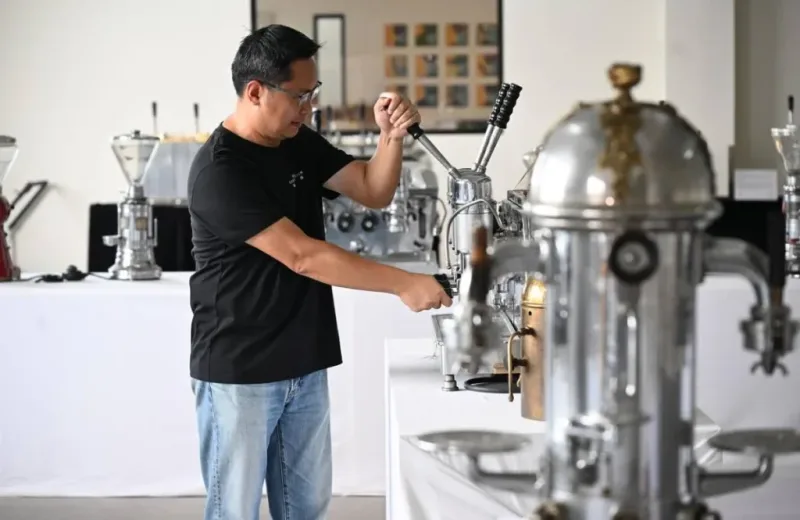
Yunnan coffee has never been sold only to Chinese people. In the raw-material era it was exported in volume to Europe, the United States, Japan, Korea and Southeast Asia, a quiet link in the global supply chain; in the specialty era the structure of exports is changing too, with more and more high-grade green beans and roasted beans going overseas under the name “Yunnan”, carrying a clear origin identity rather than anonymity.
Domestic sales are the more imaginative source of growth. As China’s coffee consumption base expands and local brands rise, the “home advantage” of Yunnan beans becomes ever more evident: shorter logistics, smoother communication and stronger cultural resonance. A Yunnan bean that goes from picking to cupping in a matter of weeks is naturally superior in freshness and story to an imported bean that has spent months crossing oceans. The growth of the domestic market gives Yunnan coffee, for the first time, the possibility of using “demand on its doorstep” to support “a premium on its doorstep”.
Exports protect the base, domestic sales open new space; running both paths in parallel is the most pragmatic configuration for Yunnan coffee. Both point to one thing: keeping more of the origin’s value at the origin.
Part Nine: Hidden Worries and Challenges: Smallholders, Standards and Climate
The story of revaluation is appealing, but putting it into practice is not easy. A major foundation of Yunnan coffee is a large number of dispersed smallholder households. The smallholder model is flexible and low-cost, but it is naturally disadvantaged in standardisation, consistency and traceability — precisely the three things the specialty market values most. How to enable thousands of smallholder households to produce beans that consistently meet the specialty threshold is a hard problem the whole industry cannot sidestep.
Beyond standardisation lies climate uncertainty. Coffee is a cash crop highly dependent on climate; extreme weather, pests and diseases, drought or prolonged rain can all rewrite output and quality within a single season. As global climate volatility intensifies, building resilience in the producing areas — drought-tolerant varieties, shade cultivation, water conservancy and disaster-prevention facilities — will shift from a “bonus” to a “mandatory requirement”.
In addition, the industry faces the hidden worry of homogenised competition. As more and more people crowd into the “Yunnan specialty” track, if they stop at labelling and sentiment without pulling ahead on real quality and supply chain, a blue ocean can easily be churned back into a red one. The real moat is always what others cannot copy: consistently good flavour and credible traceability.
Part Ten: Conclusion: The Time Is Right for Revaluation
Looking back on the road Yunnan coffee has travelled, it is a long journey from “being defined” to “defining itself”: from the raw-material hinterland of international giants to the flavour home ground of domestic brands; from a bulk commodity rising and falling with ICE to an origin brand consumers can remember. The road is not finished, but the direction is clear.
For the producing region, revaluation is not an abstract concept but a series of concrete actions: grow the right varieties, refine processing, establish standards, build genuine brands and connect smallholders. For consumers, every time they order “Yunnan” from a menu, every time they pay a little more for better flavour, they are casting a vote for the long-term value of this land. When the demand side is willing to pay for good coffee, the supply side has the confidence to grow coffee better — this is perhaps the simplest and most solid logic behind the revaluation of Yunnan coffee.
References and Data Sources
This article is an original industry observation by China Coffee Network, written on the basis of public industry reporting, information published by the competent authorities of the producing regions, and relevant reports in mainstream media. Figures mentioned in the text concerning output shares, the distribution of producing areas and consumption growth are widely cited public estimates in the industry; the specific statistical basis is subject to the original sources. If you wish to quote them, please refer to the data in the original sources. The main reference directions include: public statistics on Yunnan’s coffee industry and information released by competent authorities; public industry research reports on China’s coffee consumption market; reporting by mainstream financial and trade media on the branding and specialisation of Yunnan coffee; and public materials from the International Coffee Organization (ICO) and related institutions on global output and futures prices.
Original Notice
- This article is an original work of China Coffee Network. No media outlet, website or individual may reproduce, excerpt, copy or mirror it without authorization; violators will be held legally liable.
- All images in this article come from the China Coffee Network file-photo library (file photos), and the copyright belongs to China Coffee Network.
- For reprint licensing, commissions, interviews or business cooperation, please contact: Tel 400-0000-641 (+86-18288016826) | Email 405854472@qq.com | Address: Jinghong, Xishuangbanna, Yunnan Province / Tieling, Liaoning Province
Related Reading
 Three Decades of Shanghai-Yunnan Collaboration: A Coffee Bean ‘Ferments’ at the Import Expo
 Why Yongde’s Coffee Beans Won Gold in Shanghai – A Taste of ‘Life in Yunnan: 365 Days’
- Yunling Commentary: Yunnan Coffee Turnaround Hinges on Autonomous Pricing
 A ‘Travel Pack’ Reveals Another Possibility for Pu’er Baristas
- Bean in Short Supply: A Taiwan Youth on Yunnan Coffee as a Shared Cross-Strait Stage
- Five Years, Eight Championships: Lincang Coffee Joins the World Stage





 Liaoning ICP Security No. 21122402000217