
At a Glance (China Coffee Network): Most people shopping for coffee beans look first at origin, then at variety, yet they often overlook the single line on the package that matters most to read: the processing method. From the same farm and the same variety, a washed and a natural can taste like two completely different cups—the former like a clean cup of floral tea, the latter like a full-bodied fruit wine. The processing method is the “base tone” of coffee flavor: it decides, from the moment a cherry is picked until it becomes a green bean, how the pulp and seed coexist, how fermentation happens, and how sugars and aromas are locked into the bean. Understand the four mainstream processing methods and you hold the most critical 50% of bean selection.
When most people buy coffee beans, they look at the origin first, then the variety, yet they often overlook the single line on the package that matters most to read: the processing method. From the same estate and the same variety, coffee processed by washing and by natural can taste like two completely different cups—the former like a clean floral tea, the latter like a full-bodied fruit wine. The processing method is the “base tone” of coffee flavor. It determines, from the moment a cherry is picked until it becomes a green bean, how the fruit pulp and seed coexist, how fermentation occurs, and how sugars and aromas are locked into the bean. Understand the four mainstream processing methods, and you hold the most critical 50% of bean selection.
I. The Anatomy of a Coffee Cherry: What Does Processing Actually “Process”?
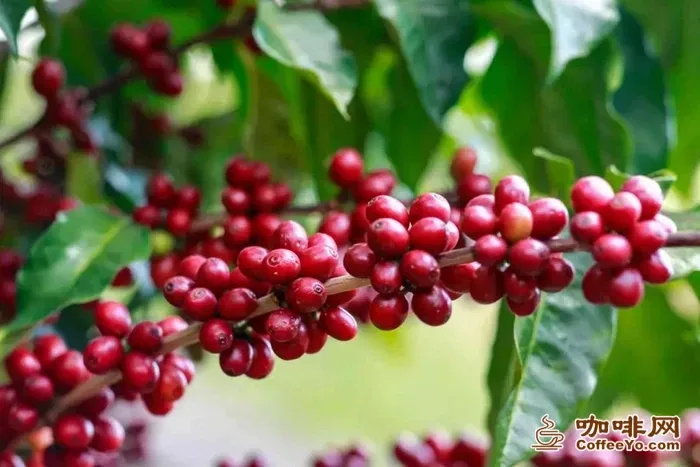
To understand processing, you must first know the structure of a coffee fruit. From outside in it runs: the skin (exocarp), pulp (mesocarp), pectin layer, parchment (endocarp), silver skin, and at the very center the seed we roast—the coffee bean (technically the two cotyledons of the seed). The essence of processing is deciding “how to remove the outer skin, pulp and pectin while letting the seed undergo what kind of fermentation before drying,” and the core variable is just one: how much pulp is retained to take part in fermentation.
The more that is retained, the more deeply the sugars and flavor compounds from the pulp penetrate the bean—flavor becomes more complex and exuberant, but cleanliness drops and risk rises; the cleaner the removal, the clearer and more transparent the bean’s terroir character, yet complexity and sweetness often give way to “purity.” Over 90% of the world’s specialty coffee uses the three foundational methods—washed, natural and honey—or their variants, while recent innovations such as anaerobic fermentation extend further along this spectrum toward “controlled complexity.”
II. Natural Process: The Oldest and Most Expressive
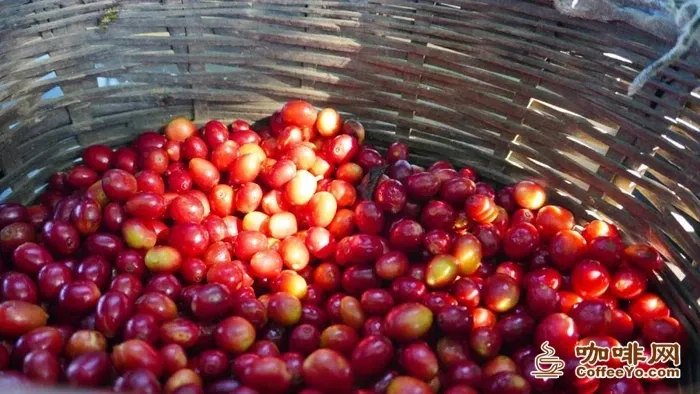
Natural is the oldest coffee processing method and the one closest to nature. The practice is beautifully simple: after picking fully ripe cherries, remove no outer layers—the whole fruit is laid directly on drying beds, the ground or African raised beds and dried naturally by the sun. It must be turned continuously for evenness and to avoid mold; once moisture drops to about 10%–12%, a machine hulls off the dried skin, pulp and parchment to yield the green bean.
Because the pulp, pectin and seed “share one room” for a long time, sugars and flavor compounds seep deeply into the bean. The most typical traits of naturals are: very high sweetness, intense fruit aroma and prominent body, often carrying berry, tropical-fruit, chocolate and even wine-like fermented notes. Those who love exuberant flavors like strawberry, grape or passion fruit usually find their home in naturals. Ethiopia is the birthplace of the natural method, and many stunning Yirgacheffe naturals are the ultimate expression of this craft.
But the difficulty of natural lies precisely in the word “natural.” Too fast a dry means underdeveloped flavor; too slow risks over-fermentation or even mold. It depends heavily on weather, and any lapse in turning or hygiene lets unpleasant off-notes creep in. A good natural is astonishingly sweet yet still clean; a bad one is full of funky fermentation. This is exactly why natural is said to have “a high ceiling and a low floor.”
III. Washed Process: A Clean, Transparent Mirror
The washed process is the most classic and widely used method in specialty coffee, and its core logic is the opposite of natural—minimize the influence of pulp as much as possible, so the bean “speaks for itself.” The typical flow: first float off defective cherries (under-ripe ones float), machine-remove the skin and most pulp, then place the pectin-covered beans in water tanks or fermentation tanks, let fermentation break down the pectin, rinse thoroughly with clean water, and finally move to drying.
The flavor profile of washed coffee is very clear: bright acidity, clean transparency, prominent floral and citrus notes, and a crisp finish. Many high-altitude washed lots show citrus, jasmine and black-tea-like flavors—like a mirror reflecting the terroir itself. This is why, when a cupper judges a region’s “true terroir flavor,” they often prioritize its washed sample: washing reduces variables to a minimum, exposing regional differences with nowhere to hide.
The cost of washed is resources and threshold. Traditional washing consumes 40–50 liters of water per kilogram of green coffee, and control of fermentation time directly determines quality consistency. Yet it is highly controllable and low-risk for off-flavors, ideal for specialty supply chains pursuing standardization and stable performance. Colombia and Kenya are representative washed regions; Yunnan’s Pu’er has traditionally been a washed stronghold.
IV. Honey Process: The Art of Balance
The honey process sits between natural and washed; the name misleads people into thinking “honey was added”—it has nothing to do with honey. The method: remove the skin but retain some pectin and dry directly. Because the pectin is sticky like honey, the bean surface takes on different shades during drying, and so by the amount of pectin retained it is subdivided into white honey, yellow honey, red honey, black honey and so on—the more retained, theoretically the higher the sweetness and fermentation complexity, but the harder the drying management.
The honey process lands right in the middle: it combines the sweetness of natural with the cleanliness of washed—balanced acidity and sweetness, round and smooth mouthfeel—often showing caramel, honey, ripe fruit and soft acidity, thus regarded by many as a “beginner-friendly” balanced choice. It keeps some fruit sweetness while avoiding the easily runaway off-flavors of pure natural; it is Costa Rica’s signature craft and has spread rapidly in Yunnan in recent years.
However, batch stability of the honey process depends heavily on drying management. Differences in residual mucilage and in temperature-humidity control make the flavor swing of different batches from the same farm larger than with washed. For producers, honey is a craft of “trading management for flavor”; for consumers, it is the safe card when you “want a bit of both.”
V. Anaerobic Fermentation and Emerging Techniques
Anaerobic fermentation is the most watched innovation in specialty coffee in recent years. Its core is not to leave the beans longer, but to place whole cherries or de-pulped beans in a sealed container, minimize oxygen as much as possible, even inject carbon dioxide, and let microorganisms work in a low-oxygen or oxygen-free environment—through precise control of temperature, time and pressure, steering fermentation toward more complex flavors. Many world competition champion lots use similar techniques.
The flavor trait of anaerobic processing is extremely rich aromatic layers, with fruit, floral and even wine notes more vivid and highly recognizable—each farm can craft its own stylistic signature. The “lactic fermentation” direction relates to yogurt-like rounded acidity, in contrast to the acetic fermentation common in aerobic environments—once the latter loses balance, it produces sharp volatile acids and pungent notes. Anaerobic’s derivatives include anaerobic honey, anaerobic natural and other combinations, further amplifying the strengths of two methods.
But anaerobic demands far higher equipment and skill than traditional methods; any breakdown in container, temperature control or duration yields a cup of “strange fermentation flavor.” It suits enthusiasts already used to traditional methods who want to explore personality and memorable notes. In addition, niche methods such as wet-hulling (unique to Indonesian Mandheling—low acidity, herbal and dark-chocolate notes) and barrel fermentation (absorbing vanilla-smoky notes from whisky barrels) also hold a place in specific regions and high-end single origins, enriching the boundaries of coffee flavor.
VI. Yunnan’s Processing Map and Local Adaptation
Back to Yunnan, the distribution of processing methods itself tells a story of industrial transformation. Publicly compiled data shows that traditionally Pu’er was dominated by washed, with the washed share once above 80%, while natural and honey were smaller; Baoshan’s Lujiangba, differing in microclimate and a specialty path, has a closer balance of honey and washed, with natural also a fair share. This difference stems both from historical equipment conditions and from the market’s dual demand for “clean Yunnan beans” and “flavorful Yunnan beans.”
In recent years Yunnan’s processing upgrade has a clear direction: from single washed toward a diversified combination of “washed as the floor, honey and natural for flavor, anaerobic for the sharp goods.” On one hand, the building of centralized fresh-fruit processing centers has raised the standardization and hygiene of washing; on the other, more estates introduce temperature-controlled fermentation, sealed containers and other equipment, turning anaerobic from “by luck” into “replicable.” The enrichment of processing methods directly underpins the earlier-mentioned leap in specialty rate—only when the same bean can be shaped into different flavor profiles per market demand does the realization of source value truly begin.
A reminder: processing is not a ruler where “the more advanced, the tastier.” Natural, washed, honey and anaerobic each have their devotees; what truly decides whether a cup is good is the synergy of processing with variety, origin, altitude, roasting and brewing. The processing label on the package is the consumer’s first key, not the final judge.
VII. A Bean-Buying Guide for Consumers
Understanding the four mainstream methods makes the next time you stand before a row of beans more relaxed: want clean and bright, floral and citrus—choose washed; want exuberant sweetness, berry and wine—choose natural; want balanced acidity and sweetness, round and smooth—honey is safest; want to explore complex personality and memorable notes—try anaerobic. One practical tip: take the same bean and try its washed and natural versions respectively; the flavor difference will be more intuitive than any text description—that is the best proof of processing as the “flavor base tone.”
A level deeper, reading processing is also a window into Yunnan coffee. When Yunnan estates begin marking “Yunnan Natural,” “Yunnan Honey,” “Anaerobic Batch” on their menus, it means this land is translating its vastly different microclimates into a flavor language consumers can recognize and repurchase. From cherry to cup, processing is the most critical transformation step—it does not change the origin, yet defines how the origin’s taste is tasted by the world.
VIII. How Processing Plays with Roasting and Brewing
Processing sets the base tone of flavor, but it does not fight alone—it plays in close concert with roast degree and brew method. The general rule: washed beans, being clean and bright, suit light to medium roast, with pour-over or drip that amplifies floral-fruity aromatics, presenting the terroir fully; natural beans, with prominent sweetness and body, show fuller chocolate and berry at medium-dark roast and can hold a heavy base in espresso; honey sits between the two, and a medium-roast pour-over best shows its round balance; complex methods like anaerobic are best at light-medium roast with slow pour-over, avoiding high-temperature roasting that “steams” away the delicate fermentation aroma.
Brew parameters should also adjust accordingly: high-acidity naturals and washed can use slightly higher temperature (about 90–93°C) and medium grind to excite aroma; fuller-bodied types can lower temperature a bit and lengthen extraction to draw out sweetness. What must be stressed: the processing label is a starting point, not an end—the same natural bean as light-roast pour-over versus dark-roast espresso is two completely different drinks. Understand this and we won’t wrongly blame “wrong processing” or “wrong roast” on the origin. From seed to cup, processing is the most critical yet most misread transformation step.
From an industry perspective, the richness of processing methods is itself a sign of Yunnan coffee’s maturity. In early years Yunnan had almost only the voice of washed; now natural, honey and anaerobic coexist diversely, meaning the origin is gaining the ability to “customize” flavor per market demand, and consumers gain far more choice. When a cup can clearly label its processing, the transparency of source value truly lands—what you drink is not just beans, but the result of a whole set of process choices. And this transparency, in turn, pushes the upstream to process more carefully and more traceably.
For home enthusiasts, the most practical advice is to “start with washed”: a clean washed bean helps you build a baseline understanding of terroir flavor, then try honey and natural in turn, and finally challenge anaerobic—your taste reference will grow clearer. Processing is not a label for showing off, but a map to help you find “your cup” faster—read it, and the world on the café menu shrinks and comes closer instantly. When you can reverse-engineer a coffee’s processing from a single cup, terroir and craft become truly your own language, not just a line on the package.
References
(Note: the statements in this article about processing principles and flavors are synthesized from publicly available specialty-coffee industry science-popularization materials; all data are cited from publicly verifiable sources, subject to the original.)
· Public science-popularization materials on coffee processing (steps and flavor traits of natural, washed, honey and anaerobic fermentation)
· Public reports on Yunnan’s coffee industry (processing-method distribution across regions, centralized fresh-fruit processing centers, specialty-rate improvement)
· Public research by international specialty-coffee institutions on the association between cup-tasting flavor description and processing methods
Original Notice
- This article is an original work of China Coffee Network. No media outlet, website or individual may reproduce, excerpt, copy or mirror it without authorization; violators will be held legally liable.
- All images, charts and videos herein were shot or produced by China Coffee Network and carry its copyright watermark; the copyright belongs to China Coffee Network.
- For reprint licensing, commissions, interviews or business cooperation, please contact: Tel 400-0000-641 (+86-18288016826) | Email 405854472@qq.com | Address: Jinghong, Xishuangbanna, Yunnan Province / Tieling, Liaoning Province
Related Reading
 Coffee and Health: The 400 mg Daily Caffeine Limit
 Global Coffee Belt 2026/27 Outlook: Brazil Record Crop and the Volume-Up, Price-Down Equation
 Revaluing Yunnan Coffee: From a Raw-Material Base to a Flavour Origin
 ‘Thai Milk Tea Nearly Sent Me to My Late Grandma’ Trends: Caffeine Content Left Unlabeled, Experts Urge Caution
 Yunnan Coffee Terroir: Geography and Microclimate
 China’s Coffee Industry: Current Landscape and Future Outlook






 Liaoning ICP Security No. 21122402000217