
At a Glance (China Coffee Network): Recently “Thai-style milk tea” surged in popularity on social media again, but so did a growing caffeine controversy. Topics like “Thai milk tea nearly sent me to my late grandma” quickly topped trending charts, with many consumers complaining of insomnia and palpitations after drinking it. A reporter’s visit to multiple tea shops found caffeine content is generally “impossible to tell and unlabeled”—experts urge caution for sensitive groups.
By Luo Anshu, reporter of Consumer Quality News (Sichuan Daily Press Group).
Recently, “Thai-style milk tea” has gone viral on social media again, but alongside its soaring popularity a caffeine controversy keeps fermenting. Topics such as “I almost met my late grandma after drinking Thai milk tea” rapidly climbed the social platforms’ trending lists, with many consumers complaining of insomnia, palpitations and similar symptoms after drinking it. A Consumer Quality News reporter’s visits found that, from offline stores to e-commerce platforms, the caffeine content of Thai-style milk tea is generally “impossible to state clearly and unmarked.”
Xu Jinkui, a dietitian in the clinical nutrition department of West China Chunxi Hospital (Sichuan Provincial Fourth People’s Hospital), reminded in an interview with Consumer Quality News that for healthy adults, internationally recognized authorities generally agree that a daily caffeine intake not exceeding 400 mg is the safe upper limit, and caffeine-sensitive people should drink new-style freshly made tea drinks with caution.
Consumers puzzled:
After a cup of Thai milk tea, sleep won’t come—where does the “kick” come from?
“I’m intolerant to caffeine and rarely drink milk tea or coffee, but Thai milk tea was so popular lately that I chose to have one in the morning—and I couldn’t fall asleep until 2 a.m.,” said Ms. Xiong, a consumer who never expected this cup of Thai milk tea to be far more stimulating than other flavors.
Such experiences are not isolated. One netizen posted that, believing herself unable to drink coffee or strong tea, she felt unwell within an hour of finishing a bottle of Thai milk tea, her heart rate once hitting 125 bpm. Others said the first sip tasted fine, but afterward they suddenly felt palpitations, dizziness, nausea and the urge to vomit, warning caffeine-sensitive people not to try it lightly.
According to public information, traditional Thai milk tea uses water, Thai black-tea powder, condensed milk, light milk, and white sugar or syrup as main ingredients, with the Thai black-tea powder often blended with natural spices such as cinnamon, star anise, cardamom and lemongrass. Today’s tea-brand “Thai milk tea” drinks are all adjusted on this basis. Unlike ordinary milk tea, Thai milk tea’s tea base, with finer tea particles and fuller extraction, releases caffeine faster and in greater amount—the very reason its stimulating effect far exceeds that of regular milk tea. Moreover, Chen Lan, an endocrinology doctor at Zhejiang Zhongshan Hospital, told media that the large amounts of condensed and light milk added to Thai milk tea also make it a typical high-sugar, high-fat drink.
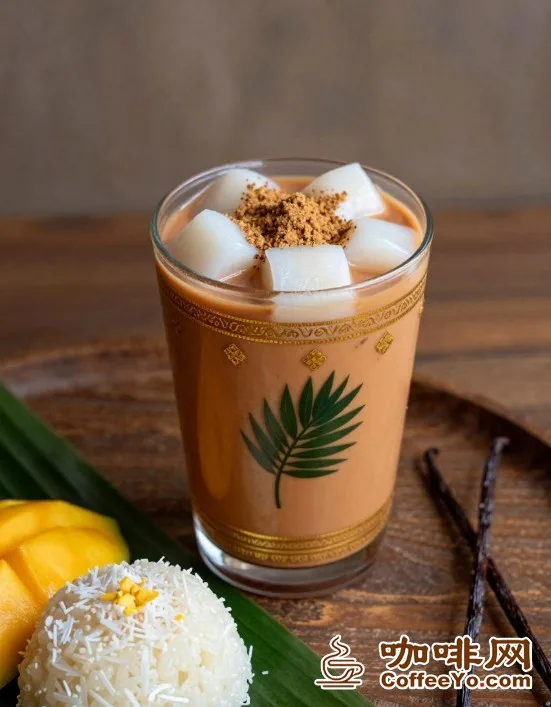
Thai-style milk tea (image AI-assisted)
Reporter’s visits:
Stores sell briskly, but caffeine content “can’t be stated”
Recently, a Consumer Quality News reporter visited several drink shops in Chengdu selling Thai milk tea, finding every store busy with queues of waiting customers. At one shop, the reporter saw seven Thai milk tea flavors on offer. A clerk said the basic version uses only black tea, condensed milk and light milk, but when asked about caffeine content, replied “not clear,” only suggesting customers order as they liked.
Another shop said its classic Thai milk tea, if the customer chooses no sugar, carries only the faint natural sweetness of the ingredients themselves; as for caffeine content, it would only say “within a suitable range, with appropriate refreshing effect.”
Besides offline freshly made drinks, the reporter found on e-commerce platforms that bottled and instant Thai milk teas are also popular, with reviews praising “not cloying, strong tea aroma.” But the reporter noted these products only list main ingredients, with caffeine content never clearly stated.
In fact, caffeine content has long been a blind spot for milk-tea consumers. According to China Food News, in 2023 the Changshu (Jiangsu) Consumer Council purchased 14 milk-tea samples for testing; the one with the highest caffeine, calculated at 500 g per cup, reached 162.5 mg—already close to a medium Americano. Meanwhile, 52.15% of respondents still did not know tea contains caffeine, and 88.41% wanted to know the caffeine content of their drinks.
“There is currently no mandatory rule requiring freshly made tea drinks to label caffeine content, and the already-implemented ‘Raw and Auxiliary Material Requirements for Freshly Made Tea Drinks’ sets no upper caffeine limit. With natural batch differences in tea leaves and the on-site process affected by cup size and recipe, a brand that wants to publish numbers long-term must build detection, data-update and in-store execution mechanisms,” said Mr. Lin, a veteran new-tea-drink industry expert, noting that establishing a unified grading standard remains difficult for now.
Zhong Kai, director of the Food and Health Information Exchange Center under the China Food Information Center, has also publicly stated that China currently has no mandatory labeling rule for caffeine in freshly made drinks.
Still, some tea brands have taken the lead, offering a referenceable sample for the industry. Through an internet search platform, the reporter found that in 2024 HEYTEA launched a “caffeine traffic light,” publicly disclosing caffeine content of drinks on sale and giving drinking-time prompts by none / green / yellow / red light; CHAGEE had previously published caffeine figures through an online “product ID card.”
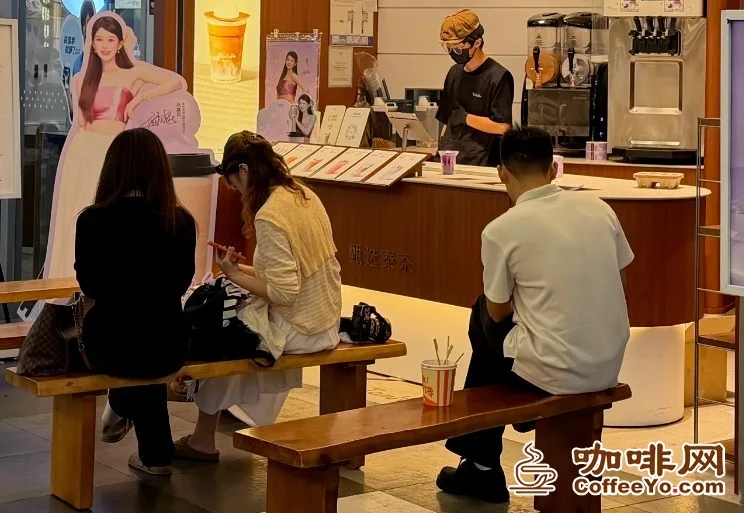
Original Notice
- This article is an original work of China Coffee Network. No media outlet, website or individual may reproduce, excerpt, copy or mirror it without authorization; violators will be held legally liable.
- All images, charts and videos herein were shot or produced by China Coffee Network and carry its copyright watermark; the copyright belongs to China Coffee Network.
- For reprint licensing, commissions, interviews or business cooperation, please contact: Tel 400-0000-641 (+86-18288016826) | Email 405854472@qq.com | Address: Jinghong, Xishuangbanna, Yunnan Province / Tieling, Liaoning Province, China
Related Reading
 How ‘Sea-Flavored’ Coffee Blooms Across Dongtou
- Health Guide: How to Enjoy Your Coffee the Healthy Way
 Study: Regular Coffee and Tea May Lower Dementia Risk, but More Is Not Better
 Frontline Story: A ‘Mobile City Coffee Bar’ Arrives by the Grand Canal
 Yantai’s Wind Tastes of Coffee
 In Zhenyuan, a Cup of Coffee and a Waiting Train







 Liaoning ICP Security No. 21122402000217