
At a Glance (China Coffee Network): Policy “Gold Content” · Enterprise Gain (Series 5): The first batch of 800 coffee trees—400 already adopted. Adopt a coffee tree in Hainan, and you enjoy rights such as corresponding coffee beans and coffee-making training.
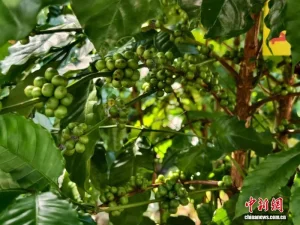
(Series 5) The first batch of 800 coffee trees—400 already adopted. Adopt a coffee tree in Hainan, and you enjoy rights such as corresponding coffee beans and coffee-making training.
At the second session of the Hainan Free Trade Port Enterprise Gain-Sharing Case Conference held on June 16, Zheng Libao, head of the Xinglong Coffee Cultural Park and Hainan store operations at CP Group (Hainan) Xinglong Coffee Industry Development Co., Ltd., introduced the new tourism experience of the established Xinglong Coffee.
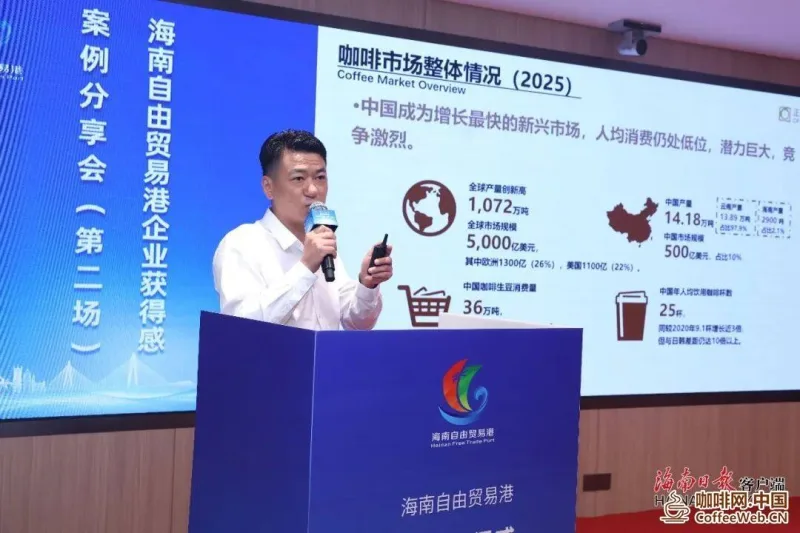
Xinglong Coffee has over 70 years of brand heritage. The Xinglong Overseas Chinese Farm Coffee Factory was established in 1952 as the first coffee factory after the founding of the People’s Republic of China; for over 70 years, built because of and thriving on overseas Chinese, it formed a unique Nanyang (Southeast Asian) diaspora flavor culture.
In 2020, Thailand’s CP Group partnered with the Wanning Municipal Government to fully take over the Xinglong Coffee brand, building the CP · Xinglong Coffee Cultural Park on the original site; in March 2025 it was rated a national AAA-level tourist attraction.
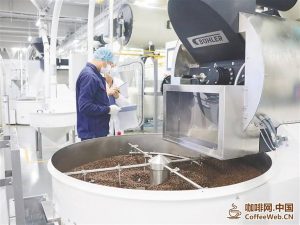
Zheng Libao introduced that the park’s operation emphasizes recreating the historical scenes of returned overseas Chinese bringing seeds and techniques, through the overseas-hometown-memory exhibition area, Nanyang-style architecture, and scenario-based experiences; at the same time, it runs a whole-industry-chain coffee experience tour where visitors can experience planting, picking, roasting, grinding, brewing, and tasting, immersively feeling coffee culture. In addition, the park is equipped with children’s playgrounds, themed cultural-creative products, outdoor sports, and other formats, effectively driving secondary consumption.
The deep integration of “coffee + cultural tourism” makes visitors stay. “Since the Hainan Free Trade Port began closed-off operation, we have felt a clear increase in overseas tourists,” Zheng Libao said. In the first quarter of this year, the park received 160,000 visits, a year-on-year increase of 31%; the rise in visitors also boosted coffee product sales.
The superimposed release of free-trade-port policies has rejuvenated the old brand with new vitality.
On processing-value-added tariff exemption, CP Xinglong Coffee imports green coffee beans for processing in Hainan; after the value-added rate exceeds 30%, the products leave the island for the mainland market, exempt from the 8% import tariff. On December 18 last year, the enterprise completed its first processing-value-added tariff-exempt domestic sale, with comprehensive costs significantly optimized, opening space to expand the mainland market.
On zero tariff, the enterprise imports green coffee beans, processes them into finished products, and directly exports overseas, enjoying zero tariff at the import stage. The enterprise completed the first “two ends abroad” order for the coffee category relatively early—importing Colombian green beans, processing them, and exporting to Australia—exempt from the 8% import tariff and 13% VAT, significantly enhancing international competitiveness.
“Under such favorable policy support, enterprise operating costs are greatly reduced,” Zheng Libao said. Relying on the policy advantage of the Hainan Free Trade Port, plus CP Group’s global layout, the enterprise is now setting out to enter the international market, bringing Xinglong Coffee to the world.
Interactive Q&A.
Reporter: Under Hainan Free Trade Port’s processing-value-added-over-30%-tariff-exemption policy and the green-bean zero-tariff policy, how much cost reduction have they specifically brought to Xinglong Coffee? What other on-the-ground cases are there?
Zheng Libao: Our coffee segment in Hainan relies heavily on imports. In fact, as a global group, CP Group itself operates on this philosophy—buy raw materials globally, sell products globally. Especially now that Hainan has such good policies; without these policies, our cost advantage in Hainan couldn’t be realized. Compared with the mainland coffee market, our cost advantage isn’t large, so we need these policies. Last October, we imported green beans from Colombia and then exported them directly to Australia after processing, exempt not only from the 8% import tariff but also the 13% VAT. Under such good policy support, the cost advantage of enterprise operations was greatly optimized; with the cost advantage optimized, the expansion of the domestic market space and international influence gained both name and benefit.
Reporter: After Xinglong Coffee Cultural Park was rated a national AAA tourist attraction, how do you drive park revenue through coffee cultural tourism and increase tourists’ off-island consumption time?
Zheng Libao: Just now a reporter also asked whether tourists’ consumption capacity has changed. My sharing to him was: it’s not that they’re unwilling to consume, but whether your product is worth their purchase. In the past two years, as I’ve been responsible for park operations, I’ve felt a very obvious change—tourists come here and pay for their experience, pay for their emotions, even pay for “emotional value”; it depends on whether your product is worth it. Since last year, we’ve made a lot of investment in this area; I also mentioned “from seed to cup.” I’ll share a case: in our park, you can buy a coffee tree for yourself—these trees come in 200-yuan, 500-yuan, 800-yuan options. After purchasing, from picking and roasting to making the coffee… we even mail you each season’s new products; you can watch the coffee tree grow 24 hours a day, 365 days a year, through video. This approach has attracted large numbers of tourists and even peers to emulate. In this process, many of our products have changed—guests at partner hotels can come to the park for a free cup of coffee and feel the charm of an intangible-cultural-heritage coffee; or we do product exchanges… In Hainan’s tourism industry, we should think more in this direction: how to attract more tourists? How to keep tourists staying longer? Even make them come back a second or third time—that’s what we in tourism need to think about.
Source: Hainan Daily.
Reprint Notice & Disclaimer: This article is reprinted from Hainan Daily. All rights belong to the original publisher.
Related Reading
- Bean in Short Supply: A Taiwan Youth on Yunnan Coffee as a Shared Cross-Strait Stage
- Five Years, Eight Championships: Lincang Coffee Joins the World Stage
 Haikou ‘Union Cup’ Barista Skills Competition Kicks Off to Empower the Service Sector
 Yunnan Specialty Coffee Beans Deliver an ‘Excellent’ Report: Path to Value Leap
- Cross-Strait Tides Rise: A Taiwan Youth Farms Coffee in Yunnan, a Cup Bridging Both Sides
 2026 2nd Yunnan Treasure Coffee Green Bean Competition (Cup of Excellence Pilot) Concludes


 Liaoning ICP Security No. 21122402000217