
At a Glance (China Coffee Network): On June 25, the 2026 2nd Yunnan Treasure Coffee Green Bean Competition (Yunnan Cup of Excellence pilot) closed by Dianchi Lake; Gengxia Manor’s traditional washed Geisha scored 91.78 to win, setting a new record for Yunnan coffee competitions. In the CoE’s strict system, 90+ means “excellent grade”—and three Yunnan beans crossed that line, marking a profound leap in quality, value, and voice.
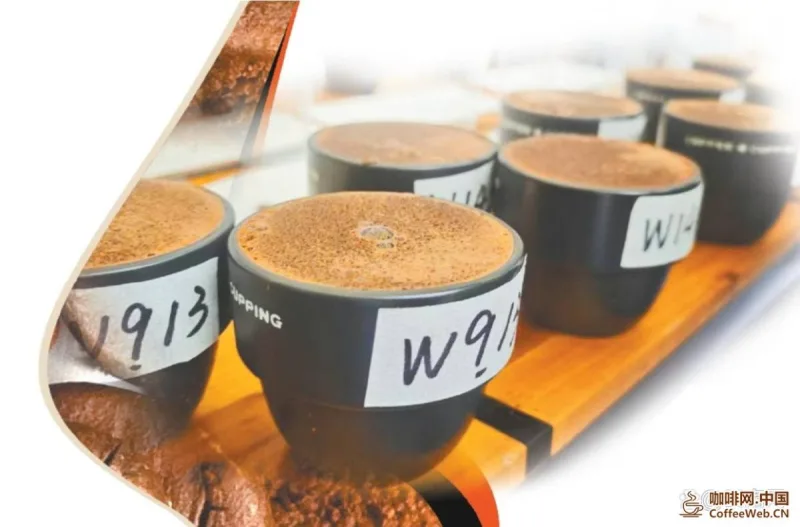
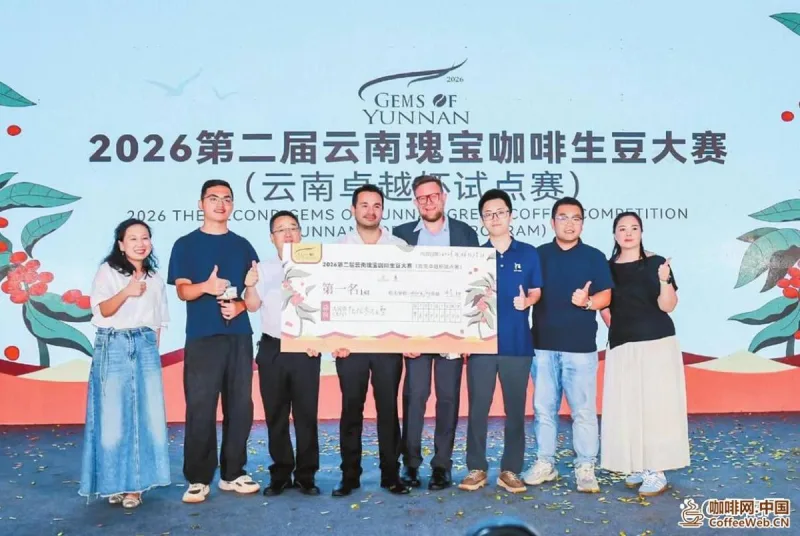
On June 25, the 2026 2nd Yunnan Treasure Coffee Green Bean Competition (Yunnan Cup of Excellence pilot) concluded by Dianchi Lake; Gengxia Manor’s traditional washed Geisha green bean won with 91.78 points, setting a new record for Yunnan coffee competition scores, delivering an excellent answer sheet in this event hailed as the “Olympics of green coffee.”
In the CoE’s strict scoring system, above 90 points represents the “excellent grade,” the passport to world-top coffee beans. In this competition, three Yunnan green beans exceeded 90 points in international blind tasting, and the top 20 scores were all above 87. Behind this result lies the arduous trek of Yunnan’s coffee industry climbing out of a long trough and onto the world stage—and a profound leap in quality, value, and discourse power for Yunnan coffee.
Low-point reversal: Yunnan coffee accurately changes track
“Three Yunnan beans scoring above 90 points thrilled overseas distributors selling Yunnan beans—Yunnan flavor is being recognized by more and more people,” said a relevant official of the competition.
Kiels, a German judge and one of this competition’s international reviewers, sighed: “This is my first return to Yunnan in 15 years, and I found Yunnan coffee quality improving by leaps and bounds. In the competition I could clearly feel the layers and flavors of Yunnan coffee—for example, in fruit flavors I could sense lemon and mango, and in floral notes jasmine. Through the competition, we can introduce Yunnan coffee’s planting and processing information to judges and audiences from around the world.” At this moment, Yunnan coffee has won attention and recognition.
Although Yunnan coffee’s planting history traces back 130 years, Yunnan beans were once the “invisible man” in international giants’ blending vats, exported by the ton as commodity beans. Because the main planted varieties were disease-resistant, high-yield “Catimor” hybrids, and pricing power was firmly in the hands of the New York futures exchange and giant procurement departments, Yunnan farmers remained at the bottom of the value chain.
In 2019, a bumper Brazilian harvest caused international futures prices to plummet, transmitting to Yunnan and driving green-bean purchase prices below planting costs. “Selling beans lost money, so we simply stopped picking; some farmers even chopped down coffee trees to plant tea and corn,” recalled Liao Xiugui, a first-generation Pu’er coffee farmer, voicing the despair of the time. The coffee industry, caught in a vicious cycle, reached a crossroads.
Although the trough was painful, it forced a determination to change born of desperation. This comeback began with top-level design precisely changing tracks. In 2022, Yunnan issued the “Six Coffee Articles” policy, clearly switching the track from commercialization to specialty.
As the visible hand of policy exerted force, the invisible hand of the market also sent a tailwind.
In the past five years, domestic coffee consumption has exploded; the expansion of brands such as Luckin and Manner needing stable supply completely broke the original pricing rules. These brands’ choices let Yunnan beans no longer rely solely on export, and the market structure reversed rapidly—from 90% export six or seven years ago to 90% domestic sales today. The support of domestic demand let Yunnan beans grasp local pricing power for the first time; prices tripled in three years, thoroughly ending the passive situation of “eating from the weather.”
Yunnan has low latitude, high altitude, and large day-night temperature swings—natural endowments no different from the world’s famous specialty regions. Facing market dividends, Yunnan gave a calm analysis: the real shortboards lie in varieties, management, and processing.
The turning point came from reflection after the pain; a top-down industrial transformation thus began. Centered on the “Six Coffee Articles,” Yunnan coffee’s development logic directly hits the pain points. On the planting side, it delineated a 1.05 million mu specialty-suitable zone, eliminated low-end varieties, and promoted quality germplasm such as “Geisha” and “DeRei 132”; on the processing side, it funded environmentally friendly fresh-fruit processing centers and promoted technologies such as low-water processing; on the market side, it fully built regional public brands and encouraged coffee-tourism integration.
The data is most convincing: Yunnan coffee’s specialty rate rose from 8% in 2021 to 41.7% in 2025, and its deep-processing rate jumped from 20% to 85%. In Xinzhai Village, Baoshan, by promoting full-red-cherry picking and integrated water-fertilizer management, villagers’ per-capita disposable income exceeded RMB 40,000. Coffee beans are no longer merely agricultural products but works condensing technology and craftsmanship.
The strongest protection: pressing firmly forward on the specialty path
Along the way, the market’s tests of Yunnan coffee’s specialty path have never ceased.
On May 1, 2026, China’s 100% tariff-line zero-tariff treatment for products from 53 African diplomatic countries took formal effect. Kenyan coffee, Ethiopian coffee, and other African specialty agricultural products entered the Chinese market along the zero-tariff channel. Overnight, “with African coffee beans entering China tariff-free, where does Yunnan coffee go?” became a hot industry topic.
Industry insiders admitted that if we turned the clock back five or six years, facing the large-scale entry of African-origin beans, Yunnan coffee’s position would indeed be worrisome. Today, specialty has become Yunnan coffee’s hardest “bulletproof vest.” In 2025, Yunnan’s coffee agricultural output value reached RMB 8.39 billion, growing over 70% year-on-year. From “sold by the ton” to “sold by the cup,” behind this numerical change is a fundamental shift in industrial form—no longer cheap raw-material export but branded, specialty value output. Yunnan coffee’s specialty practice had precisely prepared for the battle before the zero-tariff policy landed.
The Cup of Excellence has set pilot competitions in Yunnan for two consecutive years, letting the international specialty-coffee standard system shine directly into the producing region, becoming an international passport to test Yunnan coffee quality.
Truly good coffee never fears competition, because it has irreplaceable terroir, unreplicable flavor, and every solid step taken for specialty. In this competition, beans from all Yunnan producing regions made the cut, and the confidence of diverse advantages began to show.
Hu Faguang, researcher at the Tropical and Subtropical Economic Crops Research Institute of the Yunnan Academy of Agricultural Sciences and director of Yunnan’s Provincial Coffee Key Laboratory, said: “This competition proves Yunnan specialty coffee is recognized by the world. The result of three beans above 90 points is a vivid footnote to Yunnan coffee’s specialty path.”
Objectively, Yunnan coffee’s comeback is not yet complete. The industry still faces vague brand recognition and an ununified public-brand image. Yunnan has proven to the world its ability to grow good coffee, but how to make Yunnan coffee flavor a cultural symbol recognized worldwide will be an even more exciting contest on this specialty-development path.
Reprint Notice & Disclaimer: This article is reprinted from Yunnan news coverage (China News Service). All rights belong to the original publisher. If you believe any content infringes your rights, please contact us for removal.
Related Reading
 Three Decades of Shanghai-Yunnan Collaboration: A Coffee Bean ‘Ferments’ at the Import Expo
 Why Yongde’s Coffee Beans Won Gold in Shanghai – A Taste of ‘Life in Yunnan: 365 Days’
- Yunling Commentary: Yunnan Coffee Turnaround Hinges on Autonomous Pricing
 A ‘Travel Pack’ Reveals Another Possibility for Pu’er Baristas
- Bean in Short Supply: A Taiwan Youth on Yunnan Coffee as a Shared Cross-Strait Stage
- Five Years, Eight Championships: Lincang Coffee Joins the World Stage




 Liaoning ICP Security No. 21122402000217