
At a Glance (China Coffee Network): Before you even get near the booth, a scent of citrus, berries, and coffee beans wafts over. This is not the back kitchen of a Michelin restaurant; this is the scene of the Beijing Century Golden Source · 1/2 Coffee Festival. More than 70 “small but beautiful” brands are trying to retell this city’s consumption story with a cup of coffee.
Before you even get near the booth, a scent of citrus, berries, and coffee beans wafts over. This is not the back kitchen of a Michelin restaurant; this is the scene of the Beijing Century Golden Source · 1/2 Coffee Festival. More than 70 “small but beautiful” brands are trying to retell this city’s consumption story with a cup of coffee.
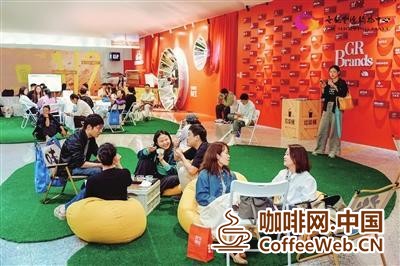
Connie, a resident living near the Century Golden Source Shopping Center, knows the famous coffee shops in Beijing like the back of her hand; here she not only found familiar old brands but also dug up many “treasure coffees” gathered from all over. “This time I saw many coffee brands from out of town; I had to come try them. I just bought a cup from Shanghai—they actually made the coffee into caviar shape, very special!”
The cup of “Caviar Apple Pie” Connie mentioned comes from a Shanghai brand focused on “tasty, good-looking, fun.” A row of coffees carefully wrapped in bouquets on the booth is especially eye-catching, instantly evoking diners’ impression of Shanghai’s refined new trend.
But what truly makes people stop at the coffee festival is not just good looks.
Putting the city’s emotions “into” the cup.
Similar “city emotions” can be found almost everywhere at the coffee festival.
Coffee from Xinjiang served in a “bowl” made of naan caught the reporter’s eye! “‘Coffee first came to China through the Silk Road, and Xinjiang is an important node on the Silk Road,’ said Ms. Chai, a stall owner of Jiangmi Coffee. ‘We wanted to combine Xinjiang characteristics, using naan as the vessel for coffee, making this coffee.'” The wheat aroma of naan and the mellow richness of coffee unexpectedly matched; the experience of drinking coffee from a “naan cup” also made many people take photos and check in.
“‘Hello, I tried the coffee with Rosa roxburghii last time, it was especially delicious; are there other special flavors you can introduce?'” a returning customer asked the stall owner in front of a booth featuring Guizhou characteristics; among them, a coffee named “Yanpi Cave” caught the reporter’s attention. According to the stall owner, the inspiration for this coffee comes from Guizhou’s Yanpi Cave Waterfall, and the coffee’s crisp taste lets consumers feel fresh and pleasant while tasting it, as if immersed in the waterfall.
The taste memory of old Beijing was not ignored either. “Erba Sesame-Paste Coffee,” “Hawthorn-Osmanthus Brewed Cold Brew”… these local brands themed on old Beijing memory and sentiment blend the richness of sesame paste and the sweet-sour of hawthorn into coffee, letting locals taste a sense of familiarity and outsiders taste a freshness.
Here you’ll find that these coffee brands are unanimously doing the same thing: putting the city’s taste, memory, and everyday warmth all into the cup.
Creative “recipes,” a brainstorm contest.
If putting local ingredients into coffee is city sentiment, then what truly surprises is those “wildly imaginative” creations. Some baristas point at their menu, enthusiastically inviting customers to choose freely, because each has a very unique “recipe”—the “recipe” can be called the absolute “arena” of baristas’ creativity. “This cup is called ‘No Kiwi’; there’s no kiwi in it, but when you drink it, it tastes like kiwi,” introduced the barista of Houniao Coffee. Other baristas just stand quietly behind the counter, hand-brewing a specially roasted bean for customers; after each pour, they invite the other party to first taste the aroma escaping into the air. Taking time to experience the different layers of coffee brewing shows both an ultimate pursuit of the senses and the most “serious” love for coffee as a beverage.
A Suzhou coffee brand’s star product, selling 300 cups a day, drew its inspiration from an accident. The owner said: “I especially like Suzhou-style mung-bean soup; once, after scooping a bowl of mung-bean soup, I casually added coffee into it, unexpectedly colliding into a surprising taste.” After repeated adjustments, this cup of coffee finally presented the unique “sandy” texture of mung-bean soup—cool, slightly sweet, with a bean aroma, forming a wonderful balance with coffee’s bitterness.
“This coffee, a homophone for ‘sole apple,’ adds Henan’s jingjie (catnip); the taste is unique,” introduced Ms. Nan, a partner of Zhengzhou Z-Square Coffee. Jingjie brings its own crisp, pungent aroma, distinct from ordinary mint, enriching the coffee’s flavor. Other coffee brands pull some “tricks,” embedding edible fresh flowers in the coffee, adding a faint floral aroma and layers, while firmly catching the eye in appearance.
Emotions are the true “recipe.”
In a corner of the coffee festival, the reporter saw a coffee brand from Wenzhou precisely “hit” consumers’ hearts; the signature “Analgesic” copy reads: “Life always has some small emotions with nowhere to rest. Fortunately, there’s this cup of ‘Analgesic’—not strong, not harsh, black tea wrapped in fruity aroma… all discomfort, relieved in one sip.”
Behind these seemingly “rule-breaking” coffees is the quietly growing demand of a new generation of consumers for “stories” and “emotional value.” When people are no longer satisfied with a standardized refreshing drink, but more willing to pay for “uniqueness,” “human warmth,” even “imperfection.”
These unique brands, like the city’s buyer shops, cultural-creative shops, and blind-box shops, are becoming new footholds for people to find belonging and identity.
Here, whoever can provide consumers with unique emotional value wins their hearts. (Intern reporter: Huang Yujie)
Original Notice: This article is an original work by China Coffee Network (coffeeyo.com). All rights reserved.
Reprint Notice & Disclaimer
- This article has been edited and compiled by China Coffee Network. The information and images therein come from public sources and the copyright belongs to the original author. This reprint is intended solely for information sharing within the coffee industry and does not represent the views of this website; all data and opinions are subject to the original article. Our thanks to the original author for creating and sharing it.
- For matters concerning content licensing, attribution, copyright or otherwise, please contact us promptly and we will verify and cooperate in handling them as soon as possible. We also welcome coffee origins, brands and industry media to exchange ideas and contribute articles.
- Contact China Coffee Network: Tel 400-0000-641 (+86-18288016826) | Email 405854472@qq.com | Address: Jinghong, Xishuangbanna, Yunnan Province / Tieling, Liaoning Province
Related Reading
 How ‘Sea-Flavored’ Coffee Blooms Across Dongtou
- Health Guide: How to Enjoy Your Coffee the Healthy Way
 Study: Regular Coffee and Tea May Lower Dementia Risk, but More Is Not Better
 Frontline Story: A ‘Mobile City Coffee Bar’ Arrives by the Grand Canal
 Yantai’s Wind Tastes of Coffee
 In Zhenyuan, a Cup of Coffee and a Waiting Train





 Liaoning ICP Security No. 21122402000217