
Brief (coffeeyo.com): On September 17, the 2026 China Tropical Crops Industry Conference was held in Kunming under the theme “Coffee Position China, Linking the Globe,” with four parallel sub-forums including one on new paths for “Chinese-style coffee going global.” Participants agreed going overseas is no longer simply selling raw material but building full-chain capability — with Yunnan as the industry base and Kunming as the regional hub — spanning planting, processing, warehousing, logistics, brand, standards and pricing.
On September 17, the 2026 China Tropical Crops Industry Conference was held in Kunming under the theme “Coffee Position China, Linking the Globe,” with four parallel sub-forums, including one discussing new paths for “Chinese-style coffee going global.”
Participants broadly agreed: Chinese-style coffee going global is no longer simply selling raw material, but building full-chain capability — with Yunnan as the industry base and Kunming as the regional hub — connecting the two variety belts of the Greater Mekong Subregion (GMS), the large Chinese market and overseas markets, spanning planting, processing, warehousing, logistics, brand, standards and pricing.
Building a GMS coffee trade distribution center
Cai Yatong, principal of the Diancuiyun Yunnan Specialty Coffee Tasting Center, started from a cup of Robusta. He noted that Robusta accounts for about 45% of global coffee output, and Vietnam is the world’s largest Robusta producer and exporter; this variety has long been undervalued. The GMS is naturally complementary: Yunnan and high-altitude areas such as Laos and Myanmar mostly produce arabica beans, while low-altitude areas such as Vietnam, Cambodia and Thailand abound in Robusta. Yunnan coffee should not be limited to the single “small-grain coffee” narrative, but move toward open integration “with Yunnan as the hub, connecting the variety belts on both banks of the Mekong.”
Kunming possesses five-dimensional capability: the China-Laos Railway and Mohan port open smooth channels; a nearly 100-billion-yuan full industry chain connects to the market; “border-trade import + local processing” promotes processing and sets standards; platforms such as the GMS Leaders’ Meeting and the Lancang-Mekong Fruit Festival are built; and border-resident mutual markets and tax incentives for local processing are fully used. Kunming’s comparative advantage lies in its climate suiting coffee storage and its port matrix radiating to GMS producing regions — it is the only city in the country with the superimposed advantages of a pilot free-trade zone, economic development zone, comprehensive bonded zone and cross-border cooperation zone.
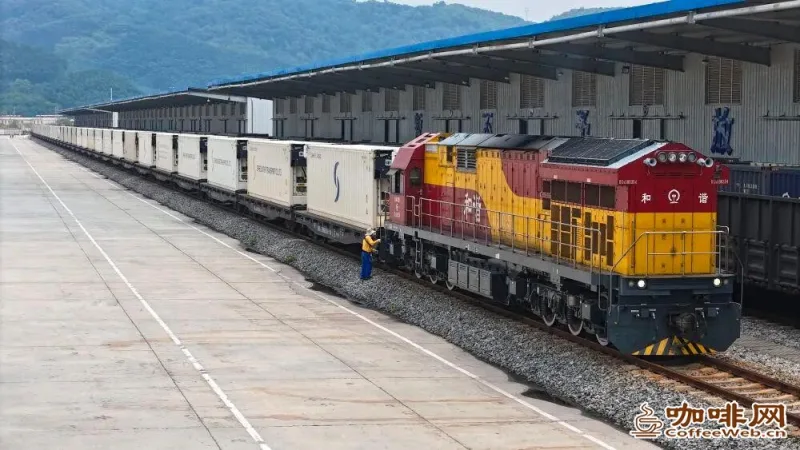
Fruit has already run the path first: in 2025, Yunnan imported 15.2 billion yuan of fruit from Mekong countries, up 28.6%; in January–April 2026, imports reached 5.04 billion yuan, up 103.8%, with its national share rising to first place. Cai Yatong suggested that Shanghai and Guangzhou handle global coffee import distribution, while Kunming handles GMS regional coffee trade distribution and pricing — not seizing position but filling it, ultimately forming “Kunming prices” and “Kunming standards.”
From consumption giant to industry power
Zheng Zimin, general manager of CP (Pu’er) Coffee Co., Ltd., argued that the center of gravity of global coffee consumption is shifting east; in 2025 Asia’s coffee consumption is projected at 45 million bags, accounting for 25.7% of the global total, with China among the world’s top five consuming countries. China is shifting from “one-way import” to “two-way import and export” — in 2025 import value reached 14.706 billion yuan, while Yunnan exported 19,000 tons (860 million yuan) to 43 countries. Domestically, made-to-order coffee drinks reached a market scale of 140.5 billion yuan in 2025, up 19.4% year on year, with per-capita cup volume at 28.6 cups and over 550 million drinkers.
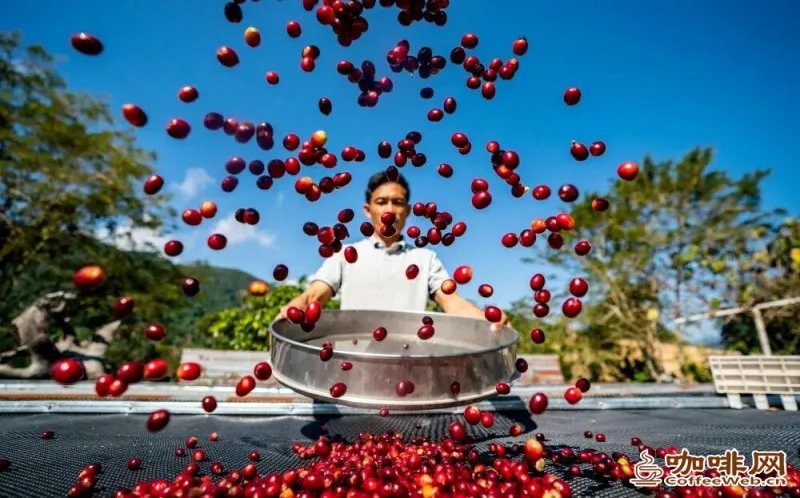
Yunnan’s coffee output accounts for over 98% of the national total, with its fine-coffee rate and deep-processing rate continuously rising. CP is building a full-industry-chain closed loop in Pu’er, planning annual processing of 10,000 tons of fresh fruit and 3,000 tons of roasted beans, and laying out coffee-powder and coffee-liquid capacity, expected to start production by end-2026, with a coffee manor built in parallel. Zheng Zimin said industrial capital should keep the producing-region dividends in Yunnan, achieving three leaps: “bringing in — going out,” “raw-material base — brand highland,” and “going solo — coordinating.”
“One inventory” paving the way for Chinese-style coffee to go global
A JD Logistics representative proposed that fragmented multi-channel inventory of consumer goods is a definite pain point: multiple warehouses, multiple order types and multiple endpoints lead to declining freshness, high stagnation, frequent transfers and data blindness. The solution is a three-stage “one inventory”: physical one-inventory, where channels share the same warehouse and joint distribution; inventory one-inventory, where goods are shared physically but accounts kept separate; and sales one-inventory, where online and offline sellable stock is unified. Relying on the ECLP system, WMS, national warehouse distribution and promotion elasticity, cases such as Xifeng Liquor and Jinxing Beer have already achieved faster next-day delivery, lower breakage and scalable surge capacity.
The JD representative argued that for the coffee industry — whether it is Yunnan beans leaving the province, cross-border import of GMS coffee, or multi-channel overseas expansion of Chinese-style coffee brands — all require BC same-warehouse, multi-owner one-inventory, professional packaging and nearby fulfillment. Supply-chain capability will become the infrastructure for Chinese-style coffee going global.
Pushing from “sold by the ton” to “tasted by the cup”
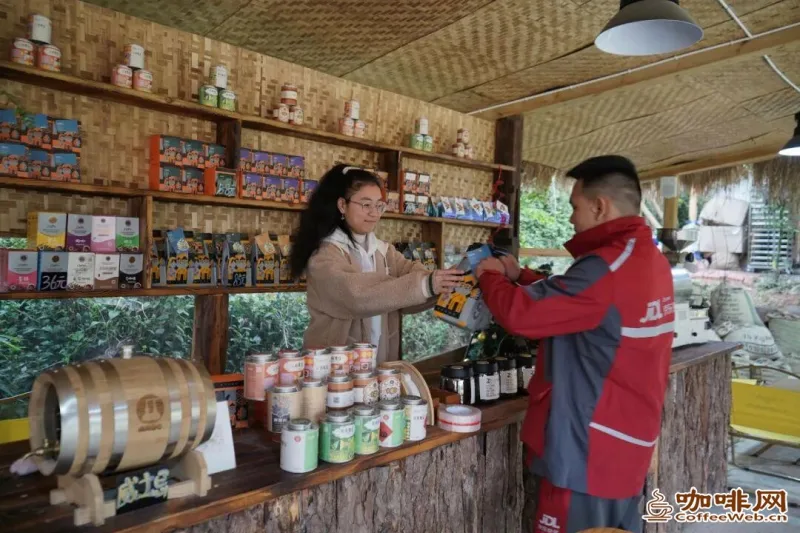
Ma Hongtao, deputy division chief of the Yunnan Academy of Science and Technology and promoter of the Lanzhen Coffee-Drink achievement transformation, compared Yunnan coffee with Hainan coconuts: Hainan’s coconut full industry chain has surpassed 20 billion yuan in output value, relying on scaled processing and brand operation; Yunnan coffee is shifting from raw-material export to refinement. Policy guidance and industrial layout should value the specialty-coffee manor economy, promoting the integration of planting, processing, culture-tourism and brand across the tertiary industry. The Lanzhen Coffee-Drink case shows that Chongqing Lanzhen Agricultural Technology Co., Ltd., leveraging resources from the Tengchong Scientist Forum, jointly developed a coffee-blueberry drink with the China National Research Institute of Food and Fermentation Industries and Vland Biotech — a sample of east-west collaboration and technological innovation empowering Yunnan coffee. He suggested using manors as carriers to raise the refinement, branding and added value of “Yunka,” letting more Yunnan coffee turn from raw material into terminal product.
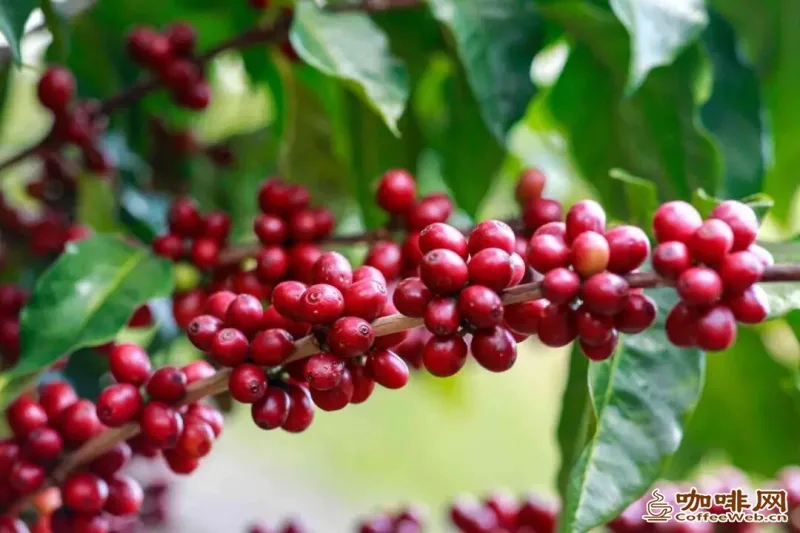
Participants held that the new path for Chinese-style coffee going global centers on “producing region + hub + supply chain + brand + standards” coordination. Records show Luckin Coffee set up a supply-chain company in Kunming, purchasing 33,000 tons of green coffee beans from Yunnan worth nearly 2 billion yuan in the 2026 new season; local coffee companies such as Biodun strengthened their Kunming layout. The government should build the stage, integrating trading centers, competitive auctions, warehouse delivery, supply-chain finance and price indices, and promoting multimodal “single-document” transport and GMS industry dialogue. Let the “aroma” of arabica and the “body” of Robusta meet in Kunming, let Kunming become the coffee hub station connecting the two variety belts and two market circles, and contribute Kunming strength and a Yunnan sample to Chinese-style coffee going global. (Liao Xingyang)
Source: “Kundian Economy” WeChat public account.
Reprint Note & Disclaimer
- This article is compiled and edited by coffeeyo.com. The materials and images herein are sourced from public channels and the copyright belongs to the original authors. This site reprints them solely for information sharing within the coffee industry and does not represent our stance; all data and views are subject to the original source. We thank the original authors for their work and sharing.
- For matters concerning content authorization, attribution, copyright, or any other issues, please contact us promptly. We will verify and cooperate in handling them without delay. We also welcome coffee-growing regions, brands, and industry media to exchange and contribute articles with us.
- Contact coffeeyo.com — Tel: 400-0000-641 (+86-18288016826) | Email: 405854472@qq.com | Address: Jinghong City, Xishuangbanna, Yunnan / Tieling City, Liaoning
Reprint Notice & Disclaimer
- This article has been edited and compiled by China Coffee Network. The information and images therein come from public sources and the copyright belongs to the original author. This reprint is intended solely for information sharing within the coffee industry and does not represent the views of this website; all data and opinions are subject to the original article. Our thanks to the original author for creating and sharing it.
- For matters concerning content licensing, attribution, copyright or otherwise, please contact us promptly and we will verify and cooperate in handling them as soon as possible. We also welcome coffee origins, brands and industry media to exchange ideas and contribute articles.
- Contact China Coffee Network: Tel 400-0000-641 (+86-18288016826) | Email 405854472@qq.com | Address: Jinghong, Xishuangbanna, Yunnan Province / Tieling, Liaoning Province
Related Reading
 Three Decades of Shanghai-Yunnan Collaboration: A Coffee Bean ‘Ferments’ at the Import Expo
 Why Yongde’s Coffee Beans Won Gold in Shanghai – A Taste of ‘Life in Yunnan: 365 Days’
- Yunling Commentary: Yunnan Coffee Turnaround Hinges on Autonomous Pricing
 A ‘Travel Pack’ Reveals Another Possibility for Pu’er Baristas
- Bean in Short Supply: A Taiwan Youth on Yunnan Coffee as a Shared Cross-Strait Stage
- Five Years, Eight Championships: Lincang Coffee Joins the World Stage



 Liaoning ICP Security No. 21122402000217