
When a cup of coffee is set on the table, few people ever ask: for the soluble matter in this cup, what exactly was taken from the coffee tree?
A frequently cited industry estimate gives an intuitive answer. Starting from 100 kg of fresh coffee cherries and going through all the washing-process steps: peeling removes about 47.1 kg of skin and pulp; fermentation and washing carry away about 5.3 kg of pectin and high-organic wastewater; drying evaporates 21.0 kg of water; hulling leaves 5.6 kg of parchment; roasting loses 2.3 kg and silver skin 0.1 kg; and brewing leaves another 10.4 kg of spent grounds—the portion that finally dissolves into the beverage is about 2.6 kg.
In other words, the roast curve, grind size, and pouring technique that consumers are familiar with all happen to this less-than-3% portion. The remaining more than 90% has long stayed in the back rooms of producing regions, roasters, and stores, treated as a problem that costs money to dispose of.
I. First, the Math: The Largest Waste Stream Comes from the Origin
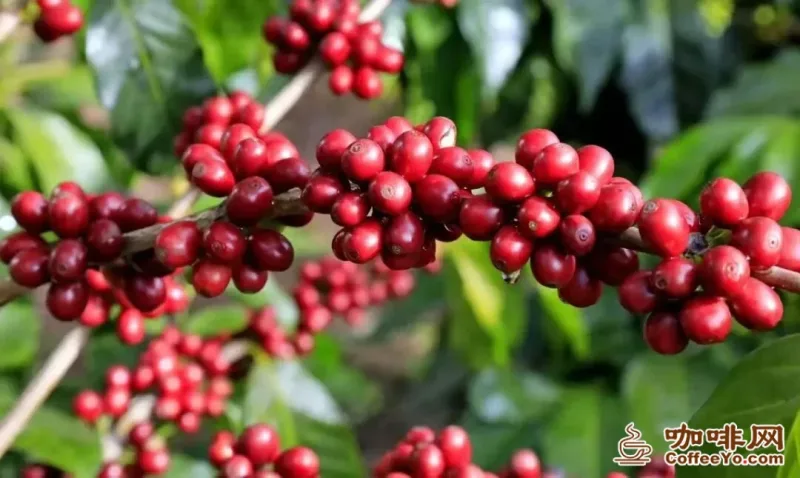
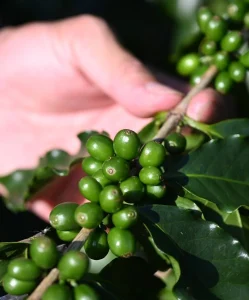
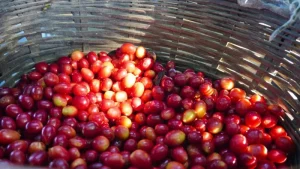
Coffee does not grow as a single bean on the tree. A ripe coffee fruit, from outside in, consists of skin, pulp, pectin layer, parchment, silver skin, and at the very center the seed we call the green bean. Primary processing is the layer-by-layer stripping and moisture reduction that leaves the storable, transportable seed.
China’s main cultivated variety is Arabica, generally processed by the wet method: fresh cherries are pulped directly to separate skin from seed; the seeds are fermented and washed to remove residual pectin, dried to about 12% moisture, then hulled to yield commodity green beans. Throughout this process, coffee pulp is the largest residual, reaching over 50% of fresh cherry weight, composed of the exocarp, mesocarp, and pectin, with very high moisture content.
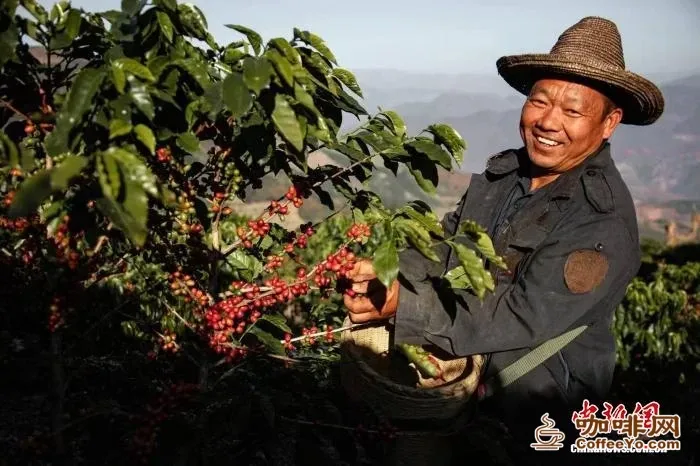
Large volume does not mean useless. In composition, dry pulp contains 21%–32% carbohydrates and 5%–15% protein, plus about 8.56% tannins, 2.6% chlorogenic acid, 1.3% caffeine, and 1.6% total caffeic acid. Its rich potassium makes it naturally suitable as an organic-fertilizer feedstock, while its high sugar and polyphenol content also means it spoils easily—a coin with two faces.
II. Yunnan’s Reality: Nearly 400,000 Tonnes of Pulp a Year
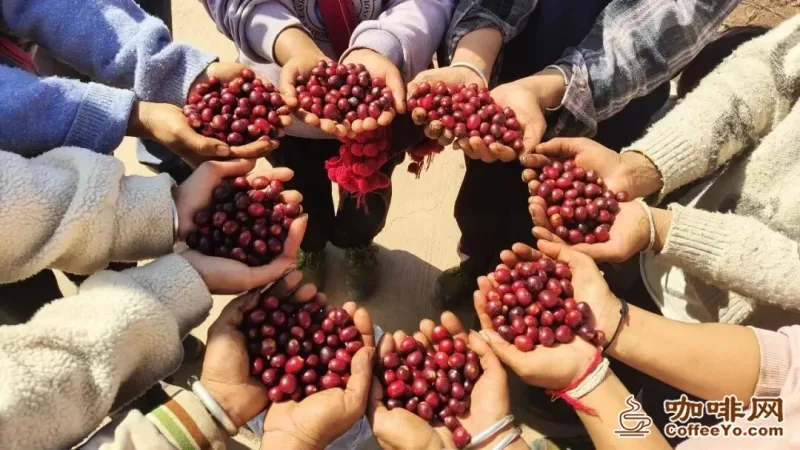
Turn the lens to China’s largest coffee region. Yunnan small-grain coffee is generally processed by the wet method into washed beans, with a material conversion ratio of about 1:0.5—that is, processing 1 tonne of fresh cherries yields 0.5 tonnes of pulp. Data disclosed in relevant patent literature show that the total pulp generated annually at the fresh-fruit primary-processing stage in Yunnan’s coffee-growing areas can reach 396,800 tonnes.
What does 396,800 tonnes mean? This pulp is high in moisture and sugar, and is generated in a concentrated burst during the two-to-three-month harvest season. A medium-sized processing plant may accumulate tens of thousands of tonnes of wet material in a short period during peak season—far exceeding what surrounding land can absorb as compost that quarter. Piled too thick, it shifts from aerobic to anaerobic, turning organic matter that could have returned to the soil into a seepage of liquid and odor.
More practically, processing plants must pay real money to handle this “waste”—site, labor, hauling, and increasingly strict environmental compliance. In this sense, by-products are never merely a moral issue.
But the other side of the coin: there is something more valuable inside the pulp. Data show coffee pulp contains abundant pectin, about 25%–30% of fresh cherries. Industrially, pectin serves as thickener, stabilizer, and drug carrier, and can be used to make edible films. Whether it stays at origin as a raw material or gets piled away with the pulp depends on whether there is technology and standards to catch it.
III. Cascara: How Pulp Becomes a Line on the Drinks Menu
The most direct outlet for pulp is to make a beverage. The drink brewed from coffee pulp has a dedicated international name—cascara. Its flavor has almost no overlap with coffee; it is closer to a floral-fruity tea: sweet-sour, with a dried-fruit aroma, commonly served as a cold brew or iced drink.
This effectively redraws the boundary of “coffee flavor.” The same fruit, without taking the roasting path, can also appear on the drinks menu in another identity.
But turning it into a product takes far more than an idea. Before pulp can become food, it must answer a string of hard questions: what are its nutritional and safety components? How are heavy metals, pesticide residues, and microbes controlled? What parameters govern drying, sterilization, packaging, and storage? The answers are precisely what China’s coffee industry had not systematically prepared in the past.
IV. Three “Nationwide Firsts”: Giving By-Products an “ID Card”
In 2026, this work was formally advanced in China’s largest coffee region. Yunnan Province pioneered the local standards “Coffee Pulp” and “Technical Regulations for Processing Coffee Pulp Tea,” for the first time bringing the processing and utilization of coffee by-products under standardized governance, giving the “waste” that once could only be piled in the field a pass to become a trendy beverage.
Supporting the implementation of these standards is long-term research by frontline scientific institutions. In May 2026, the project “Key Technology Integration and Application for High-Value Utilization of Coffee Pulp,” completed by the Baoshan Inspection and Testing Institute, passed provincial/ministerial-level scientific achievement evaluation and was registered. According to public information, the project, closely aligned with Yunnan’s plateau-feature agricultural layout, concentrated five years of research and achieved three “nationwide firsts”:
First, it completed the first systematic experimental study on the nutrition, function, safety components, and toxicology of Yunnan coffee pulp, breaking the food-application technology barrier and establishing its status as a food raw material; second, it formulated Yunnan’s first series of coffee-pulp local standards, filling the domestic gap in norms for coffee-pulp food utilization and resolving the industry’s challenge of solid-waste pollution from by-products and the lack of standards for value addition; third, it issued Yunnan’s first technical regulations for coffee-pulp tea, unblocking the technical bottleneck of whole-fruit comprehensive utilization.
This combination punch resolves problems at two different levels. The former defines identity—pulp must obtain the legal status of “food raw material” before it can enter the threshold of food production licensing; the latter opens the path—enterprises need to know by what indicators to self-inspect and how to process to be compliant. Without the former, the product cannot enter legal channels; without the latter, the standard is just a line on paper.
It is worth noting this move is not isolated. Also in July 2026, five series of local standards for “Coffee Vocational Skill Requirements” were released, covering five job types—coffee garden management, primary processing, brewer, roaster, and cupper—taking the lead in building a systematic coffee vocational-competency evaluation system; together with earlier standards such as “Coffee Quality Safety Traceability Management Specification,” “Green Food Coffee,” and “Roasted Coffee,” the provincial local standards have formed a closed loop, with 23 provincial standards such as “Small-Grain Coffee” building a technical framework covering the entire process.
V. Beyond Pulp: Pectin, Silver Skin, and Spent Grounds Each Have a Destination
Pulp is only half the story. Following that mass flow downstream, almost every node holds reuse potential.
The pectin layer is the most-watched node. Research on preparing edible antibacterial films from coffee-pulp pectin has entered the patent stage; such natural-pectin-based films have clear application prospects in food preservation. However, pectin extraction must be near the origin—the wet material is high in moisture and spoils easily, making long-distance transport uneconomical.
Parchment is the fibrous by-product of hulling, with stable volume, commonly used as fuel or cultivation substrate; silver skin is generated at roasting, small in volume but consistent in composition, mostly used for compost or as extraction feedstock; spent coffee grounds are the largest solid by-product on the consumption end—about 10.4 kg, over one-tenth of the starting cherry weight—currently mainly flowing to compost, deodorizing products, mushroom substrate, and bioenergy.
An easily overlooked key fact: these by-products are generated in completely different locations. Pulp and pectin concentrate at origin processing plants, silver skin appears at roasting factories, and spent grounds are scattered across stores and home kitchens in consumption cities. This means “who can turn them into the next use” is naturally distributed among different actors—origins hold the raw material but lack technology and standards, while the consumption end holds large but extremely scattered volumes of spent grounds and lacks a scaled recovery system.
VI. Why Bother Getting This Right
Taking by-products seriously yields at least three accounts.
The first is the environmental account. Plant tissue high in moisture, sugar, and organic matter, if mishandled, quickly converts into eutrophication pressure on water bodies and greenhouse-gas emissions; standardized diversion, drying, and composting management can directly cut this external cost.
The second is the income-increase account. Once pulp gains food-raw-material status with clear processing rules, it can enter the market as a standard product rather than waste. For a predominantly smallholder region, one more monetization channel means farmers face the next purchase order with more composure.
The third is the industrial-upgrading account. Standardization is never just writing processes more clearly; it determines whether a product can enter supermarkets, be exported, or be procured as compliant raw material by other food factories. When the entire “seed-to-cup” process is strung together by standards, the by-product branch line is no longer the leaking spout.
Looking back at that cup of coffee: 2.6 kg into the cup, the rest scattered along the whole road from origin to store. In the past they were a burden to be paid to dispose of; now, some of them are being written into standards, made into products, turned into income. This may be a hidden thread in China’s coffee industry moving from “pursuing output” to “managing value.”
Sources
This article is an original Coffeeyo synthesis; all cited data come from public channels, and specific values are subject to the original sources:
① “Research Progress on Resource Utilization of Coffee Pulp,” published in Food Research and Development (coffee-pulp generation volume, dry-pulp main-component data); ② CNIPA published patent CN120329588A “A Preparation Method, Product, and Application of an Edible Antibacterial Film from Coffee Pulp Pectin” (wet-process 1:0.5 conversion ratio, Yunnan annual pulp 396,800 t, pectin share 25%–30%); ③ China Quality News, Xinhua Yunnan, Yunnan Net: series reports on Yunnan building a national benchmark for coffee-industry standardization (nationwide-first “Technical Regulations for Coffee Pulp Tea,” 23 provincial standards system, five “Coffee Vocational Skill Requirements” standards); ④ Baoshan Municipal People’s Government website: registration of Baoshan Inspection and Testing Institute’s “Key Technology Integration and Application for High-Value Utilization of Coffee Pulp” (three “nationwide firsts”); ⑤ Industry-media-compiled mass-flow estimate (complete material distribution from 100 kg cherries to 2.6 kg in cup).
Note: For the technical indicators and scope of application of specific local standards, please refer to the officially released standard texts of the Yunnan Provincial Market Supervision Administration.
Originality Statement
- This article is an original work of coffeeyo.com. Without authorization, no media, website, or individual may reprint, excerpt, duplicate, or otherwise use it; violators will be pursued under law.
- The images, charts, and videos herein are originally photographed or produced by Coffeeyo, with copyright watermarks added; copyright belongs to Coffeeyo.
- For reprint authorization, commissioned writing, interviews, or business cooperation, contact: Tel 400-0000-641 (+86-18288016826) | Email 405854472@qq.com | Address: Jinghong City, Xishuangbanna, Yunnan Province / Tieling City, Liaoning Province
Related Reading
 Three Decades of Shanghai-Yunnan Collaboration: A Coffee Bean ‘Ferments’ at the Import Expo
 Why Yongde’s Coffee Beans Won Gold in Shanghai – A Taste of ‘Life in Yunnan: 365 Days’
- Yunling Commentary: Yunnan Coffee Turnaround Hinges on Autonomous Pricing
 A ‘Travel Pack’ Reveals Another Possibility for Pu’er Baristas
- Bean in Short Supply: A Taiwan Youth on Yunnan Coffee as a Shared Cross-Strait Stage
- Five Years, Eight Championships: Lincang Coffee Joins the World Stage




 Liaoning ICP Security No. 21122402000217