
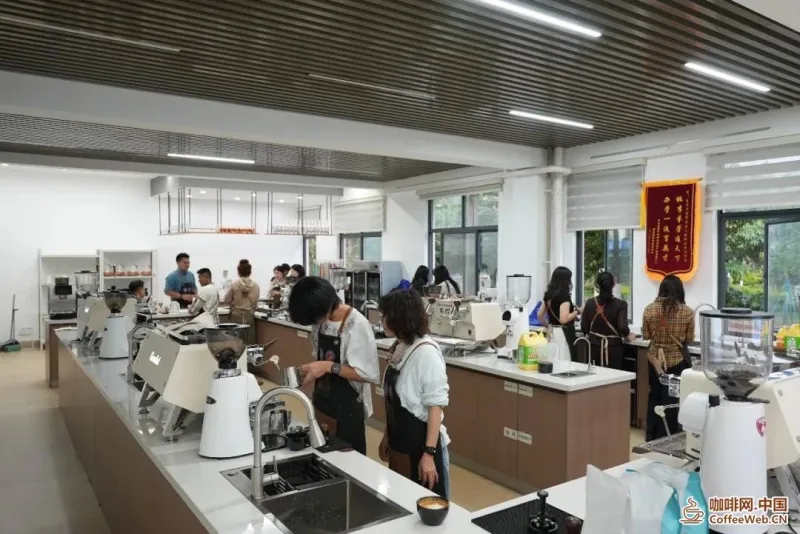
At a Glance (China Coffee Network): The aroma of coffee lingers, soaking the entire training classroom. In the training room of the College of Tropical Crops at Yunnan Agricultural University, students focus on hands-on pour-over coffee, steadily controlling the water flow and recording parameters, shedding the awkwardness of beginners with each practice and unlocking professional coffee brewing techniques. Stepping out of the classroom and closer to the industry, students enter the vibrant specialty coffee estates to explore the source of Pu’er coffee’s aroma. On June 29, the first “Pu’er Barista Travel Pack” — a coffee brewer (elementary) training class — successfully concluded in Pu’er.
The aroma of coffee lingers, soaking the entire training classroom. In the training room of the College of Tropical Crops at Yunnan Agricultural University, students focus on hands-on pour-over coffee, steadily controlling the water flow and recording parameters, shedding the awkwardness of beginners with each practice and unlocking professional coffee brewing techniques. Stepping out of the classroom and closer to the industry, students enter the vibrant specialty coffee estates to explore the source of Pu’er coffee’s aroma.
In such a learning atmosphere, on June 29, the first “Pu’er Barista Travel Pack” — a coffee brewer (elementary) training class — successfully concluded in Pu’er. Students from all over the country and locally completed all the study-tour courses and smoothly obtained their “Pu’er Barista” level certificates.
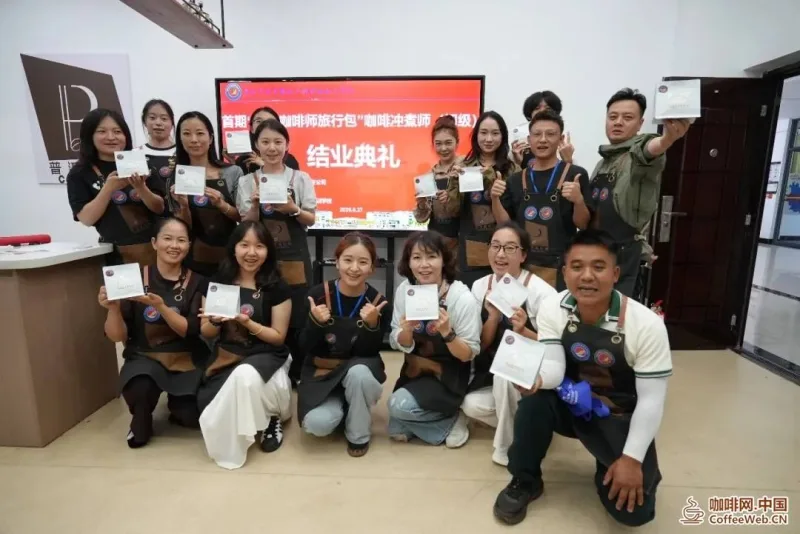
Immersive study tour
From classroom to wilderness, fully grasping the true flavor of Pu’er coffee
The five-day itinerary of the first training class was divided into three days of professional classroom training and two days of on-site origin tracing.
For the first three days, the focus was entirely on hands-on training, closely aligned with the elementary barista professional competency standards. The curriculum covered core modules such as coffee fundamentals, Pu’er coffee cupping and appreciation, espresso extraction and latte art, and pour-over brewing. Daily teaching was high-density and practice-heavy, with professional instructors providing one-on-one guidance and correction throughout. Many students admitted that they once thought brewing coffee was just simply “pouring hot water over grounds,” but only when they tried it themselves did they discover that the speed and pressure of pouring, the coffee-to-water ratio, and temperature control all hide professional nuances. Beginners quickly built a standardized operational understanding, while those with some foundation also shored up detailed weaknesses and refined their craft.
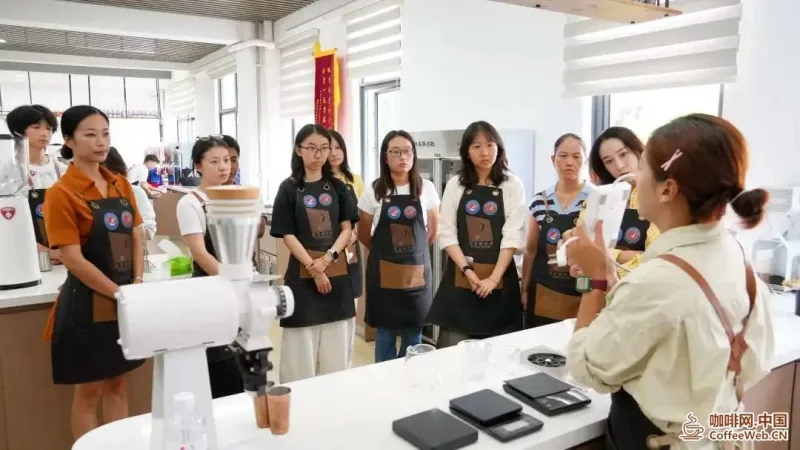
Stepping out of the classroom, the two-day field study tour brought the training down from “the books” to “the land.” Students successively entered Pu’er barista star-rated stores and specialty coffee estates: changing into work uniforms in the stores to shadow and practice, fully observing the entire professional barista output process, and immersively experiencing the professional daily life of a barista; walking through the contiguous coffee forests and into modern coffee factories, students bent down to examine the fruiting status of the coffee, and learned about the complete processes of fresh fruit picking, primary processing, and industrial production. Many said that the flavor they had only tasted in a cup finally found its source here, and they truly understood the origin code of Pu’er coffee’s “remote mountain forest flavor.”
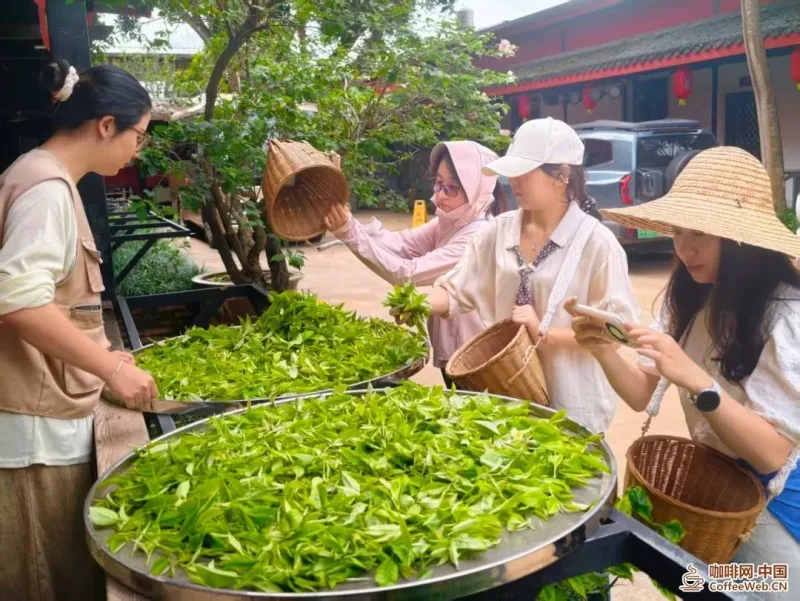
The itinerary also simultaneously featured ecological tea-garden plucking, tea-making, and tea-art observation sessions. Students personally picked tea leaves and pressed their own exclusive tea cakes. Some students reflected that the dual hands-on experience of one coffee and one tea was what truly let them touch the unique urban character of Pu’er — “coffee in one hand, tea in the other.”
Following the fragrance
Crossing mountains and seas to keep the appointment, everyone grows
This cohort of students spanned different age groups and professional backgrounds — there were students, coffee enthusiasts, and local entrepreneurs. Different motivations for training yielded their own growth and insights within the same immersive journey.
For young students, this was a growth journey where interest takes root and skills advance. Yang Juanyu, a current college student, accidentally learned of the training info while scrolling short videos. Because she loves coffee herself and her family is in the related industry, she signed up immediately, even bringing her mother along to train and improve. Zero-based student Yang Weiting also reflected that this learning helped her find a new hobby worth deeply cultivating, and even sparked the idea of entering the profession: “Coffee will probably be integrated into every aspect of my life and work from now on.”

For students who came from afar in other provinces, this was a deep-experience journey that refreshed cognition and returned with a full harvest. Zu Yafei from Henan admitted that this systematic learning was a very precious starting point for understanding coffee. “I truly felt the simplicity and warmth of Pu’er, and I also hope that my fellow students can always maintain their love for coffee and their passion for life.” Jiangxi student Zeng Xuehui came to Yunnan for the second time, specially bringing her son who had just graduated from junior high school to Pu’er to start a coffee study-tour graduation trip. This immersive experience made her feel it was super worthwhile — not only did she appreciate Pu’er’s cultural charm, but also unlocked the diverse flavors of Yunnan coffee. She said she wants to return to Pu’er in the future to continue participating in intermediate and advanced barista training, and share Pu’er’s tea-coffee flavors with more relatives and friends.
For Pu’er’s local practitioners, this training was a pragmatic recharge to shore up shortcomings and empower the industry. Ai Gongxian from Jingmai Mountain grows both tea and coffee, and specially attended this training to fill professional gaps. He said the play-while-learning model is relaxed and not boring, the classroom interaction is strong, and he also met coffee enthusiasts from all over, gaining many new ideas for industry development through exchanges. The planting management and flavor-control knowledge he learned can be directly applied to his own coffee cultivation and product development. Zhao Yunfeng, also a Jingmai Mountain student, has her eye on the local cultural-tourism new format; she found that Jingmai Mountain now attracts many young people, and single tea drinks can no longer meet tourists’ diverse needs. “I want to add a coffee business, so visitors can both taste tea and drink coffee.” She admitted she is still a novice, but wants to study deeply in the future and become a communicator of Pu’er’s tea-coffee culture.
Empowering through learning
Cultivating industry talent, illuminating the coffee industry
A five-day study-tour training carries value beyond the individual student’s skill improvement, bearing the deeper value of Pu’er’s industry empowerment and brand breakout.
As an innovative carrier of the 10,000-person barista training plan, the “Pu’er Barista Travel Pack” lowers the threshold for learning coffee in a lightweight “skills + cultural tourism” form. It not only lets national enthusiasts get to know and spread Pu’er coffee up close, but also builds a low-cost, high-efficiency improvement channel for local practitioners, forming a two-way empowerment of “external outreach to expand fame, local capacity-building to strengthen industry.” Every graduating student is a walking “promoter” of Pu’er coffee, continuously polishing the “Coffee Capital of China” name through word of mouth.
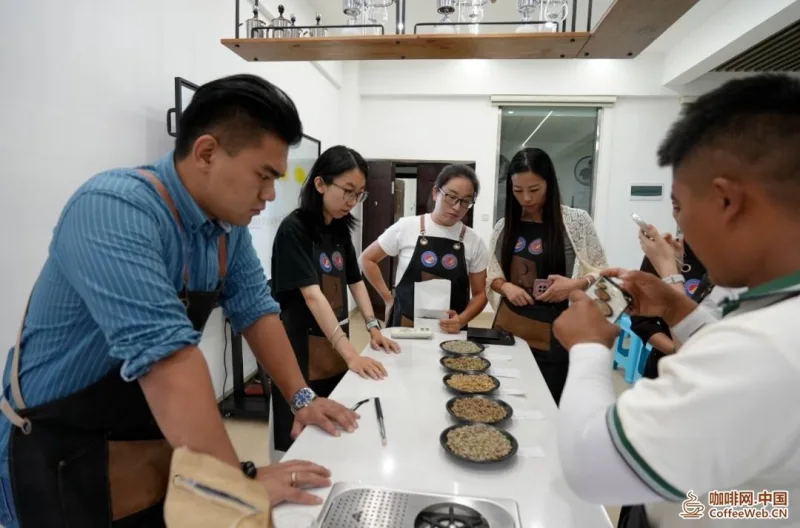
The “Pu’er Barista Travel Pack” is guided by the Pu’er Municipal Human Resources and Social Security Bureau, and jointly launched by the Pu’er Media Convergence Center, the Pu’er Barista Talent Service Center, and the Pu’er Tropical Agricultural Engineering Vocational Training School. It is reported that the smooth landing of the first training class has accumulated ample practical experience for curriculum optimization and model upgrading.
Next, the organizers will closely follow the coffee production and sales nodes, successively launch full industry-chain training courses such as coffee primary processing, roasting, and sensory analysis, continuously linking estates, stores, and cultural-tourism resources, and deeply integrating skills training, labor-brand building, and rural industry revitalization, promoting Pu’er’s transformation from a raw-coffee main production area to a coffee-talent exporter and coffee-culture destination, and continuously injecting Pu’er’s strength into the high-quality development of Yunnan’s coffee industry.
Reprint Notice & Disclaimer: This article is reprinted from Pu’er Media Convergence Center / Pu Rong Cultural Tourism, text by Li Yushan and Shi Liyang. We translate and repost for informational purposes only; all copyrights belong to the original author and publisher. If you believe any content infringes your rights, please contact us for removal. The views expressed do not necessarily reflect those of China Coffee Network.
Related Reading
 Three Decades of Shanghai-Yunnan Collaboration: A Coffee Bean ‘Ferments’ at the Import Expo
 Why Yongde’s Coffee Beans Won Gold in Shanghai – A Taste of ‘Life in Yunnan: 365 Days’
- Yunling Commentary: Yunnan Coffee Turnaround Hinges on Autonomous Pricing
- Bean in Short Supply: A Taiwan Youth on Yunnan Coffee as a Shared Cross-Strait Stage
- Five Years, Eight Championships: Lincang Coffee Joins the World Stage
 Yunnan Specialty Coffee Beans Deliver an ‘Excellent’ Report: Path to Value Leap


 Liaoning ICP Security No. 21122402000217