
Brief (coffeeyo.com): On September 22, the Supreme People’s Court and the Supreme People’s Procuratorate jointly released typical cases of punishing online food-safety crimes according to law. One case — selling diet coffee laced with the banned drug sibutramine via social-network platforms — drew attention. The two defendants were each sentenced and fined for selling toxic and harmful food, and the verdict has taken legal effect.
On September 22, the Supreme People’s Court and the Supreme People’s Procuratorate jointly released typical cases of punishing online food-safety crimes according to law. One case — selling diet coffee illegally adulterated with sibutramine via social-network platforms — drew attention. The two defendants were each sentenced and fined for the crime of selling toxic and harmful food, and the verdict has taken legal effect.
Case review: knowingly harmful, yet kept selling
From November 2021 to August 2024, Zhang Moujing, a merchant in Bairin Right Banner, Inner Mongolia, without food-operation qualifications and without verifying suppliers’ qualification certificates or inspection reports, contacted six merchants via e-commerce platforms to discuss agency, purchased diet coffee abbreviated “Blue Coffee” and “Black Coffee,” and sold it externally via social-network platforms and by developing downstream agents, with total sales over 170,000 yuan.
From 2022 to 2024, defendant Ma Mou, as Zhang Moujing’s downstream agent, bought “Blue Coffee” and “Black Coffee” and sold them via social platforms, totaling over 17,000 yuan. During sales, Zhang’s supplier went silent and frequently changed collection accounts; some consumers reported weakness, palpitations, nausea, and sweating after taking the products, and an individual, feeling unwell, commissioned testing that found sibutramine and informed the seller. Zhang and Ma continued selling after learning this. Testing identified sibutramine in both “Blue Coffee” and “Black Coffee.”
Verdict: severe punishment according to law
The Bairin Right Banner People’s Procuratorate prosecuted Zhang and Ma for selling toxic and harmful food. After trial, the Bairin Right Banner People’s Court found that Zhang and Ma violated national food-safety regulations by selling food knowingly adulterated with toxic and harmful non-food raw materials, and their acts constituted the crime of selling toxic and harmful food.
Zhang’s sales exceeded 100,000 but under 200,000 yuan, and the sales period lasted over six months, legally recognized as having “other serious circumstances.” Both defendants had surrendered themselves and pleaded guilty and accepted punishment; the court thereby mitigated Zhang’s punishment and gave Ma a lighter sentence.
Accordingly, for the crime of selling toxic and harmful food, Zhang Moujing was sentenced to two years and ten months’ imprisonment and fined 350,000 yuan; Ma Mou was sentenced to one year’s imprisonment and fined 50,000 yuan. After pronouncement, within the statutory period no appeal or protest was filed, and the verdict has taken legal effect.
Typical significance: warning on the hidden risks of social-platform sales
This case is a typical food-safety crime committed via social-network platforms. Sibutramine may increase serious cardiovascular risk and is explicitly banned from food in China. Unlike open sales on e-commerce and livestream channels, the social-platform sales model — with online promotion, private negotiation and payment, and electronic settlement — is highly concealed and easily evades oversight.
In this case, defendant Zhang Moujing leveraged the customer base built from a physical store, promoted on social platforms, and developed subordinate agents; the strong concealment increased the difficulty of evidence collection for administrative and judicial authorities and posed serious social harm.
During case handling, the judiciary strictly implemented the food-safety “four strictest” requirements, comprehensively fixed the involved electronic data, appraisal opinions, and subjective-knowledge evidence, and clarified the complete criminal chain. The judiciary also jointly signed with market-regulation departments a “Collaborative Governance Mechanism for Public-Interest Protection in Food Safety,” establishing information sharing and administrative-criminal linkage, and relied on the 12309 procuratorial service center to keep reporting channels open, combining offline community legal education and online official-account case explanations to warn of the potential risks of viral weight-loss foods and improve the public’s ability to discern online food safety.
Reporter: Yu Jiamin | Editor: Li Xin | Supervising editor: Shi Hanfeng | Source: Elephant News
Reprint Note & Disclaimer
- This article is compiled and edited by coffeeyo.com. The materials and images herein are sourced from public channels and the copyright belongs to the original authors. This site reprints them solely for information sharing within the coffee industry and does not represent our stance; all data and views are subject to the original source. We thank the original authors for their work and sharing.
- For matters concerning content authorization, attribution, copyright, or any other issues, please contact us promptly. We will verify and cooperate in handling them without delay. We also welcome coffee-growing regions, brands, and industry media to exchange and contribute articles with us.
- Contact coffeeyo.com — Tel: 400-0000-641 (+86-18288016826) | Email: 405854472@qq.com | Address: Jinghong City, Xishuangbanna, Yunnan / Tieling City, Liaoning
Reprint Notice & Disclaimer
- This article has been edited and compiled by China Coffee Network. The information and images therein come from public sources and the copyright belongs to the original author. This reprint is intended solely for information sharing within the coffee industry and does not represent the views of this website; all data and opinions are subject to the original article. Our thanks to the original author for creating and sharing it.
- For matters concerning content licensing, attribution, copyright or otherwise, please contact us promptly and we will verify and cooperate in handling them as soon as possible. We also welcome coffee origins, brands and industry media to exchange ideas and contribute articles.
- Contact China Coffee Network: Tel 400-0000-641 (+86-18288016826) | Email 405854472@qq.com | Address: Jinghong, Xishuangbanna, Yunnan Province / Tieling, Liaoning Province
Related Reading
 A ‘Travel Pack’ Reveals Another Possibility for Pu’er Baristas
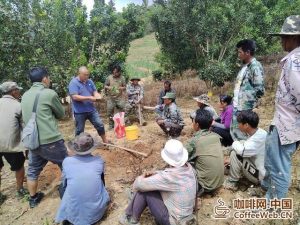
 Cangyuan: Yanshuai Town Delivers ‘Tech Nourishment’ to Coffee Fields
- 9.9-Yuan Coffee but a 50,000-Yuan Bike: Jiang Nanchun Fears Not Price but Lack of Soul
- After Just 19 Months in Coffee, He Was Called to Save Heineken
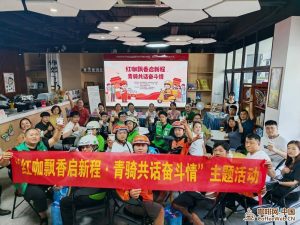
 Guangzhou Haizhu Uses Coffee to Engage Delivery Riders in Party Education
- Laishan Police Safeguard the Coffee Festival with Dedicated Patrols


 Liaoning ICP Security No. 21122402000217