
By Wu Yujia, Cover News
On October 21, Starbucks China announced that in its new fiscal year 2027 it will add an investment of over RMB 300 million, focused on refreshing the store service experience. The investment will go toward adding peak-hour and reserve-bar service staff, upgrading digital systems and core equipment, refreshing facilities at roughly 1,000 stores, and further enhancing the coffee experience and customer connection. At the same time, Starbucks China released a “Third Place Initiative” on sharing store space and maintaining atmosphere, inviting customers to co-create a pleasant third-place experience. In addition, starting October 22, all Starbucks stores in China will implement a “seat with purchase” policy: stores will display reminder signs, but pregnant women, delivery riders, and others may enter without purchase; passers-by seeking shelter from rain and on-duty security guards from nearby areas may also enter to rest and refill hot water free of charge. This series of moves marks Starbucks China’s customer-centric start to the new fiscal year—further strengthening its coffee leadership, partner service, and differentiated third-place experience, extending the “thousand stores, thousand faces” strategy into daily service.
The money is spent where it is closest to the consumer: supplementing peak-hour store staffing, iterating on smart equipment, renovating the hardware of over a thousand stores, and upgrading the coffee experience. At the same time, after listening to the genuine voices of countless customers and frontline partners, Starbucks China released the “Third Place Initiative,” inviting everyone who walks in to help safeguard this relaxed urban corner.
Instead of chasing only the look of store formats, this time “thousand stores, thousand faces” steps into every daily order, every seat taken, and every cup of coffee.
Liu Wenjuan, CEO of Starbucks China, put it plainly: “‘Thousand stores, thousand faces’ is not just about different stores and different products—it is hidden in the real feeling of every customer’s visit. In the new fiscal year, we are sinking resources to the frontline of the stores, so partners can settle down and brew every cup of coffee well and receive every guest well.”
Where does the real RMB 300 million+ go, and what do consumers get?
During morning peaks, lunch breaks, and weekend crowds, there are more partners in the store. In front of the reserve bars, black-apron coffee masters no longer bury their heads making drinks; they have ample time to sit down with guests, talk about where the beans come from, how the flavors differ, and recommend a suitable brewing method based on taste.
Nearly half of the stores nationwide will add peak-hour staff. The priority coverage targets are transit hubs, office towers, and popular scenic-area stores where crowds pack in. Once fully rolled out, ordinary stores will gain an extra 200,000 hours of peak service per month; reserve stores will add 70,000 hours of bar service per month—together over 270,000 additional service hours each month.
For ordinary customers, it means no long waits at peak times and patient answers to coffee questions, instead of seeing staff too busy to look up.
Starting January 2027, a new smart mobile POS will roll out in batches, with over 70 new functions added. During peaks, partners won’t be tied to the cash register; they can walk up to you with the device to take orders and explain products nearby. It reduces queue clustering and quietly remembers your taste preferences, making every order more personalized.
Hardware gets an update too. About 1,000 stores will be renovated and upgraded—refreshed bars, adjusted seating and lighting make the environment more comfortable; hundreds of stores will replace core espresso machines for more consistent cup quality; more stores will install new roasting equipment, bringing warm, freshly baked pastries closer to everyday life. All renovations will be completed progressively during fiscal year 2027.
Refining the coffee, tucking small warmth into daily life
Coffee is always the core of the Starbucks experience.
Walking into any Starbucks from now on, you’ll have more choice when ordering. All stores uniformly stock three bean options—classic espresso roast, blonde roast, and decaf. Beyond the reserve series, most core beverages let you freely choose your bean. Whether you love richness, prefer mildness, or need lower caffeine, there is a cup that fits.
Around “taking care of every cup,” two warm services also launch. If a drink doesn’t satisfy, you can simply ask a partner to remake it free of charge; if you accidentally ordered at the wrong pickup store, no need to run around—show your order and the nearest store will remake it for you.
Since October, small hand-drawn smile stickers have become popular across all stores—sketched by partners, stuck on cups. A tiny doodle, no grand ceremony, yet adding an unexpected tenderness to an ordinary coffee.
The reporter’s on-site experience found that if a customer is dissatisfied with a drink, the partner will remake it free of charge based on feedback; if a customer orders at the wrong pickup store, they only need to explain to the local partner and show a valid order, and the partner will proactively assist and remake the drink per the original order.
The “Third Place Initiative” is a soft, co-built effort—warm, not one-size-fits-all
While store staffing, equipment, and the coffee experience undergo sweeping upgrades, Starbucks—drawing on long-collected feedback from customers and frontline partners—formally launched the “Third Place Initiative.”
This is not a hard rule but a gentle invitation to everyone, with four points: leave space for each other—seats are for in-store customers, used reasonably and shared; keep quiet for each other—speak softly, use headphones, mind the volume of audiovisual devices; keep it fresh for each other—do not bring strongly scented outside food into stores; show respect for each other—be polite and friendly, respect differences, and respect partners’ normal service and communication.
Starbucks specifically noted that the initiative guides co-construction and absolutely avoids one-size-fits-all enforcement. The brand has prepared complete, uniform service guidelines for all store partners. In special cases such as pregnant women, those with limited mobility, or temporary shelter from weather, stores will still offer warm acceptance, balancing public order with human warmth. It is not a one-sided constraint on customers, but a combination of large-scale upgrades to store software and hardware service alongside an invitation to jointly safeguard the shared urban resting space.
At a downtown store, we randomly interviewed several customers who shared their honest feelings. Ms. Chen, a white-collar worker in a nearby office tower who buys coffee almost daily, said: “Seats are especially tight at noon on workdays. I quite support everyone being considerate—watch videos with headphones on, no external audio; try not to bring strongly scented outside food, so everyone can have a comfortable environment. After all, seats are mainly for paying customers, and I completely understand that.”
College student Xiao Zhou also reflected: “I’ve seen people occupy large tables for a whole day before, sitting from morning to night while paying customers couldn’t find a seat. I hope everyone can put themselves in others’ shoes, maintain this space together, so we can truly enjoy the relaxation the third place brings.”
Retired citizen Auntie Zhang often stops in to rest. She said: “Public spaces are about mutual respect. Don’t talk loudly, mind those around you. The store is willing to set aside space for everyone to rest, and we should cherish this environment.”
Expert reading: a deep re-examination of the ‘third place’ core value, seeking dynamic balance between human warmth and business logic
Cui Lili, deputy director of the Digital Economy Research Institute at Shanghai University of Finance and Economics, told the reporter: “Starbucks’s optimization of the in-store seating experience is essentially a typical practice of domestic consumer experience entering an era of refinement. In offline commercial spaces, the demands of different groups are complex; how to draw service boundaries and balance multiple interests is a real question the entire physical service industry must face.”
In her view, when store service resources are limited, establishing a reasonable service priority is precisely the key to group fairness. “For special situations such as the elderly and vulnerable groups or emergency help, we should rightly release social goodwill and offer inclusive care—this belongs to the humanistic care of social ethics. But returning to the commercial scenario, stores’ limited seats, staffing, and operations resources should inherently prioritize paying in-store customers. The two can proceed in parallel; it is the unity of human warmth and business logic.”
“Standardized management is by no means making the third place cold and rigid, but safeguarding the fairness it should inherently possess. The ‘consumption priority, flexible inclusion’ approach is well worth referencing for offline formats.” Cui noted that when store resources are ample, they can openly accommodate the resting needs of the urban public, but they must also resist borderless occupation of merchants’ limited resources. “A good offline consumer experience relies on merchants’ continuous investment and, more, on the two-way commitment and joint safeguarding of consumers and the brand.”
Wang Peng, an associate researcher at the Beijing Academy of Social Sciences, also shared his observations: “Many mistakenly think the brand is tightening service; in fact, this is a deep re-sorting and reconstruction of the ‘third place’ core value.”
“A physical store’s space, utilities, and labor operations are all real operating costs. When boundaryless goodwill is over-consumed, the experience of the vast majority of paying customers is diluted.” Wang evaluated that Starbucks chose a soft initiative over a hard ban—safeguarding paying customers’ seating rights while reserving a goodwill channel for special groups, truly achieving coexistence of commercial operating order and urban human warmth.
In his eyes, standardized management brings fairer and more efficient circulation of spatial resources. “What it changes is the phenomenon of a few people indefinitely monopolizing public seats, so that more ordinary people who genuinely need coffee socializing or brief relaxation can equally enjoy the value of the third place.”
On the industry’s future direction, Wang Peng believes that across the entire coffee and new-tea track, there may not be an industry-wide copycat trend, but this matter brings profound inspiration. “Offline physical leisure spaces are bidding farewell to the old model of ‘fully borderless opening’ and moving toward a new stage of tiered operation. Pickup stores emphasize operational efficiency; core commercial-district stores prioritize paying customers’ rights; community stores retain stronger public openness. Seeking dynamic balance among commercial sustainability, consumer-rights protection, and urban human warmth—that is the future trend of offline leisure formats.”
Reporter’s notes: fighting “fast” with “good”—the third place is a two-way beautiful commitment
Nowadays many brands chase expansion speed, while Starbucks chose in its new fiscal year to settle down and polish real experiences.
This refresh did not hype concepts, but put real money into the frontline—adding staff, replacing equipment, renovating stores, enriching coffee choices, and improving customer safeguards; at the same time issuing an initiative inviting consumers to co-build the environment. It is not a one-sided demand on customers, but thickening the service while inviting everyone to jointly safeguard the space.
Giving more time back to store partners, putting more choice in customers’ hands, and bringing a more comfortable space to surrounding communities.
The third place has never been just tables, chairs, lighting, and air conditioning. It is a cup of hot coffee, the gentle coexistence between people, a corner of the city where one can catch a breath. The brand polishes service inward and invites customers outward to be considerate of each other, fighting “fast” with “good,” returning to the authentic need of a cup of coffee and a comfortable corner. This upgrade, balancing commerce and humanity, is worthy of recognition.
Reprint Notice and Disclaimer
- This article was compiled and edited by coffeeyo.com and reprinted from NetEase, “RMB 300M to Upgrade Frontline Service, Third Place Initiative Released: Starbucks Brings ‘Thousand Stores, Thousand Faces’ to Every Visit.” The original copyright belongs to NetEase and the original author. This reprint is for coffee-industry information sharing only and does not represent this site’s position; all data and views are subject to the original. We thank the original author for their creation and sharing.
- Original: NetEase, “RMB 300M to Upgrade Frontline Service, Third Place Initiative Released: Starbucks Brings ‘Thousand Stores, Thousand Faces’ to Every Visit”
- For matters involving authorization, attribution, copyright, or other issues, please contact us promptly; we will verify and cooperate in handling at the first opportunity. We also welcome coffee enterprises and industry media to exchange contributions with us.
- Contact coffeeyo.com: Tel 400-0000-641 (+86-18288016826) | Email 405854472@qq.com | Address: Jinghong City, Xishuangbanna, Yunnan Province
Related Reading
- Bean in Short Supply: A Taiwan Youth on Yunnan Coffee as a Shared Cross-Strait Stage
- Five Years, Eight Championships: Lincang Coffee Joins the World Stage
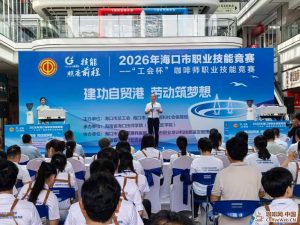
 Haikou ‘Union Cup’ Barista Skills Competition Kicks Off to Empower the Service Sector
 Yunnan Specialty Coffee Beans Deliver an ‘Excellent’ Report: Path to Value Leap
- Cross-Strait Tides Rise: A Taiwan Youth Farms Coffee in Yunnan, a Cup Bridging Both Sides
 2026 2nd Yunnan Treasure Coffee Green Bean Competition (Cup of Excellence Pilot) Concludes



 Liaoning ICP Security No. 21122402000217