
At a Glance (China Coffee Network): Cotti Coffee—the bargain chain that flooded Chinese offices with ¥9.9 lattes—has taken its business to the home turf of Starbucks. Since its first Paris store opened in January 2026, it has grown to 29 outlets in just seven months, reaching Lyon, Bordeaux and Marseille. A Chinese student’s part-time vlog recently gave domestic netizens a glimpse of the brand’s surreal day-to-day life in France.
French streets have been far from peaceful lately, but that was hardly reason for Cotti to close shop and take a holiday. The student’s way of “slacking off” was unusually creative—filming the riots, the looting and the pepper spray as a peculiar slice of street life. Having finished his shift as a “war correspondent,” he did not forget his actual job. “Tired and thirsty after all that smashing and looting—isn’t a cup of coffee a great business opportunity?” The bigger the waves, the pricier the fish, as the saying goes, so they genuinely took their coffee out to do street promotion. Back in the store, they also offered drinking water and tap water to passers-by caught up in the unrest. A chain that was only meant to sell coffee had, on the spot, taken on a side job as a “street supply station.”
On October 17, roughly 550,000 people joined mass protests across France; shops in parts of Paris were smashed and looted, and in Limoges, in central France, a 143-year-old city hall was burned so badly its roof collapsed. This rather magical-realist vlog earned Cotti the nickname of Paris’s “Peace Hotel,” with some joking it was a “foreign concession” on the French street and others sighing that “while the two sides fight, the baristas are spared.” The brand that kept Chinese office workers alive with ¥9.9 drinks had, unexpectedly, found new business-development talents in Paris—still with that familiar grind-flavor: no matter how chaotic the street, the business cannot wait, and not a single passing potential customer can be let go.
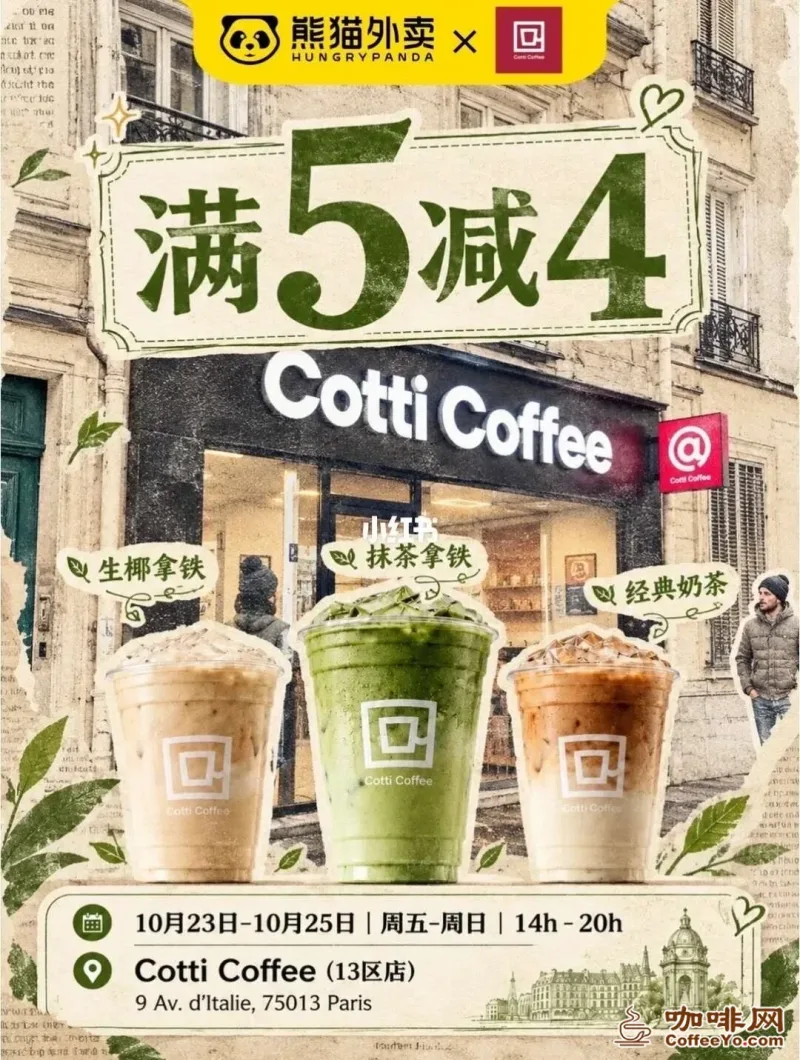
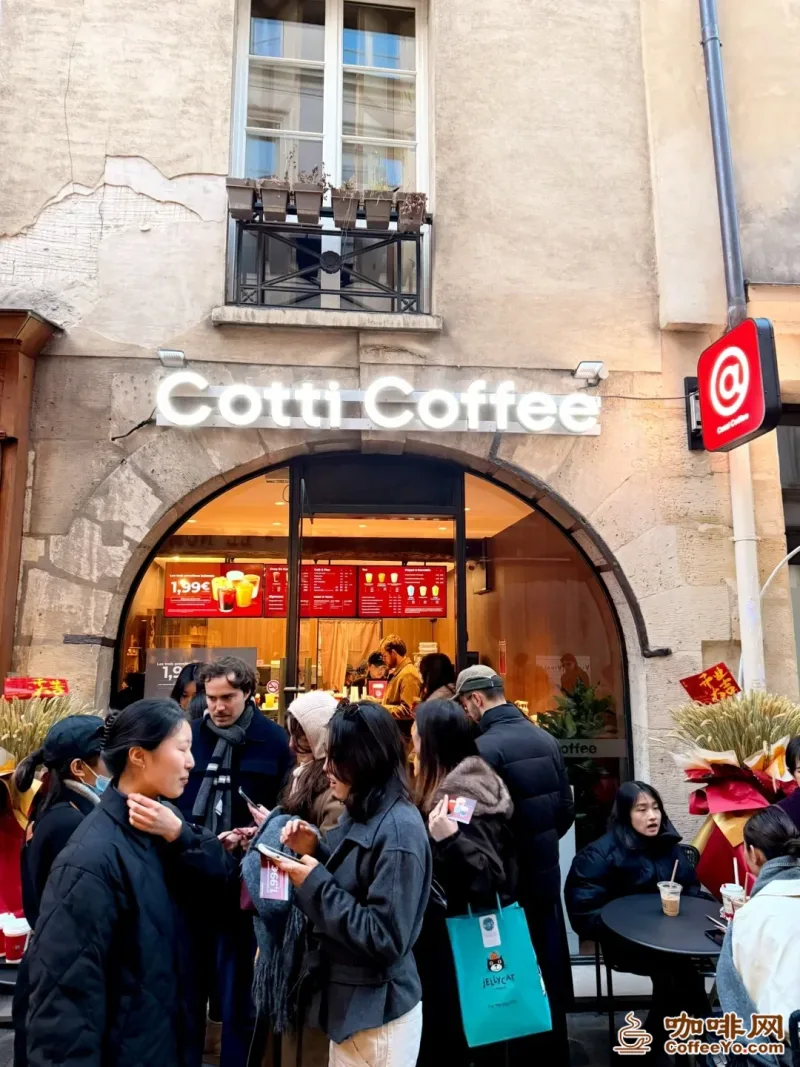
The vlog also revealed something new to many netizens: France actually has Cotti? And not just one—quite a few. According to France’s Le Parisien, Cotti opened its first three Paris stores in January 2026, and within seven months the French store count reached 29, expanding beyond Paris into Lyon, Bordeaux and Marseille.
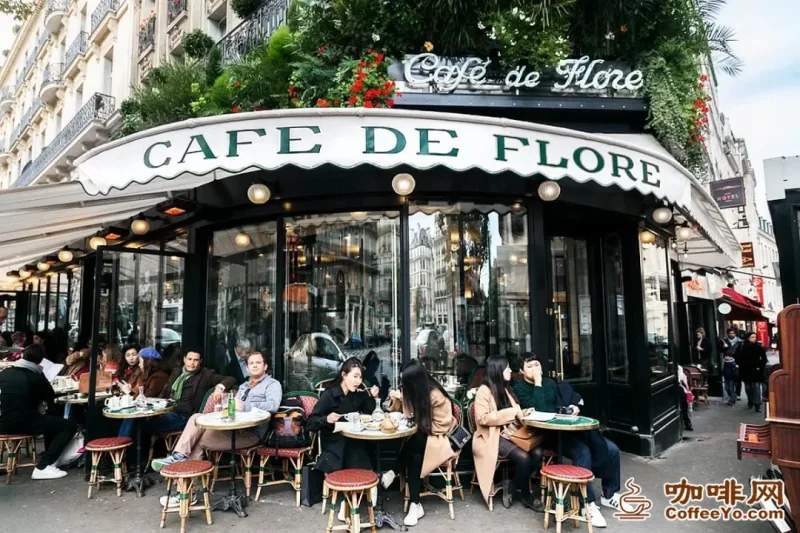
But how did a brand reeking of overtime culture barge into artsy Paris? In Paris, coffee is savored for more than taste—it is about mood and romance. The cafe is like a Parisian’s living room: order an espresso, sit in the open air, soak up the sun, chat with friends, watch the passers-by, even strike up a conversation with the stranger at the next table—all legitimate parts of having coffee. From the Procope, opened in 1686, to the Café de Flore where Sartre and Beauvoir debated philosophy, Parisian cafes have witnessed the clash of literature and philosophy and hosted ordinary people’s daily leisure. Parisians love their cafe culture so deeply that some have even pushed to have it listed as intangible cultural heritage.
But compared with the “existentialism” debated in Parisian cafes, Cotti clearly cares more about workers’ “survivalism.” It has little time to discuss philosophy or romance with the French. This chain, nicknamed “livestock feed” by Chinese workers, has been the opposite of refined and elegant since birth. In 2023, Cotti fired the first shot of the ¥9.9 coffee price war and once dropped drink prices to ¥8.8, forcing neighbor Luckin to come up with its own “happy-customer price-cut principle.” To let workers drink cheap coffee anytime, Cotti opened stores with almost no vanity to protect. In 2024 it launched the COTTI Express store-in-store model, squeezing a full coffee setup into a few square meters. Convenience stores, bakeries and pharmacies could all host Cotti—one netizen even found its counter inside a grilled-gluten shop. Following the navigation to pick up a latte, you might bump straight into a grilled-gluten shop and wonder if you took a wrong turn.

While others studied cafe ambience, Cotti had already started mixing “peanuts, drinks, mineral water—your coffee is ready” into one sale. So, can the brand that won over Chinese workers with low prices and convenience now make the French pay up obediently, in a city full of cafes? Cotti’s first move was still its specialty—the price war. Compared with domestic workers, Paris consumers got only modest results. According to French food-service media Snacking.fr, a regular Cotti espresso in France costs €2, a medium Orange C Americano €4.7, and some large specialty drinks top €5.
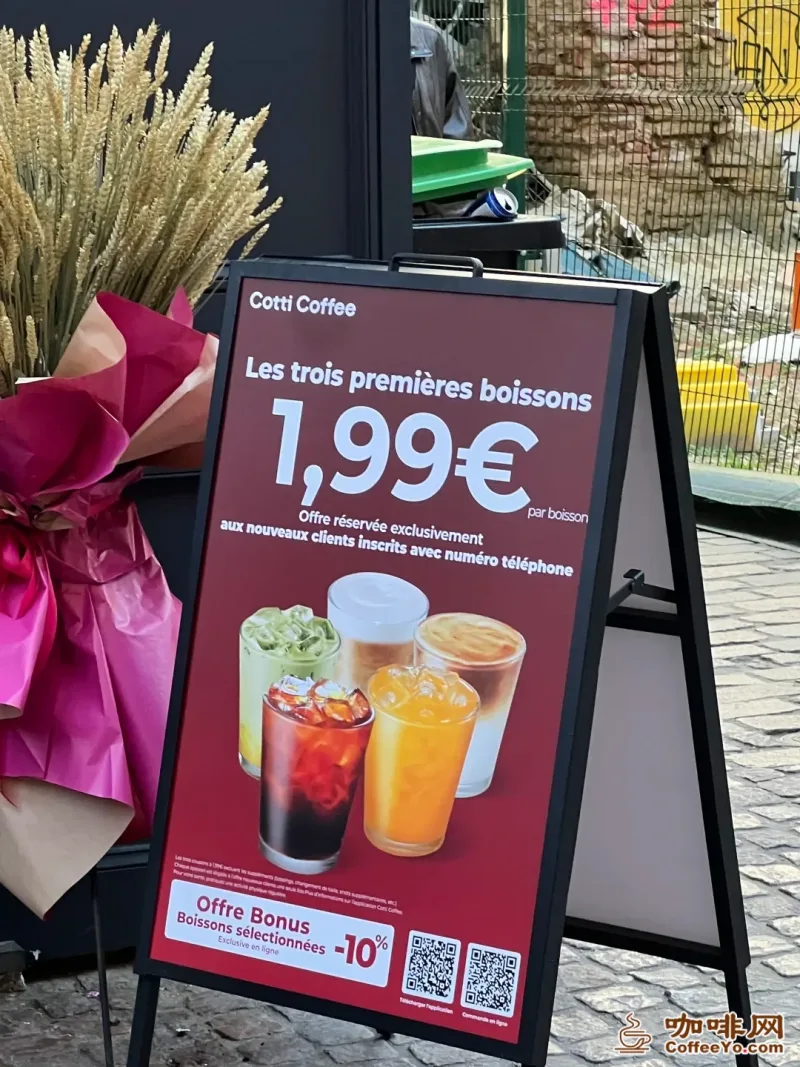
The overseas prices left domestic workers stunned: the ¥10 camellia latte that becomes a €5 “light-luxury” drink abroad? The former office buddy had morphed into a near-Starbucks price. But for consumers used to local prices, it still looks fairly reasonable—”the basics around €3 feel cheap.” Chinese living in Paris say a large coconut latte costs just €3.9, quite a bargain against the €5–6 cappuccinos at local cafes. Better quality than a vending machine, cheaper than the average local cafe—Cotti’s “Tian Ji horse-racing” strategy won over plenty of willing buyers. But when it comes to coupon-clipping, French consumers probably haven’t seen Cotti’s full strength. During promotions, Cotti dropped espresso to €0.99, with Orange C Americano and jasmine orange tea as low as €1.99, and coconut latte promo priced at just €2.19.
In a Google review of a Cotti in Paris’s Le Marais, a customer shocked by the €0.99 espresso warned other Paris cafes to watch out. The familiar domestic “claim a coupon, then drink” routine also crossed to France: download the European Cotti Coffee app, register as a new user, and the first three designated drinks cost just €1.99. Order, adjust sweetness and pay on the phone, then pick up in store—no queuing to order. And that is another Cotti advantage: making coffee-drinking more time-efficient for Parisians. For French consumers who just want a cup between class, commute or shopping, convenience is itself an attraction.
In September 2026, a reporter from CommonWealth Magazine visited a Cotti store in Paris’s 5th arrondissement and found only about 10 seats, with two Chinese employees greeting customers in French and Chinese. Customers could order on the spot or scan a code; staff scanned the order QR in front of the device and the machine began auto-brewing. A purchased iced latte was ready in under a minute. Most customers left right after picking up, and even if they sat, they did not linger. This efficiency, taken for granted at home, felt like a long-lost familiarity to overseas Chinese. One netizen exploring the Marais found Cotti, though small with steady foot traffic, quick on output and clear on flow—perfect for sipping while strolling. Another was moved to tears by the app’s progress bar and estimated pickup time, feeling “transported back to China in a second,” sighing: “It’s been so long since I experienced this 21st-century efficiency.”
Still, no matter how cheap the price or how fast the output, a cafe ultimately lives or dies by taste. The folks back home were not too worried: “Cotti’s sweets taste so bad, foreigners will probably like them.” Some even asked the soul-searching question: “Cotti’s coffee is so awful it actually opened in France! Are the beans abroad better than ours?” Whether the beans got special treatment is unclear, but the drink recipes Chinese workers honed through years of cut-throat competition have gone overseas with Cotti, surely showing the French a thing or two about China’s “flavor imagination.” Outside, the street is in chaos; inside, the barista is seriously introducing the “Super Pumpkin Oat Milk.” French people march until tired, then step into Cotti to reward themselves with a Super Pumpkin—the French have their own “Cotti-aurant.”
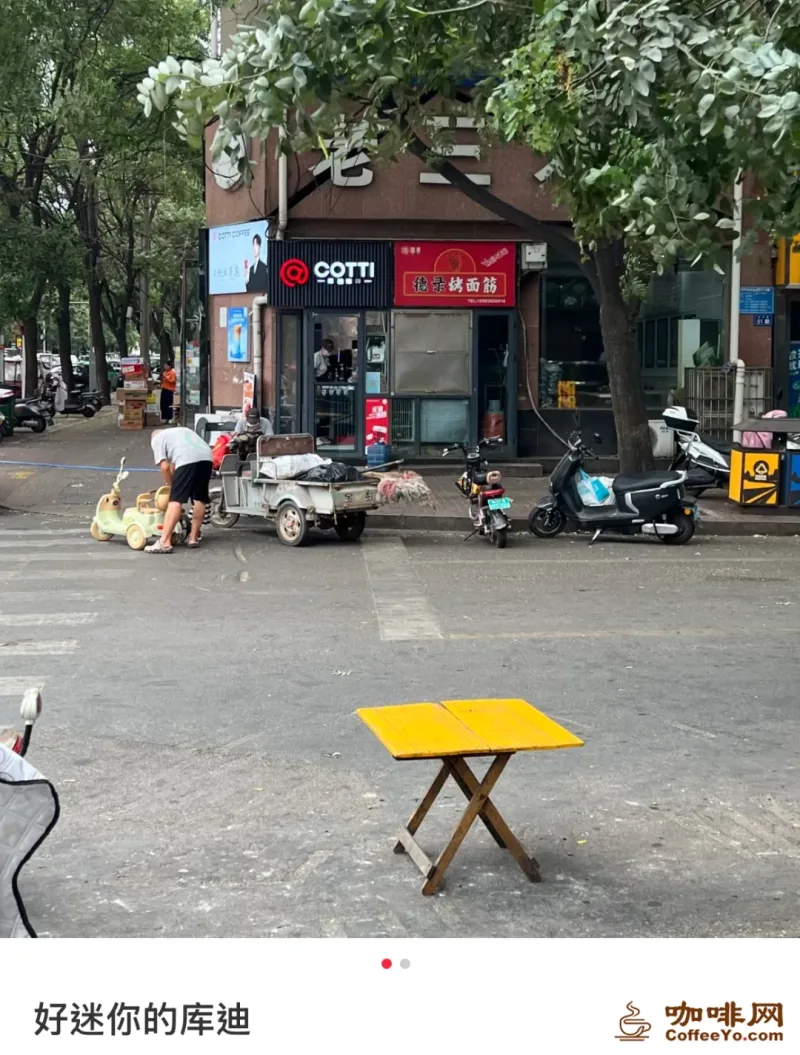
The French coffee world is not only about open-air seats and existentialism. For sun and chat, street cafes remain a fine choice; but when rushing to work or school and wanting to spend a few euros on a coffee, Cotti can do that business too. Yet Paris’s coffee scene is not so easy to crack. €0.99 can win a willing coupon-clipper, but whether they still pay once the coupons run out is the real existential question Cotti must ponder after arriving in the city of philosophy. Handing out coupons and fighting price wars in Paris is, for Cotti, just the same old business in a new place.
As early as 2023, Cotti opened its first overseas store in Seoul, then went to Indonesia, Thailand, Malaysia and beyond. By the time it landed in France in 2026, the brand—less than four years old—had reached a global store count of about 18,000. Fresh from a relentless domestic duel with Luckin, it took its business onto Starbucks’ overseas turf; Cotti clearly is not satisfied with merely feeding Chinese workers their “livestock feed.” But replicating the ¥9.9 model worldwide takes more than coupons. Cotti’s fast domestic expansion leans heavily on “joint operations”: partners put up the money and find the site, Cotti supplies brand, equipment, ingredients and operational support, then shares the proceeds by agreement. Add the tiny stores that cram a coffee machine into every corner, and the space and investment needed to open are squeezed as much as possible.
With stores opening fast, a steady bean supply behind them is essential. In 2024, Cotti’s global supply-chain base in Anhui went live; in 2025, phase-two roasting came online, with annual green-bean processing capacity of 75,000 tons. Bean roasting, ingredient processing and packaging logistics are all scaling up—the more stores, the more stable back-end supply is required. Back when it opened in Malaysia, the local operations head told China Newsweek that, except for some dairy products inconvenient to ship cross-border, other ingredients and equipment mainly ship from China. In France, Cotti did not forget its “thrift playbook”: according to Snacking.fr, by August 2026 Cotti had opened three seat-free pickup-only stores in Paris and surroundings. Perhaps Cotti saw no need to prepare a whole living room for sun and philosophy just for a takeaway cup. But while decor can be minimal, customer demands do not discount themselves. Complaints on Xiaohongshu about stores lacking air conditioning drew wide sympathy; some recalled entering on the hottest summer days to a stuffiness that made them suspect “the merchant is retaliating against staff, and staff against customers.”
Cheap enough prices do make people overlook the environment a bit. But no matter how cheap, you cannot expect customers to treat every inconvenience as part of the value. Besides, Paris rent and labor costs are waiting for Cotti to hand in its homework. A €0.99 coffee can attract orders, but how to make that cup sustain a store is what Cotti really must worry about next. Of course, Cotti is far from the only Chinese brand busy opening stores overseas. In Paris it is still a novel foreign brand; but in Southeast Asia, Mixue Ice Cream & Tea has long blended into local young people’s daily lives. A Southern Daily reporter visiting Bangkok found two Mixue stores crammed into a single sub-100-meter pedestrian street in Siam Square. The “Snow King” not only sells lemonade to Chinese tourists but also competes with local milk-tea shops for customers. A Hydrogen Business editor ran into a Mixue in Vang Vieng, Laos; at home, everyone knows Mixue’s tier, but in Vang Vieng this bright, spacious budget milk-tea shop looks rather “upscale” on the main street.
Looking back at that Paris part-time vlog, what netizens found most surreal may not be the contrast between street clashes and a normally operating cafe. On one side, the street’s chaos; on the other, baristas busy making coffee and doing promotions outside, not forgetting to hand a cup of water to affected passers-by. In this somewhat absurd picture, people saw a familiar state of life: no matter how lively the outside world, ordinary people still have their own work to do and their own lives to live. Earn when you should, enjoy when you should. The world has its turmoil; those getting by have their own composure.
Reprint Notice & Disclaimer
- This article is compiled and edited by China Coffee Network (coffeeyo.com) and reprinted from Tencent News: “《库迪咖啡出海法国:平价中式咖啡开进巴黎街头》”.
- Original: Tencent News — Cotti Coffee Goes Global to France: Affordable Chinese-Style Coffee Arrives on the Streets of Paris
- The copyright of the original article belongs to Tencent News and the original author. This reprint is for industry information sharing only and does not represent the views of this site; all data and opinions follow the original. We thank the original author for the creation and sharing.
- If you have questions about content authorization, attribution, copyright or other matters, please contact us promptly and we will verify and cooperate as soon as possible. China Coffee Network (coffeeyo.com) contact: Tel 400-0000-641 (+86-18288016826) | Email 405854472@qq.com | Address: Jinghong City, Xishuangbanna, Yunnan Province
Related Reading
- Bean in Short Supply: A Taiwan Youth on Yunnan Coffee as a Shared Cross-Strait Stage
- Five Years, Eight Championships: Lincang Coffee Joins the World Stage
 Haikou ‘Union Cup’ Barista Skills Competition Kicks Off to Empower the Service Sector
 Yunnan Specialty Coffee Beans Deliver an ‘Excellent’ Report: Path to Value Leap
- Cross-Strait Tides Rise: A Taiwan Youth Farms Coffee in Yunnan, a Cup Bridging Both Sides
 2026 2nd Yunnan Treasure Coffee Green Bean Competition (Cup of Excellence Pilot) Concludes




 Liaoning ICP Security No. 21122402000217