
At a Glance (China Coffee Network): Guiyang Net / Guiyang News: Recently, the 2026 Guiyang International Coffee Expo was held at the Guiyang International Convention and Exhibition Center. As the first professional …
Guiyang Net / Guiyang News: Recently, the 2026 Guiyang International Coffee Expo was held at the Guiyang International Convention and Exhibition Center. As the first professional expo covering the full coffee industry chain ever held in Guiyang, it spanned over 10,000 square meters, gathering more than 200 domestic and international brands and over 5,000 professional buyers, covering the entire chain of coffee raw materials, roasting and processing, equipment and utensils, brand operations, and terminal consumption, building a new industry platform linking global producing regions with the southwestern consumer market for Guiyang. On the first day, professional buyers exceeded 3,000 visits; in front of the on-site ticket checkpoints, merchants dragging suitcases and coffee enthusiasts with cameras on their backs lined up in long queues, with popularity far exceeding most exhibitors’ expectations.
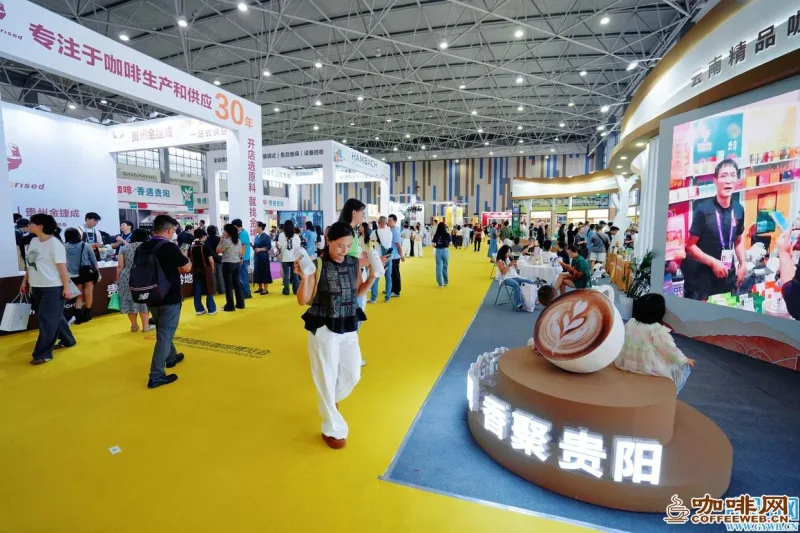
Guiyang itself produces no coffee beans, yet with a market of over 3,000 coffee business entities, it has become one of the cities with the highest café density in the country. From convenience coffee shops in old-town alleys to specialty pour-over flagship stores in the Guanshanhu business district, coffee has long been integrated into citizens’ daily consumption; “traveling to a city for a cup of coffee” has gradually become a new choice for young people to feel Guiyang’s urban vitality. The rise of new “coffee + cultural tourism” formats such as cave coffee and waterfall coffee has further strengthened Guiyang’s industry label as the “Coffee Champion City,” forming a strong appeal to global coffee industry resources.
“We chose to hold the expo in Guiyang precisely because we value its real, tangible consumption heat,” said the person in charge of this year’s expo organizer. Yunnan, as China’s core main coffee-producing region, forms a natural complement with Guiyang’s vigorous consumer market; the expo is not only a vehicle for product display and technical exchange, but also a key link connecting producing regions with terminals and integrating cultural tourism with coffee. The visitor data on opening day confirmed this judgment: among professional buyers present, about 60% were from Guiyang itself and about 40% from surrounding provinces. Many out-of-town exhibitors admitted that Guiyang’s radiating power covers not only the locality but also reaches neighboring regions such as southern Sichuan, western Chongqing, and western Hunan, making it the core hub of the southwestern coffee market.
Many out-of-town enterprises exhibiting in Guiyang for the first time gained beyond-expectations results. The person in charge of a coffee-machine brand from Foshan explained that they had only planned to test the Guiyang market, yet within one morning of the opening they connected with dozens of local café operators; with Guiyang’s coffee stores iterating quickly and showing strong demand for equipment upgrades, the brand will subsequently lay out offline sales and service outlets tailored to local market needs.
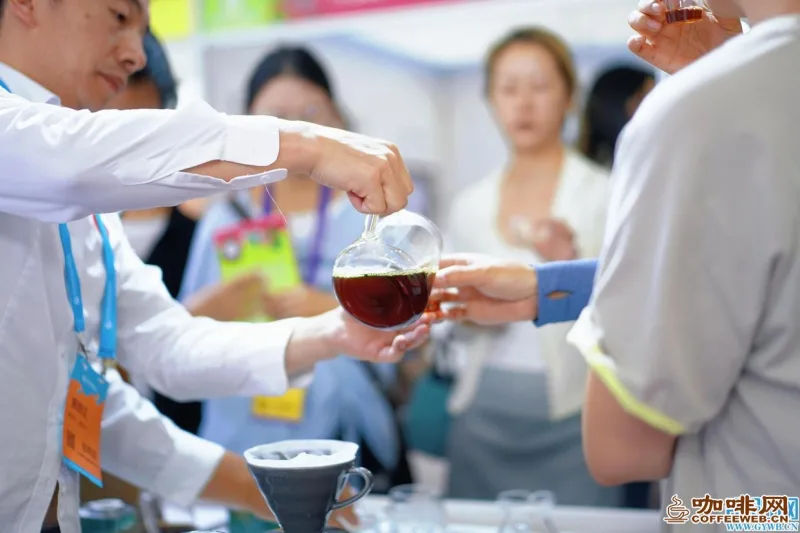
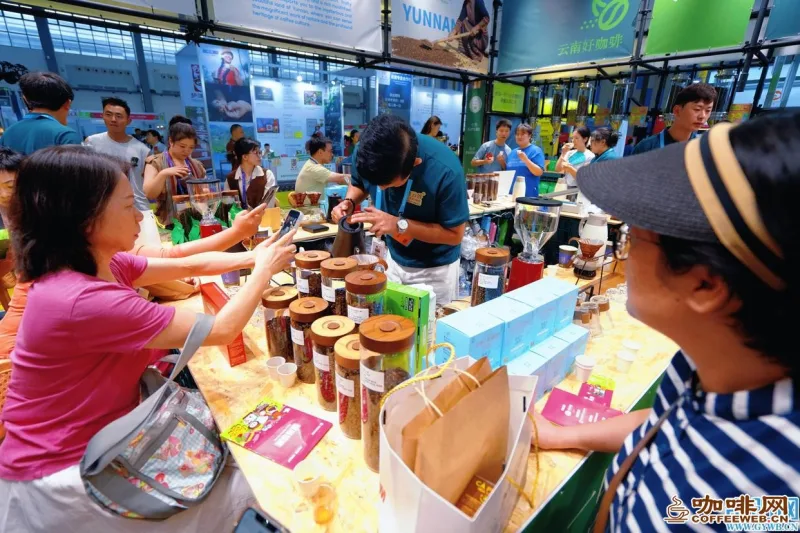
The most distinctive feature of this expo was bringing coffee-industry-chain resources that had been scattered across the country directly to the doorstep of Guiyang’s practitioners. In the international exhibition zone, specialty coffee beans from core producing regions such as Ethiopia, Vietnam, and Colombia appeared together; local café owners no longer needed to source through coastal traders, but could complete cupping comparisons and directly connect with upstream supply on-site. The full range of coffee equipment brought by the Foshan industry group let practitioners trial, negotiate, and procure through the entire process at home without making a special trip to producing regions. Core producing regions of Yunnan such as Lincang, Pu’er, Nujiang, Baoshan, and Dali appeared collectively as exhibition groups, bringing not only distinctive products such as champion-estate beans and high-altitude specialty coffee, but also hoping to use Guiyang’s coffee-tourism integration experience to give back to the upgrading of their local coffee industries.
Relying on this coffee expo, Guiyang’s coffee industry is advancing from past prosperity in terminal consumption toward coordinated full-chain development. At the concurrently held “Guizhou Rhyme, Coffee Aroma · Dialoguing on the Future” coffee industry exchange, six cross-regional industry cooperations were reached on-site, including the “Guiyang ‘Cultural Tourism + Coffee’ Supply-Chain System Construction Project” and the “Two-Place Coffee Industry Collaborative Co-Building and Cultural Exchange Development Project,” promoting the settlement of more industry resources in Guiyang.
From a “city that drinks coffee” to a “city that does coffee business,” Guiyang is converting the consumption heat accumulated by its 3,000 coffee business entities into tangible industry growth, gradually building a highly vibrant coffee-industry cluster highland in southwest China.
Reporters Ran Tinglin and Liu Yunsong
Reprint Notice & Disclaimer
- This article has been edited and compiled by China Coffee Network. The information and images therein come from public sources and the copyright belongs to the original author. This reprint is intended solely for information sharing within the coffee industry and does not represent the views of this website; all data and opinions are subject to the original article. Our thanks to the original author for creating and sharing it.
- For matters concerning content licensing, attribution, copyright or otherwise, please contact us promptly and we will verify and cooperate in handling them as soon as possible. We also welcome coffee origins, brands and industry media to exchange ideas and contribute articles.
- Contact China Coffee Network: Tel 400-0000-641 (+86-18288016826) | Email 405854472@qq.com | Address: Jinghong, Xishuangbanna, Yunnan Province / Tieling, Liaoning Province
Related Reading
- Bean in Short Supply: A Taiwan Youth on Yunnan Coffee as a Shared Cross-Strait Stage
- Five Years, Eight Championships: Lincang Coffee Joins the World Stage
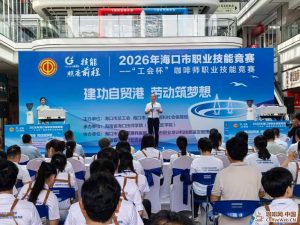
 Haikou ‘Union Cup’ Barista Skills Competition Kicks Off to Empower the Service Sector
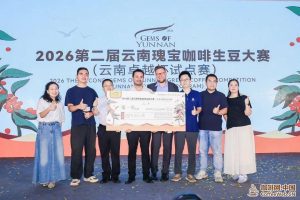
 Yunnan Specialty Coffee Beans Deliver an ‘Excellent’ Report: Path to Value Leap
- Cross-Strait Tides Rise: A Taiwan Youth Farms Coffee in Yunnan, a Cup Bridging Both Sides
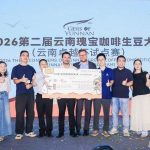 2026 2nd Yunnan Treasure Coffee Green Bean Competition (Cup of Excellence Pilot) Concludes


 Liaoning ICP Security No. 21122402000217