
At a Glance (China Coffee Network): KFC’s coffee brand Kenny Coffee (KenYue) debuted its mascot “Ken Bunny” with a tart-themed pop-up, the “Ken Bunny Tart Lab,” at Hangzhou’s Lakeside IN77. The pop-up rolled out 11 creative egg tarts—fusing local Hangzhou flavors such as osmanthus lotus root and dried radish into Western pastry—showcasing how the brand pushes egg tarts from flavor innovation toward form and scene innovation.
In late June, along the West Lake in Hangzhou during the plum-rain season, the crowds at Lakeside IN77 were denser than usual. A pink rabbit wearing a black bow tie rested obediently atop a pink house named the “Ken Bunny Tart Lab,” catching the attention of passers-by. As KFC’s brand ambassador, the sudden appearance of star Bai Jingting drew a wave of onlookers.
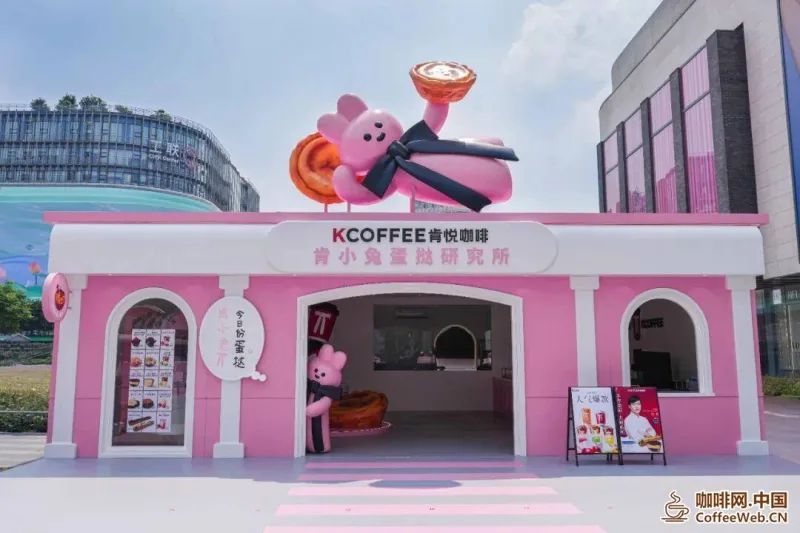
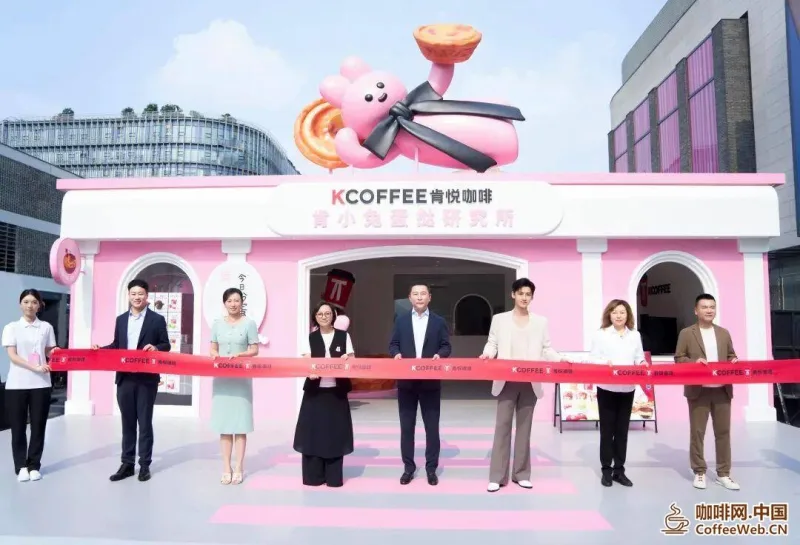
This was a creative pop-up by Kenny Coffee, the coffee brand under KFC, in Hangzhou, and also the debut of Kenny Coffee’s IP mascot “Ken Bunny.” As a rising coffee brand built on creativity, Kenny Coffee proposed from its inception the slogan “every cup is a creative master,” building an innovation system spanning product R&D, store operations, and offline marketing.
Kenny Coffee, which keeps escalating its crossover moves, has also injected new vitality into the brand through co-branding with various popular IPs, generating strong resonance among young consumers. At the same time, Kenny Coffee plans fun activities around diverse themes such as culture, travel, festivals, and pets, deepening the connection between brand and consumer.
The landing of this creative pop-up is another concentrated showcase of the brand’s innovative DNA. Built as an immersive trendy scene that precisely meets young consumers’ socializing and consumption needs, the store creates a one-stop trendy space for checking in, tasting, and interacting. The whole store adopts a soft, eye-catching pink theme; Kenny Coffee’s new brand IP “Ken Bunny” makes a stunning debut, with the tart-shaped storefront eye-catching and bright, becoming a landmark visual focus on Hangzhou’s lakeside pedestrian street and carrying inherent viral-check-in appeal.
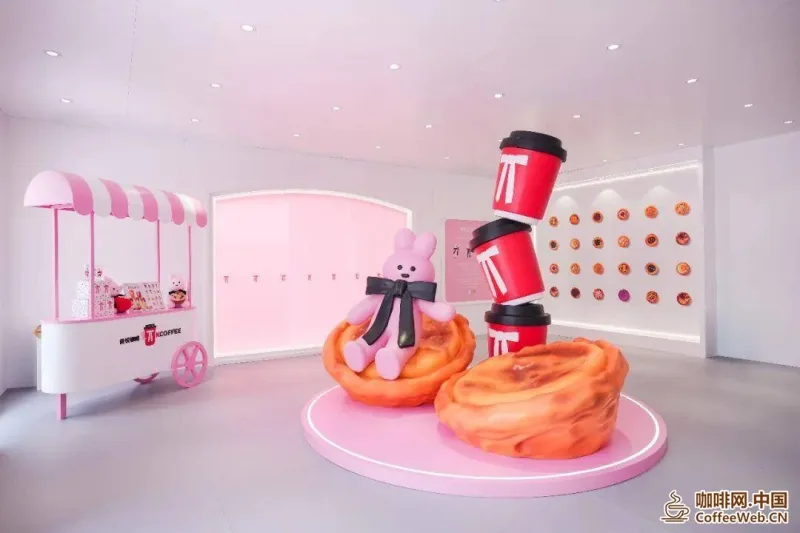
The pop-up launched 11 exclusive creative limited new products, with rich and diverse innovative flavors that fully cater to young people’s varied taste preferences and trendy consumption needs, unlocking a multi-dimensional flavor experience.
At the same time, Kenny Coffee deeply fits the local culture, creatively launching two Hangzhou city-exclusive limited styles—the “spicy radish tart” and the “osmanthus lotus-root tart”—blending Jiangnan street flavors with Western egg-tart creativity, where salty meets sweet and soft leaves a fragrant aftertaste. In addition, trendy styles such as the lava vanilla Basque and Dubai soft-cookie small-square tarts were launched simultaneously, keeping pace with current baking trends and enriching young consumers’ dessert choices.
Since its birth, Kenny Coffee has offered a rich variety of tart categories paired with coffee, and had previously launched multiple viral tart products: the “God of Tarts” caramel thick tart, each layer of pastry carrying the rich, crispy aroma of butter; and the “giant tart” that swept platforms such as Xiaohongshu. In Zhejiang, Kenny Coffee can be found in cultural-tourism scenic spots, universities, shopping malls, and airport and high-speed-rail transit hubs.
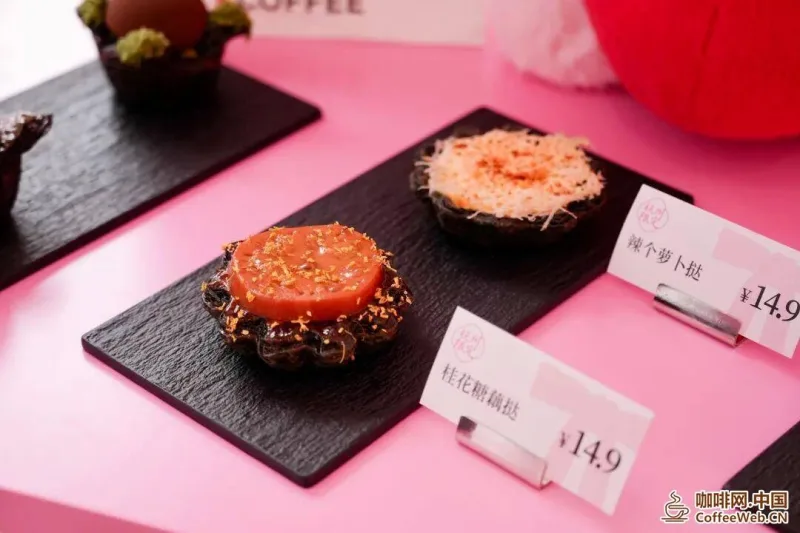
At the event, 11 creative tarts were released—besides the crowd-favorite “red apple flower tart” and the “extra-extra-long pineapple tart,” there were two tarts that surprised even Hangzhou locals: one called the “osmanthus lotus-root tart” and the other the “spicy radish tart,” full of Hangzhou flavor.
A tart is still a tart, yet it has grown a new look.
A tart ignites a hot race track
Making a tart seems to hold no great secret or threshold—pour custard into the shell, send it to the oven, and it is done when it comes out. But precisely this thing anyone can make has become one of the most fiercely contested items in the food circle right now.
That is exactly why the tart has become a category every player is rushing to lay out: supermarket entrances set up tart stalls to draw traffic, with single-store daily sales booming; some frozen-food brands attack the home scene with low-price combo packs.
A single tart solves completely different business problems in different players’ hands. But for KFC, this question was already thought through clearly more than two decades ago.
Twenty-two years building a moat with handmade fresh baking
Among baked goods, brioche toast, Swiss rolls, and soufflés flared and faded, but the tart is different—it was not the first to be hyped, yet it is the most evergreen. Behind this are three things holding true at once: the craft is stable enough, the supply chain mature enough, and the space for innovation wide enough. And these three happen to be what KFC excels at. Since licensing Margaret’s Portuguese egg-tart recipe and introducing authentic Portuguese egg tarts to mainland China in 2004, KFC has invested continuously in the tart category for 22 years.
In a dining industry pursuing efficiency and cost control, the tart is actually an “inefficient” category. Some brands use a semi-finished reheating model—fast serving, labor-saving. But after KFC’s internal professional evaluation, reheated tarts have hardened, softened shells with insufficient flakiness, air holes easily form in the custard center, and the texture turns dry and old; the unique egg-and-milk aroma of fresh baking is markedly discounted.
So for 22 years KFC has insisted on in-store fresh baking—stores prepare custard fresh daily and bake with customized dedicated ovens at precisely controlled temperatures. From thawing, mixing, and baking to finished-product storage, every step follows standardized operating norms.
KFC’s moat was built day by day like this. The brand mindshare accumulated over the years—the phrase “when it comes to tarts, choose KFC,” passed mouth to mouth by consumers themselves—is something no latecomer can replicate in the short term. In consumers’ perception, KFC’s tarts are authentic Portuguese flavor, eaten from childhood, freshly baked and hot in store, crispy and aromatic. This perception was not bought with advertising; it was accumulated one tart, one day at a time.
“Good tarts, made by hand”—this line is written on KFC’s tart posters, and also in the flaky pastry of every tart.
Beyond upholding the fundamentals, there is innovation; the tart becomes a “top traffic driver”
What can a tart really become? KFC’s strategy is clear—”original classic” as the foundation, “flavor innovation” to meet different scenarios and different crowds. With only adherence, KFC’s tart might be just a classic product, not an evolved super-category exceeding RMB 3 billion.
According to the Hongcan Research Institute’s “2025 Baking Category Development Report,” in 2025 consumers’ preference for new baked-subcategory products placed egg tarts at 40.7%. In recent years the category’s heat has visibly climbed. For such a “traffic product,” KFC has naturally spared no effort. Over the years KFC has launched cereal-crisp raw-chocolate flavor tarts, durian tarts, and custard-mochi tarts. This June, the “chick-duck-baby tart” launched with cute, fun shaping won wide consumer favor.
In this pop-up, KFC’s Kenny Coffee showed even greater innovation: it specially invited a Le Cordon Bleu chef to join the R&D of the “master series.” Square “small-square tarts” paired with red-apple mousse or Dubai chocolate soft cookies; petal-shaped “flower tarts” topped with fresh pineapple or hand-rolled apple slices; long U-shaped “extra-extra-long tarts” piled with tiramisu sauce or fresh fruit pulp; plus lava vanilla Basque and raw-chocolate Basque flavor tarts, and more.
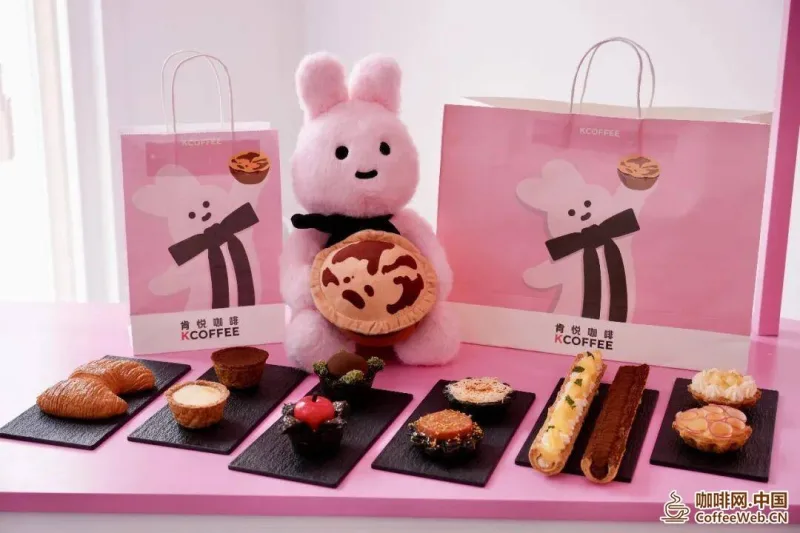
A tart can be not round, not sweet, not just afternoon tea, and even can be a pop-up. With this boundary expansion, Kenny Coffee pushes the tart from “flavor innovation” toward “form innovation” and “scene innovation,” giving a small tart a bigger imagination of space.
In Hangzhou, the tart gains the taste of dried radish and osmanthus lotus root
After the official opening, the queue at the “Ken Bunny Tart Lab” Hangzhou pop-up never broke. “A tart can look like this?!” The innovative tart products inside the pop-up surprised and delighted every queuing customer.
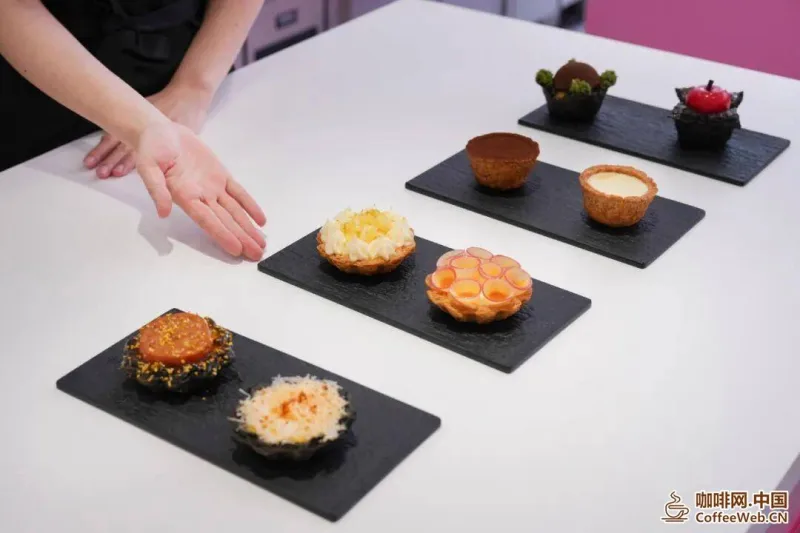
The “spicy radish tart” folds Xiaoshan dried radish into a savory Basque sauce, topped with a slightly spicy cheese crisp—salty, crispy, and mildly spicy, three textures layered together. Xiaoshan dried radish is something Hangzhou locals know all too well—salty, crisp, usually eaten with congee or stir-fried with edamame; chopping it into a tart was probably something only KFC could think of. A young woman who came all the way from Xiaoshan took a bite, froze for a few seconds in place, and said, “Why does it feel a bit like a radish-cake cousin?” The person next to her in line heard and laughed.
Another Hangzhou-local element is the “osmanthus lotus-root tart.” A whole slice of osmanthus lotus root sits atop a classic Portuguese egg tart, dusted with dried osmanthus. Osmanthus lotus root is representative of Jiangnan desserts—soft, glutinous, and sweet—and its milk-and-egg aroma layers with the Portuguese tart’s. The two sets of dessert logic echo each other. “I’ve eaten osmanthus lotus root since I was little; seeing it on a tart is a first,” said a local Hangzhou person licking their fingers while eating, feeling this combination cut a notch of cloying sweetness and added the fresh note of osmanthus.
On-site staff said most customers’ first reaction upon getting a tart was to photograph it. Some described Kenny Coffee’s tarts as “opening like a pudding that breathes.” These comments seem to make sense on the pop-up’s variously shaped tarts—the crispy shell is still that shell, only now it has grown things familiar to Hangzhou people on top.
Those tart photos captured into phone albums are probably the most wonderful imprint left by this pop-up. And this creatively tart, insisting on handmade fresh baking, is waiting to come out of the ovens in Kenny Coffee stores across the country—for Kenny Coffee, this is not only a continuation of KFC’s classic flavor but also a further step forward on the tart track.
A tart holds no secret. But taking a tart with no secret and hand-baking it for more than 20 years, passing it down from KFC’s mega-product to Kenny Coffee’s creative stage, constantly probing boundaries between upholding and surprising—perhaps this very act is the “secret” Kenny Coffee truly wants to tell: good flavor is worth upholding, and good creativity is equally worth being continually interpreted.
Reprint Notice & Disclaimer: This article is reprinted from Trendy News. The original report was filed by reporter Ni Wangzhen, with responsible editor Zhou Qin. All rights belong to the original publisher. If you believe any content infringes your rights, please contact us for removal.
Related Reading
 ‘All-Ice’ Coffee Goes Viral! Will the Next Hit Be Your Personal Favorite?
- Hong Kong’s Dyee Coffee Lands in Qianhai, Building a Specialty Pour-Over Outpost
 World Cup Enters the Breakfast Slot: Can Coffee-Tea Brands Turn Traffic into Orders?
- ICE Agricultural Futures Mostly Rise at Close; Coffee Futures Up 3.28%
- ‘Sleep Cafés’ Become a New Favorite Among Seoul Office Workers
 Vibrant Yunnan: Why Lijiang, Which Grows No Coffee, Raises Yunnan Coffee’s ‘Traffic Cup’


 Liaoning ICP Security No. 21122402000217