

South of Colorful Clouds, Fragrant with Coffee Fragrance: Exploring the Customs of Yunnan Coffee Production Areas
Coffee, this magical seed originating from the Ethiopian plateau, has found a fertile land suitable for growth in the south of colorful clouds after crossing thousands of mountains and rivers. Yunnan, with its unique geographical environment and pleasant climate conditions, has nurtured the unique flavor of small grain coffee, becoming the cradle and main force of China's coffee industry. Here, coffee is not just a crop, but also a cultural symbol that connects nature, culture, and industry, attracting countless people to explore its charm.
1、 Tracing back: Seeds planted and rooted a hundred years ago
The history of coffee cultivation in Yunnan is like a legendary tale spanning centuries. At the end of the 19th century, French missionary Tian Denong, with a love for coffee, introduced a precious iron pickup coffee seedling to Zhukula Village in Binchuan County, Dali. This Yi ethnic village, hidden deep in the Jinsha River Canyon, has since opened an unbreakable bond with coffee. In the following years, coffee trees quietly grew on this land, from the initial spark to gradually spreading like wildfire.
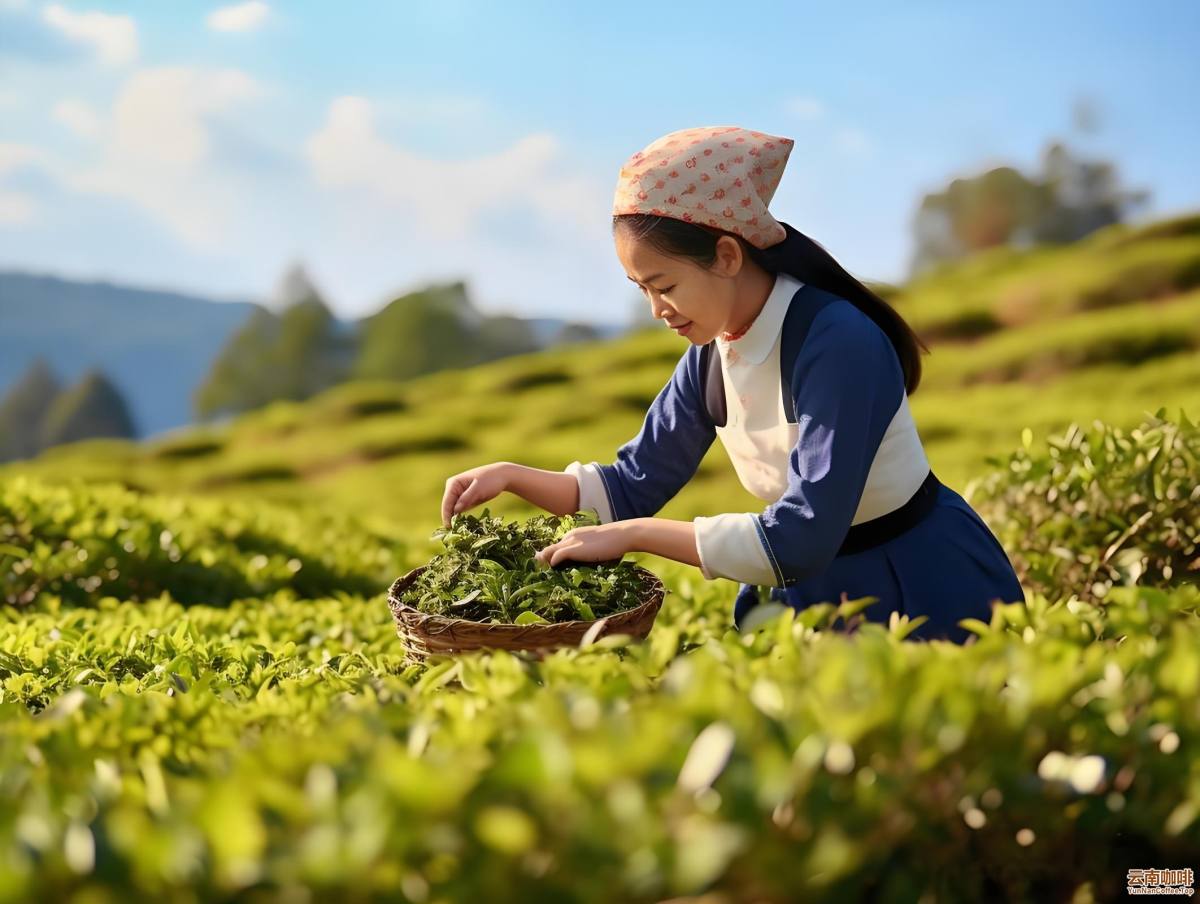
Zhukula Village still preserves 13 acres of 1134 ancient coffee trees, of which 24 are over a hundred years old. These ancient coffee trees, like witnesses to history, quietly tell the origin story of Yunnan coffee. They are not only living fossils of coffee cultivation in China, but also important symbols of Yunnan coffee culture. In the local area, villagers continue traditional planting and processing methods, such as manual picking, pestle and mortar shelling, and sun exposure. Each process is full of reverence and love for coffee, which also allows Zhukula coffee to retain its purest and most primitive flavor.
In 1952, researchers from the Tropical and Subtropical Crop Research Institute of Yunnan Academy of Agricultural Sciences brought coffee tree seeds from Zhugula Village to Baoshan City for planting, marking the beginning of a large-scale cultivation journey for Yunnan coffee. Afterwards, the coffee industry rapidly developed and grew in Yunnan, with Pu'er, Dehong, Xishuangbanna, Lincang, Nujiang and other places joining the ranks of coffee cultivation, gradually forming the current industrial pattern of Yunnan coffee.
2、 Tianci terroir: unique flavors on the 'Golden Coffee Belt'
Yunnan, located in a low latitude region, is crossed by the Tropic of Cancer, and Baoshan Lujiang Dam and Pu'er are situated in the area known as the "Golden Coffee Belt". Here, it is warm and humid all year round, with abundant sunshine and an average annual temperature of around 18 ℃. The large temperature difference between day and night provides ideal climatic conditions for the growth of coffee trees. At the same time, Yunnan is mountainous and the soil is mainly composed of weakly acidic red soil and brick red soil, which are rich in minerals and have good air permeability and water retention, providing an excellent growth environment for the root system of coffee trees.
On this blessed land, Arabica coffee, which is extremely picky about its growth environment, has found a place to settle. This coffee variety, originating from the tropical regions of northern and central Africa, is highly favored for its delicate taste, rich aroma, and low caffeine content. Under the careful nurturing of Yunnan, Arabica coffee exhibits a unique flavor – strong but not bitter, fragrant but not strong, slightly fruity, with rich layers of taste and long-lasting aftertaste.
Yunnan coffee from different production areas has its own unique characteristics. Baoshan, as the birthplace of Chinese small grain coffee, is mainly planted on both sides of the Nu River Canyon at an altitude of 900-1450 meters. The coffee produced is rich in aroma, with obvious fruit and jasmine fragrance, and is a national geographical indication product; Pu'er, the largest coffee plantation in Yunnan, has an altitude of 1000-2000 meters and a large temperature difference between day and night. The coffee here is famous for its citrus, floral, and berry flavors; Dehong Prefecture, known as the hometown of coffee in China, has a planting history of over a hundred years and an altitude of 1000-1600 meters. The coffee produced is mainly floral and cereal flavored, with extremely high quality and mostly grown organically; Lincang, one of the core coffee producing areas in Yunnan, is known for its citrus and floral flavors; Xishuangbanna's coffee is known for its high quality, with some products exported to European countries such as France.
3、 Coffee Plantation: The Fusion of Pastoral Pastoral and Quality Pursuit
In the coffee producing areas of Yunnan, coffee plantations are scattered like stars. These estates are not only bases for coffee cultivation and production, but also comprehensive places that integrate natural landscapes, leisure tourism, and cultural experiences, presenting visitors with a poetic pastoral picture.
The Xinzhai Coffee Plantation, located in Lujiang Town, Longyang District, Baoshan City, is situated in Xinzhai Village, known as the "Number One Coffee Village in Yunnan". The Tie Pika coffee trees here are cultivated on the edge of the Gaoligong Mountain National Nature Reserve, and the unique natural environment endows the coffee beans with a distinctive flavor. Inside the estate, 760000 bricks form a courtyard full of classical atmosphere, with blue bricks and red walls. New and old buildings collide with each other, bursting out with a unique artistic atmosphere. Strolling through it, not only can you taste the mellow coffee, but you can also gain a deeper understanding of the entire process of coffee from planting to roasting, and feel the charm of coffee culture. In addition, the coffee museum within the estate displays hundreds of physical objects related to coffee in Lujiang Town, from coffee varieties to processing equipment. Each exhibit witnesses the history of coffee cultivation in Lujiang Town, providing visitors with a deep cultural experience.
The small concave coffee plantation in Pu'er is a different style. The estate owner, Mr. Liao Xiugui, is a barista who has been dedicated to cultivating premium coffee for over 30 years and a witness to the development of the Pu'er coffee industry. In this estate that brings coffee into nature, there are not only lush coffee trees, but also habitats for birds, reptiles, insects, and ants. Every June and July, it is an ideal place for fireflies to inhabit and reproduce. Tourists who come here can listen to Liao Xiugui's stories about him and coffee, personally pick coffee fruits, experience the coffee processing process, and even watch fireflies flying in the sky at night, feeling the magic and beauty of nature.
Aini Manor is located in Manzhongtian, Bangnong Village, Yixiang Town, Simao District, including Aini Coffee Manor and Aini Livestock Manor. The rainforest coffee plantation and plateau pasture complement each other, forming the most unique scenery of Aini Manor. Tourists can ride horses through high-altitude pastures, get to know different varieties of coffee trees in the rainforest, pick coffee fruits by hand, experience the processing of coffee in factories, and finally taste a cup of coffee made by themselves, feeling the joy and satisfaction brought by labor.
4、 Industrial Butterfly Transformation: From Fields to Cups, Towards the World Stage
Once, Yunnan coffee mainly existed in the form of raw material supply and was at the low end of the value chain in the international market. Coffee farmers are facing problems such as large price fluctuations and meager profits, and the development of the coffee industry is facing many difficulties. Especially from 2019 to 2021, the purchase price of Yunnan coffee beans has plummeted, and the local area has experienced a "tree cutting wave" of coffee trees. Many coffee farmers have given up coffee cultivation and switched to economic crops such as tea and corn in order to recover their losses.
However, the difficulties did not stop Yunnan Coffee from moving forward. In recent years, with the rapid growth of the domestic coffee consumption market and the increasing demand for premium coffee among consumers, Yunnan coffee has ushered in new development opportunities. The local government and enterprises are actively promoting the transformation and upgrading of the coffee industry, from variety selection, planting management, processing technology to brand building, and are committed to improving the quality and added value of Yunnan coffee throughout the entire industry chain.
In terms of variety breeding, Yunnan continuously introduces and cultivates high-quality coffee varieties such as Tie Pica and Bourbon, and strengthens the improvement of local varieties to enhance the quality and disease resistance of coffee beans. In terms of planting management, promote scientific planting techniques, strengthen field management, introduce data monitoring, and achieve precise planting; At the same time, we should pay attention to ecological protection, develop organic coffee cultivation, reduce the use of chemical pesticides and fertilizers, and ensure the quality and safety of coffee beans.
In terms of processing technology, Yunnan has increased investment in initial and deep processing of coffee, introduced advanced processing equipment and technology, and improved the processing quality of coffee beans. From simple peeling and air drying in the beginning, to various processing methods such as washing, sun drying, and honey treatment, as well as sophisticated roasting and grinding techniques, the processing technology of Yunnan coffee has become increasingly mature and can meet the taste needs of different consumers.
Brand building is an important part of the transformation and upgrading of Yunnan's coffee industry. More and more Yunnan coffee companies are paying attention to brand building, enhancing the visibility and reputation of Yunnan coffee by participating in international coffee competitions, hosting coffee culture festivals, and other activities. At the same time, we will strengthen cooperation with well-known domestic coffee brands such as Luckin Coffee and Manner, and integrate Yunnan coffee beans into more coffee products to further expand our market share. Nowadays, small grain coffee produced in Yunnan is highly sought after by coffee enthusiasts, accounting for nearly 90% of the domestic coffee consumption market.
5、 Coffee tourism integration: Experience Yunnan style in the aroma of coffee
With the development of the coffee industry, Yunnan has deeply integrated coffee with tourism, creating a unique "coffee tourism integration" model that provides tourists with a brand new tourism experience. Nowadays, taking a coffee trip to Yunnan has become a popular choice for many tourists.
In Pu'er, tourists can visit various specialty coffee plantations, learn about the planting, picking, and processing of coffee, and make their own cup of coffee by hand; You can also stroll through coffee themed streets and coffee culture markets, taste various coffee delicacies, and purchase specialty coffee souvenirs; You can also participate in coffee culture lectures, coffee tasting events, and other activities to gain a deeper understanding of the essence of coffee culture.
In Xinzhai Village, known as the "Number One Coffee Village in China," tourists can not only enjoy the beautiful rural scenery, but also experience the unique coffee culture. The coffee culture painted walls that can be seen everywhere in the village have attracted many tourists to take photos and check in; The "Spring Festival Coffee Feast" launched during the Spring Festival ingeniously combines the traditional customs with the modern industry. It uses coffee grounds to feed the chicken stew, uses coffee nectar to make Tomatoes on sticks, and even rice dumpling with coffee filling, so that visitors can experience the unique charm of coffee culture while tasting food.
In addition, some coffee plantations have developed a variety of tourism projects that combine local natural scenery and folk culture. For example, at Elephant Coffee Boutique Manor, tourists can enjoy coffee while gazing at the wild Asian elephant herds foraging and inhabiting in the distant mountains and forests; At Xiaocaozi Coffee Plantation, tourists can watch fireflies at night and experience the romance and magic of nature; At Aini Manor, tourists can experience activities such as horseback riding and camping, and enjoy the fun of rural life.
Yunnan, this charming land, has nurtured high-quality coffee with its unique customs and traditions. From a seed a hundred years ago to the thriving coffee industry today, Yunnan coffee has gone through ups and downs, but has always maintained a strong vitality. Here, coffee is not only a beverage, but also a way of life and a cultural heritage. Whether it's the leisurely time in a coffee plantation or the new experience brought by the fusion of coffee and tourism, people can feel the unique charm of Yunnan in the aroma of coffee. In the future, with the continuous upgrading and innovation of the coffee industry, Yunnan coffee will surely shine brighter on the world stage and become a beautiful business card for Yunnan to go global.