
[Opening statement]
On August 10th, the APEC summit welcomed a 100 day countdown. Guangzhou Daily focuses on the theme of APEC and has launched the "Let's Go" series of reports, inviting students from other APEC member economies in Guangdong to walk into the streets, alleys, schools, and communities of the Greater Bay Area. In the daily work of ordinary people, they can immerse themselves in the taste of Guangzhou from every detail of life, experience Lingnan culture, and tell the world the stories of China, Guangdong, and Guangzhou. In the first episode, Korean international student Han Xizhu, who claimed to have "coffee all in his body", walked into the Guangzhou Coffee Culture Season with our reporter to experience a different Guangzhou coffee culture.
Han Xizhu is probably one of the most distinctive tasters at the Guangzhou Coffee Culture Festival.
This Korean international student from Sun Yat sen University grew up in a coffee shop in Seoul – his mother runs her own coffee shop in that city, and from working part-time to taking over the shop, she has turned her passion for coffee into a career.
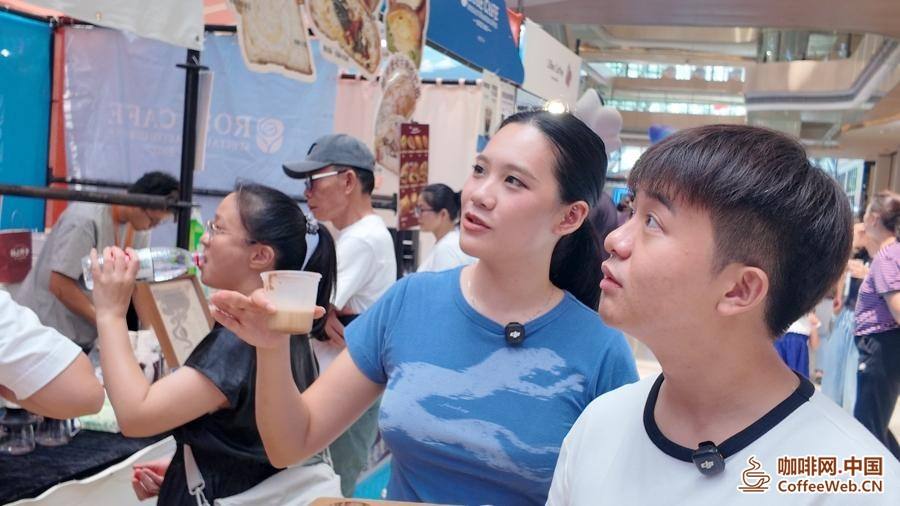
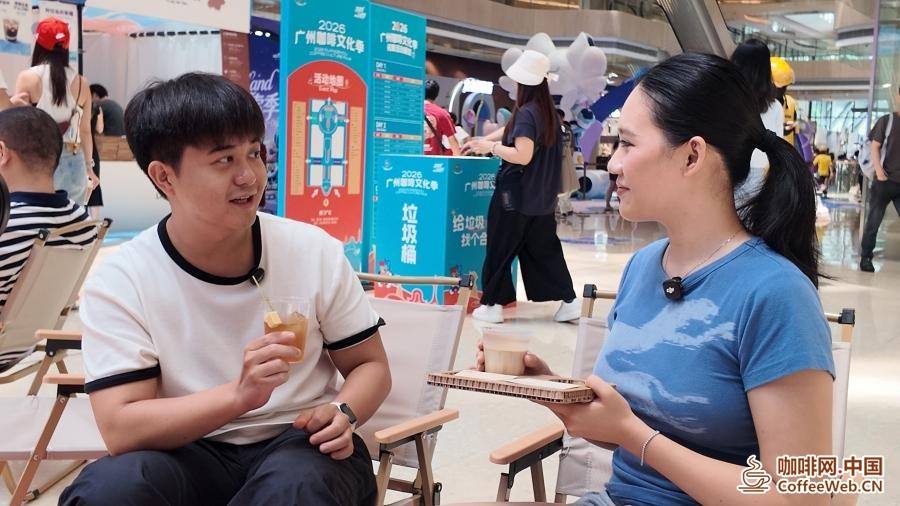
Korean student Han Xizhu (right) from Sun Yat sen University participated in the closing ceremony of the 2026 Guangzhou Coffee Culture Season. Due to her Chinese language education, Han Xizhu's mother is not unfamiliar with life in China. This vague connection later led Han Xizhu to study in Guangzhou.
Growing up immersed in coffee, he developed his own set of criteria for judging it. But when the spiciness of ginger collided with the richness of coffee, and the sweet and sour taste of pig's foot ginger mixed with the bitterness of coffee surged up his throat, he began to realize in surprise that Guangzhou's understanding of coffee was completely different from what he had known before.
A cup of coffee, tasting the taste of the world
At the closing ceremony of the 2026 Guangzhou Coffee Culture Season, a specially brewed coffee made from Ethiopian beans was presented to Han Xizhu. Han Xizhu took a sip, his expression somewhat surprised – not the deep roasted bitterness he was accustomed to, but a clean and bright sourness, a refreshing sweetness, with a hint of fruity aftertaste. Ethiopian beans have been turned into creative coffee with distinct fruit flavors in Guangzhou, which is far from the bitter and mellow appearance that coffee should have in his impression.
Korean student Han Xizhu from Sun Yat sen University tasted coffee made with Ethiopian coffee beans and "I didn't expect to find Ethiopian beans in Guangzhou with this flavor." Han Xizhu thought it was very fresh. In Guangzhou, coffee beans from various production areas gather here, and in a cup of coffee, you can simultaneously enjoy the taste of being far from the production area but close to Guangzhou.
Two cups of Cantonese style special notes, drinking out the urban character
What truly refreshed Han Xizhu's understanding of coffee was the next two cups of Cantonese style special notes.
When the first cup is served, the dark brown liquid surface doesn't show anything special, but upon closer inspection, a strong sweet vinegar flavor seeps into the nose, accompanied by the spiciness of ginger. Pig's foot ginger – the most familiar traditional food among Guangdong people. Sweet vinegar and aged ginger blend the flavor into every inch of the ingredients in slow cooking over low heat, and the barista surprisingly incorporated this Lingnan flavor into the coffee.
Han Xizhu took a careful sip. The warmth of ginger slowly rises from deep in the throat, spicy and warm. The taste is amazing, "he couldn't help but say." The first time I saw 'pig's feet ginger', I didn't see any ginger, I only saw the word 'pig's feet', and I thought there were really pig's feet in the coffee
The second cup is a special blend of ginger and milk flavor. Hot milk mixed with ginger juice instantly solidifies the spiciness and milky aroma into a tender and smooth taste. Han Xizhu has tasted this Cantonese dessert before and remembers the spicy taste. When the same spiciness appeared in the coffee, intertwined with the rich taste, he tasted it and was somewhat surprised: "The spiciness is still there, I didn't expect it to blend so well with the coffee
This bold integration of local food culture into coffee made Han Xizhu feel very novel and tolerant. It may be difficult for ordinary people to imagine making pig's feet ginger into coffee, "he said," but ginger itself is a characteristic of Guangdong. Cafeterists use Guangdong culture to make things, which is unique and fashionable
In the coffee, I saw the opening of a city
The taste seeking journey of this coffee season has given Han Xizhu a different understanding of Guangzhou coffee. He said that there will be more "check-in points" in Guangzhou again – different beans, different methods, and there are too many stories that can be slowly tasted in the daily life of this city. He even has his own creative direction: to make a special flavor of double skin milk, allowing customers to choose their own sweetness, "wanting to create a style that young people like".
Han Xizhu has also felt the opening of coffee in Guangzhou on Yuanjing Road. Yuanjing Road is the most concentrated neighborhood for Koreans in Guangzhou, with Korean restaurants and supermarkets lining the streets, and even Korean coffee brands have come here for flash mobs. When he met the coffee from his hometown on the streets of a foreign country, his first reaction was surprise, but he soon felt a sense of familiarity. This is a good thing that can promote the exchange of coffee culture and baristas between the two countries
Speaking of the similarities and differences in coffee culture between the two countries, Han Xizhu has his own observations. Seoul's coffee shops tend to be classic, with caramel latte and iced Americano being everyday; There are many unique flavors of coffee in Guangzhou, and local ingredients are boldly incorporated into the coffee, creating endless creativity. But young people's preferences for coffee shops are similar – he mentioned the atmospheric shops at Dongshankou and said that young people in Korea also like to drink coffee in places with atmosphere.
Interestingly, Han Xizhu's mother also came to Guangzhou last year. She has been running a coffee shop in Seoul for many years, and that time she tasted a lot of coffee, but she was most impressed by a local Guangzhou brand. When Han Xizhu mentioned this matter, there was a hint of pride in his tone. The recognition of local brands in Guangzhou by a Seoul coffee shop operator may be a small resonance between the two cities in the coffee industry.
At the closing ceremony of the 2026 Guangzhou Coffee Culture Season, Han Xizhu slowly understood the openness of a city through cups of coffee. From the fruit acid of Ethiopia, to the sweet vinegar of pig's foot ginger, to the spiciness of ginger mixed with milk – he suddenly felt that a cup of coffee could hold much more than he had imagined. The city of Guangzhou is probably the same: not in a hurry to define itself, just cup by cup, slowly blending flavors from all over the world into its own flavor.
For this young person from an APEC economy, Guangzhou is no longer just a place for studying abroad, but also a window for him to rediscover coffee and how culture blends together.
Coordination/Guangzhou Daily Xinhua City Editor: Xue Yan
Text and pictures/Guangzhou Daily Xinhua City Reporter: Wu Di Intern Ouyang Shuting
Filming/Guangzhou Daily Xinhua City reporters: Chen Mingxi, Zheng Hongda, Wang Yushun
Editor/Guangzhou Daily Xinhua City Reporter: Chen Mingxi
Guangzhou Daily Xinhua City Editor: Wu Di