
Editor’s note: Halfway up Mount Tiantang, a coffee shop called “Jianshan” (Facing the Mountain) gives visitors a reason to stop. Gu Qian left her life in Hangzhou, brought urban coffee culture into the bamboo sea of Guangde, and kept the landscape intact through “light renovation” — turning a disused mountain rest stop into a place people can actually sit down. Today the shop doubles as an informal advisory desk for other young people returning home to start businesses.
Ridges of bamboo roll into one another halfway up Mount Tiantang. Push open the wooden door of Jianshan Coffee and you find a freshly brewed cup waiting on a plain wood table, with green mountains filling the window. A few years ago this was nothing but an idle mountain shelter.
The person who carried this city staple into the bamboo sea of Guangde is Gu Qian, a young woman who came home.
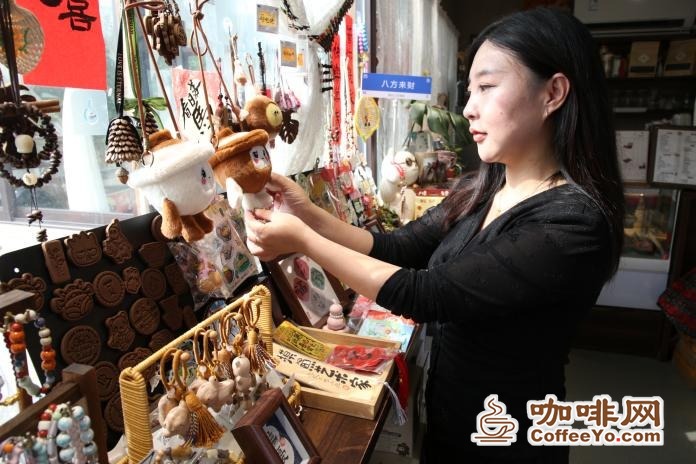
Jianshan Coffee in the bamboo sea of Mount Tiantang
An idea that began on a mountain road
Before returning home, Gu Qian spent years working in landscape planting and design in Hangzhou. The bamboo sea of Guangde was the scenery she grew up with, but what finally decided it was a walk along the “Bamboo Town Gallery” road.
“The scenery along the mountain road was beautiful, but I walked for a long time without finding anywhere to sit down, rest and have a cup of tea,” she recalls. “Right then I thought — why not open a coffee shop in these hills?” Once the idea took hold, she moved. Taking advantage of Guangde’s programme to attract returning entrepreneurs, she set her sights on the Daxiwu rest stop in Dongsheng Town.
Built in 2018, the shelter covers roughly 1,500 square metres, with a viewing platform, a leisure corridor and a vintage pavilion. It receives more than 300,000 visitors a year — yet it never had a business that let people genuinely settle in.
“The negative oxygen ions here are plentiful, and from the terrace you can look out over the whole Guangde urban area. A spot like this is not something you can buy in the city at any price,” Gu says. “There is no shortage of coffee shops downtown or in the towns. What’s missing is exactly this: a place hidden in the mountains where you stop and watch them.”
“Light renovation” that spares the bamboo
When she took it over, the shelter was little more than a shell with rudimentary facilities and no leisure offering at all. Gu set herself one rule: light renovation, modest upgrading, no damage to the native bamboo.
She and her team refurbished the existing buildings and terrace, converted interior space into a coffee room, built a new viewing deck on the summit and arranged a handful of photo spots. There was no demolition, no internet-famous colour scheme — plain wood, cane weave and bamboo elements blend into the surrounding grove.
“What we want is to give the shelter back to visitors, so people can really sit down,” Gu says. Preparations began at the end of 2024, and after several months of work Jianshan Coffee opened during the May Day holiday last year. Visitors do more than take photographs: they order a “wild mountain” signature drink or a bowl of local fried noodles, pick up a few bags of seasonal farm produce, and stay for the whole afternoon.
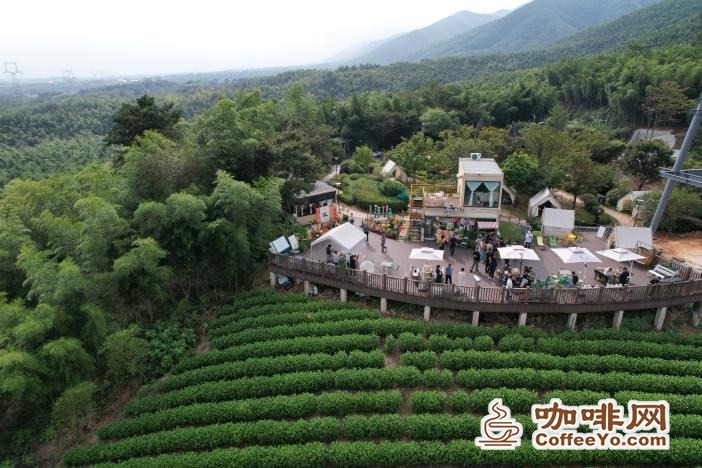
The cafe has become a place for visitors to slow down
After the drop comes a sense of belonging
Moving from Hangzhou back to the mountains brought a real drop in amenities. “Hangzhou is busy and convenient — everything is downstairs. Up here it’s quiet, and buying anything means driving down the mountain,” she says.
But the trade has paid something else back. “Open the door and there’s the bamboo sea; you wake to birdsong and fall asleep listening to wind through the valley. I get tired sometimes, but I’ve never regretted it. Putting down roots in your hometown’s landscape and doing what you love brings a satisfaction the city simply doesn’t give you.”
Once it opened, the cafe also became a “return-to-home advisory desk”. Young people considering a move back to county towns and villages reach her through social platforms, asking about site selection, fit-out, permits and traffic. Gu answers one by one, sometimes arranging to meet them at the shop. “Plenty of young people in Guangde have come back to run homestays, campsites and farm-produce e-commerce shops — everyone finds their own direction,” she says. “The countryside isn’t empty of people; it needs someone to open the first shop so those who follow know where the road is.”
By the end of the interview the terrace had filled again. Someone cradled a coffee while watching the mountains; someone else leafed through a photography book. Gu wiped glasses, looking up now and then to smile.
Asked what she would say to young people heading home to start out, she thought for a moment: “Put your heart into it, take root in the soil, take your time — time will see your persistence.”
A cup of coffee, a sea of bamboo. Jianshan Coffee is more than a shop: it is a signal that young people are moving urban ways of living into the mountains, one shop at a time.
Source note and disclaimer
This article was compiled and republished by Coffee Network China from The Paper’s original report “Gu Qian: Planting a Coffee Shop into the Bamboo Sea”. The copyright of the original text belongs to The Paper and its author. This republishing is intended solely for sharing information about China’s coffee industry with international readers and does not represent the views of this website. All data and opinions remain subject to the original source. Our thanks to the original author for the reporting that made this possible.
Read the original: The Paper — “Gu Qian: Planting a Coffee Shop into the Bamboo Sea”
For matters regarding content licensing, attribution, copyright or any other issue, please contact us and we will verify and cooperate promptly. We also welcome coffee-growing regions, Chinese coffee brands, overseas buyers and industry media to share stories with us.
Coffee Network China — Phone: 400-0000-641 (+86-18941000313)|Email: 405854472@qq.com|Address: Jinghong City, Xishuangbanna, Yunnan / Tieling City, Liaoning, China