
When the door opens, staff member Lao Lianqin looks up, smiles and waves at the customer, then
points to the QR code on the counter. A card in a prominent place reads: “Hello, we cannot hear.
Please scan to order.” Next to it are drip-bag coffee packs printed with paintings by children
with autism.
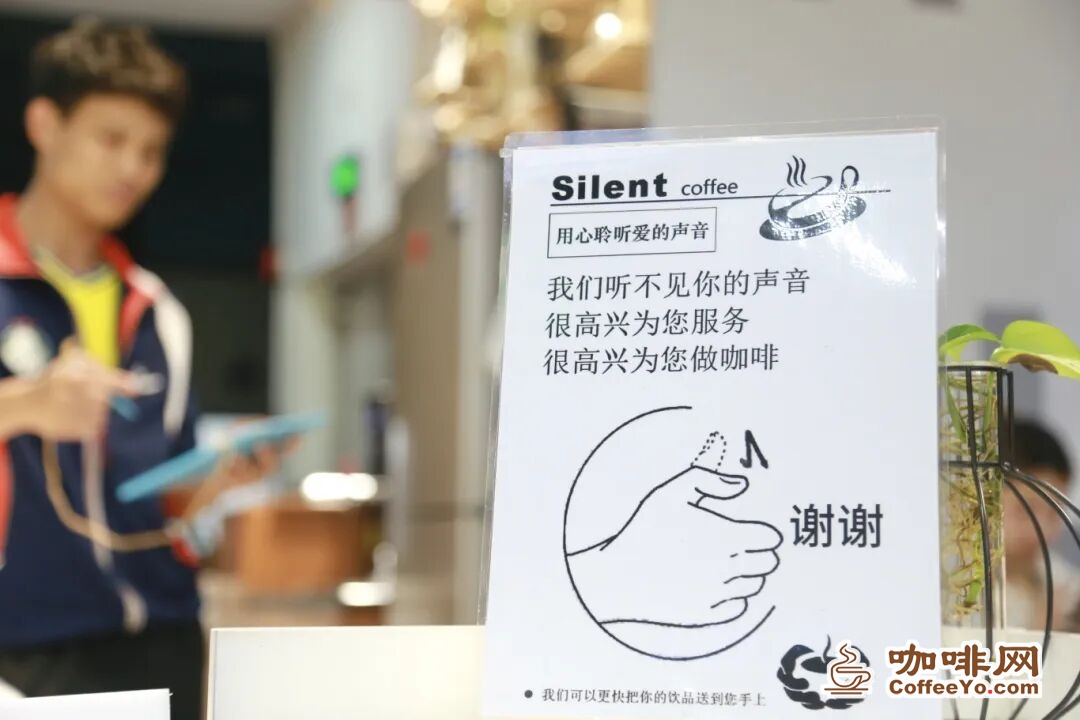
This is a coffee shop founded by deaf entrepreneurs. Named Silent Zhanlongren Coffee (“Silent
Coffee”), it sits in the ASEAN City used-car market in Zhanjiang. From 2025, after gaining a firm
foothold, the team launched drip-bag coffee co-branded with children with autism. For every box
sold, part of the proceeds goes back to these “children of the stars”.
The founders are players of the Zhanjiang Longren Football Club, winners of the first U18 World
Deaf Indoor Futsal Championship – the first youth world title in the history of Chinese deaf
football. The squad has also taken national para-sports titles three times and national deaf
football championships five times.
Three years ago, coach Zheng Guodong had an idea: let deaf people learn coffee-making so they
could earn a living. He approached many baristas without success. At the end of 2023, a friend
introduced him to Pang Xiaoling, a senior barista with nearly 20 years in the coffee industry.
Pang was taken aback. How do you teach without sound? Zheng answered plainly: many deaf people
end up on factory assembly lines or street stalls after school. Communication barriers and low
group identity make it hard for them to fit into mainstream workplaces. They are sensitive and
prone to feeling inferior. What faces them is a difficult struggle to survive. Pang was moved and
became their coffee teacher.
Problems surfaced quickly. Sign-language interpreters could only convey basic movements, not
professional terms. Real-time transcription software produced errors, and “the class felt like
talking to the air”. She ended up writing everything on the blackboard, then found that the logic
of sign language differs from written text. So Pang learned sign language herself – “coffee”,
“fast”, “slow” – “just like learning English vocabulary”. Within a month she could teach in sign,
and the students’ coffee training got on track.
She also noticed that, unable to judge progress by sound, the trainees were unusually strict
about weight in grams and timing – which in turn lifted the quality of the product.
After training, Pang helped them start the business rather than look for jobs. In April 2024 she
organised a silent barista skills competition; the first Silent Coffee shop opened in May 2024,
and a second followed a month later at ASEAN City.
At first the staff saw themselves as employees, asking each month when wages would come. Pang
repeatedly told them: “We are co-founders with you. You are not employees, you are bosses.” It took
more than half a year before they began to take ownership of stock, the space and their own
responsibilities.
Once the shop was stable, another group came into view: children with autism. They often have
rigid behaviours and language barriers, yet may have special talent in art or music. Pang found
that a Shanghai coffee shop printed autistic children’s paintings on drip-bag packs, and decided
Silent Coffee could do the same.
So the “Lighting Up the Star Journey” programme was born. Working with Xiashan District Peizhi
School, Silent Coffee selected paintings by 10 children with autism, obtained guardian consent, and
printed them on its drip-bag coffee packaging, returning part of the sales income to the children.
Li Haiyang, a veteran of the football club and the “big brother” of the shop, joined without
hesitation. His biggest worry at first was that his coffee would not taste good – until a customer
told him it was better than the chain brands. For him, coffee, like football, has become a bridge
to the outside world.
“Our ultimate vision is to build a shelter for special-needs groups through Silent Coffee – a
platform that breaks through the ‘paper window’ covering them and changes how society sees them,”
Pang says. More than ten volunteers from different industries have formed a “Silent
Entrepreneurship Support Group”, and China Post Zhanjiang has joined in with themed postcards.
The warmth of a city often hides in small shops like this one, and in the persistence and
kindness of ordinary people.
Reprint Notice & Disclaimer
This article is reproduced by Coffee Network China from The Paper (“A World Champion Football Team Opened a Special Coffee Shop in Zhanjiang”). All copyright belongs to The Paper and the original author. It is shared here for coffee-industry information purposes only and does not represent the views of this site.
Original article: The Paper
Contact: Tel 400-0000-641 (+86-18941000313) | Email 405854472@qq.com