
At a Glance (China Coffee Network): Yunnan coffee is China’s flagship coffee. First planted in 1892 by French missionaries in Zhukula Village, Binchuan County, it now supplies more than 98% of the country’s coffee: in 2024, 1.267 million mu under cultivation and 146,000 tonnes of output. Grown in the world’s golden coffee belt across Pu’er, Baoshan, Lincang and Dehong, its Arabica beans are known for a mellow, gently fruity cup with jasmine notes and a lasting sweet finish.
Yunnan coffee is an outstanding representative of Chinese coffee, well known at home and abroad for its distinctive flavor and excellent quality. Below is a detailed introduction.
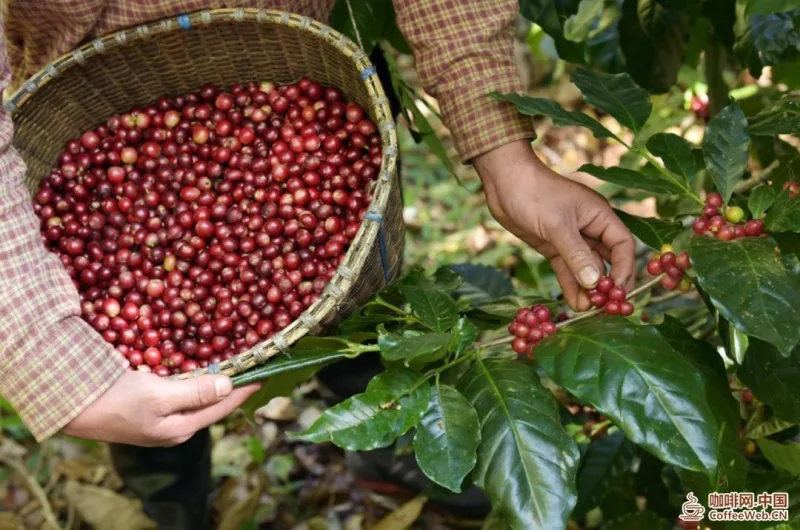
A long planting history
Coffee cultivation in Yunnan began in 1892, when French missionaries successfully introduced the crop to Zhukula Village in Binchuan County — a history of more than 130 years. Large-scale planting began in the 1950s. After decades of development, Yunnan is now China’s largest coffee-producing region: in 2024, the planted area reached 1.267 million mu with output of 146,000 tonnes, more than 98% of national production.
Distinctive growing regions
Yunnan lies between 15 degrees north latitude and the Tropic of Cancer, within the world’s golden coffee belt. Its producing areas are mainly spread across seven prefectures and cities including Pu’er, Baoshan, Lincang and Dehong. Low latitude, high altitude, a large day–night temperature difference, fertile soil, abundant sunshine and ample rainfall give it natural conditions similar to those of world-famous origins such as Colombia — an ideal environment for coffee.
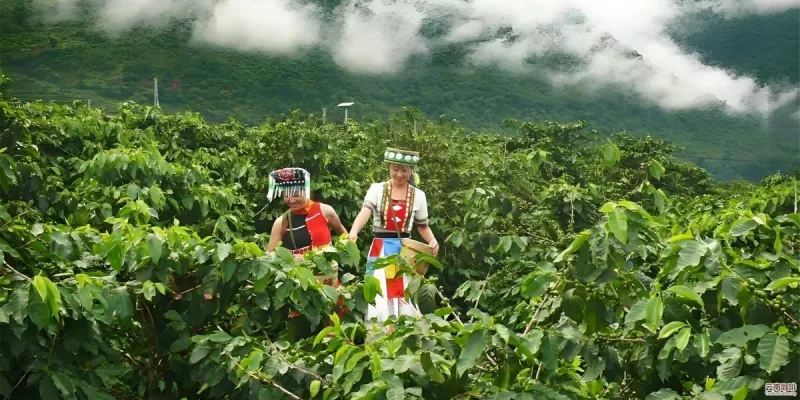
Rich, high-quality varieties
The main crop is Arabica, commonly called Yunnan small-bean coffee. Traditionally the Bourbon and Typica varieties dominated, and Catimor was introduced later. These beans offer a rich aroma, a soft flavor and moderate acidity, making them an ideal raw material for high-quality coffee.
A distinctive, appealing flavor
Yunnan coffee belongs to the mellow-aromatic type: rich without being bitter, fragrant without being harsh, with a touch of fruity acidity, a faint jasmine-floral note and a crisp fruitiness, plus a long sweet aftertaste. Its cup profile resembles Colombian coffee and suits mainstream tastes.
A mature industry chain
Yunnan has built a complete chain from planting and primary processing to deep processing. In 2024, the province’s specialty-coffee rate reached 31.6% and its deep-processing rate rose to 80%, with well-known brands such as Aini, Beigui and Manya emerging alongside a number of specialty coffee estates. Exports are also growing: in the first three quarters of 2024, Yunnan exported 30,000 tonnes of coffee, up 371% year on year, to more than 40 countries and regions.
Reprint Notice & Disclaimer
- This article is compiled and edited by China Coffee Network (coffeeyo.com) from publicly available materials. The copyright of the original text and images belongs to the original authors. This site reprints it solely for coffee-industry information sharing and does not represent our position; all data and views are subject to the original. We thank the original authors for their creation and sharing.
- If there are any issues regarding content authorization, attribution, copyright or other matters, please contact this site promptly; we will verify and cooperate in handling them at the first opportunity. We also welcome coffee producing regions, brands and industry media to exchange and contribute articles.
- Contact China Coffee Network (coffeeyo.com): Tel 400-0000-641 (+86-18288016826) | Email 405854472@qq.com | Address: Jinghong City, Xishuangbanna, Yunnan Province / Tieling City, Liaoning Province, China
Related Reading
 Three Decades of Shanghai-Yunnan Collaboration: A Coffee Bean ‘Ferments’ at the Import Expo
 Why Yongde’s Coffee Beans Won Gold in Shanghai – A Taste of ‘Life in Yunnan: 365 Days’
- Yunling Commentary: Yunnan Coffee Turnaround Hinges on Autonomous Pricing
 A ‘Travel Pack’ Reveals Another Possibility for Pu’er Baristas
- Bean in Short Supply: A Taiwan Youth on Yunnan Coffee as a Shared Cross-Strait Stage
- Five Years, Eight Championships: Lincang Coffee Joins the World Stage






 Liaoning ICP Security No. 21122402000217