
Brief (coffeeyo.com): In Yongde County, Lincang, Yunnan—known as the “Hometown of China’s Macadamia”—600,000 mu of macadamia intercropped with more than 40,000 mu of coffee form a three-dimensional “nut trees above, coffee below” agriculture. The local CPPCC has driven the industry’s upgrade through research reports, targeted proposals and grassroots consultation.
By Xu Jia, public-interest reporter of Changjiang Commercial News; correspondents Wu Yan and Gui Qiuting.
In Yongde County, Lincang City, Yunnan Province, 600,000 mu of macadamia trees stretch like a sea, dotted with more than 40,000 mu of coffee—unfolding a three-dimensional agricultural picture of “nuts on the trees, coffee beneath them.”
As the “Hometown of China’s Macadamia,” Yongde County anchors itself on a “one county, one industry” development positioning. Giving full play to the specialized consultative role of its CPPCC (Chinese People’s Political Consultative Conference), it empowers the quality improvement of its specialty industry through precise research, pragmatic proposals, efficient consultation and strict supervision, continuously activating new momentum for rural industrial revitalization.
At present, Yongde’s total coffee planting area reaches 43,400 mu. In the 2025–2026 coffee season the county harvested 2,538 tons of green beans, with the industry’s output value surpassing 110 million yuan.
The “research depth” in a cup of coffee
To promote the standardized, high-quality development of the coffee industry and pinpoint its bottlenecks and difficulties, in August 2025 the Yongde County CPPCC formed a special research group to carry out an in-depth, dedicated investigation of the coffee industry.
The group went deep into the county’s concentrated coffee-growing areas, talking face to face with frontline coffee farmers to learn in detail about cultivation, management, harvests and incomes. It visited local coffee-processing enterprises to map out the realities of production, processing, market operations and development bottlenecks, and organized thematic forums with county functional departments, CPPCC members and coffee business owners to gather public sentiment and build consensus from many sides.
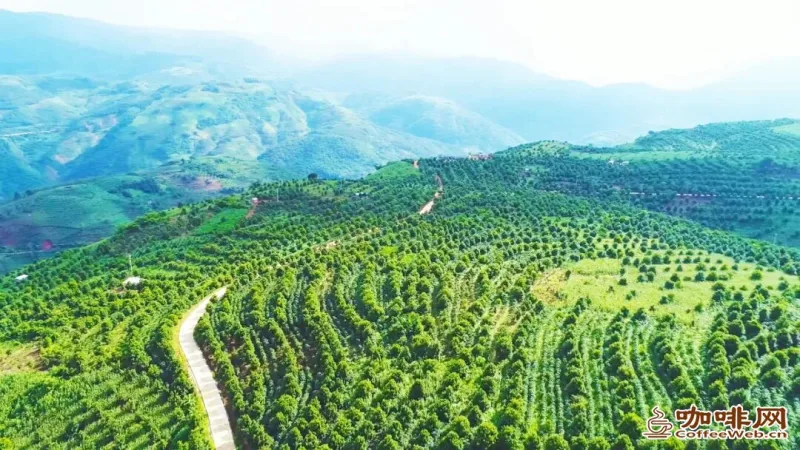
A ten-thousand-mu macadamia-coffee forest sea. (Photo provided by interviewee)
Combining field visits and panel discussions, the Yongde County CPPCC produced the “Research Report on the Development of Yongde County’s Coffee Industry,” systematically sorting out the industry’s history and clearly outlining its evolution.
According to the research summary, Yongde’s coffee industry has gone through scattered exploration, scaled development and a period of downturn, and since 2024 has entered a new stage of recovery, quality improvement and efficiency gains.
At present, Yongde’s total coffee planting area reaches 43,400 mu. In the 2025–2026 coffee season the county harvested 2,538 tons of green beans, with industry output value surpassing 110 million yuan. “Yongde Coffee” was included in the national catalogue of famous, special, high-quality and new agricultural products, and 25,400 mu of coffee bases have obtained organic-transition certification.
At the same time, the report confronts the industry’s shortcomings head-on, clearly pointing out prominent problems such as extensive planting management, a short deep-processing chain, weak brand and market influence, insufficient talent reserves and thin financial support.
In response to the existing gaps, the research group precisely proposed four major development recommendations—consolidating the industry’s foundations, smoothing product sales channels, shaping a distinctive regional brand, and strengthening factor-service guarantees—providing the county party committee and government with detailed, precise reference for scientific decision-making, and clarifying the thinking and path for quality upgrading and deep macadamia-coffee integration.
The “proposal strength” in a single nut
As the leading industry of Yongde’s “one county, one industry,” macadamia is the core pillar of the county’s rural industrial revitalization.
Focusing on quality improvement, transformation and upgrading of the nut industry, the Yongde County CPPCC organized members to visit planting bases and production enterprises, offering precise advice and driving high-quality development through high-quality proposals.
Addressing various pain points and difficulties, CPPCC members submitted a series of targeted special proposals. To tackle weak cultivation-management techniques in townships, they submitted “Suggestions on increasing training in macadamia cultivation and management techniques in Daxueshan Township,” pushing nut planting from “scaled planting” toward “standardized quality improvement” and raising farmers’ scientific planting level. To address processing shortfalls and low product added value, they submitted “Suggestions on increasing support for nut-processing enterprises,” helping the industry escape the low-end “selling raw materials” model and extending the chain toward deep processing and branded sales. To put idle understory space to use, they submitted “Suggestions on continuing to increase support for understory planting and breeding” and “Suggestions on helping apply for understory industry projects,” revitalizing understory land resources, promoting three-dimensional agriculture and realizing “multiple harvests from one plot.” To broaden narrow agricultural sales channels, they submitted “Suggestions on attending to rural e-commerce development,” supporting an online–offline integrated sales system and widening nut sales paths.
Driven by the precise promotion and follow-up supervision of this series of proposals, the quality and efficiency of Yongde’s nut industry keep rising. Routine planting-technique training now covers all planting areas of the county, markedly improving farmers’ management capability; support policies for processing enterprises have taken effect, continuously expanding processing capacity and enriching product categories; the understory planting-and-breeding model is fully promoted, greatly raising land-output efficiency; and rural e-commerce is thriving, with a diversified sales pattern taking shape—the foundations of the county’s macadamia industry growing ever more solid.
The “consultation warmth” in macadamia-coffee intercropping
The “macadamia + coffee” intercropping model is a distinctive three-dimensional, wealth-generating agriculture that Yongde locals discovered—with strong ecological and economic advantages. Macadamia trees take 6 to 8 years to reach full yield, while coffee yields in just 3, so intercropping “uses the short to support the long,” effectively making up for the nut’s early no-income gap.
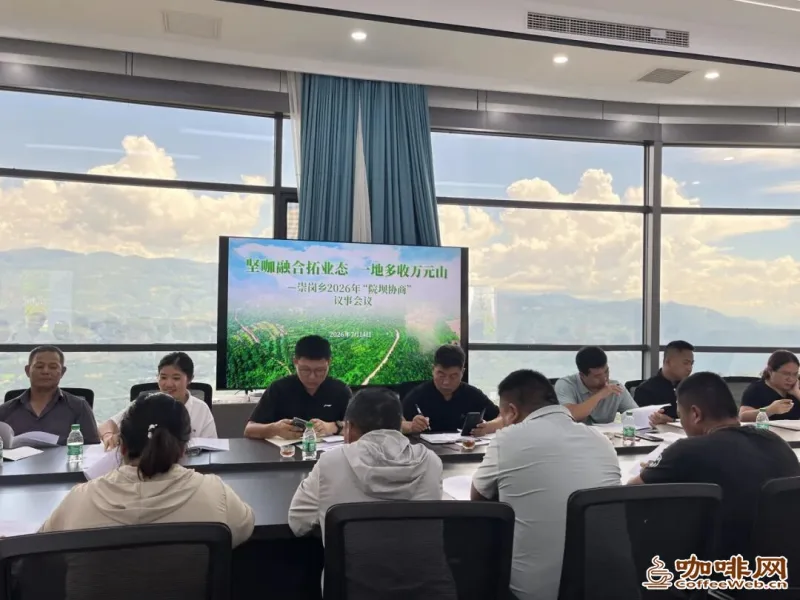
Courtyard consultation deliberating macadamia-coffee development.
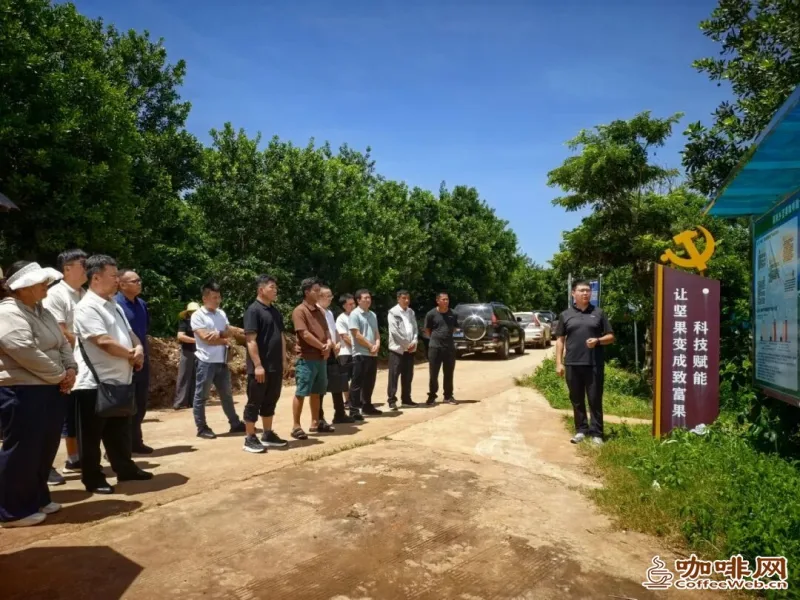
Technology empowers macadamia to become a “fruit of wealth.”
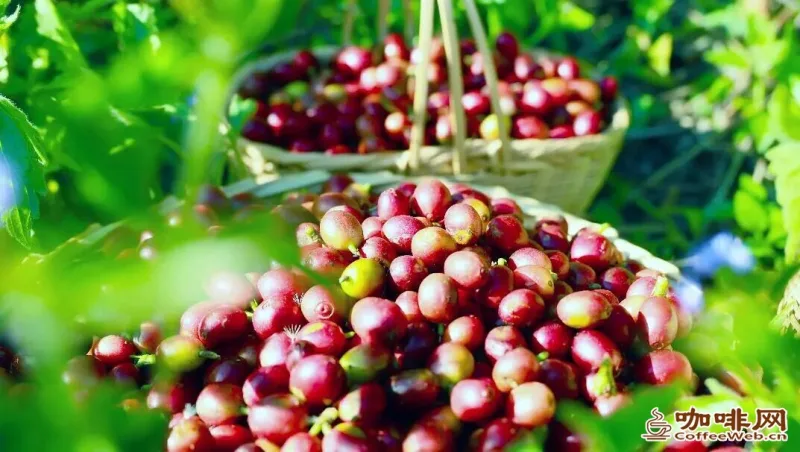
Fresh coffee cherries fill the baskets.
Meanwhile, macadamia trees provide natural shade for the coffee and a suitable microclimate, while coffee root exudates and fallen leaves return nutrients to the soil, nourishing the nut trees—the two living in symbiosis and a virtuous cycle. Calculations show that, compared with monoculture, intercropping raises per-mu output value by 1.5 to 2 times, truly achieving “one plot of land, two streams of income, threefold benefits.”
As the intercropping model was fully promoted, industrial bottlenecks gradually emerged; the problems of “area without yield, yield without quality, quality without brand” constrained the upgrade.
In response, the Yongde County CPPCC insisted that wherever industrial difficulties appear, consultative deliberation should follow, precisely building a grassroots consultation platform. On July 14, 2026, Yongde held a courtyard consultation at the Chonggang Township Dianka Manor titled “Integrating Macadamia and Coffee to Expand Business Forms—One Plot, Multiple Harvests, a Ten-Thousand-Yuan Mountain,” bringing together the township party committee and government, CPPCC members, village-group cadres, large growers, enterprise representatives and county functional departments to sit and deliberate the industry’s big plans.
At the consultation, members, growers and enterprise representatives actively offered advice. Member Li Yongqin suggested routine field agronomy hands-on training, leveraging professional cooperatives to integrate small-holder resources and building a production–sales docking platform to help farmers reach big markets. Member Zhou Shiming proposed unifying and standardizing intercropping density, selecting well-matched fine varieties, and promoting a green integrated-management model, guiding growers to develop collectively and break into markets together. Each functional department responded on the spot to the various opinions and clarified implementation measures, effectively pooling public wisdom and building development consensus.
This consultation formed a “345” macadamia-coffee integration mechanism—three safeguard mechanisms consolidating the industry’s foundations, four income-increase goals clarifying the development direction, and five integration measures running through the whole chain—to build a distinctive “ten-thousand-yuan mountain” sample of macadamia-coffee industry in the dry-hot river valley.
When one mountain’s vegetation thrives, the people of that place prosper. Today across Yongde, the ten-thousand-mu forests of intercropped macadamia and coffee are full of life, and the distinctive three-dimensional agriculture keeps improving in quality and efficiency. The Yongde County CPPCC continues to observe realities through research, pool strength through proposals, solve problems through consultation, and implement through supervision—polishing the wealth path the people explored on their own, turning macadamia into a steady “fruit of fortune” and letting the distinctive coffee send out a rich “aroma of income growth,” continuously writing the CPPCC’s answer sheet for rural industrial revitalization.
Reprint Note & Disclaimer
- This article is reprinted from Chinese media for information and cultural exchange. The views expressed are those of the original author and do not necessarily reflect the position of coffeeyo.com.
- All trademarks, brand names and logos mentioned belong to their respective owners.
- For cooperation, reprint or correction requests, please contact coffeeyo.com.
Reprint Notice & Disclaimer
- This article has been edited and compiled by China Coffee Network. The information and images therein come from public sources and the copyright belongs to the original author. This reprint is intended solely for information sharing within the coffee industry and does not represent the views of this website; all data and opinions are subject to the original article. Our thanks to the original author for creating and sharing it.
- For matters concerning content licensing, attribution, copyright or otherwise, please contact us promptly and we will verify and cooperate in handling them as soon as possible. We also welcome coffee origins, brands and industry media to exchange ideas and contribute articles.
- Contact China Coffee Network: Tel 400-0000-641 (+86-18288016826) | Email 405854472@qq.com | Address: Jinghong, Xishuangbanna, Yunnan Province / Tieling, Liaoning Province
Related Reading
 Three Decades of Shanghai-Yunnan Collaboration: A Coffee Bean ‘Ferments’ at the Import Expo
 Why Yongde’s Coffee Beans Won Gold in Shanghai – A Taste of ‘Life in Yunnan: 365 Days’
- Yunling Commentary: Yunnan Coffee Turnaround Hinges on Autonomous Pricing
 A ‘Travel Pack’ Reveals Another Possibility for Pu’er Baristas
- Bean in Short Supply: A Taiwan Youth on Yunnan Coffee as a Shared Cross-Strait Stage
- Five Years, Eight Championships: Lincang Coffee Joins the World Stage


 Liaoning ICP Security No. 21122402000217