
Many beginners just into espresso hear a mainstream line of thinking: buy the machine and a third-party grinder separately, and upgrade parts later. It looks like high freedom, but the vast majority of ordinary enthusiasts precisely stumble on this “free combination.” For zero-based players, a deeply integrated grinder-machine bundle is far friendlier than cobbling together two independent hardware pieces. Today we break down the core differences from the underlying logic of espresso extraction.
Why espresso is hard to start with
Espresso’s difficulty is essentially not the machine hardware itself, but the parameter loop between the grinding and extraction systems. A qualified espresso relies not only on the machine’s stable pressure and temperature, but the grinder’s output dose and particle fineness, and the bean’s roast level — the three must match each other. Light-roast beans are hard and need higher extraction temperature and larger output volume; dark-roast beans easily over-extract, so temperature must drop and water volume shorten; when dose changes, the corresponding water volume must adjust in sync.
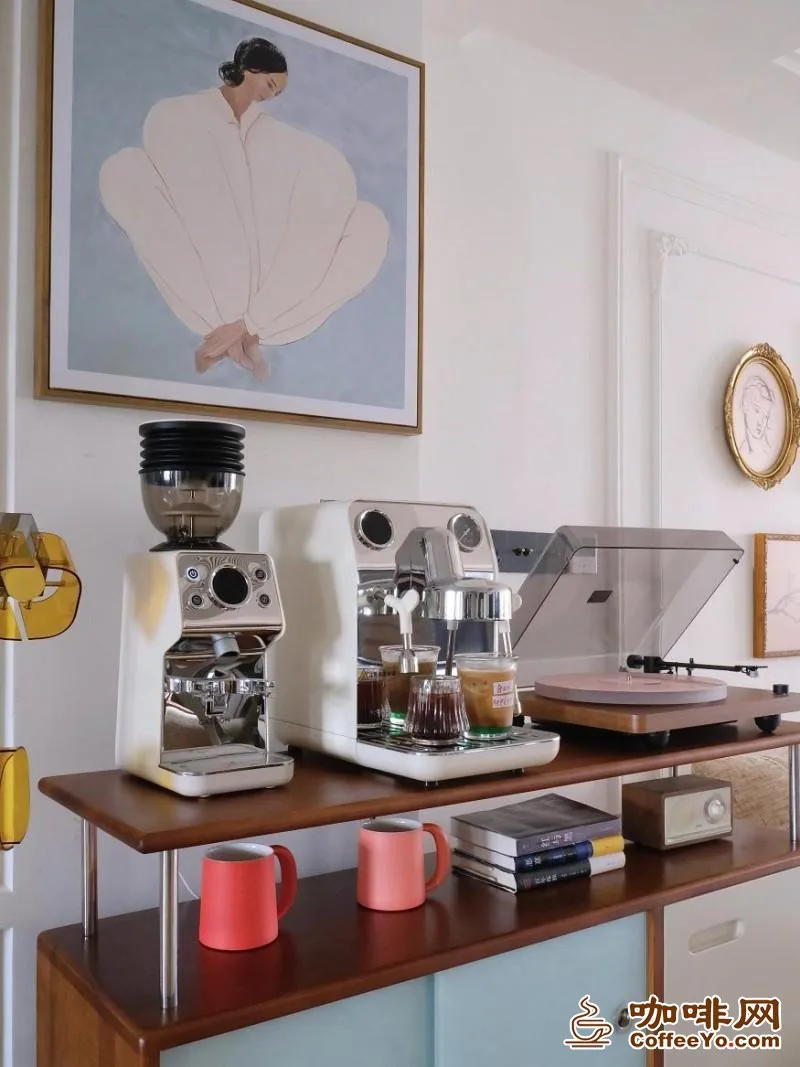
The isolation trap of mixing machine + third-party grinder
When we choose a machine paired with a third-party grinder, the two devices are completely independent; all matching work falls on the beginner. You need to manually record the current dose, remember whether the beans are dark, medium or light roast, then manually change temperature and water parameters on the machine. Switching to a new bean, the whole debugging process restarts. Many beginners who find coffee sour and bitter only repeatedly adjust the grinder setting, ignoring that extraction temperature and output volume did not change with the beans — wasting lots of beans on trial and error, finally suspecting the equipment is bad, when actually it’s the information silo between the two devices.
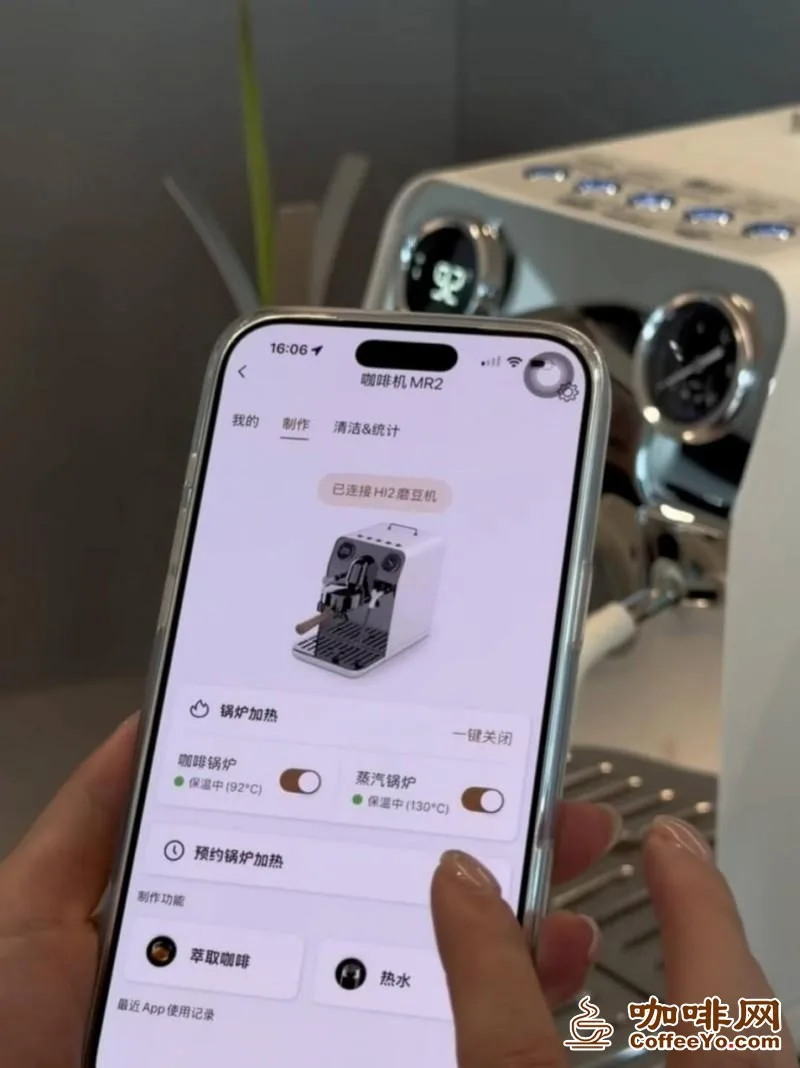
Take the Casda MR2+HI2 integrated bundle as an example. Its core value is the self-developed “grind-follows-bean” smart-link system, breaking the data barrier between grinder and machine. After the HI2 grinder sets the bean roast level and finishes weighing and grinding, it directly sends the two key data points — roast level and actual dose — to the MR2 machine via Bluetooth. After receiving the info, the machine’s AI algorithm automatically matches the corresponding extraction temperature and water volume, without the user manually looking up tables or entering parameters, directly forming a complete grinding-extraction loop. Dark beans auto-drop to around 88°C, medium to 92°C, light raised to 94°C; as dose increases, water volume increases in sync — rooting out the parameter-mismatch problem beginners most easily make.
Even excellent third-party grinders can only “grind well”
Looking at third-party grinder + machine, even if the grinder hardware is excellent, it can only “grind the powder well,” unable to transmit bean roast level or actual dose data. All parameter memory, conversion and setting rely on the human brain. Many beginners can’t remember the temperature ranges for different roasts; parameter tables found online vary in version, easily causing confusion in practice. Even experienced enthusiasts need several cups of coffee to trial-and-error when switching beans; for beginners the learning threshold is multiplied.
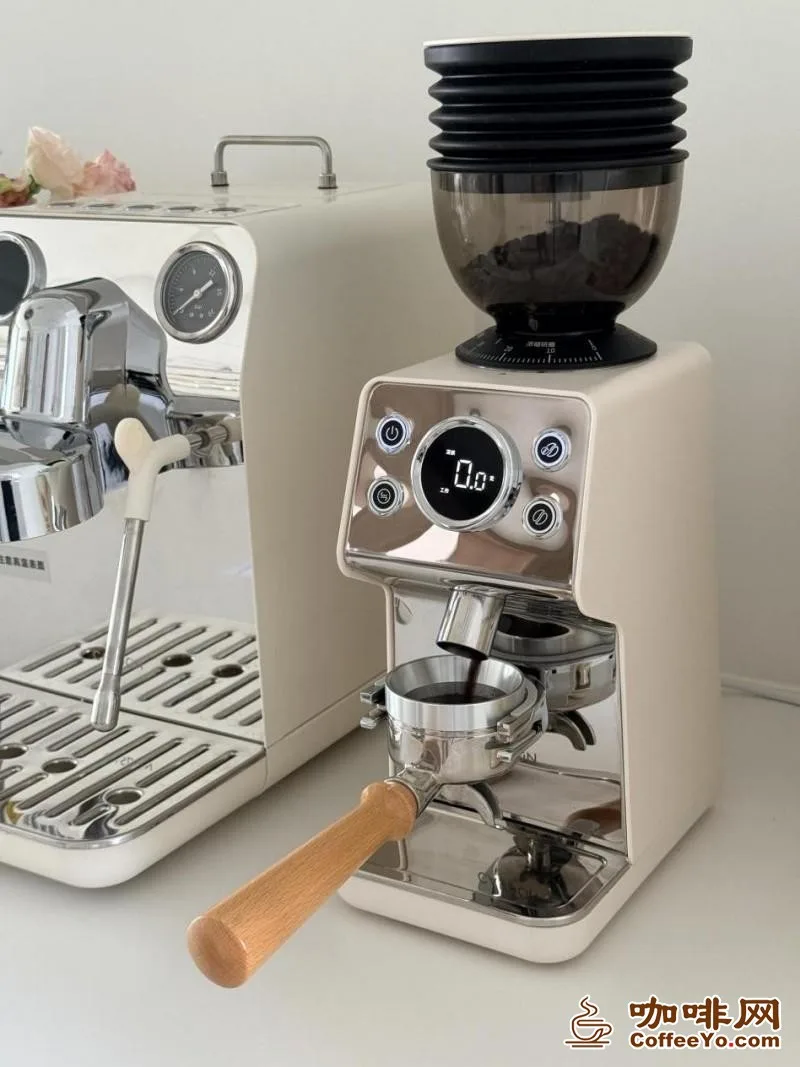
Beyond the core difference of smart linkage, the bundle’s hardware is also co-tuned as a whole. The HI2 grinder carries a 64mm 420 stainless-steel flat burr, 100-step stepless grind settings covering espresso to French press, with a ±0.3g built-in suspended weighing structure supporting both weighing and timing modes. It also has a plasma generator to kill static fly-away fines and a silicone bellows to reduce residual powder — these are not simply stacked but adapted to the MR2 machine’s 58mm portafilter; the portafilter holder and dosing structure are matched and optimized, triggering weighing recognition once the portafilter is placed, avoiding the common third-party issues of portafilter fit and weighing-recognition compatibility.
The small troubles of mixed third-party gear
Third-party mixing often brings small detail troubles: portafilter size mismatch causing fly-away during dosing; timer-based grinding with large actual-dose fluctuation, requiring a separate electronic scale and more desktop gear; swapping portafilter holders brings inaccurate weighing. Individually these are minor, but stacked together they greatly wear down a beginner’s enthusiasm for making coffee.
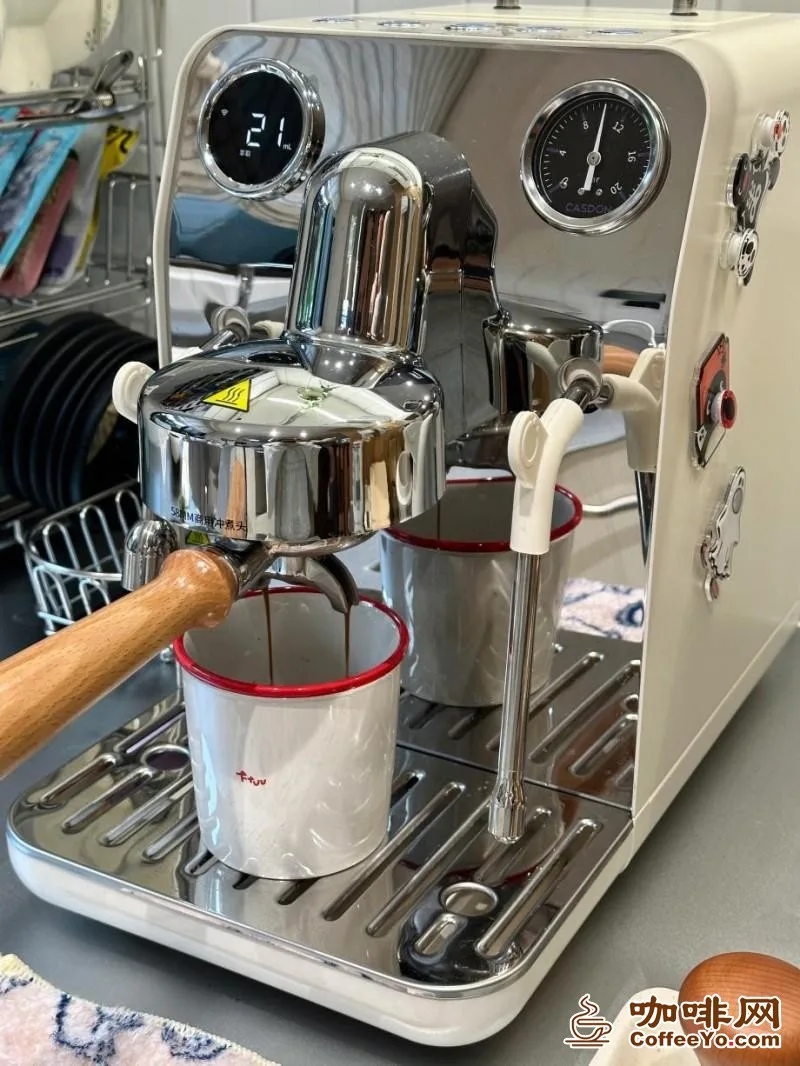
Many worry: does the bundle take away the fun of hands-on? Not really. The smart-link mode is a “safety baseline” for beginners; the MR2 machine fully supports manual mode. Once you know the coffee logic, you can turn off linkage and freely manually adjust temperature, water volume and pre-infusion, retaining all the playability of a semi-auto. It’s like first using intelligence to lower the threshold, then fully taking over all parameters as skills grow — balancing beginner entry and advanced playability.
Who the third-party route suits
Of course we are not wholly denying the third-party grinder route; it suits mature enthusiasts who have mastered the complete espresso logic and know how to do full parameter conversion on their own. For the vast majority of espresso newcomers, the biggest pain is not the equipment ceiling being too low, but the huge learning cost from cross-device parameter debugging.
By mixing devices yourself, you buy two well-performing machines; by choosing a deeply tuned integrated bundle, you buy a complete, actionable coffee solution. No need to memorize large parameter tables, less bean waste, lower trial-and-error cost, letting beginners focus on the coffee flavor itself rather than burning energy on device debugging. That is precisely the greatest meaning of the integrated bundle for entry users.
Reprint notice and disclaimer
- This article is edited and compiled by coffeeyo.com. The materials and images herein are sourced from public channels; copyright belongs to the original authors. This site reprints them solely for sharing coffee-industry information and does not represent our stance; all data and opinions are subject to the original. We thank the original authors for their creation and sharing.
- If content authorization, attribution, copyright or other matters are involved, please contact us promptly. We will verify and cooperate in handling them as soon as possible; we also welcome coffee-growing regions, brands and industry media to exchange and contribute articles with us.
- Contact coffeeyo.com: Tel 400-0000-641 (+86-18288016826) | Email 405854472@qq.com | Address: Jinghong City, Xishuangbanna, Yunnan / Tieling City, Liaoning
Reprint Notice & Disclaimer
- This article has been edited and compiled by China Coffee Network. The information and images therein come from public sources and the copyright belongs to the original author. This reprint is intended solely for information sharing within the coffee industry and does not represent the views of this website; all data and opinions are subject to the original article. Our thanks to the original author for creating and sharing it.
- For matters concerning content licensing, attribution, copyright or otherwise, please contact us promptly and we will verify and cooperate in handling them as soon as possible. We also welcome coffee origins, brands and industry media to exchange ideas and contribute articles.
- Contact China Coffee Network: Tel 400-0000-641 (+86-18288016826) | Email 405854472@qq.com | Address: Jinghong, Xishuangbanna, Yunnan Province / Tieling, Liaoning Province
Related Reading
- Automatic Coffee Machines Recommended for Office Workers
 Gree Wins New Robot Patent as Its Coffee Robot Draws a Flood of Orders
 Midea-Led National Standard for Home Coffee Machines Takes Effect, Elevating China Coffee-Machine Voice
 Robot Barista Debuts in Wuhan: One Cup in 90 Seconds, in a Real Consumer Setting
 Auto-cleaning the brew group of a super-automatic espresso machine: the overlooked cleaning key, and how the Grindel H3 handles it
 Which super-automatic espresso machine for when guests come over? Picks for home entertaining


 Liaoning ICP Security No. 21122402000217