
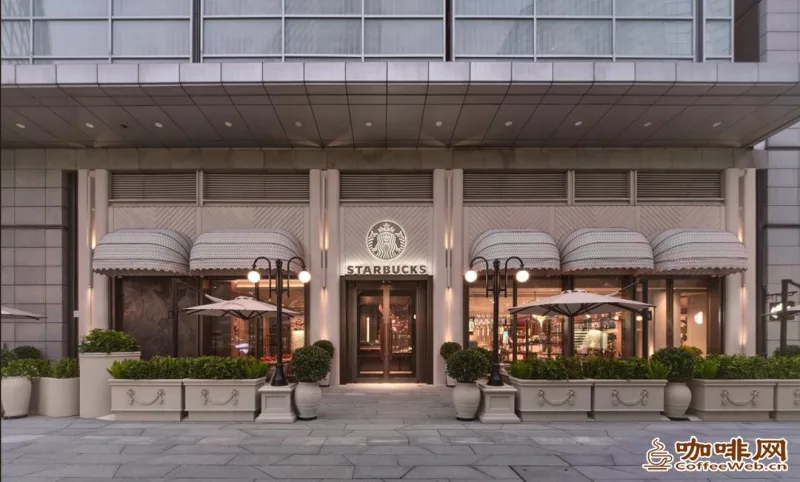
Brief (coffeeyo.com): Starbucks China has opened its new-generation flagship, the Starbucks Reserve Xingyifang, at Beijing SKP — the latest expression of its “a thousand stores, a thousand faces” strategy. As store openings and closures nearly cancel each other out industry-wide, the company is betting on differentiated formats rather than sheer store count.
By Wu Yujia, Cover News
On September 16, the latest result of the “a thousand stores, a thousand faces” strategy in a landmark retail setting — Starbucks China’s new-generation flagship, the Starbucks Reserve Xingyifang — officially opened at Beijing SKP. It brings together Reserve coffee, Italian desserts, SKP-exclusive “Ode to Milan” merchandise and the first nationwide showing of the “Global Inspiration Collection” gifts, creating a destination that blends coffee culture, lifestyle aesthetics and premium gifting.
Competition in China’s coffee market has become fierce over the past two years. Figures from the food-service database Canyan put the total number of coffee shops nationwide at about 227,000. Between May 2025 and July 2026, the industry opened roughly 53,000 new stores, yet net additions came to just 1,065 — closures have almost caught up with openings, and the sector is reshuffling fast.
The contest has moved beyond who can open stores fastest or price lowest. Luckin has expanded through scale and supply-chain strength; Cotti is adjusting the pace of its franchise rollout; Starbucks is trying to hold on to the “third space” through scenarios and culture. Back-end supply chain and quality control stay uniform, while front-of-house space, store format and experience are localised — flagships build the brand, smaller formats capture sites, and the company steps away from the old habit of competing purely on store count.
Each of these formats answers to a different business logic. Reserve flagships in the core commercial districts of higher-tier cities carry brand presentation and check-in appeal. Standard stores in county-level markets drive brand penetration. Compact Xinglifang units and mobile coffee carts in residential communities, office buildings and scenic areas lower the investment per store and pick up fragmented locations. Cultural-tourism and intangible-heritage themed stores come with built-in destination appeal, drawing visitors who make a special trip and lifting food and merchandise sales, which in turn supports average transaction value.
Industry observers say the core logic of “a thousand stores, a thousand faces” is a shift from chasing store volume to deepening the quality of each store and the breadth of scenario coverage. Distinctive stores also face practical tests, however: customised refurbishments cost more to design and operate than standardised ones. Whether differentiated experiences can be turned into a replicable profit model — rather than fading into a short-lived social-media check-in craze — remains to be proven by the market. Ultimately, whether the model works will depend on whether heritage- and tourism-themed stores can build steady footfall and repeat purchases.
Reprint Note & Disclaimer
- This article is reprinted from Chinese media for information and cultural exchange. The views expressed are those of the original author and do not necessarily reflect the position of coffeeyo.com.
- All trademarks, brand names and logos mentioned belong to their respective owners.
- For cooperation, reprint or correction requests, please contact coffeeyo.com.
Reprint Notice & Disclaimer
- This article has been edited and compiled by China Coffee Network. The information and images therein come from public sources and the copyright belongs to the original author. This reprint is intended solely for information sharing within the coffee industry and does not represent the views of this website; all data and opinions are subject to the original article. Our thanks to the original author for creating and sharing it.
- For matters concerning content licensing, attribution, copyright or otherwise, please contact us promptly and we will verify and cooperate in handling them as soon as possible. We also welcome coffee origins, brands and industry media to exchange ideas and contribute articles.
- Contact China Coffee Network: Tel 400-0000-641 (+86-18288016826) | Email 405854472@qq.com | Address: Jinghong, Xishuangbanna, Yunnan Province / Tieling, Liaoning Province
Related Reading
 ‘All-Ice’ Coffee Goes Viral! Will the Next Hit Be Your Personal Favorite?
- Hong Kong’s Dyee Coffee Lands in Qianhai, Building a Specialty Pour-Over Outpost
 Ken Yue Coffee Opens Egg-Tart Pop-Up in Hangzhou: Sweet Craft, Reinvented Classics
 World Cup Enters the Breakfast Slot: Can Coffee-Tea Brands Turn Traffic into Orders?
- ICE Agricultural Futures Mostly Rise at Close; Coffee Futures Up 3.28%
- ‘Sleep Cafés’ Become a New Favorite Among Seoul Office Workers


 Liaoning ICP Security No. 21122402000217