
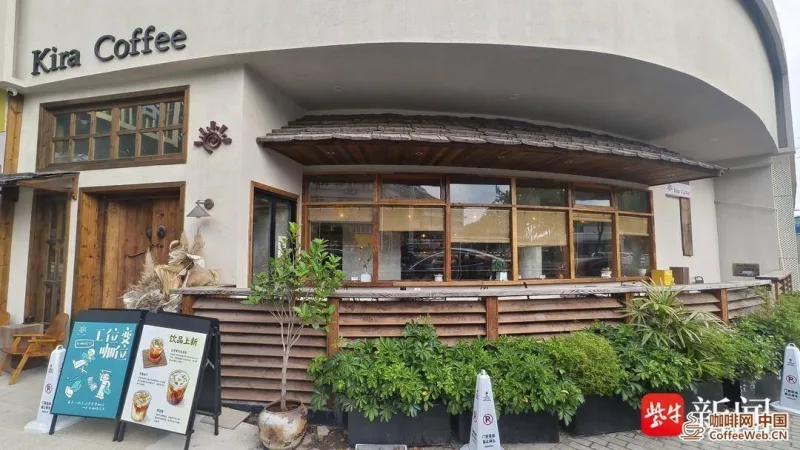
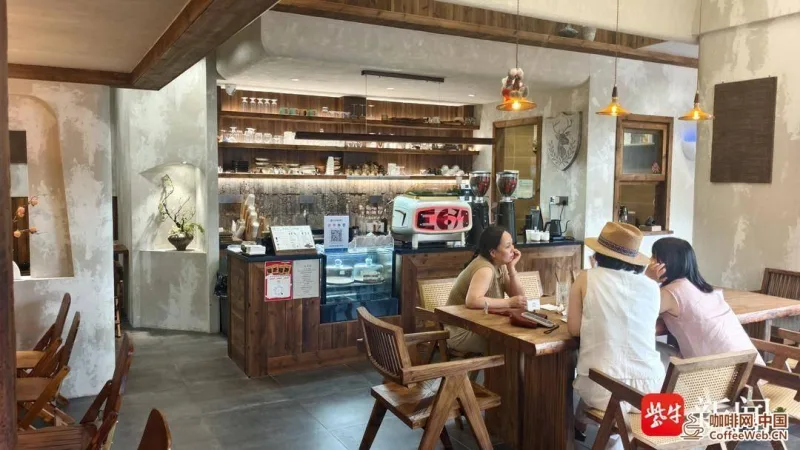
At a Glance (China Coffee Network): Afternoon sunlight pours into Kira Coffee on the corner of an old street; push open the door and the rich, mellow aroma of coffee greets you, the barista intent on grinding beans, a few guests chatting at ease. Warm yellow light fills the room, and the wabi-sabi decor exudes an unpretentious beauty that feels instantly healing. Yunqi Coffee by Jiangong Lake offers quite another scene: a breeze carrying the lake’s mist drifts in through the windows, lakeside seats face an expanse of blue ripples, and young people sit sipping coffee as natural poetry and youthful energy blend in harmony.
Afternoon sunlight pours into Kira Coffee on the corner of an old street; push open the door and the rich, mellow aroma of coffee greets you, the barista intent on grinding beans, a few guests chatting at ease. Warm yellow light fills the room, and the wabi-sabi decor exudes an unpretentious beauty that feels instantly healing. Yunqi Coffee by Jiangong Lake offers quite another scene: a breeze carrying the lake’s mist drifts in through the windows, lakeside seats face an expanse of blue ripples, and young people sit sipping coffee as natural poetry and youthful energy blend in harmony.
Today, the aroma of coffee has long since spread across the whole city of Haimen, with 84 distinctly styled coffee shops scattered through its streets, lakesides and industrial parks, presenting a wide range of consumption scenarios. To deepen the building of a city that is both talent-friendly and youth-development-oriented, and to fill gaps in leisure amenities for young people, the Haimen District Bureau of Commerce of Nantong recently launched the “Haimen Coffee Map” WeChat mini-program, which offers one-tap shop-finding and navigation, bundled consumption vouchers, and check-ins at distinctive cafes. Behind a city filled with coffee fragrance lies Haimen’s thriving coffee economy — and, more than that, the gentle intention of a small river-and-sea town to embrace young people and keep talent.
The proliferation of coffee shops across Haimen rests on a clear foundation of urban development. “In recent years, as Haimen’s industries have grown, more young people from and graduated in first-tier cities have come to Haimen to work and start businesses, bringing with them the coffee-drinking habits of those cities; coffee has thoroughly shifted from a trendy beverage to a daily necessity for young people,” said Zhang Jianfeng, deputy director of the Haimen District Bureau of Commerce, frankly.
At the same time, Haimen has formed a fully tiered coffee consumption system: affordable chain coffee at 9.9 yuan suits commuters who need a quick, time-saving and economical cup; mid-range independent specialty cafes focus on social check-ins with atmosphere dialed up to the full; high-end lakeside cafes and quiet neighborhood shops meet the need for solitary relaxation or private small gatherings, with no spending threshold and full coverage of scenarios. To further boost consumption and empower coffee shops, the Haimen Bureau of Commerce, together with Haimen Subdistrict and the China Construction Bank Haimen Branch, issued 100,000 yuan in dedicated “coffee consumption vouchers”.
Beyond this, Haimen continues to improve its business environment, encouraging owner-operators to open shops and nurturing the coffee economy, with simple setup procedures and controllable startup costs. More and more young people returning home after years in the tea and catering industries are choosing to open their own personalized coffee shops, creating distinctive coffee spaces that belong to Haimen itself.
Tucked beside the old supply-and-marketing cooperative on Haimen Subdistrict, Kira Coffee is a healing “third space” carefully built by a female entrepreneur who returned to her hometown. Owner Xu Xiaoxiao spent 11 years working in Shanghai and has been running a chain tea brand since returning home. Speaking about why she opened the shop, she is quite direct: “I lived in Shanghai for many years, and after coming back to Haimen I always felt a regret — quite a few cafes in Haimen simply could not get both taste and environment right. Either the coffee was good but the shop was noisy, with no quiet space to chat, or the decor was exquisite and photogenic but the coffee fell short. So I decided to open a little place that suited me.”
The shop is only 50 square meters, took nearly a year to prepare from start to finish, and cost close to 500,000 yuan to convert the old supply-and-marketing cooperative site. Inside, hard straight lines are abandoned in favor of soft rounded curves throughout; at the door sit vintage wooden stools she hunted down herself, and there is no loud, eye-catching storefront logo — understated yet full of texture. Speaking of her original intention, Xu Xiaoxiao is full of empathy: “At our age, at home we are mothers and wives, at work we are employees and managers; we are always playing the roles others need, and rarely get to be ourselves. I wanted to open a relaxing space of my own, where I don’t have to mind my status and can simply please myself.”
Drawing on Haimen’s local produce, the shop worked with the district bureau of commerce to develop four Haimen-exclusive coffee specials, digging into local specialties and folding the taste of home into the coffee. “We use Haimen’s local loquat honey and loquat leaves for two refreshing Americanos, and two more that incorporate Haimen Yisheng liquor, in rice-wine and baijiu versions to suit different people, paired with old-style Haimen snacks like matuan (sesame balls) and tangzao (sugared jujubes), so that young people from elsewhere can taste Haimen and locals can sip a cup of hometown feeling,” Xu Xiaoxiao explained.
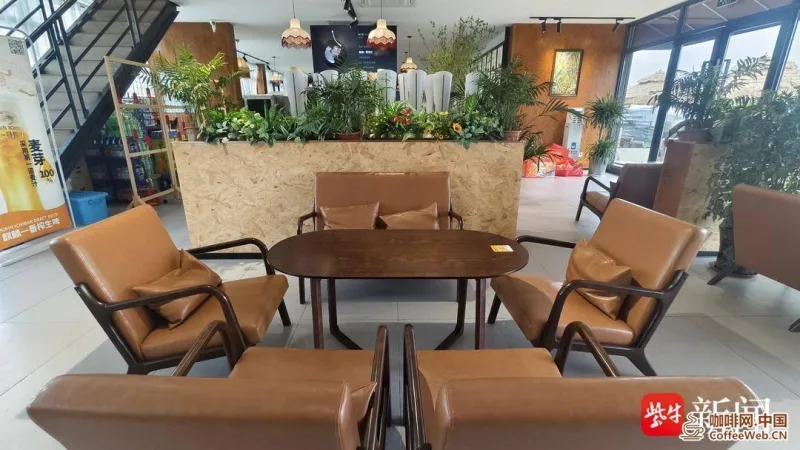
Since the Haimen Coffee Map went live, foot traffic at the shop has risen markedly. “Many young people saw the push from the official WeChat account and followed the coffee map to find us specifically; the local loquat series sells best. Quite a few newlyweds come here for wedding photos, and some young people treat the place as a quiet matchmaking corner — the map has genuinely brought customers to our little shop,” Xu Xiaoxiao said.
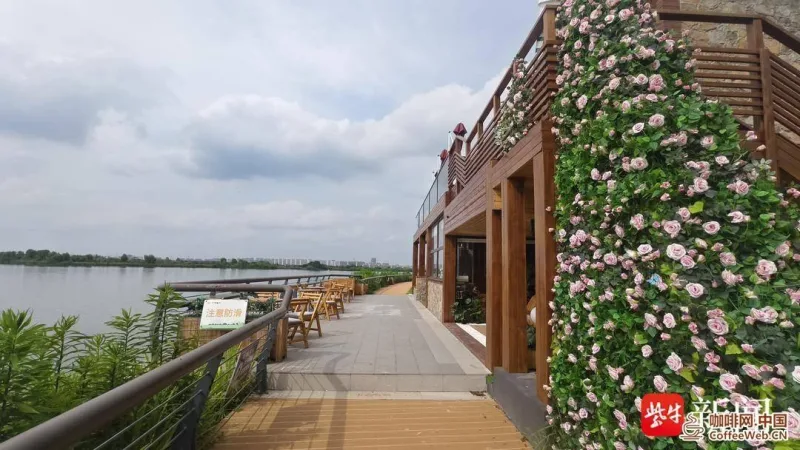
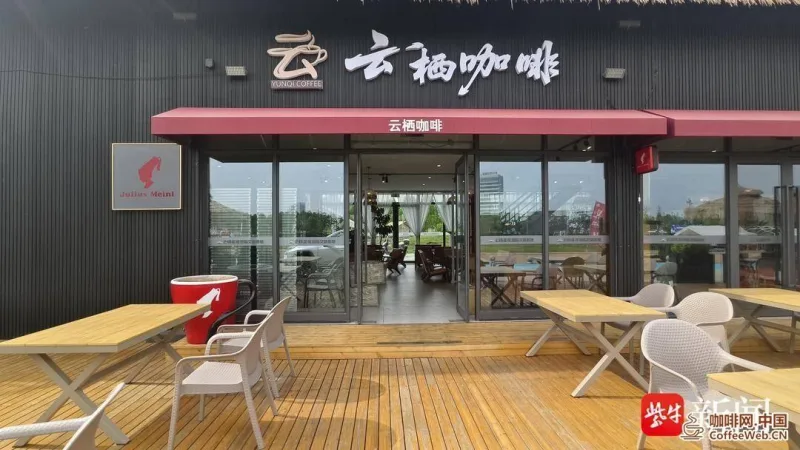
Completely different from the niche, healing style of the old streets, Yunqi Coffee, located by Jiangong Lake in the Haimen Economic and Technological Development Zone, is a state-run, trendy lakeside coffee space. It opened this January alongside the Yunqi campsite, drawing on the whole lakeside camping scenery to create a nature-style coffee space, with raw wood, greenery and full-height floor-to-ceiling windows — push the window open and the lake view is right there, the atmosphere dialed up to the full.
“We deliberately placed a coffee shop by the lake to meet young people’s current desire to be close to nature and their preference for scenario-based leisure,” explained Shao Jiahai, head of Yunqi Coffee. The shop sits close to the Jiujing Esports Center, Haimen Secondary Vocational School and the Football Town, surrounded by a dense young clientele; esports players after training, students after class, and team-building groups from tech startups all choose to come here to rest and relax.
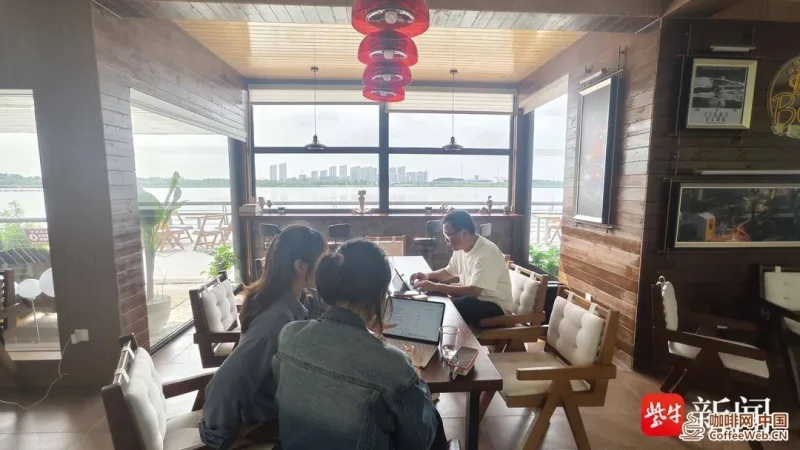
Yunqi Coffee has also linked up with Haimen’s local sports IP to create an outdoor “second venue” for Suchao football matches, achieving two-way integration of coffee and sports. “When a Suchao football match once coincided with rain, outdoor viewing was inconvenient, and large numbers of fans all came into our shop — the whole coffee area was packed,” Shao Jiahai said. The shop regularly hosts youth matchmaking events, parent-child coffee workshops and lakeside camping parties, paired with regular resident performances and lakeside night-economy offerings: sipping coffee by the water and unwinding by day, watching matches and gathering at dusk, comprehensively meeting young people’s diverse leisure needs.
From small, exquisite neighborhood cafes full of local feeling to trendy lakeside coffee houses built by the water; from affordable everyday chains to locally flavored creative coffee, Haimen has long since moved beyond the shallow logic of using coffee merely to drive consumption, treating the coffee economy instead as an important lever for serving young people and retaining talent. One small coffee map consolidates the city’s coffee resources, issues dedicated consumption subsidies, and precisely meets young people’s needs for daily leisure, social check-ins and solitary relaxation — letting the city understand its youth and its youth put down roots, steadily polishing the city’s identity as talent-friendly and youth-development-oriented.
Yangtze Evening Post / Ziniu News reporter Zhu Yayun
Proofreading Zhu Yaping
Reprint Notice & Disclaimer: This article is reprinted from Yangtze Evening Post / Ziniu News. All rights belong to the original publisher.
Related Reading
- Bean in Short Supply: A Taiwan Youth on Yunnan Coffee as a Shared Cross-Strait Stage
- Five Years, Eight Championships: Lincang Coffee Joins the World Stage
 Haikou ‘Union Cup’ Barista Skills Competition Kicks Off to Empower the Service Sector
 Yunnan Specialty Coffee Beans Deliver an ‘Excellent’ Report: Path to Value Leap
- Cross-Strait Tides Rise: A Taiwan Youth Farms Coffee in Yunnan, a Cup Bridging Both Sides
 2026 2nd Yunnan Treasure Coffee Green Bean Competition (Cup of Excellence Pilot) Concludes




 Liaoning ICP Security No. 21122402000217