
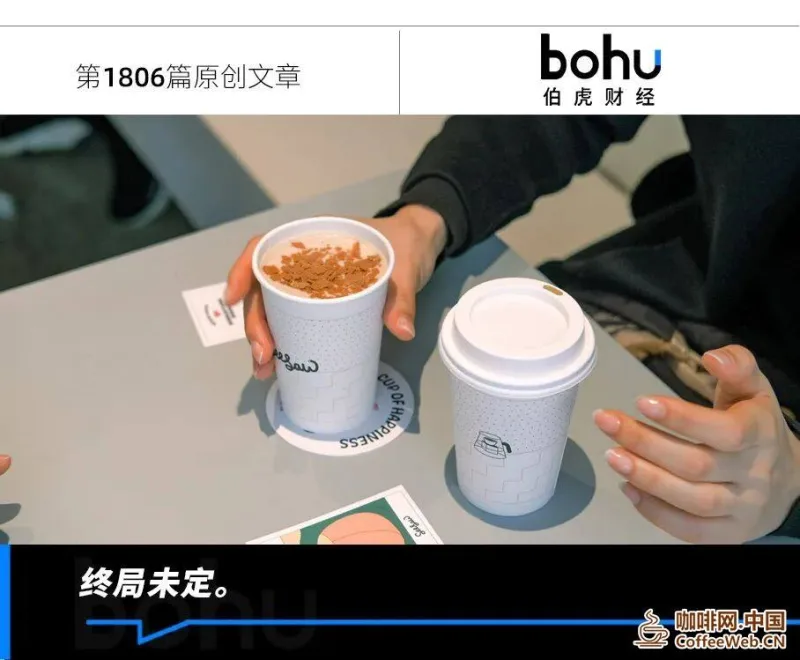
At a Glance (China Coffee Network): Seesaw, hailed as the pioneer of China’s specialty coffee and its “Whampoa Military Academy”, has entered bankruptcy proceedings.
Seesaw, hailed as the pioneer of China’s specialty coffee and its “Whampoa Military Academy”, has entered bankruptcy proceedings.
Source | BohuFN
Author | Lynn
The Shanghai Third Intermediate People’s Court has formally accepted the bankruptcy liquidation application filed against Shanghai Xishe Coffee Co., Ltd., the operator of Seesaw. Public records show the liquidation was petitioned by two companies — Shanghai Liuli Gongfang Glass Art Co., Ltd. and Shanghai Malu Industrial Co., Ltd. — on the grounds that Xishe Coffee was unable to repay debts as they fell due and clearly lacked the ability to pay.
Lawyers note that the court’s acceptance of a bankruptcy liquidation case does not mean Xishe Coffee will ultimately be liquidated. During judicial bankruptcy proceedings, a company may undergo restructuring or reach a settlement with creditors; if either succeeds, the business can be revived and continue operating. Only when the company has no restructuring value and the two sides cannot reach a comprehensive settlement will it actually be liquidated.
Seesaw was once valued at 1 billion yuan, and at its peak operated 135 stores.
Is the “fall” of such a specialty coffee brand the result of its own mismanagement, or of how the industry has evolved?
Seesaw ‘Falling’
Founded in 2012, Seesaw was one of the first domestic chain brands to roll out standardized specialty coffee, and is also called the pioneer of Chinese specialty coffee.
In the early days of China’s specialty coffee scene, Seesaw was the first to introduce category concepts such as specialty beans and single-origin pour-over. With products priced between 30 and 40 yuan, it focused on premium experiential consumption. Combined with design-led store spaces, Seesaw filled a gap in the local specialty chain market at the time.
The entry of capital accelerated Seesaw’s expansion. It raised institutional investment in 2017, 2021 and 2022, reaching a peak valuation of 1 billion yuan.
With funds in hand, Seesaw sped up its store rollout. Data show it opened 43 new stores in 2021 and 67 in 2022, and by August 2022 its total store count had surpassed 100.
Seesaw’s expansion ambitions were unambiguous. It not only kept the large-format, directly operated model, with main stores concentrated at 100 to 220 square meters, but also sited stores mostly in high-rent settings such as core commercial districts and office buildings, using a customized “one store, one design” fit-out scheme.
Starting in 2023, Seesaw’s operations began to go off track. Its expansion slowed, with only 12 new stores opened that year. From that year on, Seesaw raised no new financing, and suppliers began to encounter delayed payments for goods.
By now, the situation has escalated to the point where dozens of suppliers have filed lawsuits against Xishe Coffee, most of them over sales-contract disputes.
Drawing on the views of several coffee-industry figures, Seesaw’s core problem is that its specialty model never worked out an efficient operating model, nor did it cover the tastes of the mass market.
Jiang Han, a senior analyst at the Pangoal Think Tank, noted that Seesaw relied on capital in its early stage to scale up quickly, but refined operations, cost control and supply-chain bargaining power did not improve in step, leaving store fixed costs persistently high.
Once capital stopped injecting funds, operational problems surfaced faster. In fact, this is a cycle with no easy answer. Early investors betting on specialty coffee were not absolutely bullish on it; they hedged by betting on both sides to see which had the better odds. As affordable coffee expanded rapidly and produced a proven profit model, capital naturally shifted its attention elsewhere.
Yet, faced with its own operational mess, Seesaw steered toward even more dangerous ground.
For example, to counter falling foot traffic, Seesaw launched group-buy discounts on platforms such as Meituan and Douyin, with single items priced as low as 6.9 yuan, alongside promotions such as “any item for 19.9 yuan” across the store.
Zhang Yi, CEO of iiMedia Research, believes low-price promotions did little to improve operations and instead tended to blur brand positioning, drive away the original high-end customers, and leave new customers with a weak understanding of the brand.
Seesaw employees revealed that day-to-day strategy shifted frequently: livestream coupon sales ran for a while, and trend-chasing co-branding campaigns were tried for a spell, but all lacked systematic, professional planning and made hardly a splash.
That Seesaw has sunk to its present state is indeed surprising, yet looking back at its trajectory, it is hardly unexpected.
Small and Beautiful: The Core of the Business
Of course, Seesaw is not the only one making adjustments; it is also a microcosm of the specialty coffee industry’s development.
Over the past couple of years, specialty coffee has indeed been going through a “reshuffling period”, with the sector visibly cooling from 2024 onward.
Media data show that from 2021 to 2023, investment deals in the coffee sector numbered 11, 15 and 18 respectively, then fell to 10 in 2024. Manner’s last funding round was in 2022, and M Stand’s in 2023. This timeline lines up exactly with Seesaw’s.
Not long ago, Centurium Capital, the controlling shareholder of Luckin Coffee, reached an agreement with Nestle to acquire Blue Bottle Coffee’s global stores for less than US$400 million. Earlier still, the parent company of Peet’s Coffee went through a sale and restructuring.
The ceiling on specialty coffee is plain to see, dictated by the very nature of specialty coffee itself — and this is the core reason capital has been discouraged.
Specialty coffee refers to coffee made from specialty-grade beans, with greater emphasis on origin, processing and flavor, highlighting the style and artistry of store design, and following a high-quality, high-price path.
This dictates that specialty coffee’s consumer base is relatively niche, made up of a small number of heavy coffee users. Specialty coffee is destined to be a small but beautiful business.
Such a small but beautiful business also faces the impact of affordable coffee.
The 9.9-yuan coffee swept the industry relentlessly, reshaping consumers’ sense of what coffee should cost. In just a few years, Luckin Coffee and Cotti Coffee created one “ten-thousand-store” legend after another, becoming the public’s default choice for coffee and tugging at investors’ nerves.
An industry insider pointed out: “What investors want are the returns of a Luckin or a Manner, but a proper specialty coffee shop simply cannot deliver that kind of return — the actual payback period is quite long — so many investors have become more cautious.”
More fatal still, as affordable coffee scales up rapidly, the equipment and ingredient advantages once held by specialty coffee have become less and less obvious. Budget brands can buy better beans and equipment at lower cost, steadily closing the gap with specialty coffee on this front — even erasing it entirely.
At FBIF 2026, a number of coffee-industry insiders told BohuFN that coffee itself has no obvious barriers: whatever Brand A has, Brand B can buy too.
Today, the biggest difference between specialty and affordable coffee lies in the in-store experience. Budget coffee shops are often small and offer no seating, whereas specialty coffee can satisfy the demand for a space where consumers sip their coffee while sitting down to enjoy a slower pace.
Has specialty coffee lost outright? Not necessarily.
Where Does Specialty Coffee Go from Here?
Not every specialty coffee brand is faring badly.
Peet’s Coffee is revered as “the founding father of Starbucks”. Its parent JDE Peet’s 2025 results show that, among its many brands, Peet’s stood out, with China singled out as a growth region. In 2025, Peet’s China stores maintained double-digit sales growth.
Founded in 2015, Manner, with its “small-store model + specialty coffee” approach, has opened 2,563 stores.
In addition, a new crop of homegrown specialty coffee brands has emerged in China over the past two years. Grid Coffee, backed by Yuanfudao, was founded three years ago and has surpassed 100 stores, mostly located in high-end commercial complexes, with products priced in the 24–36 yuan range; Bixing, focused on the 15–20 yuan price band, nearly doubled its store count in 2025, from 160 to close to 300; Qingsong Coffee, founded in 2023 and centered on Americanos, has opened 45 directly operated stores.
As can be seen, today’s specialty coffee sector is showing a trend of polarization.
In April 2026, Manner raised prices on some products, citing the use of better, higher-quality coffee beans.
This move also reflects a market signal: there are still plenty of consumers willing to pay for better-quality, higher-priced coffee. And that is precisely where specialty coffee’s opportunity lies.
Moreover, as the overall coffee market grows larger, specialty coffee is gaining favor alongside it.
In an interview at FBIF 2026, Peet’s Coffee’s general manager for retail noted that under the price war, coffee’s value has been severely weakened and diluted for consumers. But as a brand, it is glad to see this change: the market, through low-priced, high-quality products, has quickly cultivated demand for coffee among some consumers.
An interesting phenomenon is that, as budget coffee broadly moves away from the 9.9-yuan price point, its gradually rising prices are also pushing some consumers toward specialty coffee. “Rather than buying an ordinary coffee for a dozen-plus yuan, I might as well spend a little more on a specialty coffee with a better experience,” more than one interviewee told BohuFN.
In the poor performance of brands like Seesaw, we see the severe challenges facing specialty coffee. Yet at the same time, in the steady growth of brands like Manner, we also see its many opportunities and possibilities.
Going forward, specialty coffee’s opportunity still lies in — on top of a price higher than affordable coffee — showing consumers more consistent output, clearer flavors, or a more definite sense of value.
Reference Materials:
1. Xinpinlue Finance: Seesaw’s Specialty Coffee Dream Is Completely Shattered
2. Lianshang Net: Why Did Luckin’s Largest Shareholder Buy Blue Bottle Coffee?
3. China Business Journal: Behind the Bankruptcy Liquidation of “Capital’s Darling” Seesaw — the Specialty Coffee Sector Splits at Speed
4. Banma Consumer: Specialty Coffee Struggles to Win Over the Masses
5. Canyin Laoban Neican: After the 9.9-Yuan Tide Recedes, a Group of Specialty Coffee Brands Fight Back
The cover image and accompanying images of this article were compiled and edited by China Coffee Network (coffeeyo.com). Copyright belongs to the respective rights holders.
Original title: “Specialty Coffee Hasn’t Gone Cold”
Reprint Notice & Disclaimer: This article is reprinted from BohuFN. All rights belong to the original publisher.
Related Reading
- Bean in Short Supply: A Taiwan Youth on Yunnan Coffee as a Shared Cross-Strait Stage
- Five Years, Eight Championships: Lincang Coffee Joins the World Stage
 Haikou ‘Union Cup’ Barista Skills Competition Kicks Off to Empower the Service Sector
 Yunnan Specialty Coffee Beans Deliver an ‘Excellent’ Report: Path to Value Leap
- Cross-Strait Tides Rise: A Taiwan Youth Farms Coffee in Yunnan, a Cup Bridging Both Sides
 2026 2nd Yunnan Treasure Coffee Green Bean Competition (Cup of Excellence Pilot) Concludes



 Liaoning ICP Security No. 21122402000217