
At a Glance (China Coffee Network): A China News Service reporter visited the "Star Bazaar" in Urumqi to explore a market scene where Xinjiang's intangible cultural heritage blends with coffee culture in a fresh new way.
China News Service, Urumqi, November 6 (by Yuan Pengchong, Xie Longfei, Zhao Yamin, Luo Luqiao) — At 10 p.m., the lights are still on at the Xinjiang International Grand Bazaar in Urumqi.
Behind the Starbucks coffee bar, 24-year-old Alimujiang·Yiminjiang set down his milk pitcher, picked up a dutar and plucked the strings; the sound carried through the crowd all the way to the back of the line. A Russian tourist swayed his shoulders; a Ms. Chen from Taiwan held up her phone without a word; an old local man’s coffee went cold, but he never got around to drinking it.
Everyone just calls this store the “Star Bazaar.”
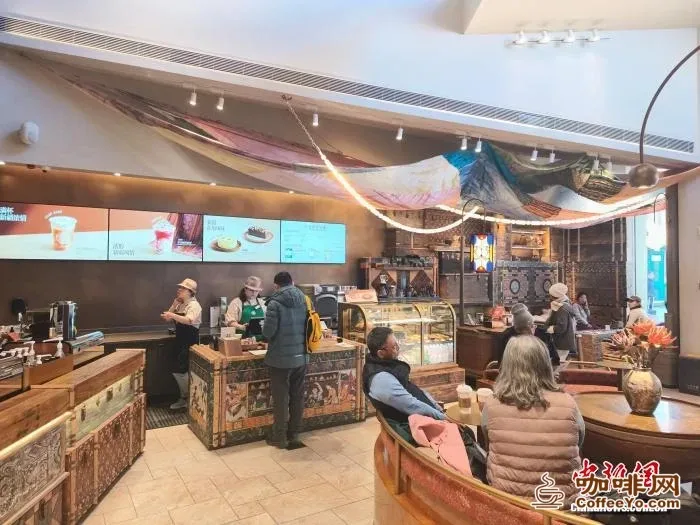
“Bazaar” means market in Uyghur — it is also the bustle that Xinjiang people have flocked to for a thousand years. From Zhang Qian’s “opening of the Western Regions” to today’s China-Europe freight trains, this has always been where people from all directions meet.
At the end of September this year, Starbucks opened its first intangible-cultural-heritage flagship store in China inside the Grand Bazaar — not merely hanging up a sign, but piecing together the bazaar’s canopy from more than 7,000 locally made clay bricks, and bringing Atlas silk, the Twelve Muqam and the dutar together into the store.
From the day coffee aroma met the Muqam, this little shop became a window through which visitors get to know Xinjiang.
A Cup of “Xinjiang” Welcomes Visitors from All Directions
“We are a store that is at ‘peak’ all day long,” said store manager Ma Ying with a smile. She had been at a store in Qinghai; when she heard Starbucks was returning to Xinjiang, she applied to transfer back right away — “With the store in Xinjiang, I can also be by my parents’ side.”
Dozens of employees, one third each Han, Uyghur and Hui. This is a familiar yet unfamiliar Starbucks: the bar counter looks like an old wooden chest on the Silk Road, the seats are the kang (heatable beds) from Xinjiang homes, and in the afternoon sunlight filters through the Atlas silk, casting a gradient of light on the wall.
Red-pomegranate yogurt Frappuccino, milk-skin salted milk tea, apricot Basque cheesecake… the menu is limited, and even the merchandise carries Atlas patterns — sold out the moment they hit the shelf. Russian tourist Vadim looked up at the ceiling over his cup: “I have never seen a Starbucks like this; it is as if all of Xinjiang were poured into a cup.”
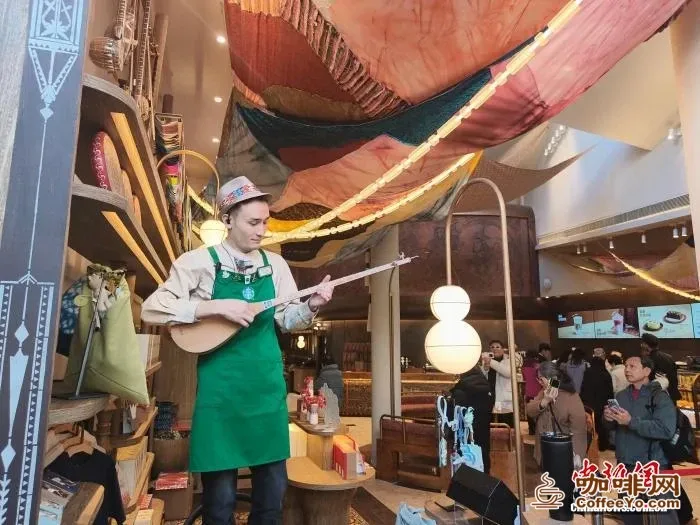
When the Dutar Sounds, Alimujiang Is No Longer a Barista
Alimujiang is from Hotan. He began learning dance at age four and studied music performance in college. He never expected to return to his hobby inside a coffee shop.
Every weekend afternoon, he changes into festive dress, walks onto the second-floor stage and dances a Xinjiang dance. As soon as the dutar sounds, he spins to the music. Downstairs, visitors sip their coffee and learn to raise their hands; some laugh along.
“Rather than explain the decor to visitors, I’d rather dance a song.” He posted dance clips online and racked up millions of views. In the footage, netizens at home and abroad see a Xinjiang youth with a sincere smile and light, brisk steps.
After the performance, a lady from Taiwan said softly, “I have longed for Xinjiang’s mountains and rivers for a long time.”
In that instant, song and dance drew people closer.
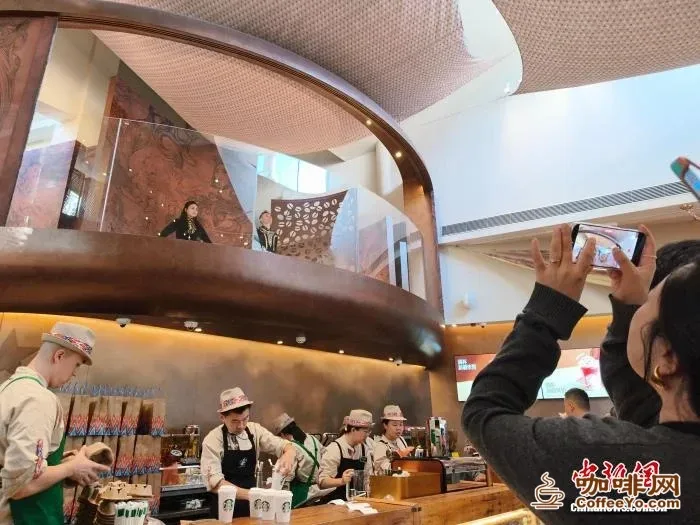
Daily Life Always Blends in Silence
At the “Star Bazaar,” dances are performed for strangers, and the dutar is played for those who have come from afar.
Han, Uyghur and Hui staff shoulder-to-shoulder pour out the cups; compatriots from Taiwan, Russian and Thai tourists raise their cups crowded around the same kang table.
A bazaar has never been only about buying and selling — it is the road Zhang Qian walked, the port the freight trains pass through, and also, in today’s cup of coffee, the way peoples of all ethnic groups draw near to one another.
The door of the “Star Bazaar” stays open. Those who enter are first caught by a cup of coffee, then kept by a passage of Muqam.
Reprint Notice & Disclaimer
- This article has been edited and compiled by China Coffee Network and reprinted from China News Service, “Seeing a Bustling Xinjiang at the ‘Star Bazaar’.” The copyright of the original text belongs to China News Service and the original author. This reprint is intended solely for information sharing within the coffee industry and does not represent the views of this website; all data and opinions are subject to the original article. Our thanks to the original author for creating and sharing it.
- Read the original: China News Service, “Seeing a Bustling Xinjiang at the ‘Star Bazaar'”
- For matters concerning content licensing, attribution, copyright or otherwise, please contact us promptly and we will verify and cooperate in handling them as soon as possible. We also welcome coffee origins, brands and industry media to exchange ideas and contribute articles.
- Contact China Coffee Network: Tel 400-0000-641 (+86-18288016826) | Email 405854472@qq.com | Address: Jinghong, Xishuangbanna, Yunnan Province / Tieling, Liaoning Province
Related Reading
- Bean in Short Supply: A Taiwan Youth on Yunnan Coffee as a Shared Cross-Strait Stage
- Five Years, Eight Championships: Lincang Coffee Joins the World Stage
 Haikou ‘Union Cup’ Barista Skills Competition Kicks Off to Empower the Service Sector
 Yunnan Specialty Coffee Beans Deliver an ‘Excellent’ Report: Path to Value Leap
- Cross-Strait Tides Rise: A Taiwan Youth Farms Coffee in Yunnan, a Cup Bridging Both Sides
 2026 2nd Yunnan Treasure Coffee Green Bean Competition (Cup of Excellence Pilot) Concludes



 Liaoning ICP Security No. 21122402000217