
Editor’s Note (coffeeyo.com): Reported by Yunnan Net on November 2, Nujiang Lisu Autonomous Prefecture leverages its selenium-rich volcanic-ash soil and layered river-valley climate — tightening variety and method at the front end, processing value-addition in the middle, and coffee-tourism fusion at the back end — moving coffee from extensive cultivation toward standardized, specialty, full-chain development, turning coffee cherries into “golden beans” that boost rural revitalization.
In recent years, Nujiang Lisu Autonomous Prefecture in Yunnan has drawn on its selenium-rich volcanic-ash soil, three-dimensional river-valley climate and rich ethnic-cultural resources to drive the transformation and development of its coffee industry. Tightening fine varieties and good practices at the front end, processing value-addition in the middle, and coffee-tourism integration at the back end, it is moving coffee from extensive planting toward standardized, specialty, full-chain development, turning tiny coffee cherries into “golden beans” that support comprehensive rural revitalization and raise household incomes.
Guarding quality at the source: fine varieties and good practices yield gorge-grown flavor
These days, coffee trees on both banks of the Nujiang River have entered their first 2026 picking season, and the mountain coffee gardens are filled with the air of a bountiful harvest.
Just past 9 a.m., the coffee garden in Jiu’naishan Natural Village, Manying Village, Shangjiang Town, Lushui City is already bustling. Coffee farmers, in twos and threes, weave among the trees; with a gentle pinch of their fingertips, plump red coffee cherries are lightly picked and dropped into baskets, a year’s toil turning into the joy of harvest.
“This year’s coffee is growing well and the price is good too. The income from selling 100 jin of fresh cherries can buy 400 jin of rice — enough staple food for a family for half a year,” Yang Yingkuan, Party branch secretary and group leader of Jiu’naishan Natural Village, reckoned for the reporter. “These coffee trees are our money trees right at the doorstep!”
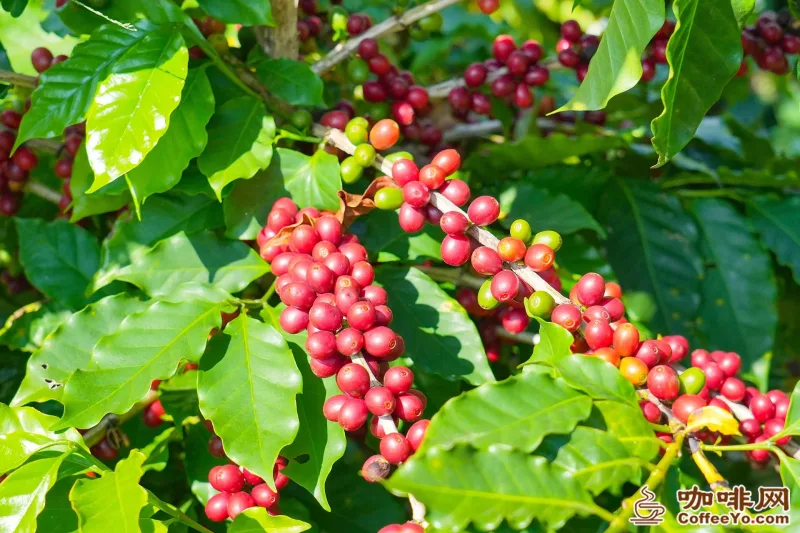
Jiu’naishan Natural Village has over 40 years of coffee-growing history; all 149 households grow coffee, with a planting area exceeding 1,900 mu and a fruiting area over 1,100 mu. In 2025, the village’s fresh cherry yield at peak season reached 2,000 jin per mu, raising average household income by over 100,000 yuan. Behind the eye-catching figures lies the local coffee farmers’ adherence to the “fully red cherry picking” standard.
“In earlier years we didn’t understand what ‘specialty’ meant; we picked green and red together and couldn’t sell at a good price. In recent years everyone has understood that only fully red cherries yield good flavor and fetch a higher purchase price, so when picking everyone keeps an eye out for the reddest batch on the tree,” Yang Yingkuan said.
While strictly enforcing picking standards, Nujiang has also deepened the selection and promotion of fine varieties, reshaping the coffee industry’s structure from the source. It has successively introduced 17 new varieties including the “Dere” and “Yunka” series, and completed the breeding of two new varieties, “Dere 211 – Gaoligong” and “Biluo Snow.” To date, the prefecture’s coffee planting area has surpassed 100,000 mu, with a fine-variety coverage rate of 90%.
Lou Yuqiang, deputy director of the Lushui Agriculture and Rural Bureau and associate researcher at the Tropical and Subtropical Cash Crops Research Institute of the Yunnan Academy of Agricultural Sciences, explained: “The purpose of introducing rich specialty-coffee germplasm resources is to screen for fine varieties well-suited to local soil and water with outstanding overall benefits. Quality seedlings paired with scientific stewardship, bolstered by Nujiang’s high-plateau, high-latitude, high-heat ‘three-high’ climate and the selenium-rich soil of the Gaoligong Mountains, allow the beans to accumulate ample inner substances, ultimately giving birth to the distinctive flavor of Nujiang specialty coffee.”
Processing built at the ‘doorstep,’ full-chain freshness-locking adds more value
Turning good cherries into good products, the processing stage is key. To solve the problem of “fresh cherries hard to get down the mountain, processing far away,” Nujiang has built primary-processing facilities right at the “doorstep” of the planting areas.
Inside the Lushui Fuxing Coffee Planting Farmers’ Professional Cooperative, freshly picked cherries can enter primary processing at the first moment, going through depulping, flotation and sun-drying to become parchment coffee.
“For nearby farmers, we can guarantee primary processing within 8 to 12 hours. Our products are mainly honey-processed, with no secondary fermentation step, so the fresh cherries must be processed quickly to lock more sweetness and freshness into the beans,” said Su Fuwei, person in charge of the Lushui Fuxing Coffee Planting Farmers’ Professional Cooperative.
Primary processing solves the “fresh” problem nearby, while deep processing determines the height of “value.” While consolidating the primary-processing foundation, Nujiang, following the approach of “cultivating excellence, supporting the strong, and revitalizing existing stock,” uses the Spice Industrial Park as an agglomeration carrier to vigorously cultivate and attract deep-processing enterprises, pushing the industry chain toward the high end of the value chain.
Inside the specialty coffee processing plant of Nujiang Tropical Cash Crops Hi-Tech Spice Industry Development Co., Ltd., the low hum of machinery mingles with the roasting aroma. On the plant floor, the roasted-bean production line runs rapidly; bean by bean, green beans pass through intelligent color-sorting, roasting, cooling, weighing and sealing to become bag after bag of roasted coffee products.
“We have now built four production lines — drip bags, concentrate, bagged beans and freeze-dried powder — and have developed and expanded over 10 quality differentiated products to meet the diverse needs of different consumer groups; annual roasted-bean capacity can reach 2,000 tons,” said Wang Aiting, person in charge of the specialty coffee processing plant of Nujiang Tropical Cash Crops Hi-Tech Spice Industry Development Co., Ltd.
In August 2026, Salween Coffee (Nujiang) Co., Ltd. officially went into production, mainly engaged in deep processing of freeze-dried coffee powder. This broke the history of Nujiang Prefecture having no large freeze-dried instant-coffee production entity, and it has established strategic cooperation with 11 enterprises, effectively driving the coordinated development of upstream and downstream industry chains such as local coffee-bean planting, product packaging and warehousing logistics, stably absorbing around 90 jobs long-term, and tangibly boosting local industrial efficiency and household income.
“Our production equipment is at a leading level domestically, with an estimated annual capacity of 4,000 to 5,000 tons and an annual output value of 350 million to 380 million yuan. Currently 70% of our products supply the domestic market and 30% are exported; whether in technical strength or product quality, we hold a clear advantage in the industry,” said Shi Jianche, factory director of Salween Coffee (Nujiang) Co., Ltd.
“In the past, Nujiang had no deep-processing plants, so coffee beans had to be shipped out for processing; the round trip was not only costly but also incurred heavy losses. Now it’s better — from picking the cherries to the final product reaching the customer, it can be done in just over 20 days,” Su Fuwei reflected.
To date, Nujiang has planned and built 7 fresh-cherry processing centers, expected to all be operational this season; 5 deep-processing plants, of which 4 are already in operation; and 19 coffee production lines with a processing capacity of 25,000 tons, forming a processing cluster of “leading enterprises leading, SMEs agglomerating.”
Using coffee as a thread to string together gorge scenery, from ‘selling beans’ to ‘selling experience’
The gorges hold majestic landscapes, the villages hold brilliant ethnic culture, and the coffee hides its own aroma and growth story. In recent years, Nujiang has leapfrogged purely agricultural thinking, driving the deep integration of coffee and culture-tourism, persisting in using coffee as the medium and tourism to prosper the industry. It turns coffee fields, processing workshops and specialty estates into immersive scenes that can be toured, participated in, tasted and studied, upgrading from “selling beans” to “selling scenery, selling experience, selling culture.”
Building on the advantages of the G219 culture-tourism corridor, Nujiang has created the “G219 Coffee-Seeking Journey” premium route. Heading north along the Nujiang Beautiful Highway, cave coffee, tin-can coffee, cliff-edge coffee and other specialty coffee estates and viral check-in spots have successively taken shape; coffee once scattered in deep mountain gullies and little known is now strung together like beads on a chain by a single “G219 Coffee-Seeking Journey.”
The Nu Xiao Ka · Treehouse Coffee specialty selection store in Lushui City is built around a kapok tree, cleverly blending the coffee bar, viewing seats with the tree crown and branches, set off against the surging river and towering gorges. With its unique shape and excellent views, it has become a popular check-in spot for residents and visitors alike.
“The decor here is very distinctive; sitting down with a cup of coffee, facing the river breeze and gazing at the gorge, the whole person relaxes — it feels especially comfortable,” said Geng Xiaoming, a visitor from Chuxiong with a smile. “I’ve already checked in at four or five coffee shops in Nujiang, and each has its own distinct character and a great experience.”
The repeatedly held Nujiang Specialty Coffee Culture Week integrates coffee competitions, industry forums, rural markets and ethnic song-and-dance, using coffee as the medium to let gorge scenery, ethnic culture and specialty coffee empower one another. Coffee aroma has become a brand-new name card for Nujiang tourism. During the 2026 National Day holiday, Nujiang Prefecture received nearly 200,000 domestic visitors and achieved total tourism spending of over 140 million yuan, a record high.
From a traditional crop in deep mountain gullies, to a standardized, specialty, full-chain sunrise industry, to a “new gorge name card” with deep integration of primary, secondary and tertiary industries, Nujiang’s coffee industry is completing a profound transformative leap. A tiny coffee cherry strings together the complete chain of planting, processing and culture-tourism, and also strings together the happy lives of gorge dwellers increasing their incomes and becoming prosperous.
Yang Yuhua, deputy head of the Nujiang Coffee Industry Development Task Force and deputy director of the Nujiang Agriculture and Rural Bureau, said: “In the next step, we will continue to improve the benefit-linkage mechanism so that the vast majority of coffee farmers share the dividends of industrial development; relying on industry alliances and associations to consolidate base stewardship, perfect full-chain standards and shore up processing shortfalls, and polish the ‘Nu Xiao Ka’ regional public brand; connect coffee bases, estates and experience formats along the G219 highway to build a coffee-tourism fusion signature IP, continuously broaden market channels, and turn resource advantages into tangible results that promote farmers’ income growth, striving to drive the high-quality development of Nujiang’s specialty coffee industry.” (By Gao Qingying and Hu Chenlan)
Reprint Notice and Disclaimer
- This article was compiled and edited by coffeeyo.com and is reprinted from Yunnan Net, “From ‘Red on the Branch’ to ‘Fragrance in the Cup’! Nujiang Turns a Coffee Bean into a Tertiary-Industry-Fused ‘Golden Bean’“. The copyright of the original text belongs to Yunnan Net and the original author. This site’s reprint is for the purpose of sharing coffee-industry information only and does not represent this site’s position; all data and views herein are subject to the original. We thank the original author for their creation and sharing.
- Original article: Yunnan Net, “From ‘Red on the Branch’ to ‘Fragrance in the Cup’! Nujiang Turns a Coffee Bean into a Tertiary-Industry-Fused ‘Golden Bean'”
- For matters concerning content authorization, attribution, copyright or any other issues, please contact this site promptly; we will verify and cooperate in handling them as soon as possible. We also welcome coffee companies and industry media to exchange and contribute articles with us.
- Contact coffeeyo.com: Tel 400-0000-641 (+86-18288016826) | Email 405854472@qq.com | Address: Jinghong City, Xishuangbanna, Yunnan Province, China
Related Reading
- Bean in Short Supply: A Taiwan Youth on Yunnan Coffee as a Shared Cross-Strait Stage
- Five Years, Eight Championships: Lincang Coffee Joins the World Stage
 Haikou ‘Union Cup’ Barista Skills Competition Kicks Off to Empower the Service Sector
 Yunnan Specialty Coffee Beans Deliver an ‘Excellent’ Report: Path to Value Leap
- Cross-Strait Tides Rise: A Taiwan Youth Farms Coffee in Yunnan, a Cup Bridging Both Sides
 2026 2nd Yunnan Treasure Coffee Green Bean Competition (Cup of Excellence Pilot) Concludes


 Liaoning ICP Security No. 21122402000217