How Guiyang cracked open its coffee raw-material channel
Publisher: China Coffee Network / Sep 30, 2026
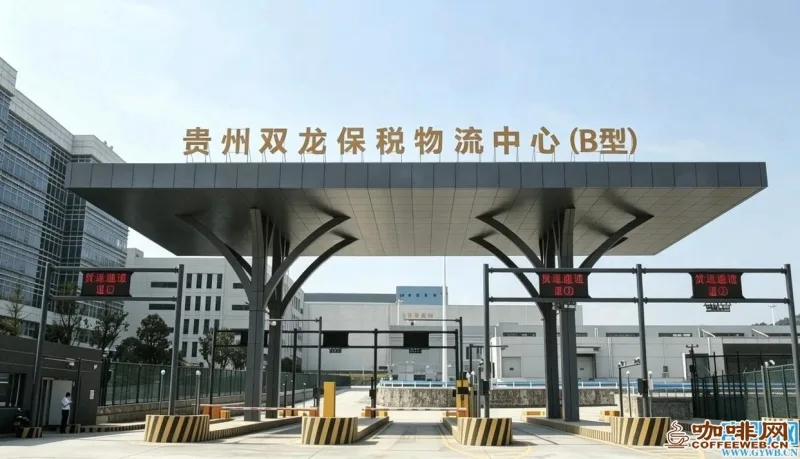
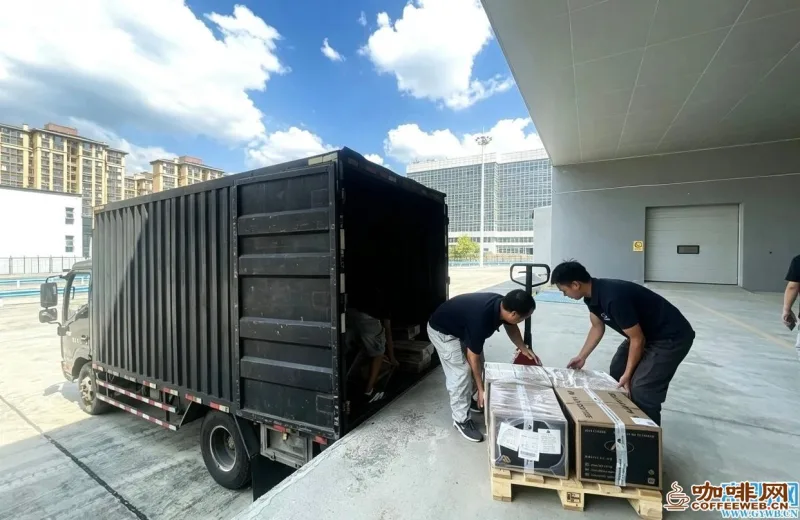
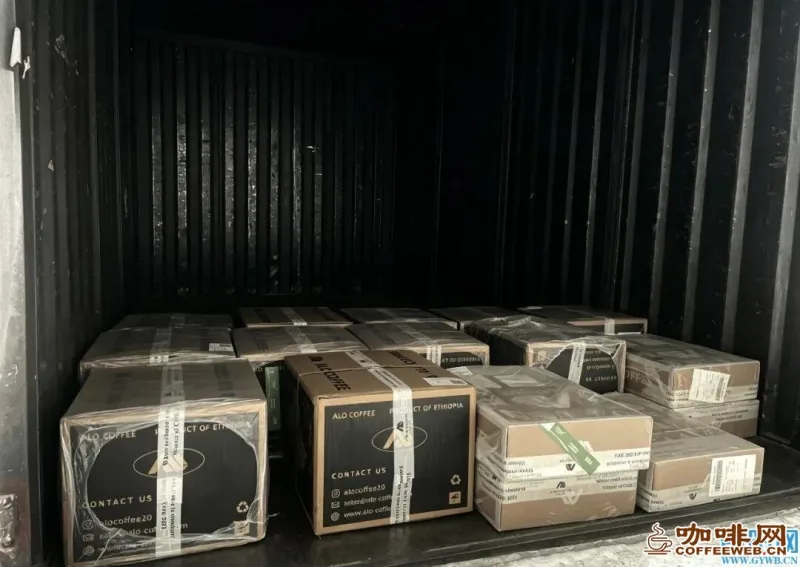
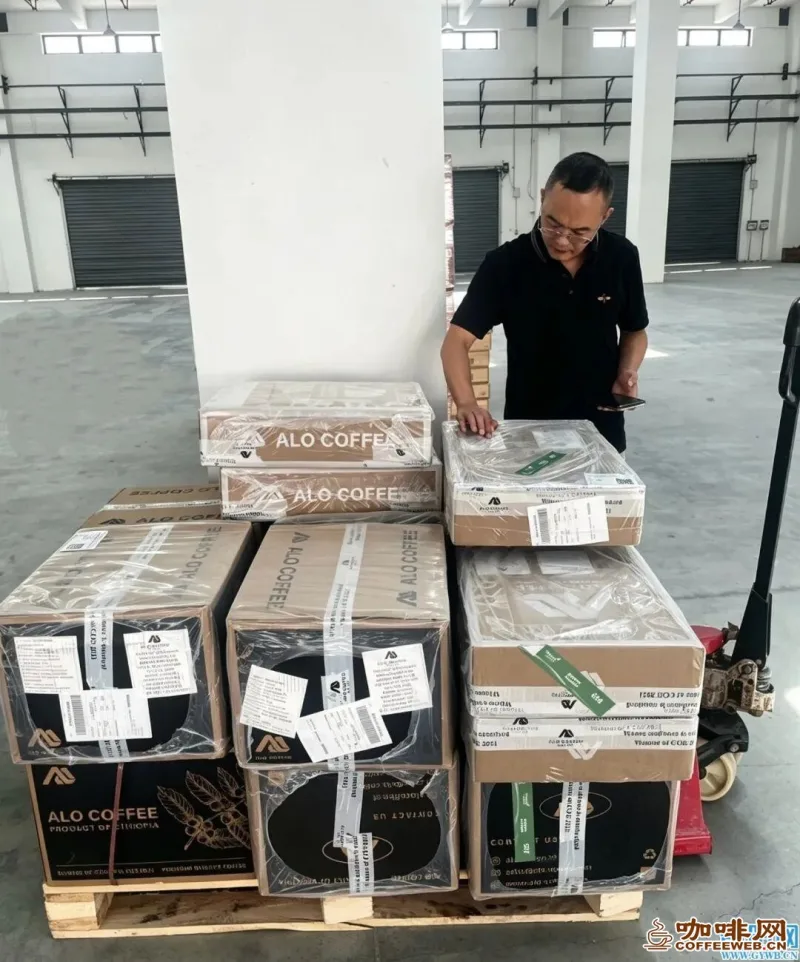
On September 22, inside the bonded warehouse of the Guizhou Shuanglong Bonded Logistics Center (Type B), logistics cartons printed with “ALO COFFEE” and “PRODUCT OF ETHIOPIA” were neatly stacked. Inside were green specialty coffee beans with a gross weight of 411 kg, produced in the Sidamo core region of Ethiopia.
The journey of this batch of beans is a little different from before — instead of first declaring at the ports of Shanghai or Guangzhou and then entering Guizhou by rail or road, they were air-freighted from Ethiopia to Chengdu, transferred air-to-air directly to Guiyang Longdongbao Airport, and entered the bonded warehouse right after customs clearance.
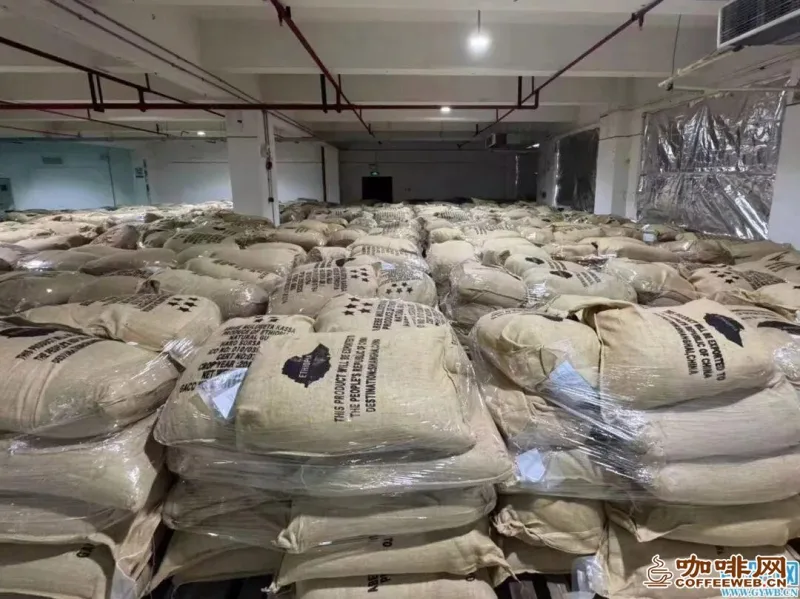
This is the first bonded import of specialty green coffee beans since the Guizhou Shuanglong Bonded Logistics Center (Type B) began sealed operation. Almost simultaneously, the 19.2-ton green specialty coffee bean import business of Guiyang Foreign Trade Development Group Co., Ltd. also landed smoothly. Since the start of this year, the Guiyang Comprehensive Bonded Zone has served entities such as the Municipal Foreign Trade Development Group and Guizong Supply Chain to open the green-coffee-bean import track, cumulatively importing over 200,000 kg of Ethiopian specialty green coffee beans.
The change in the path of beans entering Guiyang is not merely that local traders achieved direct-origin procurement from Ethiopia into the country; it also reflects the vast space for inland cities to drive industrial development by relying on raw-material imports.
Breakthrough: the “first journey” of a coffee bean
Take this bonded-import green coffee batch at the Shuanglong Bonded Logistics Center (Type B) as an observation sample. All these green beans are Ethiopia’s highest official grade — specialty G1 — covering five quality micro-lots.
The goods were procured per the needs of Guiyang Youjing Food Co., Ltd. Yang Qian, head of the marketing department at Youjing Food, told the reporter that as of now, the team’s roasted-bean sales this year have exceeded 800 tons, with full online-and-offline coverage; coffee beans account for 87% of the product line, drip bags 9%, and filter-bag coffee 4%; customers are mainly concentrated in Jiangsu-Zhejiang-Shanghai, Guangzhou and Guizhou, with the Guizhou market at about 10%.
The business was completed by Guizhou Shuanglong Airport International Trade & Commerce Investment Co., Ltd. This state-owned enterprise, with mature international-trade expertise and channel advantages, provided Youjing Food a one-stop full-process service from origin procurement, customs declaration and clearance to bonded warehousing.
The first deal came from the two-way fit between local industrial demand and cross-border corridor capability. “Coastal companies can do it, and our local foreign-trade enterprises can do it too — with even greater advantages,” said a relevant person at Shuanglong International Trade. Guiyang’s local coffee enterprises have an urgent need for specialty green-bean procurement; Shuanglong International Trade holds bonded-import and cross-border-transfer channel resources — supply and demand clicked instantly. This model not only helps open Guiyang’s coffee raw-material import chain and serve local producers nearby, but also effectively lands front-line import trade in Guizhou.
Different from previous declarations at ports like Shanghai and Guangzhou, this batch took the “Ethiopia—Chengdu—Guiyang” air-to-air transfer path. After arriving in Chengdu, the goods were transshipped under full customs bonded supervision and finally entered the Shuanglong Bonded Logistics Center (Type B) warehouse.
“After this batch of green beans arrives at the bonded center via ‘air-rail/air combined transport,’ they will later enter Guizhou physical factories and then be supplied nationwide,” the above person said. The focus this time is the linkage between the first bonded green-bean business and physical factories — both a brand-new supply-chain corridor test and accumulated mature process experience for future large-volume, normalized overseas specialty green-bean direct procurement and bonded warehousing.
Clearance efficiency is a key link. Under the safeguard of Guiyang Customs’ clearance-facilitation policy, this batch moved smoothly from arrival to warehousing. Longdongbao Airport Customs provided policy guidance in advance, worked closely with the airport and the bonded logistics center, intervened early in the declaration stage, and optimized inspection flow, achieving seamless connection and efficient clearance after the goods hit port.
From launching talks with the enterprise on September 1 to bonded warehousing of goods on September 22, the whole process took just over 20 days. Among them, the goods departed Ethiopia in the early morning of September 20 and completed cross-border transport in under 3 days.
This marks a new channel added to Guiyang’s coffee raw-material imports — on top of the Comprehensive Bonded Zone’s already-realized bulk green-bean bonded direct procurement, the Shuanglong Bonded Logistics Center (Type B) has opened the “air-to-air transfer + bonded warehousing” specialty-material direct-procurement path, moving Guiyang’s coffee raw-material imports from “single channel” to “dual channel.”
Pain point: the raw-material anxiety of 3,000 cafés
Guiyang produces not a single coffee green bean.
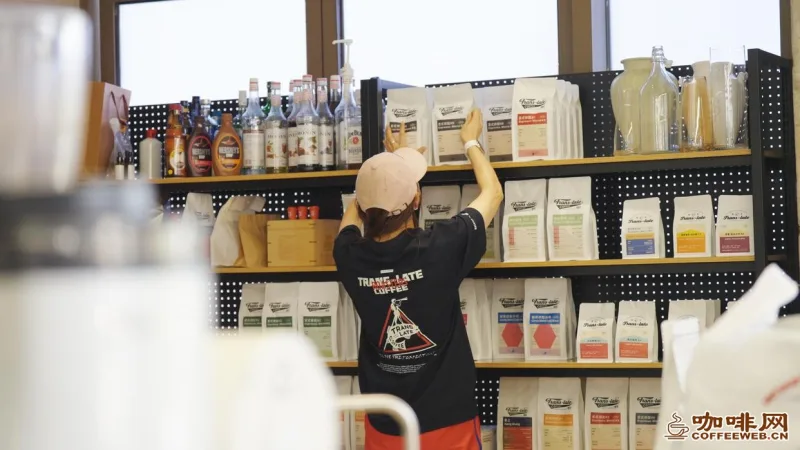
Yet this city is among those with the highest café density in the country. Over 3,000 cafés across the city — from independent specialty shops to chain brands, from old-town alley stores to business-district internet-famous shops — coffee has seeped into the daily life of Guiyang people.
Behind the terminal prosperity lies the long-term anxiety over upstream raw-material supply.
“The biggest shortcoming of Guiyang’s coffee industry is the raw-material channel,” said Lei Ming, owner of Guiyang Blackstone Coffee, bluntly. For a long time, most imported green coffee beans were first shipped to coastal ports like Shanghai and Guangzhou for customs declaration, then transshipped into Guizhou by rail or road. Yet most of Guiyang’s small and medium cafés and limited-scale operators lack direct overseas procurement conditions, and can only buy from domestic traders and distributors, passively accepting the markups after multiple layers of resale.
What does this mean?
First, slow. Shipping from origins like Ethiopia by sea to Shanghai or Guangzhou, then clearing customs and transferring by rail or road to Guiyang, the whole trip often takes 45–60 days. Caught in port congestion or peak logistics season, the cycle lengthens further. For specialty coffee that prizes freshness, every extra day is flavor loss.
Second, expensive. Secondary transshipment means extra logistics, warehousing and labor costs. Goods flowing through multiple coastal distributors stack profit at every link, significantly raising the comprehensive procurement cost of green beans.
Third, capital occupation. Under the general-trade model, import tariffs and VAT must be paid in one lump at the port declaration; before goods enter production or generate sales revenue, the enterprise must fully pay the trader. For SMEs, this is real cash-flow pressure.
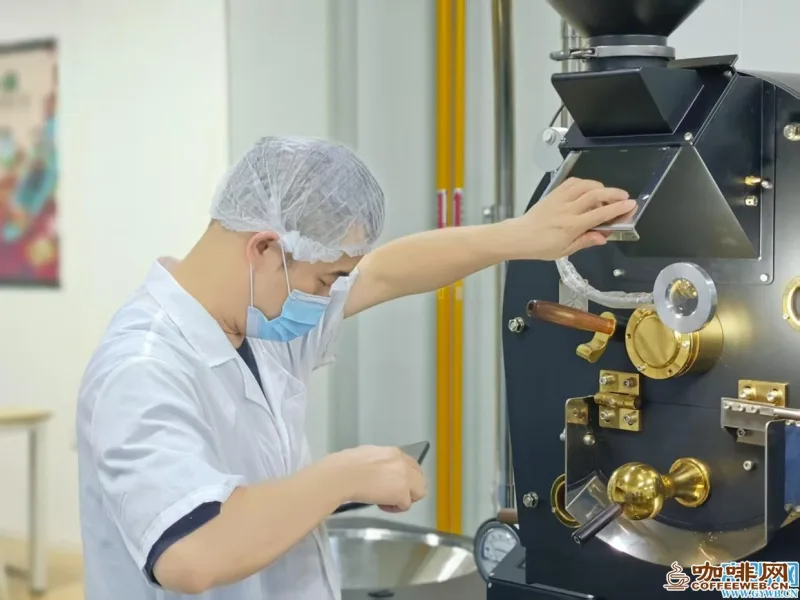
Youjing Food is a leading production enterprise in Guiyang’s coffee industry, focused on the intelligence and efficiency of its specialty coffee roasting line, with annual roasted-bean sales over 800 tons, a product line covering coffee beans, drip bags and filter-bag coffee, and a sales network radiating nationwide. The larger the scale, the more prominent the short-board pain of the raw-material channel.
“Every year we procure large volumes of green beans; we used to go through coastal transshipment — long cycles, high cost, and heavy capital occupation,” said Yang Qian. If bonded warehousing and clearance could be completed locally in Guiyang, it would be a fundamental change in the supply-chain model for the enterprise.
Youjing Food is not alone. In the Longdongbao Food Industrial Park, Blackstone Coffee’s “Coral Plan” roasting factory officially started production in 2024, with a current monthly output of about 1.5 tons — not large, but a typical sample of Guiyang’s local coffee brands extending from terminal stores upstream into the industrial chain.
Speaking of local coffee enterprises’ survival pressure, Lei Ming was candid: the foremost is raw-material cost pressure — in 2025 international coffee futures prices fluctuated, directly driving imported green-bean costs up nearly 120%, yet terminal product prices could not rise in sync; many consumers have formed a cognitive inertia around “9.9-yuan” cheap beans and struggle to understand the product-value difference behind specialty green beans and fine roasting. “If Guiyang had a bonded warehouse and direct-procurement channel, our sourcing might be lower-cost and faster,” Lei Ming said.
A single coffee bean, from origin to the cup of a Guiyang consumer, used to make a big loop. In that loop are time cost, logistics cost, capital cost, and inevitable quality loss.
Channel: how a bonded warehouse rewrites an inland city’s logistics
What changed the situation is the Guizhou Shuanglong Bonded Logistics Center (Type B), officially sealed for operation in December 2025. The center has 4 bonded warehouses, total storage area 33,000㎡, cold-storage area 1,670㎡, and can provide enterprises one-stop full-chain services of bonded warehousing, international distribution, entrepôt trade, simple processing, and cross-border e-commerce bonded stocking.
The green coffee beans entering the bonded logistics center use exactly the platform’s core function — bonded warehousing.
The rule is simple: after overseas goods enter the bonded center, they may defer import tariffs and VAT until actual exit from the zone for sale. For coffee-bean importers, this means a major reduction in capital occupation.
As a processing raw material, imported green beans must pass through warehousing, distribution and roasting before entering the terminal market. Relying on the bonded function, enterprises can arrange goods exit flexibly per production rhythm and market orders, achieving “batch-by-batch exit, batch-by-batch tax payment.”
“Before, buying goods meant paying all the payment at once; this time we only prepaid 20% of the payment, the goods went into the bonded warehouse, take as needed, pay as exited — greatly reducing capital occupation during the stocking phase,” said Yang Qian.
For large enterprises this is operational optimization; for SMEs it may be a matter of survival. Coffee-industry green-bean prices fluctuate greatly, and enterprises often need to stock heavily when prices are low. Under the bonded model, enterprises can first stock goods in the bonded warehouse without rushing to pay in full, and exit in batches as market orders come — both smoothing price-fluctuation risk and effectively easing capital pressure.
Another rewriting of logistics is air-to-air transfer.
The previous “origin—coastal port—Guiyang” path had slow sea legs and bumpy land legs, unfriendly to specialty coffee — a material sensitive to temperature, humidity and time. This bonded import used passenger-aircraft belly-hold freight for domestic transfer, bypassing coastal traders’ secondary transshipment, reducing time consumption and cargo damage, with better comprehensive logistics cost and efficiency.
“Specialty coffee has a high unit price and is sensitive to freshness; air-freight cost can be covered by quality premium,” analyzed a person at Shuanglong International Trade. As Guiyang Longdongbao Airport’s international routes and transfer capacity improve, air-to-air transfer cost still has room to fall; in future, multi-modal combinations like air-rail and air-land can be explored to match different cargo-volume needs.
“The core feature of the bonded model is ‘deferred taxation, retained taxation rights, full-process closed-loop supervision.’ This mechanism both eases enterprises’ capital pressure and promotes cross-border trade facilitation,” said Professor Li Yonggang, deputy director of the Economics Department at Guizhou University of Finance and Economics. The bonded logistics center is more than a warehouse — “it lets inland enterprises skip going to the coast for declaration, tax payment and warehousing, completing the full import process at their ‘doorstep,’ which is the core competitiveness of the business environment.”
More importantly, the bonded logistics center’s function can be replicated to other imported raw-material categories. Red wine, fresh produce, precision parts, cross-border e-commerce goods… any industry relying on imported raw materials or goods may benefit from the bonded channel.
Ambition: from one coffee deal to a whole industrial chain
Bonded import of green coffee beans tests not just a logistics channel, but explores a new path for inland-city industrial upgrading and development.
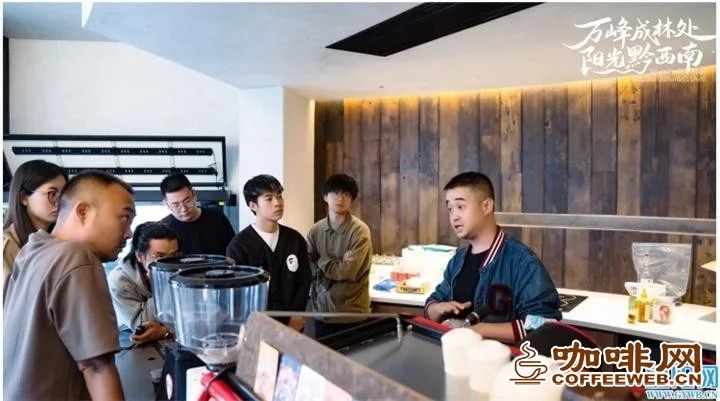
Youjing Food is already laying out. The enterprise is committed to building an automated specialty coffee roasting line suited to coffee trends over the next 5–10 years. Yang Qian said that after this batch of bonded green beans enters the warehouse, Youjing plans to first invite local Guiyang coffee practitioners to a cupping-sharing event, with the subsequent allocation plan determined scientifically based on cupping feedback.
“With the bonded direct-procurement channel, we can directly connect to more origin specialty beans, reduce intermediate links, lower costs and raise quality,” said Yang Qian. “As the raw-material channel opens, we will keep increasing our specialty-bean layout while actively exploring more business directions and the possibility of deep processing.”
A 411-kg batch of green beans is just a small-batch test for an enterprise roasting 800 tons a year. But its significance lies in validating the feasibility of the “air-to-air transfer + bonded warehousing” specialty small-batch new channel — before this, the Guiyang Comprehensive Bonded Zone had already completed over 200,000 kg of scaled Ethiopian specialty green-bean imports via the bonded direct-procurement model, charting a bulk raw-material import path. Now Shuanglong B-bond adds an air-bonded channel, and the “bulk for scale, air for specialty” dual-channel pattern is taking initial shape. As the air-bonded model normalizes, direct procurement of tens to hundreds of tons of specialty green beans per year is expected in future, driving the local development of the whole chain of roasting, packaging, logistics and sales.
Guiyang’s coffee industry is experiencing an extension from “strong terminal consumption” to “strong upstream production.”
In the past, Guiyang’s coffee name card was “3,000 cafés” — the prosperity of the consumption end. But however lively the consumption end, the most profitable roasting, trade and equipment segments mostly stayed in coastal regions. Opening the raw-material channel gives Guiyang the possibility of keeping the upstream industrial-chain segments at home.
As of now, Guiyang has 6 specialty roasting factories holding SC food-production licenses, and the industrial trend of local brands extending from terminal stores upstream into the industrial chain is becoming clearer.
“If Guiyang has a stable bonded raw-material channel and roasting-industry foundation, it can absolutely become a coffee distribution center for Southwest China,” said a relevant person at the Guiyang Commerce Bureau, noting it can serve not only the local 3,000 coffee operators but also effectively radiate across the Southwest and face the whole nation.
The momentum of industrial clustering is accelerating. Just two days after this batch entered the warehouse, from September 24 to 26, the 2026 Guiyang International Coffee Expo was held at the Guiyang International Convention & Exhibition Center — Guiyang’s first international professional coffee exhibition covering the whole industry chain, gathering 212 brands from 10 countries including Ethiopia and Colombia and 15 domestic provinces and municipalities, attracting over 5,000 professional buyers, with cumulative attendance over 27,000 in three days, offline transactions of 15.6 million yuan, and 150 sets of industry cooperation intentions.
Policy-level support is equally clear. At the end of 2025, the “Implementation Opinions on Promoting Guiyang-Guian Coffee Industry Development (Trial)” was officially issued, proposing by 2027 to build the “Cool Guiyang Coffee” regional public brand, add 600 coffee market entities, and build a nationally influential coffee consumption destination, clarifying nine measures from trial planting introduction, processing-industry clustering, trade and bonded services; this February, Guiyang released two coffee group standards, for the first time systematically building a whole-chain industry standard; in August 2025, the Guiyang Coffee Industry College was established, systematically training coffee professionals in roasting, brewing and quality control. From raw-material import to roasting processing, from standard-setting to talent cultivation, Guiyang’s coffee-industry “whole chain” is moving from planning to reality.
It is understood that since the Guizhou Shuanglong Bonded Logistics Center (Type B) began sealed operation in December 2025, nearly 10 enterprises have settled in. Currently, the center is actively coordinating with airport customs and Guiyang’s coffee industry, conducting industry-association exchanges and docking, mining market orders, attracting coffee-industry-chain enterprises to settle in, and providing solid supply-chain support for Guiyang to build a nationally influential coffee consumption destination and a coffee-culture experience city.
A single coffee bean, seemingly tiny, may lever an entire industrial chain.
Reporters Ran Tinglin, Liu Yunsong
Reporter’s notes
The meaning of the channel goes beyond coffee
A batch of Ethiopian coffee beans, via Chengdu air-to-air transfer, entered Guiyang’s bonded warehouse in 3 days. It’s also a channel matter, but half a month earlier the Pinglu Canal opened to navigation, with 5,000-ton-class vessels going straight down the Xijiang, so Guizhou goods going to sea no longer detour around the Pearl River estuary. One in, one out — put together, the deep meaning emerges.
The Pinglu Canal manages “going out,” lowering the logistics cost of bulk commodities; bonded air freight manages “bringing in,” raising the clearance efficiency of specialty raw materials. One river, one air — the New Western Land-Sea Corridor has placed two pieces in Guizhou. Where? On a judgment: what inland opening lacks has never been ports, but channels, institutions, and holding the initiative of circulation in its own hands.
Guiyang produces not a single bean, yet has 3,000 cafés. Not coastal — what to do? Detour. Around Shanghai, around Guangzhou, around the coastal “middlemen,” time detoured away, cost detoured up, capital detoured locked, quality detoured lost. What is a bonded warehouse? Not just an extra warehouse, but moving the coastal port function into the inland — pay as used, goods arrive and go straight into the factory. Institutional opening-up, in the end, is cutting the detour cost in one stroke.
Guiyang itself laid out a dual channel. The Comprehensive Bonded Zone does bulk, bonded direct procurement cumulatively over 200,000 kg; Shuanglong B-bond does air specialty, first 411 kg completing the test. Bulk secures scale, air secures timeliness — walking on two legs, the raw-material-import industry matrix is built.
The channel matter is never finished just by building roads and warehouses. With roads open, institutions in place, and the initiative grasped, mountain goods can go out, and good things from outside can come in. Guiyang’s game has only just made its opening move.
Reprint notice and disclaimer
This article is edited and compiled by coffeeyo.com. The materials and images herein are sourced from public channels; copyright belongs to the original authors. This site reprints only for coffee-industry information sharing and does not represent this site’s stance; all data and views are subject to the original. We thank the original authors for their creation and sharing.
For matters involving content authorization, attribution, copyright or others, please contact this site promptly; we will verify and cooperate in handling at the first time. We also welcome coffee origins, brands and industry media to exchange and contribute.
Coffeeyo contact: Tel 400-0000-641 (+86-18288016826) | Email 405854472@qq.com | Address: Jinghong City, Xishuangbanna, Yunnan Province / Tieling City, Liaoning Province
Reprint Notice & Disclaimer
This article has been edited and compiled by China Coffee Network. The information and images therein come from public sources and the copyright belongs to the original author. This reprint is intended solely for information sharing within the coffee industry and does not represent the views of this website; all data and opinions are subject to the original article. Our thanks to the original author for creating and sharing it.
For matters concerning content licensing, attribution, copyright or otherwise, please contact us promptly and we will verify and cooperate in handling them as soon as possible. We also welcome coffee origins, brands and industry media to exchange ideas and contribute articles.
Contact China Coffee Network: Tel 400-0000-641 (+86-18288016826) | Email 405854472@qq.com | Address: Jinghong, Xishuangbanna, Yunnan Province / Tieling, Liaoning Province

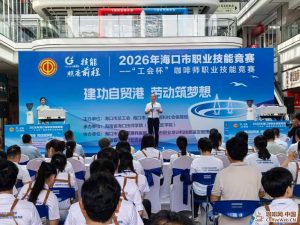
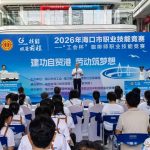 Haikou ‘Union Cup’ Barista Skills Competition Kicks Off to Empower the Service Sector
 Yunnan Specialty Coffee Beans Deliver an ‘Excellent’ Report: Path to Value Leap
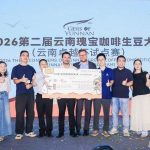 2026 2nd Yunnan Treasure Coffee Green Bean Competition (Cup of Excellence Pilot) Concludes


 Liaoning ICP Security No. 21122402000217