
Since the successful conclusion of the 2026 Guangzhou Coffee Culture Season, Guangzhou’s coffee industry has continued to be activated overall and substantially upgraded, growing ever hotter in the international market!
At the 140th Canton Fair, just looking at the coffee-machine segment, one can feel the fierce heat of industry development. Walking into the exhibition area, global merchants crowded enthusiastically around the coffee machines of Guangzhou local brands such as Kanghong and Kuku; Triangle Electric, which has long cultivated small appliances, is going all-in on smart coffee robots this year, also seen as a new dynamic at this Canton Fair.
At the front line of the surging industry matchmaking, industry giants jointly explored new paths for high-quality development and discussed new opportunities for Guangzhou’s industry. On October 18, the “Coffee Gathers in the Bay Area, Connecting the World” 2026 Coffee Industry High-Quality Development Dialogue Salon, hosted by Guangzhou Daily Press Group, the China Coffee League Organizing Committee and the Guangzhou Coffee Industry Association, and supported by China Construction Bank Guangzhou Branch, was held at the Guangzhou Canton Fair Complex. Leading coffee brands such as Luckin and Starbucks, representatives from well-known domestic and overseas producing regions such as Vietnam, Yunnan and Hainan, and representatives of over a hundred industry-chain enterprises gathered to put the whole industry chain behind a cup of coffee on the “round table” and discuss the development prospects of China’s and Guangzhou’s coffee industries.
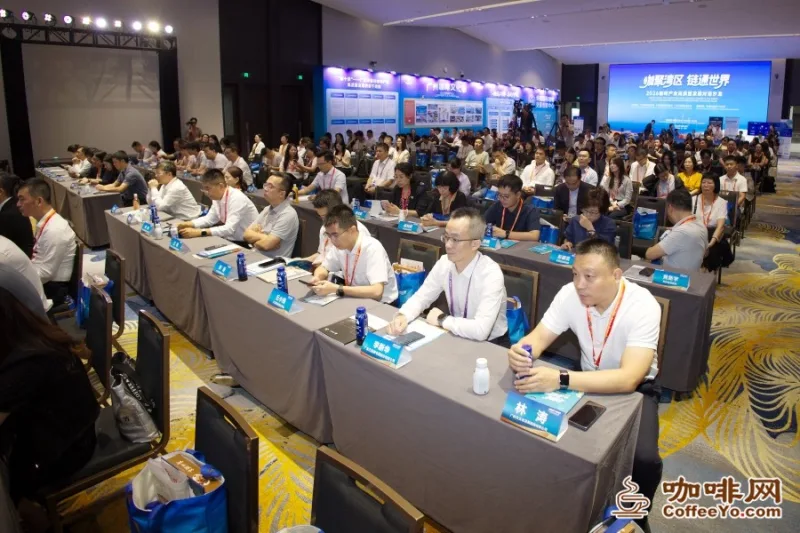
This salon was highly “substantive,” with participants covering the entire coffee industry chain: upstream were representatives of major domestic producing regions Yunnan and Hainan; midstream were enterprises in coffee machines, roasting equipment, green-bean trade and trading platforms; downstream were leading chain brands such as Luckin, Starbucks, Lavazza and McCafé, and time-honored brands like Guangzhou Restaurant, Dian Dou De and Yantang Dairy also happily crossed over.
From the “first cup” at the Thirteen Hongs to Guangzhou’s “Ten Coffee Measures”
Guangzhou embraces the big opportunity of the coffee industry with its “five advantages”
A responsible person from the organizer said that the coffee industry has become one of the new tracks where Guangzhou combines industry and commerce and integrates the secondary and tertiary sectors. Since this summer, when Guangzhou held citywide Coffee Culture Season series activities, the city has added over 500 coffee stores in a few months, and the Guangzhou Commodity Exchange’s green-bean trading volume grew 12.6 times year on year. At the same time, the municipal “Coffee Task Force” was established and operates, and the “Ten Coffee Measures” were released — the city is making every effort to provide wholehearted service, support and guarantee for the vigorous development of the entire coffee industry chain. It is introduced that this salon gathered key entities across the industry chain, setting up multiple dialogue and signing sessions, aiming to build a weather vane and connector for the industry, and a platform for joint standard-setting, resource matchmaking and information empowerment. Today, Guangzhou has become an important link in the global coffee industry chain. The organizer also extended an invitation to the industry, welcoming global practitioners to land in the Flower City and jointly expand the new future of the coffee industry.
Li Hong, head of the Yunnan Provincial Coffee Expert Group and vice president of Yunnan Agricultural University, said in his keynote speech that the historical starting point of Chinese coffee falls on Guangzhou: in 1836, a Danish merchant opened China’s first coffee house, “North Wind and Sea,” on Jingyuan Street in the Thirteen Hongs of Guangzhou, opening the history of coffee in China — 190 years ago. Li Hong said that a cup of coffee 190 years ago was a novel imported good in Sino-foreign trade; 190 years later, coffee has connected production, manufacturing, consumption, culture-tourism and trade, spanning the primary, secondary and tertiary industries. “The development of Chinese coffee has never been a mere spread of a beverage, but a result jointly driven by open exchange, industrial accumulation and consumption upgrading.”
Wang Xiaohua, a first-level researcher at the Guangzhou Municipal Bureau of Commerce, introduced: by the end of 2025, Guangzhou had over 8,000 coffee stores, ranking second nationally and first in South China; the annual output value of the entire industry chain reached 67 billion yuan, driving over 150,000 jobs; from May to August this year during the Guangzhou Coffee Culture Season, the city added over 500 stores.
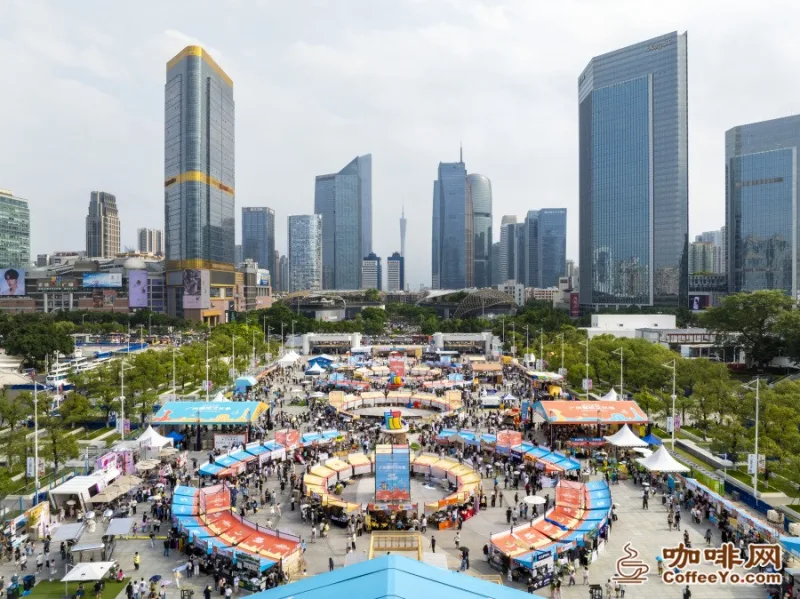
May 2, 2026, Guangzhou Coffee Culture Season scene. File photo / Guangzhou Daily Xinhua City reporters: Su Junjie, Hai Guo, Chen Youzi
Why was Guangzhou “chosen” by coffee? Wang Xiaohua attributed Guangzhou’s advantages to five aspects: the trade advantage of a millennium-old commercial capital, the hub advantage of combined sea-land-air access, the consumption advantage of a population near 100 million, the industrial advantage of full-chain coordination, and the cultural advantage that endures and renews.
Supporting these advantages is the “Several Measures for Promoting High-Quality Development of the Coffee Industry in Guangzhou” issued this year — the “Ten Coffee Measures”: on the trade side, optimizing green-bean import clearance and building a digital trading platform; on the manufacturing side, up to 30 million yuan in rewards for a single technical-transformation project; on the consumption side, encouraging the creation of coffee blocks; on the finance side, launching “coffee loans”; on the talent side, building a multi-level cultivation system.
The policy is not on paper. What coffee lovers may be more familiar with is this year’s hundred-day-plus Guangzhou Coffee Culture Season: it opened in May at Tianhe Sports Center and concluded in August in Liwan, with 13 countries and regions, 43 cities and over 230 brands participating; the opening main venue drew 133,000 visits over 5 days with revenue exceeding 14.6 million yuan. Yunnan brand Wujin Coffee was a “guest” at the main venue in May and by August had become a new Guangzhou enterprise — it placed its national marketing center in Guangzhou. Also “reflected” is Guangzhou smart manufacturing: Techneo Intelligence (a Guangzhou enterprise) holds over 200 coffee-machine patents, exports products to more than 110 countries and regions, with overseas revenue exceeding 70% of total; of China’s shared coffee machines exported to Europe and the US, 1 in 10 comes from Techneo. The Guangzhou Coffee Culture Season turns foot traffic into business and flow into industry.
As a supporting unit of the coffee salon, China Construction Bank Guangzhou Branch brought its supply-chain finance “magic weapon” to the scene: a digital financial service solution, specially tailored to precisely promote to upstream and downstream enterprises of the coffee industry chain, directly addressing the capital-turnover needs of business entities in raw-material trade, production and processing, and brand distribution, adding fuel to the high-quality development of the bay-area characteristic industry with financial live water. “There are many small and medium entities upstream and downstream of the coffee industry chain, and occupied funds from receivables and cumbersome financing procedures are common problems,” said a relevant person in charge of CCB Guangzhou Branch. Relying on the coffee salon platform, it brings digital supply-chain finance products to the industry front line, penetrating upstream and downstream with the credit of core enterprises, and lowers the financing threshold for small and micro enterprises in the industry chain with online, high-efficiency financing services. In the next step, CCB Guangzhou Branch will continue to deepen bay-area characteristic industries, continuously improve supply-chain financial services, and inject financial momentum into stabilizing and strengthening the chains of foreign trade and characteristic industries.
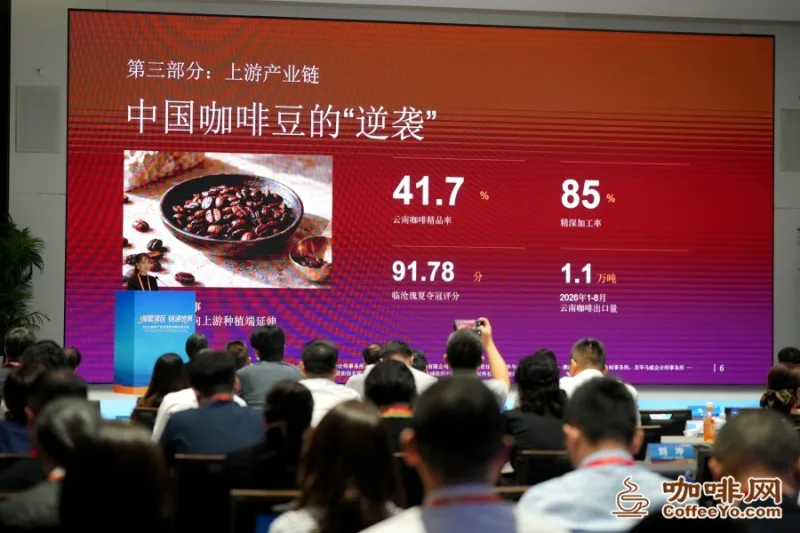
And the most concrete footnote of this salon was two signing ceremonies on site. The China Coffee League Organizing Committee, the organizing committee of the Shanghai Lujiazui Financial City International Coffee Culture Festival, and coffee industry associations and organizations from 9 representative provinces and cities including Yunnan, Hainan, Sichuan and Guangzhou jointly signed a memorandum of cooperation, reaching consensus on joint standard-setting, cross-city exchange, talent cultivation and brand building; subsequently, the South China International Coffee Trading Innovation Center signed centralized contracts with six leading enterprises including Yunnan Zuoyuan, Hainan Mushan and Huasheng Coffee, with a total value exceeding 108 million yuan. The business spans domestic green-bean supply chains, bulk import trade, South China roasting and processing, coffee-equipment distribution, packaging-machinery export and designated deep roasting — the full-chain closed loop of “green-bean import, domestic circulation, roasting and processing, equipment going global” was established in one agreement after another.
Discussing trends, sharing opportunities
The next round of global coffee consumption growth: China is an important force
— Li Hong, head of the Yunnan Provincial Coffee Expert Group and vice president of Yunnan Agricultural University
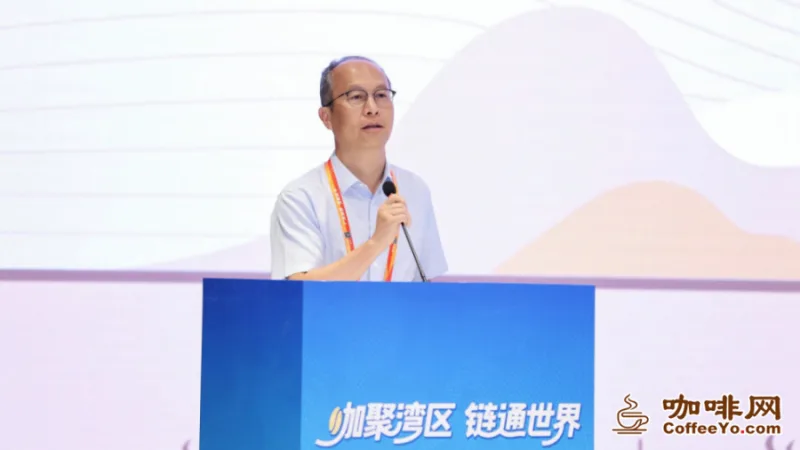
Coffee consumption growth is slowing in traditional markets such as the EU, the US and Japan; China shows a different picture, with green-bean consumption of about 367,400 tonnes in 2025 and 385,200 tonnes in 2025/26, up about 30.5% from 2021/22. “An important space for the next round of global coffee consumption growth is in Asia, and China is a force worthy of attention.” He proposed a “dual circulation”: domestically, “Yunnan produces, Guangdong sells,” Yunnan plus big cities, from region to world; internationally, use China’s consumption engine to attract global coffee to sell to China, then sell finished products to the world with manufacturing and sci-tech innovation capabilities. In his view, the Canton Fair is precisely the “key bridge of the international great circulation.” He looks forward to China moving from “participating in the world market” to “contributing Chinese solutions,” becoming a new world coffee center.
Chinese coffee will grow into a leading force in the Asian coffee industry
— Chen Zhenjia, director of the China Coffee Engineering Research Center and secretary-general of the Asia Coffee Association
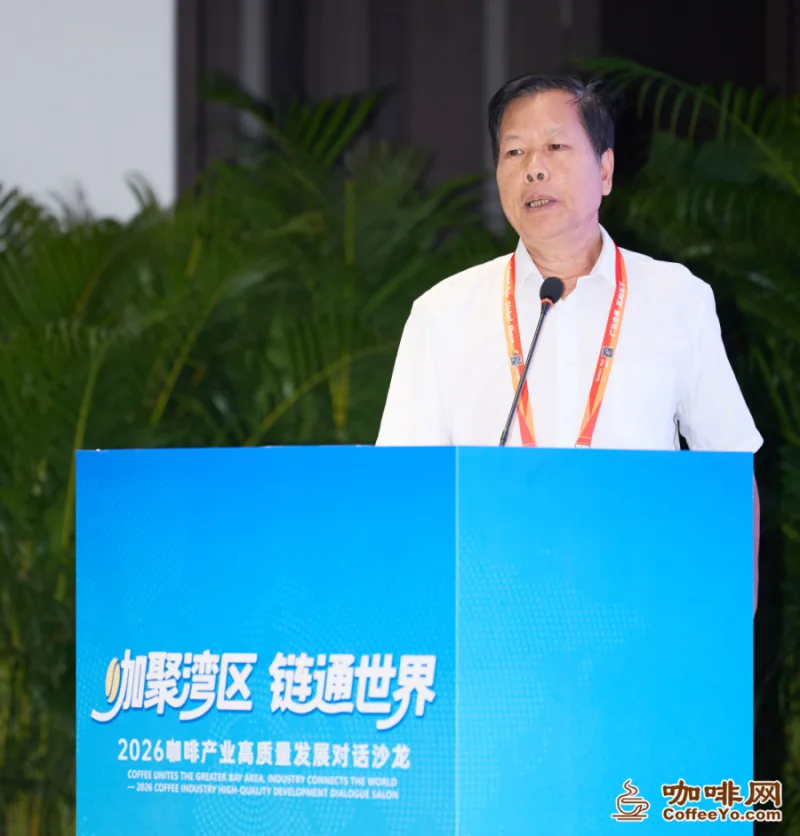
Chen Zhenjia judges that Chinese coffee has entered a new cycle of scale, standardization and branding: an industry scale of 354.9 billion yuan, an average annual growth rate exceeding 23%, with three advantages of production-capacity security, flavor differentiation and domestic-demand expansion, but also facing shortcomings such as insufficient international discourse power. He proposed three main lines for industry breakthrough — high-quality commercial beans as the main body, deep processing as support, and green sustainability as the base color. Internationalization cannot rely only on product export; it must complete the progression of “standard output — technology output — brand output — industry-ecology output” through standard output, differentiated IP building, industry-academia-research synergy and industry grouping to go global. He judges that in the next 5 to 10 years, Chinese coffee will complete the transition from boutique niche to full-category coordination, from raw-material export to standard- and brand-driven, leap out of the follower identity, and grow into a leading force in the Asian coffee industry.
Capital selects coffee targets carefully, shifting from betting on the track to betting on certainty
— Zhang Xin, partner of KPMG China’s Retail and Consumer Goods industry
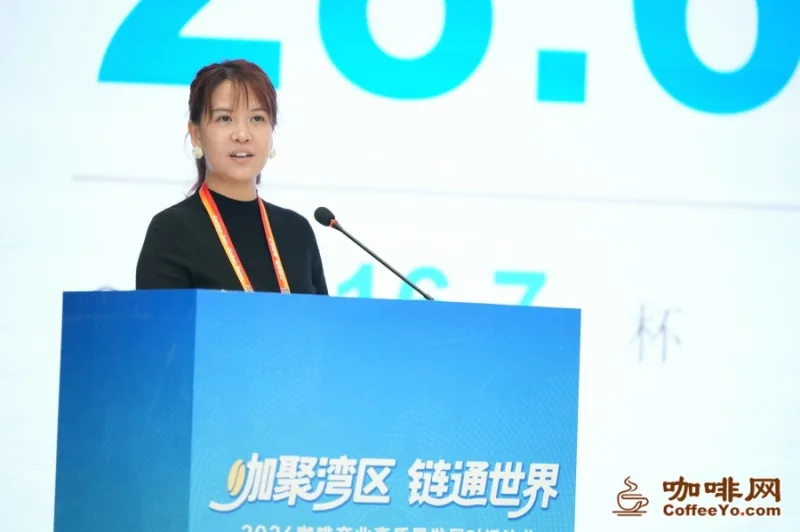
Zhang Xin depicted the market with data: China’s per-capita coffee consumption reached 28.6 cups in 2025, 1.7 times that of 2023; coffee delivery orders exceeded 990 million, up 430% year on year; the share of stores in third-tier and below cities rose from 37% to 43%; the chain rate is 42%, still below tea drinks’ 66%. But capital’s attitude has changed — in the first half of 2026, total consumer-goods retail investment and financing exceeded 100 billion yuan, yet coffee-brand equity financing was only 1 deal. “It’s not that capital is withdrawing, but shifting from ‘casting a wide net’ to ‘selecting targets carefully.'” Boyu Capital’s acquisition of 60% of Starbucks China’s business and Nowwa Coffee’s completion of hundreds of millions of yuan in Series C financing are both “shifting from betting on the track to betting on certainty.” She also reminded that compliance is a stepping stone to capital markets, not a stumbling block — “what capital fears most is not slow growth, but not being able to see clearly.”
Bullish on the Chinese market, will increase presence in South China, targeting Guangzhou for new stores
— He Weibiao, deputy general manager of the Greater China region of Vietnam’s Trung Nguyen Legend Coffee
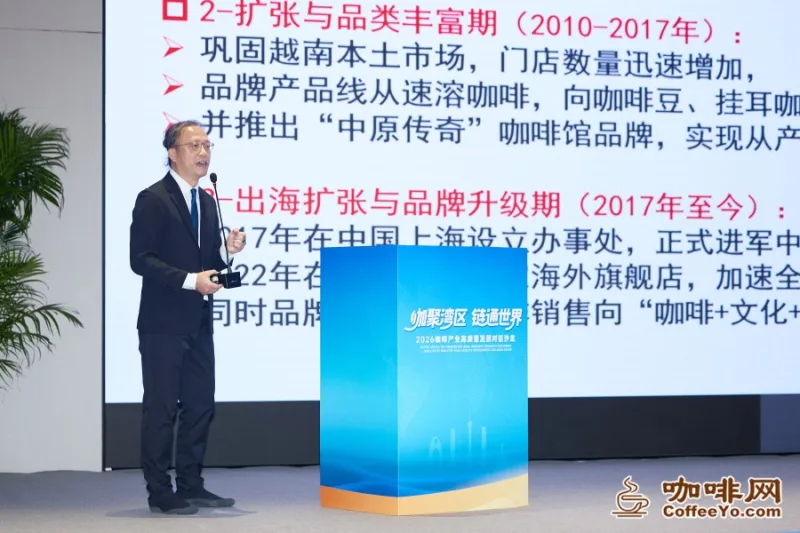
He Weibiao said that relying on Vietnam’s origin advantage as the world’s No.1 robusta producing country, “Trung Nguyen Legend” has spent 30 years completing the leap of “agricultural raw material — global brand — full-industry-chain ecosystem,” upgrading from selling products to selling a lifestyle and coffee culture. He revealed that in 2026 “Trung Nguyen Legend” already has over 30 stores in China, and this year’s store-opening plan is being directed to South China, focusing on cities such as Guangzhou, “coordinating with the new development layout of Guangzhou’s coffee industry.” In his view, Guangzhou is a window to observe the Chinese market and a starting point to go nationwide.
Guangzhou launches coffee green-bean “whole-in, zero-out” bonded trading, helping enterprises save 20% capital-occupation cost
— Xu Yang, general manager of the Guangzhou Commodity Exchange
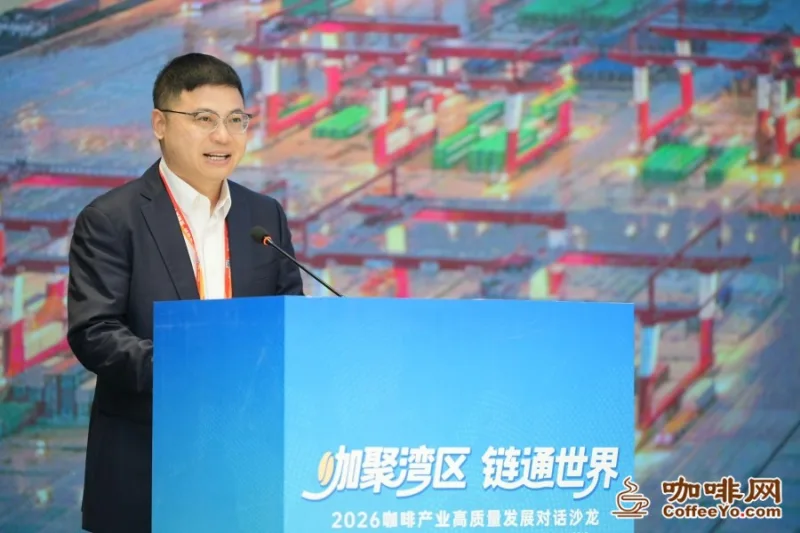
Xu Yang’s speech had a distinct “infrastructure” character. He said that relying on Nansha’s institutional innovation, the Guangzhou Commodity Exchange innovated coffee green-bean “whole-in, zero-out” bonded trading: imported green beans enter the bonded warehouse as full containers and immediately generate standardized electronic warehouse receipts, and enterprises can take out and pay tax in batches. Currently the platform has cumulatively traded 13,700 tonnes, helping enterprises reduce capital-occupation cost by over 20%; the Guangzhou bonded spot price index is being compiled, aiming to build a “international futures + Guangzhou spot” dual-dimensional price system, filling the gap of a public spot pricing benchmark in the Greater Bay Area.
Invest in Guangzhou, invest in the future; share the coffee aroma, share the opportunity
— Wang Xiaohua, member of the Guangzhou Coffee Task Force and first-level researcher at the Guangzhou Municipal Bureau of Commerce

Wang Xiaohua highlighted Guangzhou’s advantages in developing the coffee industry: quality beans from around the world converge on Guangzhou via Nansha Port and Huangpu Port, are tempered in local roasting workshops, and flow to streets and alleys as well as the whole country — a complete industry chain of “trade — smart manufacturing — processing — stores — culture” is accelerating into shape. Guangzhou’s per-capita annual coffee consumption is 28 cups, with about 2 million freshly made coffees per day, and in Tianhe’s Liuyun neighborhood there is a coffee shop on average every 150 meters.
On behalf of Guangzhou, he extended an invitation to the globe: “Invest in Guangzhou, invest in the future; share the coffee aroma, share the opportunity. From a millennium commercial capital to a coffee city, from a trade channel to an industry highland.”
Reporter’s observation
The “Guangzhou methodology” of a cup of coffee: elevating “consumption heat” into “industry reality”
If this salon is compared to an “exam” of Guangzhou’s coffee industry, the answer is already written on site: on one side, buyers queuing in the Canton Fair exhibition hall; on the other, hundred-million-yuan signatures penned in the auditorium; on one side, the “North Wind and Sea” 190 years ago; on the other, the new theme of “connecting the world.” A cup of coffee has completed a triple jump in Guangzhou from “imported good” to “city card” to “industry engine.”
Behind this is a clear set of “Guangzhou methodology.” Elevate “consumption heat” into “industry reality,” and thereby give consumption scenarios and consumer groups a better experience and a higher leap. The Guangzhou Coffee Culture Season broke 37,000 daily visitors, and “Wujin Coffee” moved its marketing center from Yunnan to Guangzhou. Guangzhou knows well that a city’s love for coffee ultimately must be retained by industry; solidify the “full chain” into a “true closed loop.” From imported green beans at Nansha Port and whole-in-zero-out bonded warehouses, to Guangzhou smart-manufactured equipment going global and store consumption throughout the streets — “trade — smart manufacturing — processing — stores — culture” links ring by ring; turn “government service” into “enterprise confidence.” From technical-transformation subsidies to “coffee loans,” the “Ten Coffee Measures” have made policy the foundation of the industry.
Some ask, why Guangzhou? The answer may lie in that set of numbers: 8,000 stores, 67 billion yuan output value, 150,000 jobs, plus the daily routine of 28 cups per capita and 2 million cups per day. More importantly, Guangzhou has not treated coffee merely as a business — it uses the Guangzhou Coffee Culture Season to gather popularity, the “Ten Coffee Measures” to consolidate the foundation, trading platforms to set standards, and the Canton Fair to connect the world, turning a cup of coffee into an industry that connects the world.
190 years ago, when the first cup of coffee wafted its aroma in the Thirteen Hongs, probably no one imagined that 190 years later it would become a high-quality-development new track for a city. Today, Guangzhou is writing this “coffee aroma” into the answer sheet of an international consumption center city. This is exactly the truly fascinating flavor of the “coffee city”!
Reprint notice and disclaimer
- This article is edited and compiled by coffeeyo.com and reproduced from Guangzhou Daily Xinhua City’s “Global industry giants jointly explore new paths for high-quality development; Guangzhou’s coffee industry is unanimously optimistic | Coffee Gathers in the Bay Area, Connecting the World.” Copyright of the original belongs to Guangzhou Daily Xinhua City and the original author. This reprint is for coffee-industry information sharing only and does not represent the views of this site; all data and opinions are subject to the original. We thank the original author for their work and sharing.
- Original: Guangzhou Daily Xinhua City, “Global industry giants jointly explore new paths for high-quality development; Guangzhou’s coffee industry is unanimously optimistic | Coffee Gathers in the Bay Area, Connecting the World”
- For matters regarding content licensing, attribution, copyright or otherwise, please contact us promptly and we will verify and cooperate in handling it as soon as possible. We also welcome coffee businesses and industry media to exchange story leads with us.
- Contact coffeeyo.com: Tel 400-0000-641 (+86-18288016826) | Email 405854472@qq.com | Address: Jinghong City, Xishuangbanna, Yunnan Province, China
Related Reading
- Bean in Short Supply: A Taiwan Youth on Yunnan Coffee as a Shared Cross-Strait Stage
- Five Years, Eight Championships: Lincang Coffee Joins the World Stage
 Haikou ‘Union Cup’ Barista Skills Competition Kicks Off to Empower the Service Sector
 Yunnan Specialty Coffee Beans Deliver an ‘Excellent’ Report: Path to Value Leap
- Cross-Strait Tides Rise: A Taiwan Youth Farms Coffee in Yunnan, a Cup Bridging Both Sides
 2026 2nd Yunnan Treasure Coffee Green Bean Competition (Cup of Excellence Pilot) Concludes


 Liaoning ICP Security No. 21122402000217