
At a Glance (China Coffee Network): On September 26, on the main stage of the 2026 Guiyang International Coffee Expo, the "Fei You Bu Ke" coffee-tourism fusion deep-study program was introduced to the public. This w…
On September 26, on the main stage of the 2026 Guiyang International Coffee Expo, the “Fei You Bu Ke” coffee-tourism fusion deep-study program was introduced to the public. This was no ordinary launch event. The program turns coffee from “a cup to drink” into “a route to play”—from planting to picking, from roasting to brewing, then linking on to cafés by the Huangguoshu Waterfall and in Xijiang Miao Village, into a journey where one can slow down in Guizhou.
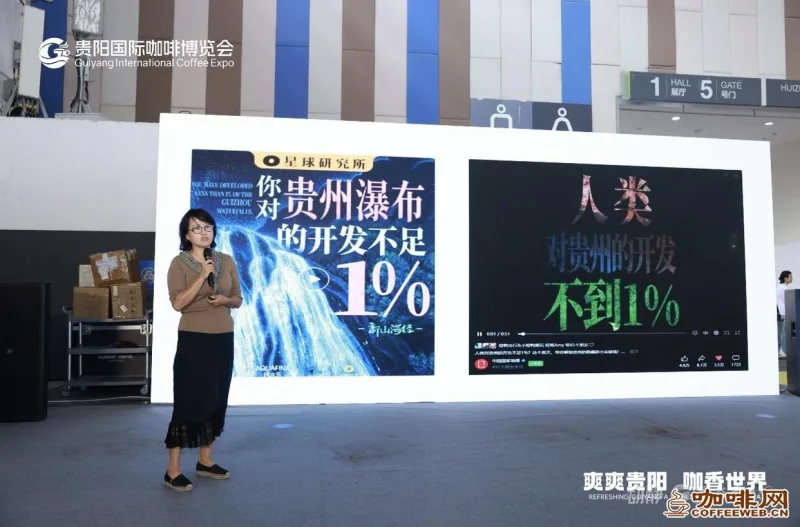
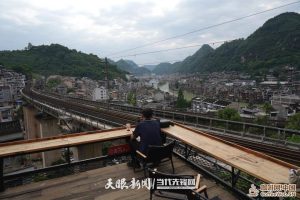
How does the study program work? Built around “from seed to cup,” it lays out four routes: the first starts at the origin, linking core producing regions such as Pu’er and Lincang in Yunnan and Guizhou’s own trial planting bases, letting participants personally do fresh-cherry picking, green-bean processing, and roasting-grinding; a second route lands in the city, stringing the “coffee maze” formed by over 40 cafés around Wenchang Pavilion, the “A Touch of Garden” beneath the forest at Changpoling, and the cliffside café by the sinkhole into a “day-coffee, afternoon-tea, night-drink” route; a third is professional training, leveraging the five national-level coffee competitions at this expo, with national champions and certified judges teaching latte art, cupping, and tasting on-site, paired with barista occupational-skill certification; the final route shows the most Guizhou flavor—intangible-heritage woodblock printing, ethnic cultural-creative products, matcha, and spent-coffee-ground soap are folded into the curriculum, producing flavors like fish mint (zhé’ěrgēn) americano, litsea (mùjiāngzǐ) special, and chestnut-rose (cílí) special that can only be tasted in Guizhou.
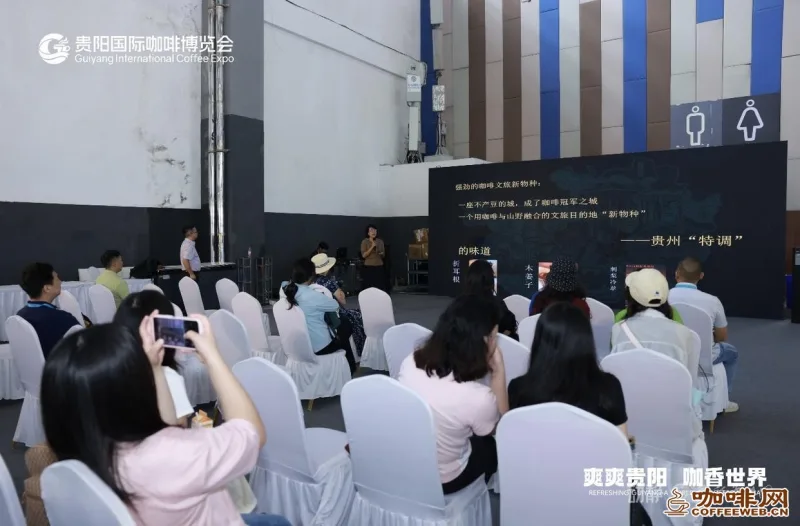
To run the study program across coffee’s “full chain,” Guizhou has its confidence. Guiyang is the “Coffee Champion City of China,” with over 3,000 coffee business operators citywide and a mature consumer market; the province’s 16 key scenic areas—Huangguoshu, Xijiang Qianhu Miao Village, Tianhetan, and others—provide natural settings for study tours.
The program aligns with Guizhou’s three-year “education-tourism fusion” study-action plan, binding coffee experiences together with natural science education and ethnic culture, and designing tiered offerings for three groups—youth study-tour participants, coffee-skill enthusiasts, and cultural-tourism practitioners—positioned as the country’s first immersive coffee-tourism study system covering the full “from seed to cup” chain.
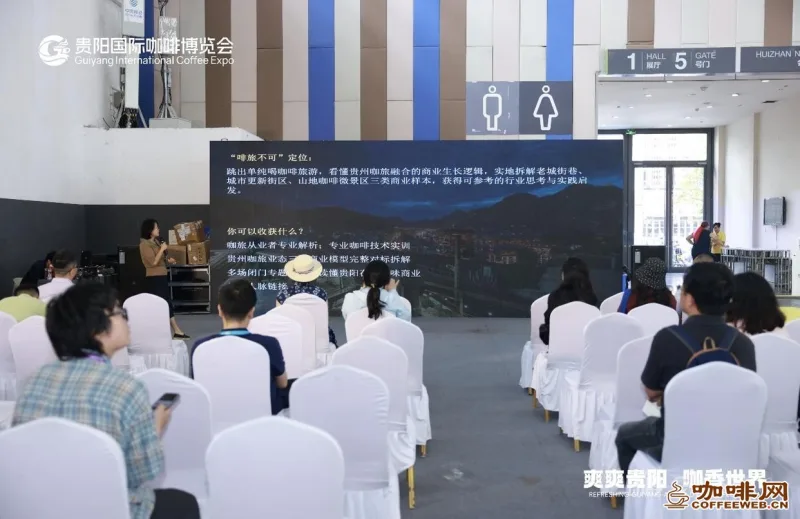
Of course, it is not only about ticket revenue. As the coffee format burrows into scenic areas, homestays, and villages, it sparks new scenes like “village cafés,” “cave cafés,” and “sinkhole cafés,” and revives idle industrial spaces, little-known karst spots, and ethnic villages; using coffee trends to draw young people is reshaping Guizhou’s tourism, long reliant on family and middle-aged-and-older sightseers, lifting the share of post-95 and post-00 visitors; study tours are inherently “slow travel, deep experience,” stretching average visitor stays from the past 2–3 days to 4–5 days, benefiting lodging, dining, and cultural-creative products.
Looking deeper, high-value-added products such as study courses, skill training, and flavor souvenirs are expected to let Guizhou upgrade from a mere coffee-consumption place into a distribution hub radiating across the southwest for green-bean trading, roasting processing, and brand incubation.
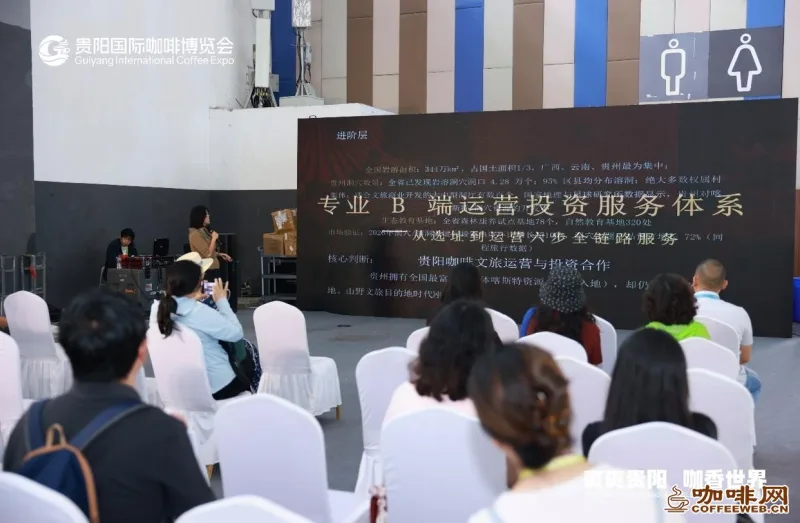
So far the program has completed the signage of its first batch of 12 study-experience sites. Supported by Guiyang’s special policy for high-quality coffee-industry development, the next step is to spread across all nine prefectures and autonomous prefectures of the province. The launch event also opened cooperation channels to cultural-tourism enterprises, study institutions, and scenic-area operators: jointly developing scenic study courses, co-building barista industry-education integration training bases, linking “Village Super” and “Village BA” to design “coffee + mountain tourism” routes, and opening study-site franchising to support urban cafés and rural homestays in upgrading into designated experience stations, sharing traffic and the course system.
The story a cup of coffee can tell is being turned by Guizhou into an industry chain that is visible, walkable into, and able to keep people here.
Reprint Notice & Disclaimer
- This article has been edited and compiled by China Coffee Network. The information and images therein come from public sources and the copyright belongs to the original author. This reprint is intended solely for information sharing within the coffee industry and does not represent the views of this website; all data and opinions are subject to the original article. Our thanks to the original author for creating and sharing it.
- For matters concerning content licensing, attribution, copyright or otherwise, please contact us promptly and we will verify and cooperate in handling them as soon as possible. We also welcome coffee origins, brands and industry media to exchange ideas and contribute articles.
- Contact China Coffee Network: Tel 400-0000-641 (+86-18288016826) | Email 405854472@qq.com | Address: Jinghong, Xishuangbanna, Yunnan Province / Tieling, Liaoning Province
Related Reading
 How ‘Sea-Flavored’ Coffee Blooms Across Dongtou
- Health Guide: How to Enjoy Your Coffee the Healthy Way
 ‘The Rhythm of Plants: Tea and Coffee Culture’ Exhibition Debuts in Rio de Janeiro, Brazil
 Study: Regular Coffee and Tea May Lower Dementia Risk, but More Is Not Better
 Frontline Story: A ‘Mobile City Coffee Bar’ Arrives by the Grand Canal
 Yantai’s Wind Tastes of Coffee





 Liaoning ICP Security No. 21122402000217