
At a Glance (China Coffee Network): Through the Shanghai-Yunnan collaboration, the remote Baishapo village in Pu'er has been transformed into a "coffee + agriculture-cultural-tourism" demonstration site, turning a single coffee bean into a driver of rural revitalization and shared prosperity.
General Secretary Xi Jinping has given important instructions on normalizing and improving east-west collaboration, emphasizing the need to “summarize and apply the useful experience of models such as the Minning collaboration, further improve the collaboration mechanism, optimize collaboration methods and expand collaboration fields.” Over the 30 years since east-west collaboration began, it has played an important role in assisting poverty alleviation and promoting coordinated regional development. Recently, reporters from this newspaper visited Yunnan, Gansu, Chongqing, Ningxia, Qinghai and other places to see how the east and west are working together to advance industrial complementarity, personnel interaction, mutual learning of technology, exchange of ideas and mutual emulation of working styles, achieving mutual benefit and common development.
Early one morning in Baishapo, Nandaohe Village, Simao District, Pu’er, Yunnan, the aroma of coffee already filled the village lanes.
Villager Wang Chunfang was grinding coffee beans while her husband, Huang Yubing, tuned an old popcorn machine in the yard. After modification, the popcorn machine was transformed into a coffee-roasting device. “The beans roasted in it brew into a richer cup; we named this coffee ‘Pop-Pop Coffee,'” the couple said. They grow 40 mu of coffee and have become specialty-coffee shop owners right at their doorstep.
In just two years, Baishapo has been transformed from a remote village into the “Beautiful Star Village – Windy Coffee Valley.” Behind this lies the sustained deepening of the Shanghai-Yunnan collaboration model of “co-building, co-managing, co-governing and co-prosperity.” Shanghai leverages its strengths in capital, market and talent, deeply integrating them with Pu’er’s ecological resources and coffee industry, strengthening and extending the industrial chain and building an integrated complex spanning planting, processing, quality control and cultural tourism.
Starting from a single small village, the project radiates to the surrounding 65-square-kilometer coffee-producing area. Coffee farmers are rapidly shifting from “bean growers” to co-builders and co-sharers of the industrial chain. A single coffee bean sets out from the mountains of Pu’er, crosses mountains and seas, and lands in the cups of consumers in Shanghai and ever more cities. Its migration is not only an extension of an industrial chain, but a vivid example of how Shanghai-Yunnan collaboration empowers the revitalization of rural industries.
Pu’er in Yunnan is China’s golden belt for coffee growing; Shanghai is the city with the most cafes in the world. One bean, two places bound by affection – mountains and seas are not so far apart.
Hands joined across mountains and seas: coffee goes from “hard to sell” to “not enough to sell”
With 36,000 mu of contiguous coffee gardens, Nandaohe Village is among the villages with the largest coffee-planting scale in the country, yet guarding those gardens, villagers long “depended on the heavens for their living.” The old model of a short industrial chain that only sold green beans left the village lacking development vitality. Village official Li Kaishun voiced the bitterness: “Coffee prices swing up and down; when they’re bad, villagers’ incomes shrink sharply, and they nearly lose confidence in growing coffee.”
The turning point came in 2022. The Shanghai and Yunnan governments joined hands with a public-welfare fund to designate the Baishapo villagers’ group as a pilot for a “coffee + agriculture-cultural-tourism” integrated demonstration village. When the news arrived, Li Kaishun was happy yet uneasy: “The whole Nandaohe area had never seen such a large project land; everyone was excited, but unsure whether it would actually work.”
Getting the project off the ground first had to pass the “hearts-and-minds test.” Village official Wang Zehua recalled: “Villagers worried the project would be left half-finished and their invested money would yield nothing.” To break the deadlock, Wang Zehua took the lead in giving up his own land as a model, and village officials went door to door to explain the policy. Seeing Party members and officials lead by example, the hesitant farmers also proactively applied for renovations, and the village took on a brand-new look.
Once the villagers’ enthusiasm was mobilized, forces from all sides quickly followed up. Shanghai’s paired-assistance funds went into improving housing, environmental amenities and building an operations hall, with industry-talent training conducted in parallel; the public-welfare fund financed a coffee-themed cultural experience center; through a “linking farmers to agriculture” mechanism, the project also guided villagers to pool part of their own funds and take part in depth.
Relying on the Shanghai Municipal Federation of Trade Unions and the Federation of Industry and Commerce to continuously channel visitor flows, the project pushes Shanghai enterprises and public institutions to fully connect with Pu’er coffee products and broaden sales channels; Axa Agriculture Insurance tailored a coffee-specific insurance to help coffee farmers withstand yield losses from pests, natural disasters and the like.
In July 2024, “Beautiful Star Village” officially opened in Baishapo. By the end of July 2026, it had received over 500,000 visitors cumulatively, directly increasing village-collective and farmers’ income by more than 2 million yuan.
Today, coffee farmers grow coffee with even greater enthusiasm. Li Kaishun summed it up with a smile: “In the past we worried about finding buyers; now we worry there isn’t enough to sell.” From “depending on the heavens” to “not enough to sell,” this cup of coffee has let villagers taste real, tangible sweetness.
Business-format innovation: from single-species planting to diversified income
After the project was built, the Shanghai-Yunnan collaboration introduced a mature operating model and innovated an income-increase mechanism combining “guaranteed returns + profit dividends + land rent + employment + entrepreneurship.” Villagers independently chose the operating team of Shanghai Bingbo Industrial Co., Ltd., which has mature operating experience.
In March 2024, operations head Dai Xiaoyan arrived in Pu’er. The moment she got off the plane, local township officials took her straight into the village. Through conversation she learned that villagers’ understanding of “operations” was close to zero.
On the spot she recruited 12 villagers and organized a training class the next day – starting with practicing Mandarin, then etiquette and smiles, reception service, and bringing in a barista to teach.
Yet villagers’ thinking about getting rich remained simple. “Every household wanted to open a farmhouse inn or a small shop, thinking they could make money just by opening the door,” Dai Xiaoyan said. Extensive, rough operation led to severe homogenization, with non-standard service and hard-to-guarantee quality. Once a tourist ate at a villager’s home and was served a dish with chicken feathers still on it, triggering a complaint – an incident that gradually helped villagers straighten out their operating mindset.
The operations team combined each household’s conditions and resource strengths to promote “one household, one business format,” tailoring differentiated courtyard economies. Wa ethnic brocade weaving, out-of-print woodblock printing, coffee roasting, kiln-baked pizza – distinctive formats blossomed everywhere. After training, the Wang Chunfang couple set up a coffee-roasting experience spot at home, and “Pop-Pop Coffee” even applied for a patent. “Now we don’t have to run around outside; we can earn a stable income running a shop at home,” Wang Chunfang said.
More and more villagers have completed the metamorphosis from “traditional coffee farmers” to “staff in various roles and format proprietors.” The Shanghai-Yunnan collaboration keeps building momentum: Shanghai sends planning and operations professionals to stay long-term in the village for guidance and channels outside visitors through Shanghai’s distribution channels, while Yunnan links up with agricultural colleges to conduct industry training. Together the two places have cultivated more than 30 local rural operations specialists and over 50 certified baristas. Homestay butlers, baristas, intangible-heritage interpreters and format proprietors have become the new identities of Baishapo villagers.
Radiating outward: strengthening the coffee brand from point to area
Centered on Baishapo, the project collaboration radiates to drive the development of the surrounding 65-square-kilometer coffee-producing area.
Inside seven deep-processing enterprises, machines roar; standardized estates rise from the ground; new formats such as coffee liquor and cultural-creative products keep emerging. The added value of coffee has multiplied severalfold. “This year there was competitive buying of coffee,” Wang Zehua said. “Without the Shanghai-Yunnan collaboration, we’d still be walking the old road.”
Online traffic added further heat to this cup of “Pu’er coffee aroma.” The micro-drama “My Way Home Has Wind 2” became a hit, quickly putting Baishapo on the map; exchange groups from multiple countries visited, and regular bonfire nights and intangible-heritage handicraft experiences turned tourists from “checking in” to “staying,” taking root in village life.
The value leap of a single coffee bean reflects a profound shift in industrial thinking. At the end of 2025, with support from the Shanghai Municipal Cooperation and Exchange Office, Simao District organized representative coffee farmers to visit Starbucks’ Kunshan roasting plant in Shanghai. Seeing the 450-kilogram-class roaster and a professional cupping room, an old coffee farmer was deeply moved: “In the past I only knew to keep my head down planting beans; today I saw with my own eyes how technology can create enormous value uplift for coffee.”
Beyond Baishapo, the Shanghai-Yunnan collaboration effect has taken root across all of Pu’er. Lancang Lahu Autonomous County is accelerating construction of a tea-and-coffee processing, warehousing and trading demonstration base, expected upon full operation to produce 10,000 tons of instant coffee powder and 5,000 tons of coffee liquid a year, benefiting 74 administrative villages; Menglian Dai-Lahu-Va Autonomous County uses a “front shop, back yard” model to drive quality, standardization and internationalization throughout the planting, processing and sales chain, forming a cluster of themed estates represented by the “Mangmang Village Coffee Community” in the county; Ning’er Hani-Yi Autonomous County draws on Shanghai market resources to build the “Ning Xiaodou” regional public brand, bringing deep-mountain coffee into first-tier-city supermarkets; Jinmo Coffee, a foreign-funded enterprise headquartered in Mojiang, achieved “equipment in place and immediately at scale” this August, with estimated annual output value exceeding 100 million yuan, pushing Mojiang’s coffee industry toward full-chain upgrading from planting and fine processing to brand operation and cultural-tourism experience, continuously expanding new consumption scenarios.
At present, targeting the shortfall in carrying capacity of the core area, the “Windy Coffee Valley” phase-two expansion project has been launched, promoting the Baishapo model to simultaneously upgrade all ten villagers’ groups in the village; regular training in coffee roasting, e-commerce livestreaming and more keeps cultivating local entrepreneurship leaders and improving the full industrial-chain layout.
A single coffee bean has witnessed the warmth of mountain-and-sea collaboration. “The coffee track is one that can truly drive village development. We will surely build up the coffee brand, go global, and let more people get to know China’s coffee,” Dai Xiaoyan said.
Reprint Notice & Disclaimer
- This article has been edited and compiled by China Coffee Network. The information and images therein come from public sources and the copyright belongs to the original author. This reprint is intended solely for information sharing within the coffee industry and does not represent the views of this website; all data and opinions are subject to the original article. Our thanks to the original author for creating and sharing it.
- For matters concerning content licensing, attribution, copyright or otherwise, please contact us promptly and we will verify and cooperate in handling them as soon as possible. We also welcome coffee origins, brands and industry media to exchange ideas and contribute articles.
- Contact China Coffee Network: Tel 400-0000-641 (+86-18288016826) | Email 405854472@qq.com | Address: Jinghong, Xishuangbanna, Yunnan Province / Tieling, Liaoning Province
Related Reading
- Bean in Short Supply: A Taiwan Youth on Yunnan Coffee as a Shared Cross-Strait Stage
- Five Years, Eight Championships: Lincang Coffee Joins the World Stage
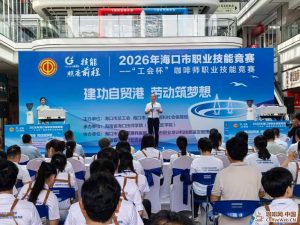
 Haikou ‘Union Cup’ Barista Skills Competition Kicks Off to Empower the Service Sector
 Yunnan Specialty Coffee Beans Deliver an ‘Excellent’ Report: Path to Value Leap
- Cross-Strait Tides Rise: A Taiwan Youth Farms Coffee in Yunnan, a Cup Bridging Both Sides
 2026 2nd Yunnan Treasure Coffee Green Bean Competition (Cup of Excellence Pilot) Concludes



 Liaoning ICP Security No. 21122402000217