
Brief (coffeeyo.com): The 7th Nujiang Specialty Coffee Culture Week was promoted in Kunming on 15 September, inviting travellers to spend the National Day holiday in Nujiang on a “coffee-seeking journey” — from canyon coffee estates and a G219 tasting trail to a thousand-person Lisu long-table feast.
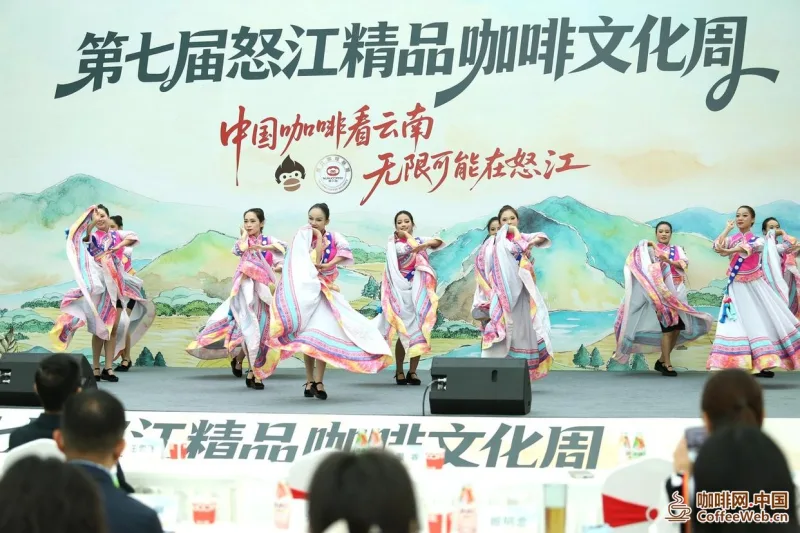
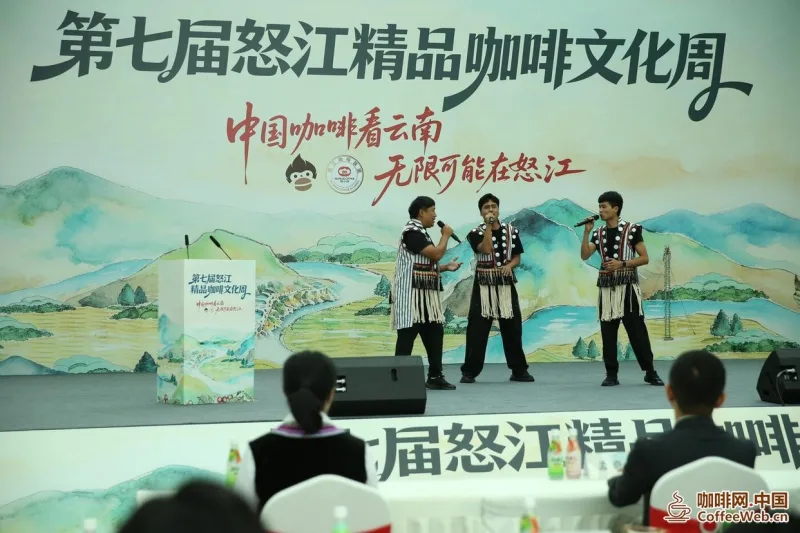
On the morning of 15 September, the promotional briefing for the 7th Nujiang Specialty Coffee Culture Week — themed “For China’s coffee, look to Yunnan; for boundless promise, look to Nujiang” — was held at Yunnan Daily Media Square. Nujiang Prefecture and Lushui City extended an autumn invitation to the media, cultural-tourism companies, people in the coffee industry and visitors at large, hoping they would come to know Nujiang and Lushui and experience the distinctive appeal of “Mystic Nujiang, an outdoor paradise”.
Breaking the planting boundary: how the “golden beans” developed a distinctive flavour
“For China’s coffee, look to Yunnan; for boundless promise, look to Nujiang.” That confidence comes from Nujiang’s distinctive natural endowments and the depth of its coffee industry.
As the seat of the only Lisu autonomous prefecture in the country, Lushui is known as “the first city of the Oriental Grand Canyon” and lies in the core zone of the “Three Parallel Rivers” World Natural Heritage site. Here growers have pushed past the traditional coffee-planting boundary of 25° north, extending the line to 26.5° north. A three-dimensional ecology of high altitude, high latitude and a wide temperature range gives Nujiang coffee its mellow, fruity aroma and distinctive flavour.
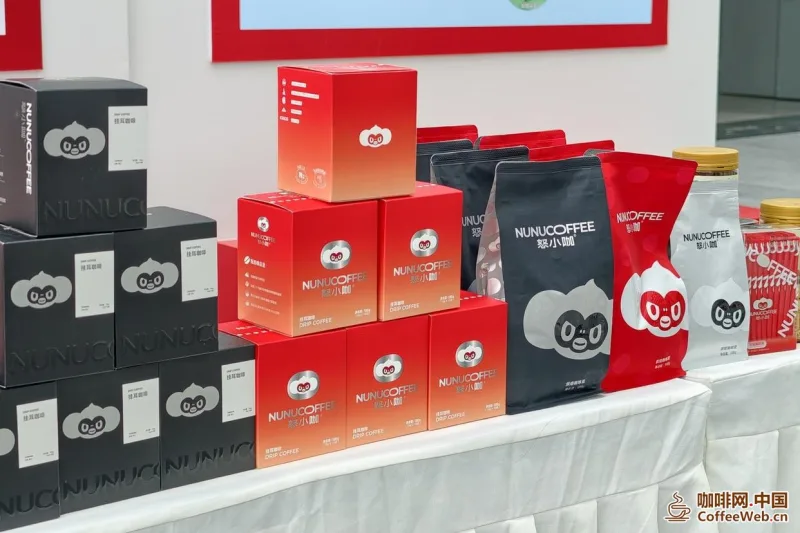
The city now has 100,000 mu (roughly 6,670 hectares) of coffee under cultivation, with improved varieties accounting for more than 90%, deep-processing capacity of 25,000 tonnes, and distinctive regional brands such as “Nuxiaoka”. These small coffee beans have become “golden beans” that help local people raise their incomes.
From tsaoko to coffee: industrial upgrading as a record of development
Lushui’s average winter temperature is 14.9°C — no severe cold in winter, no scorching heat in summer — and its negative oxygen ion concentration reaches 20,000 per cm³, twenty times the WHO standard, earning it a reputation as a “natural oxygen bar” and a “paradise for the mind”. In recent years the city has built a “five-warmth” service brand — warming the body, the heart, the eyes, the palate and the journey — while steadily improving transport, accommodation, healthcare, wellness and other supporting facilities. National Highway G219 runs through like a golden ribbon, linking the Xiaoshaaba 4A-level service area, the Denggeng hot springs, distinctive villages and other sites; it blends ancient folk customs with a modern look to create the most unmissable campsite on the G219.
What began as the Tsaoko Culture Week, then evolved into the combined Tsaoko & Coffee Culture Week, had already been held for six consecutive years in Lushui. This year the event formally centres on the coffee industry and has been upgraded afresh as the Specialty Coffee Culture Week. Behind the changing name lies a solid record of Lushui’s ongoing exploration of industrial development and its drive to build itself into a canyon tourism destination.
Coordinated across the whole region: unlocking a fresh “canyon coffee aroma” experience
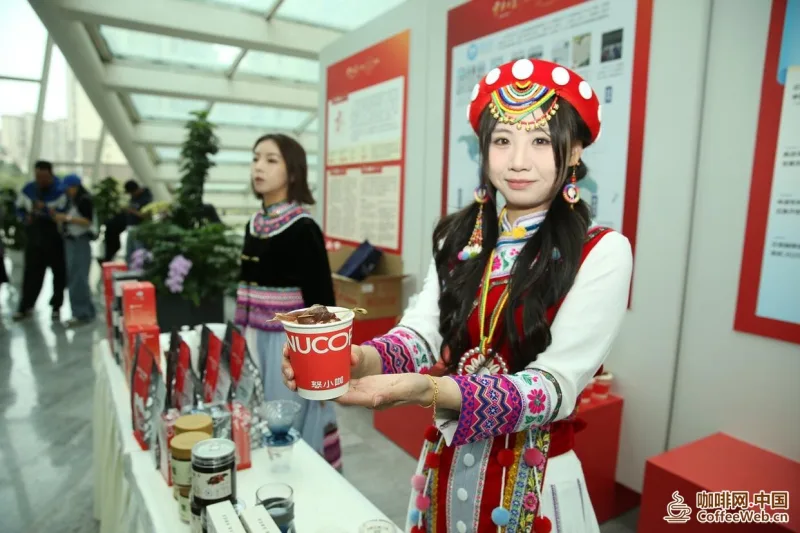
From 1 to 6 October, the 7th Nujiang Specialty Coffee Culture Week will be held in Lushui City. Over the six days, a programme linking the city proper with townships (and subdistricts) across the whole region will offer a packed itinerary: visitors can attend the opening gala with ethnic song and dance and dance around a bonfire; wander a coffee market bringing together Yunnan’s six producing regions and taste local coffee specialities; watch the coffee signature-drink competition and see wild mountain ingredients meet coffee in creative ways; follow the G219 coffee trail, collecting stamps along the canyon riverbank; and join a coffee off-road carnival where speed meets aroma. On the west bank of the Nujiang, a long-table feast of hand-grabbed rice will be set for a thousand guests in a show of togetherness, with Lisu flavours and coffee-infused dishes laid on for visitors.
Coffee enthusiasts and industry partners can unlock more “in-depth experiences”. On a cliff halfway up the mountain, the “Canyon Coffee Talk” salon will invite industry peers to sit among the scenery and discuss the future of specialty coffee. Along the Lushui section of the G219, 21 cafés and 9 popular photo spots will be selected to form a coffee-tasting trail, where visitors can sip and collect stamps their way along the canyon riverbank.
Beyond that, each township (and subdistrict) venue has “its own character”: a pastoral market in Shangjiang Town, brewing experiences in Daliandi Subdistrict, traditional coffee-making and Lisu folk activities in Yangpo Village, Liuku Subdistrict, a hike through primeval forest in Sanhe Village, Luzhang Town, cave coffee at Walayaku in Daxingdi Town, the thrilling “Tiger Leap” landscape and local rural contests in Chenggan Township, and the cliffside terraces of Tuotuo New Village in Luobenzhuo Township, among others — each with its own charm, waiting to be discovered.
Golden autumn meets the National Day holiday, and coffee aroma meets the festival. Lushui sincerely invites friends from all walks of life: savour a rich, full-bodied cup of Nujiang specialty coffee, take a coffee-seeking journey along the hidden landscapes of the G219, plunge into a hearty canyon coffee carnival, and set out on a “seed-to-cup” coffee trail. Feel the grandeur of the canyon, take in the ethnic culture, and together experience the boundless possibilities of Nujiang — for China’s coffee, look to Yunnan; for boundless promise, look to Nujiang.
Reporter Liu Weiwei, Yunnan Daily – Yun News
Editor: Xie Xiangrui
Reviewed by Li Xingwen
Reprint Note & Disclaimer
- This article is reprinted from Chinese media for information and cultural exchange. The views expressed are those of the original author and do not necessarily reflect the position of coffeeyo.com.
- All trademarks, brand names and logos mentioned belong to their respective owners.
- For cooperation, reprint or correction requests, please contact coffeeyo.com.
Reprint Notice & Disclaimer
- This article has been edited and compiled by China Coffee Network. The information and images therein come from public sources and the copyright belongs to the original author. This reprint is intended solely for information sharing within the coffee industry and does not represent the views of this website; all data and opinions are subject to the original article. Our thanks to the original author for creating and sharing it.
- For matters concerning content licensing, attribution, copyright or otherwise, please contact us promptly and we will verify and cooperate in handling them as soon as possible. We also welcome coffee origins, brands and industry media to exchange ideas and contribute articles.
- Contact China Coffee Network: Tel 400-0000-641 (+86-18288016826) | Email 405854472@qq.com | Address: Jinghong, Xishuangbanna, Yunnan Province / Tieling, Liaoning Province
Related Reading
 Three Decades of Shanghai-Yunnan Collaboration: A Coffee Bean ‘Ferments’ at the Import Expo
 Why Yongde’s Coffee Beans Won Gold in Shanghai – A Taste of ‘Life in Yunnan: 365 Days’
- Yunling Commentary: Yunnan Coffee Turnaround Hinges on Autonomous Pricing
 A ‘Travel Pack’ Reveals Another Possibility for Pu’er Baristas
- Bean in Short Supply: A Taiwan Youth on Yunnan Coffee as a Shared Cross-Strait Stage
- Five Years, Eight Championships: Lincang Coffee Joins the World Stage







 Liaoning ICP Security No. 21122402000217