
At a Glance (China Coffee Network): Guiyang, September 27 (Xinhua) — Guiyang, the capital of Guizhou Province, produces no coffee beans yet is hailed as the ‘Coffee Champion City.’ Recently it hosted the 2026 Guiyan…
Guiyang, September 27 (Xinhua) — Guiyang, the capital of Guizhou Province, produces no coffee beans yet is hailed as the ‘Coffee Champion City.’ Recently it hosted the 2026 Guiyang International Coffee Expo, attracting over 200 coffee brands from home and abroad to exhibit and more than 5,000 professional coffee buyers who gathered on-site to experience China’s burgeoning coffee market.
Guiyang boasts a very strong local coffee-consumption atmosphere, with over 3,000 coffee shops in the urban area, and many of the country’s coffee world champions hail from this city. In recent years Guiyang has grown into an important domestic hub for coffee consumption and craftsmanship; relying on the massive consumer base of Yunnan, Guizhou, and Sichuan, it has attracted many domestic and foreign coffee practitioners to come here.
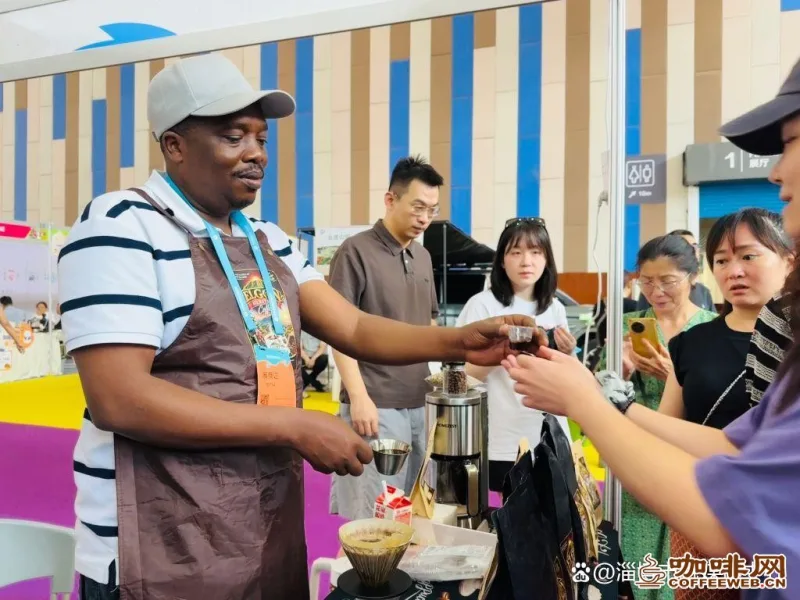
Martin Muneria, a coffee merchant from Uganda in Africa, came to this coffee expo in the southwest mountains for the first time. He brought 20 kilograms of Arabica beans from Uganda’s Elgon mountain region; in just three days he sold 15 kilograms and also gained a large number of prospective clients who discussed long-term coffee-bean supply orders with him.
On September 26, Martin Muneria from Uganda, Africa (first from left), serves coffee to a customer at the 2026 Guiyang International Coffee Expo. Photo by Xinhua reporter Zhou Xuanni.
Martin’s family has run a coffee business for generations in Uganda and owns coffee plantations and a processing factory there. He came to China five years ago and set up a branch in Beijing, aiming to introduce African highland coffee to the Chinese market. ‘I have been in China for over five years, and today China’s coffee market—even for imported coffee categories—continues to see rising demand,’ said Martin.
‘There are many coffee varieties on the Chinese market; I want to introduce the quality beans produced in my hometown to more Chinese coffee lovers. It turns out Chinese customers really like our beans,’ Martin said proudly.
On September 26, Yin Qingsong (front row, first from left), sales head of Baoshan Guoxin Civet Coffee in Yunnan, explains the civet coffee production process. Photo by Xinhua reporter Zhou Xuanni.
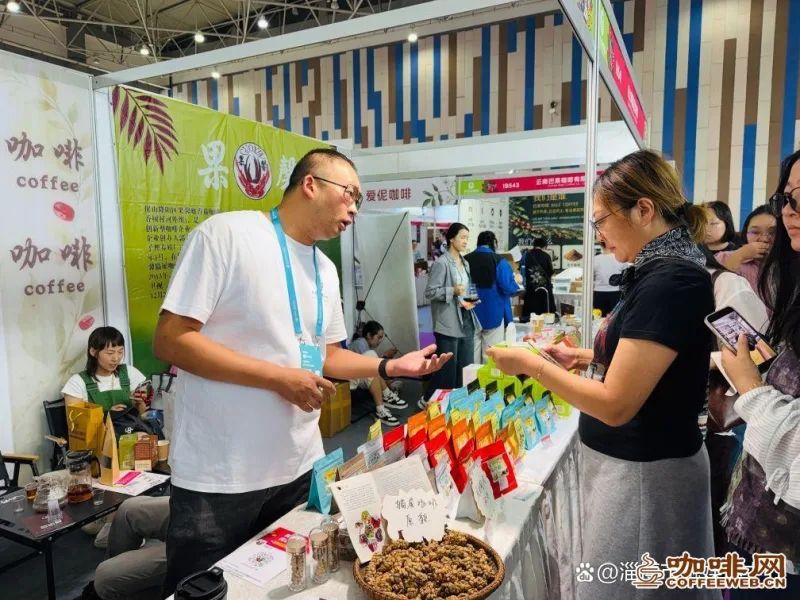
‘We are a college-student returning-home entrepreneurship project, and we have been deeply engaged in the civet coffee track for 16 years,’ said Yin Qingsong, sales head of Baoshan Guoxin Civet Coffee in Yunnan.
‘Now many people drink coffee not just for taste, but are beginning to value its health attributes. Consumers no longer single-mindedly chase novelty; they pay more attention to raw materials, craftsmanship, and product traceability, which means the market for developing distinctive domestic coffee in China keeps expanding,’ Yin said, noting that the domestic specialty-coffee consumer market is constantly undergoing new changes.
On September 26, Yang Jingyu (first from right), founder of the new-Chinese-style wellness coffee brand ‘Pulse Life,’ and her staff display various coffee products. Xinhua photo.
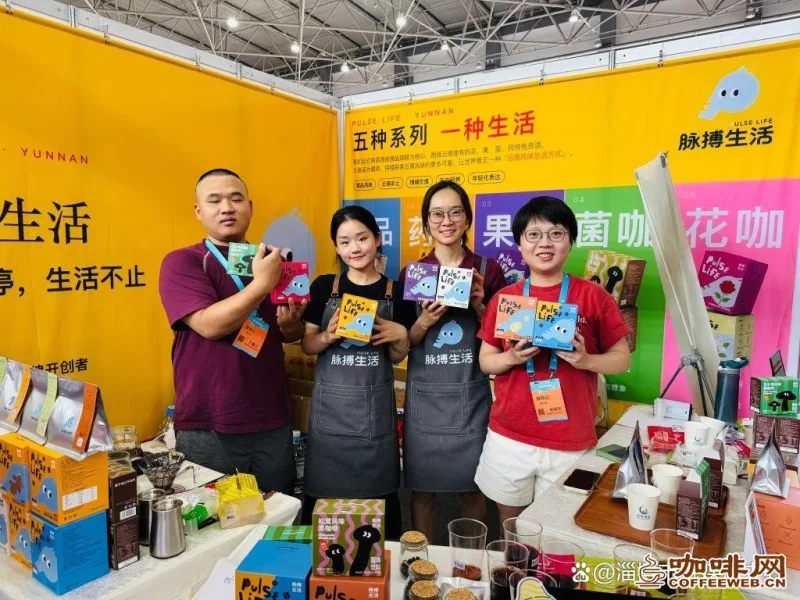
Yang Jingyu once studied in Australia and was deeply influenced by overseas coffee culture. With a long-standing keen interest in traditional Chinese medicine and wellness, after leaving her job in Shanghai she returned to her hometown of Yunnan and founded the new-Chinese-style wellness coffee brand ‘Pulse Life.’
Speaking of her career choice, she said Yunnan has both quality coffee beans and rich local produce, as well as a deep soil of traditional Chinese medicine and wellness culture. Returning home, she wanted to do something that can only be accomplished on this land.
‘Our brand focuses on Yunnan’s local characteristics, drawing inspiration from Chinese medicinal herbs and Yunnan’s distinctive crops, with products spanning coffee beans, drip bags, freeze-dried coffee, and more categories,’ Yang introduced. Invited to the expo this time, on the first day of the event several products sold out, and many consumers, after tasting and buying, continued to repurchase online.
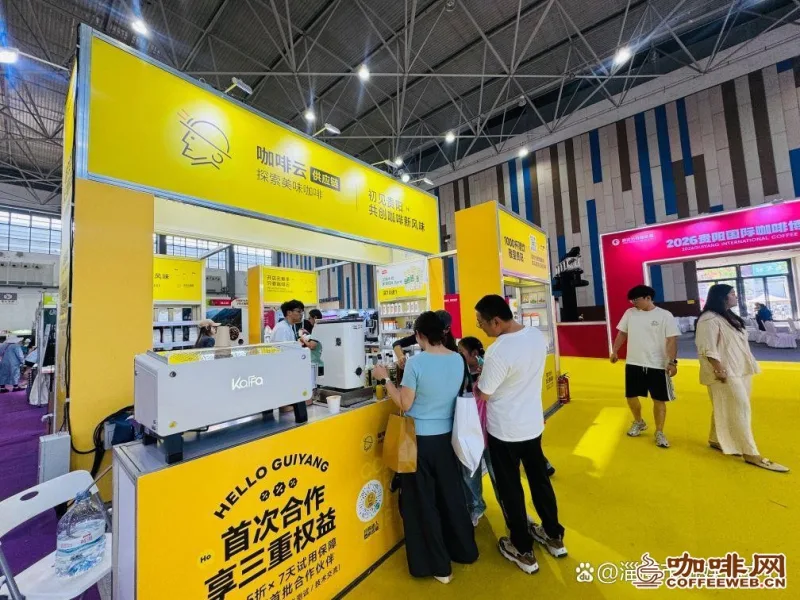
On September 26, at the 2026 Guiyang International Coffee Expo, consumers are tasting and selecting coffee. Photo by Xinhua reporter Zhou Xuanni.
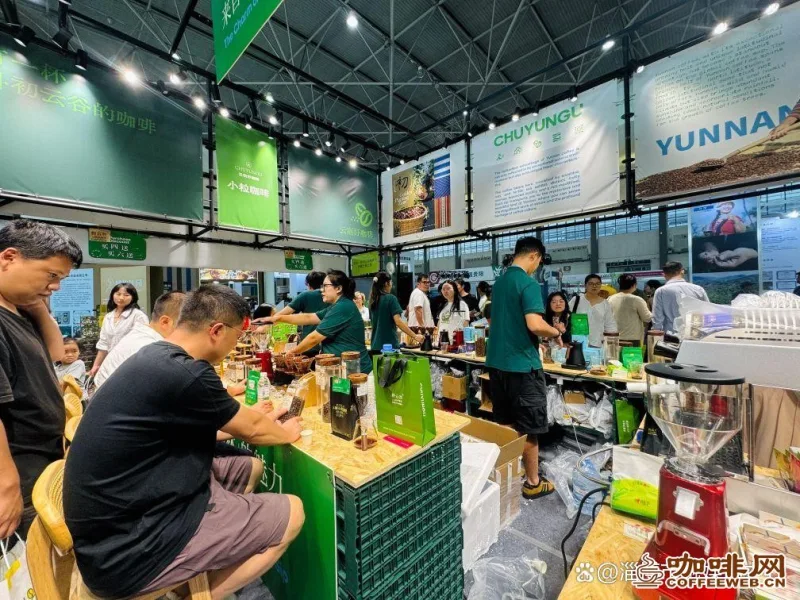
In Yang’s view, Yunnan, Guizhou, and Sichuan have now formed a unique coffee-industry development path. ‘Guizhou’s dendrobium, Yunnan’s jianshouqing mushroom, and other local produce offer boundless imagination for coffee’s cross-over fusion,’ she said, adding that the next step could build on southwest local specialty produce to drive the coffee industry toward greater standardization and industrialization, thereby sustaining the healthy development of local coffee industries.
One bean connects mountains and seas; today China’s enormous incremental coffee market is attracting countless domestic and foreign coffee brands and practitioners, jointly witnessing the rising tide of China’s coffee industry.
Source: Xinhuanet
Reprint Notice & Disclaimer
- This article has been edited and compiled by China Coffee Network. The information and images therein come from public sources and the copyright belongs to the original author. This reprint is intended solely for information sharing within the coffee industry and does not represent the views of this website; all data and opinions are subject to the original article. Our thanks to the original author for creating and sharing it.
- For matters concerning content licensing, attribution, copyright or otherwise, please contact us promptly and we will verify and cooperate in handling them as soon as possible. We also welcome coffee origins, brands and industry media to exchange ideas and contribute articles.
- Contact China Coffee Network: Tel 400-0000-641 (+86-18288016826) | Email 405854472@qq.com | Address: Jinghong, Xishuangbanna, Yunnan Province / Tieling, Liaoning Province
Related Reading
- Bean in Short Supply: A Taiwan Youth on Yunnan Coffee as a Shared Cross-Strait Stage
- Five Years, Eight Championships: Lincang Coffee Joins the World Stage
 Haikou ‘Union Cup’ Barista Skills Competition Kicks Off to Empower the Service Sector
 Yunnan Specialty Coffee Beans Deliver an ‘Excellent’ Report: Path to Value Leap
- Cross-Strait Tides Rise: A Taiwan Youth Farms Coffee in Yunnan, a Cup Bridging Both Sides
 2026 2nd Yunnan Treasure Coffee Green Bean Competition (Cup of Excellence Pilot) Concludes


 Liaoning ICP Security No. 21122402000217