
At a Glance (China Coffee Network): China News Service, Liuzhou, Guangxi, June 22 — Coffee Aroma Wafts from a Dong Village Deep in Guangxi’s Mountains, Drawing Returnees Home
China News Service, Liuzhou, Guangxi, June 22 — Coffee Aroma Wafts from a Dong Village Deep in Guangxi’s Mountains, Drawing Returnees Home
Reporter Huang Yanmei from China News Service
“When the singing starts and mountain flowers bloom, welcome to Batuan…” Recently, clear Dong folk songs have been ringing out at the head of the wind-and-rain bridge in Batuan Village, Dudong Town, Sanjiang Dong Autonomous County, Liuzhou, Guangxi, where visitors linger, immersed in the landscape and ethnic customs of this traditional Dong village.
Walking into the village, blue-stone paths link the well-spaced stilt houses, and a small wooden cabin named “Moomoo Cafe” wafts the aroma of coffee. “Sitting here, time seems to slow down. Right outside the window is the century-old wind-and-rain bridge; look up and the green hills are dark and soft, look down and the stream babbles along. To rest here with a few friends is truly delightful,” said visitor Li Xin.
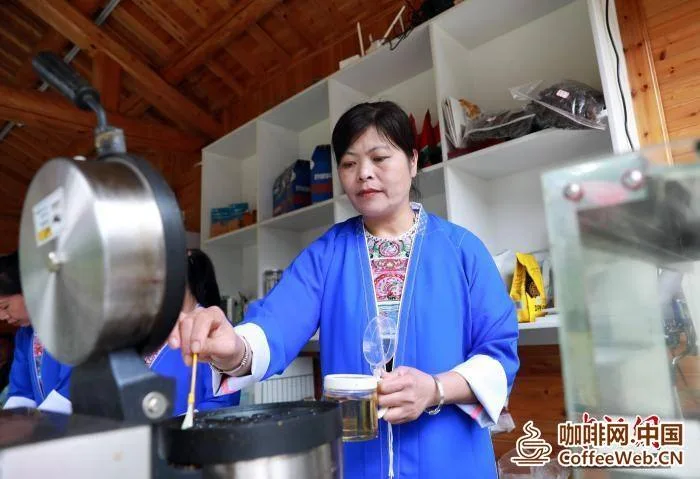
Recently, Wu Yuhua, a returnee entrepreneur in Batuan Village, Dudong Town, Sanjiang Dong Autonomous County, Guangxi, prepares specialty snacks for visitors at the cafe. Photo by Gong Pukang.
Wu Yuhua, a returnee entrepreneur born in the 1980s, is one of the cafe’s operators. She is an agricultural manager in Batuan Village and is known among villagers as the “village CEO.”
In recent years, Wu Yuhua has led fellow villagers in growing tea. “Since I started working with tea, I have come to feel ever more strongly that rural development needs to rest on the integration of agriculture, culture, and tourism,” she said in an interview with China News Service.
A chance opportunity changed the course of Wu Yuhua’s career. Through the Guangdong–Guangxi Digital Agri-Culture-Tourism Program, she took part in training on digital operations and exploring new business formats. Afterwards, the idea took shape: embed a coffee business into the village’s cultural tourism and, by upgrading the business mix, draw more visitors to this ancient village deep in the mountains.
Batuan Village is richly endowed with tourism resources: it is a core inheritor of “Dong Kuan” culture, boasts distinctive attractions such as a water bullfighting arena, and the Batuan wind-and-rain bridge, first built in 1898, is a national key cultural relic protection unit. In the past, however, poor transport and a single, limited business mix kept these treasures “hidden away from the world” for a long time.
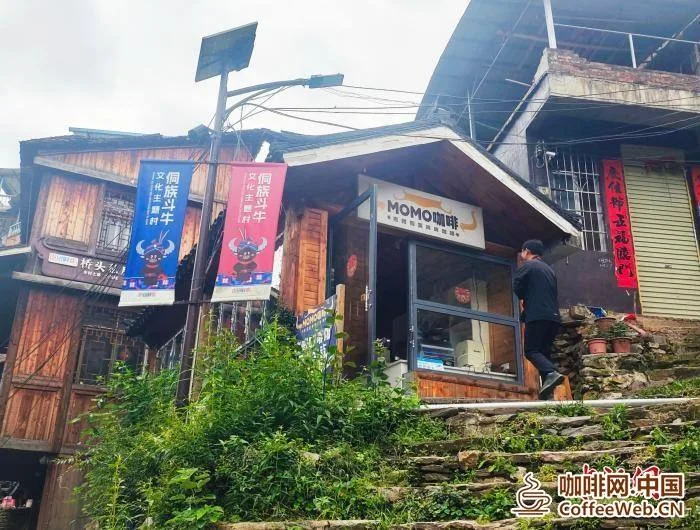
Recently, a visitor walks into the cafe in Batuan Village, Dudong Town, Sanjiang Dong Autonomous County, Guangxi. Photo by Huang Yanmei, China News Service.
“Opening a coffee house in a Dong village is a very romantic thing.” In Wu Yuhua’s view, bringing in the coffee house blends modern living ideas with the quiet beauty of a traditional village, opening a window to the outside world for the ancient settlement.
In October 2023, with support from Guangdong–Guangxi aid funds and internet companies, this cafe, led by the village-level collective economy, officially opened its doors. Wu Yuhua and her team used it as a platform to promote “digital village” operations, showcase Batuan’s beautiful scenery and bullfighting culture, and sell local specialties and cultural-creative products online, helping raise villagers’ incomes.
The effect of a cup of mountain coffee is gradually showing. With the cafe as a “traffic entry point,” local farm restaurants and homestays have been steadily multiplying. During the Water Bullfighting Festival, Wu Yuhua’s team built buzz through coordinated online and offline promotion, hundreds of tickets to the “hundred-family feast” sold out, and the ancient-village market they organized drew over ten thousand visitors.
Even greater changes are happening among the people. Once, most young people in Batuan Village chose to leave for work elsewhere; now the Dong village is welcoming more and more “returnees.”
Villager Shi Diannu has taken part in running the cafe since it first opened and, through systematic training and practice, has become an agricultural manager. Wu Jian, a young man born after 1995, has also joined the effort to build up his hometown. “The village’s tourism development needs the fresh thinking of young people,” he said.
According to Wang Ling, secretary of the village’s general Party branch, the village’s tourist service center complex has now been completed. Next, the village will deepen its tourism resources, strengthen distinctive industries, plan and build venues for study tours and cultural and recreational activities, and develop itself into a Dong bullfighting-culture theme village. (End)
Reprint Notice & Disclaimer: This article is reprinted from China News Service. All rights belong to the original publisher.
Related Reading
 How ‘Sea-Flavored’ Coffee Blooms Across Dongtou
- Health Guide: How to Enjoy Your Coffee the Healthy Way
 ‘The Rhythm of Plants: Tea and Coffee Culture’ Exhibition Debuts in Rio de Janeiro, Brazil
 Study: Regular Coffee and Tea May Lower Dementia Risk, but More Is Not Better
 Frontline Story: A ‘Mobile City Coffee Bar’ Arrives by the Grand Canal
 Yantai’s Wind Tastes of Coffee







 Liaoning ICP Security No. 21122402000217