
Before reading, please tap “Follow” for easier discussion and sharing. The author will live up to expectations and keep creating better content on schedule.
Text/Edition: Li Lin Global
Edition: Li Lin Global

Preface
Hello, today Xiao Li is back to chat about some international affairs.
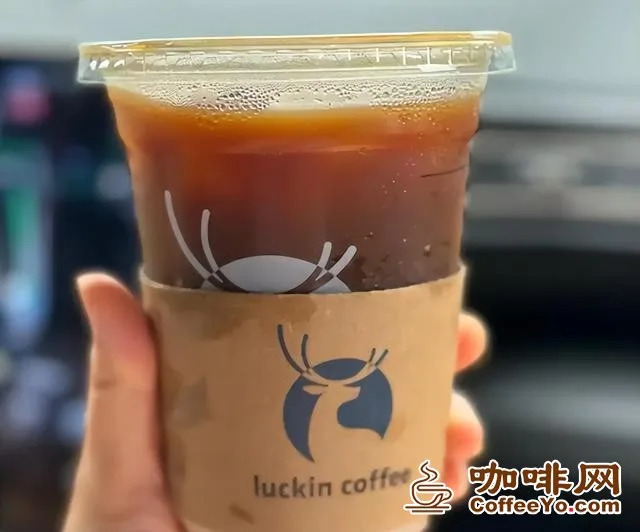
The most absurd business war in Chinese commercial history is none other than the Luckin–Cotti coffee battle. Many relish this showdown, yet few know that the founders of the two brands are actually the same person.
The former boss was kicked out, lay low for two years, then returned with his original team, using the exact same playbook to topple the empire he built — a plot twist worthy of a power-fantasy serial, lurid yet addictive.

From car-rental giant to coffee gambler
Lu Zhengyao didn’t do coffee early on. When he founded Shenzhou Car Rental, he worked out a fierce playbook: chase capital for crazy financing, spend money to blow up scale, win customers with low-price subsidies, then lightning-fast package and list. With this formula he made Shenzhou the industry leader.
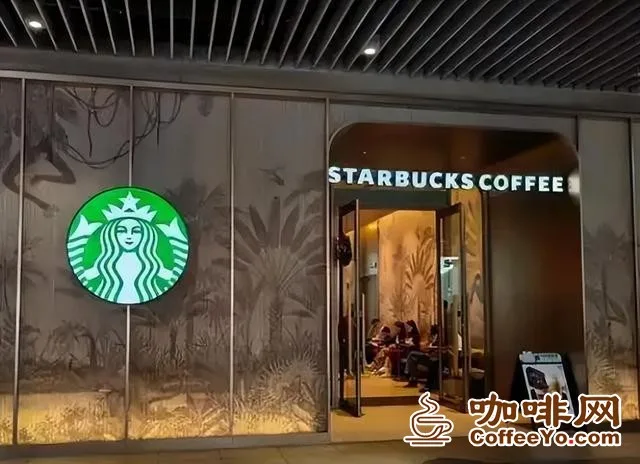
In 2017, judging the car-rental lane hopeless, he set his sights on fresh-brewed coffee. Back then domestic fresh-brewed coffee was basically monopolized by Starbucks, a cup over 30 yuan — ordinary folks couldn’t afford it daily.
He saw the blank of affordable,just-needed coffee at once, brought his old partner Qian Zhiya and transplanted Shenzhou’s money-burning playbook — and Luckin Coffee was born.
How wild was Luckin’s early play? Starbucks opened hundreds-of-square-meter big stores; Luckin opened 50 m² seatless small shops, rent cut to the bone. Starbucks sold 30-plus; Luckin flooded coupons — a cup for a dozen yuan or even less, first order free.

On crazy subsidies, Luckin listed on Nasdaq in just 18 months, setting the world’s fastest-IPO record. American investors scrambled for Luckin stock; Lu Zhengyao’s net worth soared to 18 billion yuan.
18 months to list, 13 months to delist — ups and downs more thrilling than a roller coaster. In 2020 Luckin exposed financial fraud, inflating 2.2 billion yuan in revenue; US capital markets exploded, the stock plunged 75% in a day, $5 billion in market value went up in smoke, and after an 180-million-dollar fine it was forced to delist.
As founder, Lu Zhengyao was kicked out of the core team by the investors, becoming capital’s discarded pawn.
Luckin was handed to former assistant Guo Jinyi. Expected to collapse, Guo instead pulled Luckin back from the brink with the raw-coconut-latte hit and solid operations, turning losses into profit.
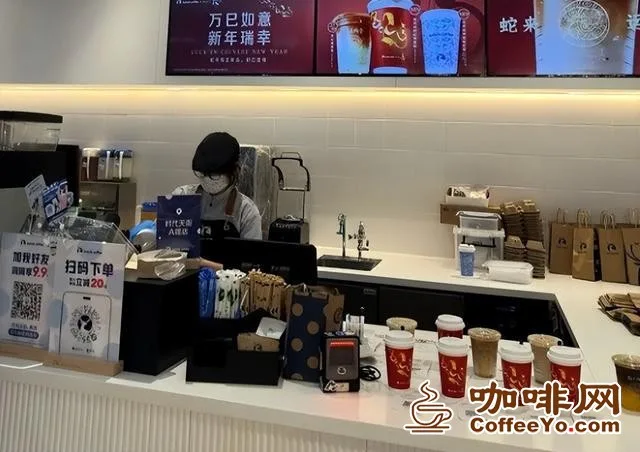
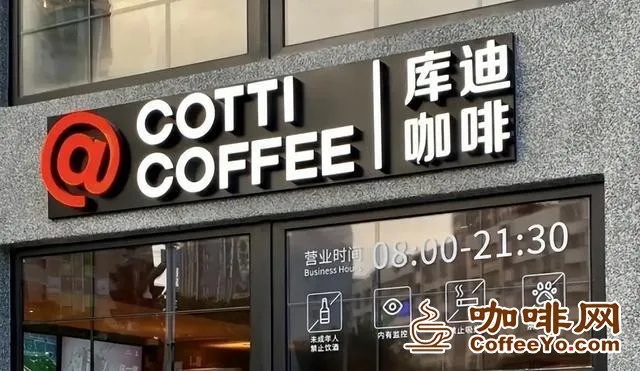
Refusing to swallow the defeat, Lu Zhengyao declared his return in October 2022, pulling 50% of Luckin’s core team to found Cotti Coffee. The whole internet knew this was a revenge match — China’s most absurd coffee war officially began.
Lu Zhengyao knew Luckin too well, wielding the inside playbook for a dimensional blow. First, face-to-face store siting: wherever there’s a Luckin in the business district, a Cotti sits next door. Banners at the door read “Luckin’s founder invites you for coffee” — customers walk in bewildered. This pixel-level copy directly intercepted Luckin’s traffic.

Next came the brutal price war. Luckin rose on low prices; Cotti pushed it to the extreme — Luckin at a dozen-odd yuan, Cotti normalized 9.9 across the board; Luckin was forced to fight back with 9.9 coupons; Cotti went further, straight to 8.8. 8.8 normalized, single-cup profit squeezed dry.

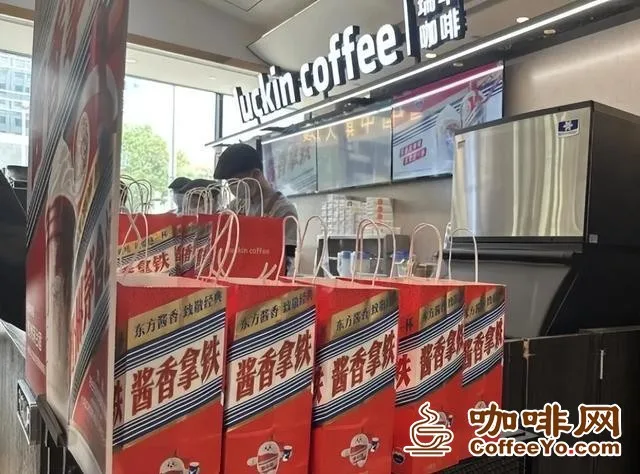
This god-tier brawl dragged the whole industry into the 9.9 era; even Starbucks couldn’t hold, quietly issuing discount coupons. Online marketing tracked Luckin closely: Luckin launched the Moutai sauce-aroma latte; Cotti teamed with Wuchang rice for a rice-milk latte, with a taunting copy: “Liquor at night hurts the liver; congee at dawn nourishes the stomach.”
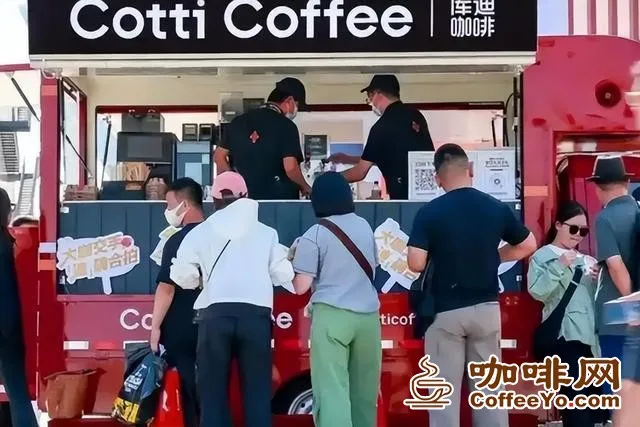
The traffic war also maxed out. At the 2022 Qatar World Cup, one-month-old Cotti spent big to sponsor the Argentina national team in China,binding Messi’s traffic. Luckin countered with Portugal and Spain sponsorships, aiming at Ronaldo. Argentina won, and Cotti’s bet paid off, going viral nationwide.
By 2025 the war escalated from price to capacity: Luckin ran lucky-draw free up-sizes; Cotti launched unlimited free jumbo cups — fighting to the bitter end.
Many wonder: can Lu Zhengyao’s revenge succeed? Really topple Luckin? Judging by current data and business fundamentals, winning is very doubtful.
Behind 9.9 coffee is short-term capital subsidy, long-term supply-chain foundation. After years of development Luckin built its own coffee-roasting plants, sourcing beans globally, pushing single-cup cost to the extreme — still profitable at 9.9.

Cotti, by contrast, expands fast but with shaky roots, opening 100% through affiliated merchants, charging ahead with franchisees’ money. At the 8.8 price extreme, many franchisees can’t even cover rent and labor, struggling on the profit-loss line — pure running mates.
Luckin revenue 49.2 billion; Cotti only 13 billion, under a third. After three years of coffee war in 2025, Luckin’s Greater China revenue hit 49.2 billion yuan, earning 3 billion a year; Cotti revenue only 13 billion — under a third of Luckin’s.
Lu Zhengyao did use familiar tactics to quickly raise a force that could rival Luckin, proving himself a top-tier marketer and capital operator — but business must ultimately return to its essence. Without strong supply-chain support, relying only on emotional output is hard to sustain.
Yet from the consumer’s view, who wins or loses this grudge matters little. It is precisely this love-hate sibling rivalry that beat coffee from a light-luxury drink down to an everyday fast-moving good ordinary people can drink for a few yuan.

Conclusion
No matter how brutal the competition, the ultimate beneficiary is the common people. One only hopes this war lasts a little longer — after all, fresh-brewed coffee under 10 yuan, who wouldn’t want to drink it for a few more years?
Reprint Notice & Disclaimer
- This article has been edited and compiled by China Coffee Network. The information and images therein come from public sources and the copyright belongs to the original author. This reprint is intended solely for information sharing within the coffee industry and does not represent the views of this website; all data and opinions are subject to the original article. Our thanks to the original author for creating and sharing it.
- For matters concerning content licensing, attribution, copyright or otherwise, please contact us promptly and we will verify and cooperate in handling them as soon as possible. We also welcome coffee origins, brands and industry media to exchange ideas and contribute articles.
- Contact China Coffee Network: Tel 400-0000-641 (+86-18288016826) | Email 405854472@qq.com | Address: Jinghong, Xishuangbanna, Yunnan Province / Tieling, Liaoning Province
Related Reading
- Bean in Short Supply: A Taiwan Youth on Yunnan Coffee as a Shared Cross-Strait Stage
- Five Years, Eight Championships: Lincang Coffee Joins the World Stage
 Haikou ‘Union Cup’ Barista Skills Competition Kicks Off to Empower the Service Sector
 Yunnan Specialty Coffee Beans Deliver an ‘Excellent’ Report: Path to Value Leap
- Cross-Strait Tides Rise: A Taiwan Youth Farms Coffee in Yunnan, a Cup Bridging Both Sides
 2026 2nd Yunnan Treasure Coffee Green Bean Competition (Cup of Excellence Pilot) Concludes



 Liaoning ICP Security No. 21122402000217