
Brief (coffeeyo.com): Jinan-born tea brand Bingxue Shiguang has opened a 660-million-yuan, 350,000-ton-capacity supply-chain park in Qihe, while Luckin’s 3-billion Qingdao roaster and Nestlé’s expansions signal coffee-tea supply chains are rapidly “betting” on Shandong.
Recently, the global industrial park of Jinan-born tea-drink brand Bingxue Shiguang, located in the Qihe Economic Development Zone of Dezhou, officially opened. The self-owned supply-chain base — with three phases totaling 660 million yuan of investment and annual capacity reaching 350,000 tons — has landed, becoming a landmark event of the tea-drink industry adding capacity in Shandong this year.
The reporter noted that since the start of this year, Luckin Coffee’s 3-billion-yuan Qingdao roasting production center has gone into operation; combined with Nestlé’s ongoing capacity expansion of its instant-coffee factory in Qingdao, coffee and tea supply chains have begun to gradually “bet on Shandong,” and while rewriting the East China beverage-industry map, Shandong’s industrial attractiveness formed by the overlay of logistics, ports and policy is also constantly strengthening.
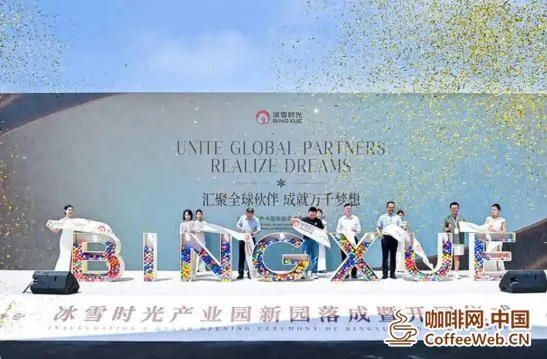
Local Tea Brand Goes Heavy on Qihe, Self-Built Supply Chain Supports Global Expansion
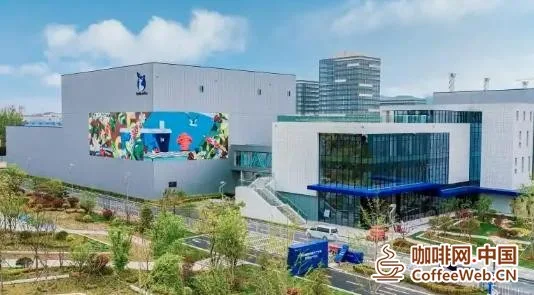
On August 10, the opening ceremony of the Bingxue Shiguang Qihe industrial park landed. This comprehensive base of nearly 100 mu (about 6.7 hectares) and 70,000 square meters of floor area integrates an automated production workshop, a joint R&D lab, the Bingxue Business School and 100,000 square meters of smart warehousing, becoming the core carrier of the brand’s supply-chain strategy.
On site-selection logic, Qihe is close to the Jinan metropolitan area and sits on multiple expressway trunk lines, able to radiate across Shandong province, the Beijing-Tianjin-Hebei region and northern Jiangsu markets. Relying on a “central warehouse + regional sub-warehouses + cooperative warehouses” model, the Shandong regional sub-warehouse can complete delivery to stores in as fast as 4 hours — one of the core reasons the brand chose to locate there.
Relying on the new capacity, Bingxue Shiguang simultaneously launched its global 8.0 store-upgrade plan; the brand now has over 5,000 signed stores worldwide, covering 17 countries, with more than 2,000 overseas stores.
A brand representative said that the Qihe factory ships materials directly to national sub-warehouses and the Qingdao port, able to supply both domestic and overseas markets simultaneously. In addition, its transport density ranks among the top county-level cities in the country, also providing a natural efficiency foundation for Bingxue Shiguang’s supply-chain operation.
Bingxue Shiguang is a tea-drink brand that grew out of Shandong, and its overseas store-expansion speed has accelerated year by year. In early March this year, Bingxue Shiguang’s parent company was approved to set up Bingxue International Co., Ltd. in Hong Kong; it is reported that this project is the second approval within three years.
Luckin’s 3-Billion Bet on Qingdao, Two Major Supply-Chain Highlands Accelerating
Apart from the Bingxue Shiguang Qihe industrial park, in the first half of this year, the domestic chain-coffee leader Luckin Coffee’s innovation production center officially broke ground and went into operation in Chengyang District, Qingdao.
This super-factory — with total investment of about 3 billion yuan, annual roasting capacity exceeding 55,000 tons and footprint over 100 mu — has become the largest single investment in the history of China’s coffee industry to date.
The core logic of the project’s site selection is to rely on Qingdao Qianwan Port’s port-adjacent location, less than 8 km in straight-line distance from the port; green beans from origins such as Ethiopia, Brazil and Colombia can be shipped directly by sea, bonded warehoused and processed on the spot, building a “port in front, factory behind, bonded processing, radiating the nation” model.
On selecting Qingdao, Luckin Coffee co-founder and CEO Guo Jinyi said that Qingdao’s port logistics, bonded processing and multimodal transport have significant advantages, able to provide strong support for Luckin building a “port in front, factory behind, bonded processing, radiating the globe” layout.
Besides being a world-class big port, Qingdao Port is also the country’s third-largest coffee green-bean import port and the largest coffee green-bean import gateway in the north. With the Qingdao factory in operation, Luckin will form a coordinated roasting matrix across four sites — Qingdao, Fujian Pingnan, Jiangsu Kunshan and the under-construction Xiamen base — with total capacity exceeding 155,000 tons, covering raw-material supply for over 30,000 stores nationwide.
It is worth mentioning that also in April this year, Shandong Youran Coffee, the world’s largest single-unit instant-coffee production project, went into operation in Binzhou; its phase-one project can provide 5 billion cups of instant coffee to the market each year, on top of Nestlé’s only instant-coffee factory in Greater China continuously increasing investment and expanding capacity in Qingdao.
As the two major supply chains accelerate their formation, Shandong is rapidly transforming from an “onlooker” into a “participant.”
Why Shandong?
Behind a series of added bets, why is it Shandong?
From comprehensive competitiveness, Shandong is China’s third-largest provincial economy, and also a major agricultural and food-industry province, with mature industrial workers and supporting enterprises. The mature industrial ecosystem provides coffee and tea enterprises with full-spectrum support from raw-material coordination to packaging materials, reducing comprehensive operating costs.
On geographic advantage, Shandong sits at the junction of East China and North China, with expressway network density ranking among the top in the country. Qihe and Jinan can achieve half-day coverage of all Shandong and one-day direct reach to core Beijing-Tianjin-Hebei cities; Qingdao Port undertakes the dual function of importing beverage raw materials and exporting finished products, fitting coffee and tea brands’ dual strategy of “domestic penetration and store expansion + overseas going-global.”
On the consumption market, Shandong’s permanent population ranks among the top in the country; Jinan and Qingdao, as core consumption markets, see continuously rising county-level store density. Building production and warehousing bases nearby can shorten replenishment cycles, reduce terminal-store safety inventory and lower cold-chain warehousing losses.
Policy is also favorable. Qingdao has included modern light industry and green food in its city’s key industry clusters, and Luckin’s Qingdao factory was rated a Shandong provincial key project for green, low-carbon, high-quality development.
Dezhou Qihe, targeting food-processing and cold-chain-logistics enterprises, provides logistics subsidies, talent-industry-academia-research and other cooperation support; the Bingxue Shiguang industrial park is equipped with joint R&D labs with Shandong University and Jiangnan University. In Shandong, multiple local governments treat beverage supply chains as tangible projects that can land, drive employment and pull logistics support, proactively releasing investment-friendly benefits.
Relying on the overlay of port and land-logistics dual advantages plus a consumption-hinterland advantage, at this stage Shandong is gradually becoming a must-choose node for leading beverage brands’ national supply-chain layout. Going forward, as multiple newly built capacities gradually reach full production, Shandong is expected, driven by leading projects, to continuously give birth to more beverage-industry supporting landing moves.
Source: Mount Taishan Finance.
Reprint Note & Disclaimer
- This article is reprinted from Chinese media for information and cultural exchange. The views expressed are those of the original author and do not necessarily reflect the position of coffeeyo.com.
- All trademarks, brand names and logos mentioned belong to their respective owners.
- For cooperation, reprint or correction requests, please contact coffeeyo.com.
Reprint Notice & Disclaimer
- This article has been edited and compiled by China Coffee Network. The information and images therein come from public sources and the copyright belongs to the original author. This reprint is intended solely for information sharing within the coffee industry and does not represent the views of this website; all data and opinions are subject to the original article. Our thanks to the original author for creating and sharing it.
- For matters concerning content licensing, attribution, copyright or otherwise, please contact us promptly and we will verify and cooperate in handling them as soon as possible. We also welcome coffee origins, brands and industry media to exchange ideas and contribute articles.
- Contact China Coffee Network: Tel 400-0000-641 (+86-18288016826) | Email 405854472@qq.com | Address: Jinghong, Xishuangbanna, Yunnan Province / Tieling, Liaoning Province
Related Reading
- Bean in Short Supply: A Taiwan Youth on Yunnan Coffee as a Shared Cross-Strait Stage
- Five Years, Eight Championships: Lincang Coffee Joins the World Stage
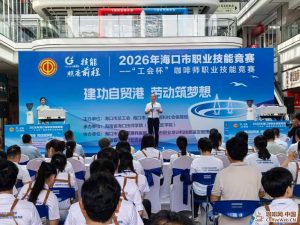
 Haikou ‘Union Cup’ Barista Skills Competition Kicks Off to Empower the Service Sector
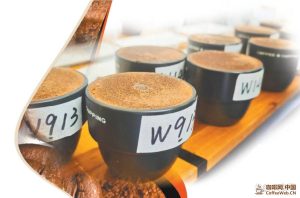
 Yunnan Specialty Coffee Beans Deliver an ‘Excellent’ Report: Path to Value Leap
- Cross-Strait Tides Rise: A Taiwan Youth Farms Coffee in Yunnan, a Cup Bridging Both Sides
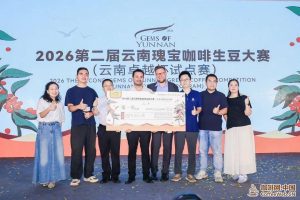
 2026 2nd Yunnan Treasure Coffee Green Bean Competition (Cup of Excellence Pilot) Concludes


 Liaoning ICP Security No. 21122402000217