
Brief (coffeeyo.com): On September 22, the National Health Commission together with the State Administration for Market Regulation released 50 national food-safety standards and amendments. Among them, the newly set acrylamide, lead, and tin contaminant-control specifications are process-management standards — and the acrylamide rule explicitly targets “over-roasting” of baked coffee.
On September 22, the National Health Commission together with the State Administration for Market Regulation released 50 national food-safety standards and amendments.
Among them, three newly set contaminant-control specifications — acrylamide, lead, and tin — are process-management standards for food production, of significance for source control of highly watched toxins.
New on the food standards front:
The world’s first control specification for tin contamination in canned foods
The three newly set food-safety standards on acrylamide, lead, and tin contaminant control are foundational mandatory standards for food-production process management. Experts said that, on one hand, the standards guide enterprises to build whole-process hygiene-control systems, formulating different control measures by contaminant-source characteristics to prevent related contamination risks at the source; on the other hand, they provide a legal basis for regulators’ on-site supervision and law enforcement, unifying enforcement scales and serving full-chain food-safety oversight.
In recent years, news of acrylamide detected in some foods has repeatedly trended. Most are high-temperature processed foods — even coffee. Reducing acrylamide formation has become an upgrade direction for the healthy food industry.
The newly set “Specification for Acrylamide Contamination Control in Foods” is oriented toward full-chain risk prevention, systematically stipulating basic requirements and management measures to control acrylamide formation in each food-processing step. For example, it emphasizes lowering reducing-sugar and asparagine content in raw materials to reduce the material basis for acrylamide at the source; strictly controls roasting/frying temperature and time parameters for potato products, grain products, and roasted coffee, prohibiting over-roasting or over-frying to reduce acrylamide in processing; and establishes an informative annex giving reference control measures via key-parameter examples.
The newly set “Specification for Lead Contamination Control in Foods” is grounded in full-chain control, systematically stipulating lead-contamination control requirements across raw-material production, processing, storage, and transport. The standard highlights prevention first: irrigation water and soil environment must meet relevant national standards, and raw materials prone to lead contamination should avoid polluted land; during cultivation, no lead-exceeding or possibly lead-contaminated utensils should be used, and lead-containing waste on production land must be cleared promptly; harvesting, sun-drying, and mechanical drying must prevent lead introduction, and transport vehicles should be dedicated with dust-proof measures. In processing, equipment and tools contacting food should not be repaired with lead solder, water pipes should be inspected regularly, lead-glazed ceramics and lead-crystal glass for decoration must not contact food, and lead compounds are banned in foods like century eggs. The standard requires food-contact surfaces to minimize ink or coating use, and non-food items in packaging such as toys and cards must be independently wrapped and not directly contact food. This specification connects with lead-limit standards into a closed loop.
The newly set “Specification for Tin Contamination Control in Electrolytic-Tinplate Canned Foods” precisely targets canned foods packaged in electrolytic tinplate (tinplate), including canned goods, infant food, and canned beverages. The standard establishes systematic tin-migration control requirements for key links such as raw can-material quality, tin-coating protection, weld repair coating, canning, and production-process control, and storage and transport.
For instance, it explicitly monitors corrosion factors such as nitrates and sulfur dioxide; reduces tin-dissolution risk via measures like controlling acetic-acid addition, vacuum degree, and sterilization temperature and time; requires container makers to repair-coat the seams of three-piece cans based on food characteristics, and for high-corrosivity (high-acidity) foods — what the industry calls highly corrosive — like strawberry cans, and for low-acidity foods using high-temperature sterilization (such as luncheon-meat cans), to choose containers with film or coating; for non-commercially-sterile canned foods (such as milk powder), ion-wind blow-and-sterilize containers before canning, and prefer nitrogen or carbon-dioxide protection with controlled headspace to reduce residual oxygen.
This standard is the world’s first of its kind. Experts explained that it targets tin-leaching risk in canned foods, providing specialized, detailed technical guidance for electrolytic-tinplate canned-food production and supply-chain management, complementing tin-limit standards.
Milk-protein standard set for the first time
Supplementary nutrition products and preschool-children nutrition supplements are a class of foods that supply specific populations with micronutrients and quality protein.
The revised “Supplementary Nutrition Products and Preschool-Children Nutrition Supplements” standard expands the applicable age for preschool children from the current 60 months to 72 months, covering all preschool children and better meeting early-childhood nutrition needs; it also sets permitted maximum values for nutrients that the current standard lacks. Experts said the revision aims to provide safe, appropriate nutrition-supplement products for early children and offer strong support for national nutrition-intervention programs and high-quality food-industry development.
Dairy deep-processing is an important direction for the dairy industry’s upgrade. “Milk Protein” is a first-time standard, applying to milk protein for the food industry, covering concentrated milk protein and isolated milk protein. Experts noted it is grounded in the dairy industry’s actual development, clarifying terminology, core technical indicators, and label identification for milk-protein products, helping drive the orderly, standardized development of the milk-component deep-processing industry, expand the dairy value chain, and safeguard the right to know and choose for users and consumers of milk-protein products.
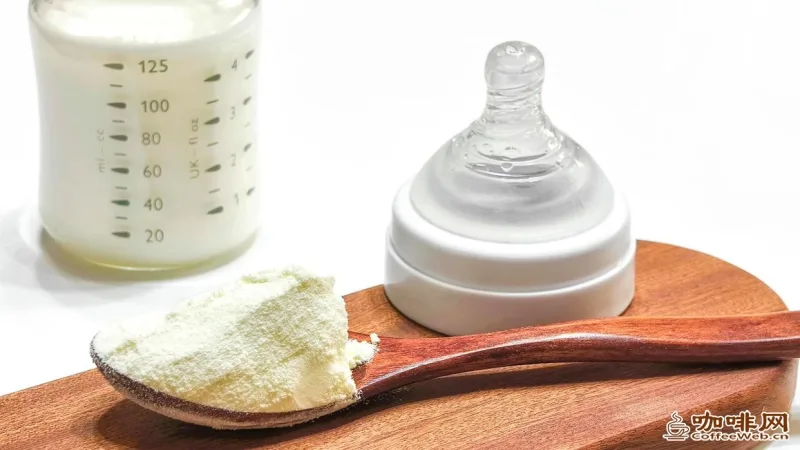
The standard requires product labels to mark “concentrated milk protein (concentrated milk protein)” or “isolated milk protein (isolated milk protein),” not merely the vague “milk protein (milk protein).” This clarity makes the product category obvious, letting consumers clearly understand the true attributes and independently choose suitable milk-protein-ingredient products.
The newly released “National Food Safety Standard · General Principles for Food Flavors” and related food-additive quality-specification standards and amendments stipulate sensory indicators, main-component content, impurity requirements, and lead and arsenic technical indicators for food flavors and other additives, adding commercial-product descriptions and further improving related additive management.
Improving the biological-toxin testing-method standard system
The 11 newly released biological-toxin testing-method standards cover testing methods for various mycotoxins, beauvericin and enniatins, alternaria toxins, aflatoxin B and G groups, aflatoxin M group, ochratoxin A, deoxynivalenol and its acetylated derivatives, patulin, tetrodotoxin, and zearalenone, complementing standards such as “Limits of Mycotoxins in Foods” (GB 2761).
Experts said the new standards, aimed at China’s food-contamination traits and regulatory needs, broaden scope, optimize testing steps, add testing means, and improve applicability and operability, while for the first time setting testing methods for various mycotoxins, beauvericin and enniatins, and alternaria toxins, filling multiple domestic and international testing-method gaps. They meet risk-prevention and multi-toxin simultaneous-determination needs, provide scientific means for food-safety oversight and product compliance, and reduce food-safety risks from biological-toxin contamination.
Source: Red Star News (Reporter: Hu Yiwen, Beijing) | Editor: Zhang Li | Review: Wang Guangdong
Reprint Note & Disclaimer
- This article is compiled and edited by coffeeyo.com. The materials and images herein are sourced from public channels and the copyright belongs to the original authors. This site reprints them solely for information sharing within the coffee industry and does not represent our stance; all data and views are subject to the original source. We thank the original authors for their work and sharing.
- For matters concerning content authorization, attribution, copyright, or any other issues, please contact us promptly. We will verify and cooperate in handling them without delay. We also welcome coffee-growing regions, brands, and industry media to exchange and contribute articles with us.
- Contact coffeeyo.com — Tel: 400-0000-641 (+86-18288016826) | Email: 405854472@qq.com | Address: Jinghong City, Xishuangbanna, Yunnan / Tieling City, Liaoning
Related Reading
- Bean in Short Supply: A Taiwan Youth on Yunnan Coffee as a Shared Cross-Strait Stage
- Five Years, Eight Championships: Lincang Coffee Joins the World Stage
 Haikou ‘Union Cup’ Barista Skills Competition Kicks Off to Empower the Service Sector
 Yunnan Specialty Coffee Beans Deliver an ‘Excellent’ Report: Path to Value Leap
- Cross-Strait Tides Rise: A Taiwan Youth Farms Coffee in Yunnan, a Cup Bridging Both Sides
 2026 2nd Yunnan Treasure Coffee Green Bean Competition (Cup of Excellence Pilot) Concludes



 Liaoning ICP Security No. 21122402000217