
In the current rapid development of consumer brands in China, global layout is becoming a pivot for brand growth. Data shows that from 2023 to 2026 (expected), the scale of China's consumer goods going global will increase from 610.6 billion US dollars to 823.1 billion US dollars, with a compound annual growth rate of over 10%. Chinese consumer goods will also bid farewell to the initial stage of "low price volume" and enter the deep-water area of "capability driven".
Standing at the beginning of the "15th Five Year Plan", the government work report of the 2026 NPC and CPPCC put "expanding high-level opening up" in a prominent position, clearly proposing "guiding the rational and orderly cross-border layout of the industrial chain supply chain" and "high-quality co construction of the" the Belt and Road ". As a leading brand in the Chinese coffee industry, Luckin Coffee is implementing these strategic directions with practical actions – integrating high-quality global resources through "brand going global", consolidating the domestic circulation while steadily expanding the international circulation, and contributing Chinese strength to the global coffee industry chain.
Global shopping, bringing the world's best products into Chinese coffee cups
In the past decade, from "buy buy buy" to "build build build build", Chinese brands have been creating a unique global resource integration system, and brands with sustainable business structures have become a common choice for capital and the market. This year's government work report clearly proposes to "guide enterprises to optimize their global market layout, promote the integration of trade and investment, and the development of domestic and foreign trade integration", which is the underlying logic of China's brand globalization practice.
Taking Luckin Coffee as an example, after establishing a foothold in China, the world's fastest-growing coffee consumption market, Luckin Coffee did not stop at "selling coffee", but instead traced its roots upstream and extended globally.
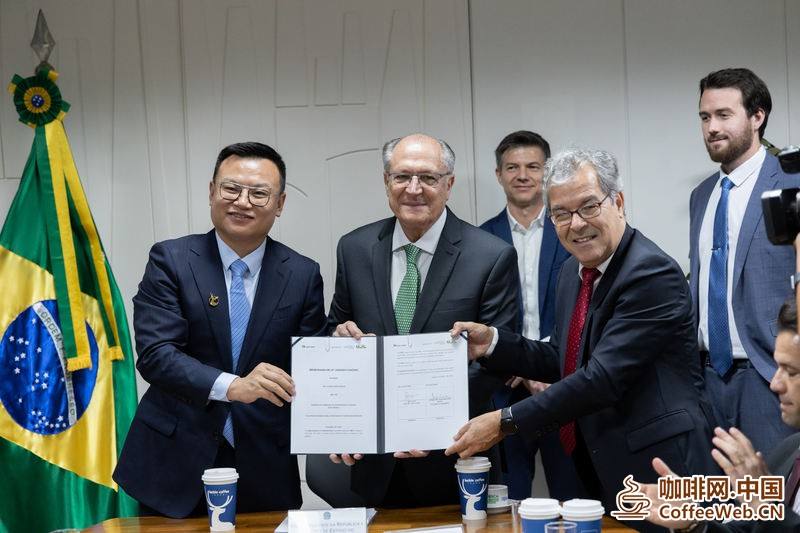
In November 2024, Luckin Coffee and the Brazilian Export Investment Promotion Agency signed a Memorandum of Cooperation in the Brazilian capital Brasilia, which will purchase 240000 tons of coffee beans from Brazil between 2025 and 2029, with a total value of 10 billion yuan. This is Luckin Coffee's largest coffee bean procurement plan to date, and also a landmark event for Chinese coffee companies to deeply participate in global resource allocation.
In March 2025, Luckin Coffee partnered with its partners to establish a "Luckin Coffee Exclusive Coconut Island" in the Banggai Islands of Indonesia. Over the next five years, they will jointly purchase approximately 1 million tons of coconut raw materials to ensure exclusive supply of core raw materials for coconut latte.
This strategic layout of deep binding to global raw material production areas has made Luckin an important bridge connecting China and the world. From coffee beans in Brazil to coconuts in Indonesia, from ancient production areas in Ethiopia to plateau estates in Yunnan, Luckin Coffee leverages the global high-quality resources with the market as the pivot, only to put the best ingredients from around the world into the cup of coffee in the hands of consumers.
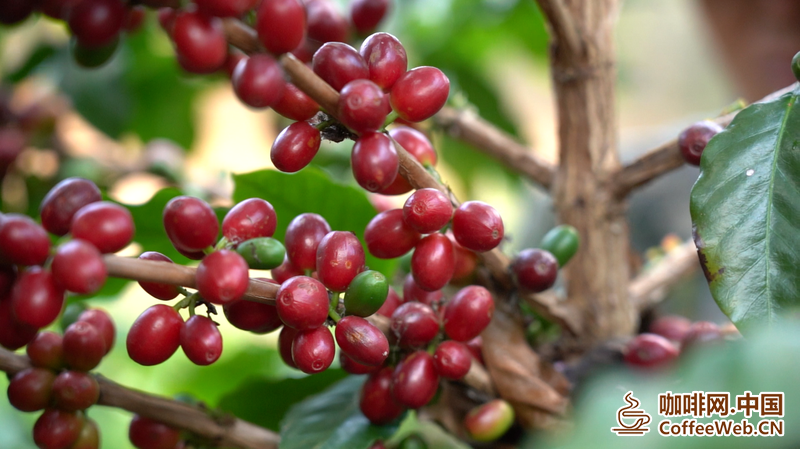
Mature coffee beans from Yunnan.
Reverse output, redefining the possibility of global coffee consumption
In recent years, the presence of Chinese consumer brands has become increasingly frequent on the world stage, and their roles are quietly undergoing profound changes. From followers to leaders, from initial product output to current mode and cultural reverse output, Chinese brands are entering the lives of global consumers with a more three-dimensional and full image, shining brightly on the world stage.
In this historical process, Luckin Coffee's "going global" practice is one of the most representative cases. As of December 31, 2025, Luckin Coffee has a total of 160 stores in the international market, from Singapore to Malaysia, from New York City in the United States to the streets of Southeast Asia. The "Little Blue Cup" is appearing in a unique way in the eyes of global consumers.
But Luckin's globalization is not just about store expansion, but a higher dimensional "brand going global". The digital operation model that has achieved great success in the Chinese market, as well as a profound understanding of consumer demand, are the confidence that Luckin has in competing in the global market. For example, in Singapore, the most developed market in Southeast Asia, Luckin achieved stable profitability in just 28 months, fully demonstrating the adaptability of its business model in mature overseas markets.
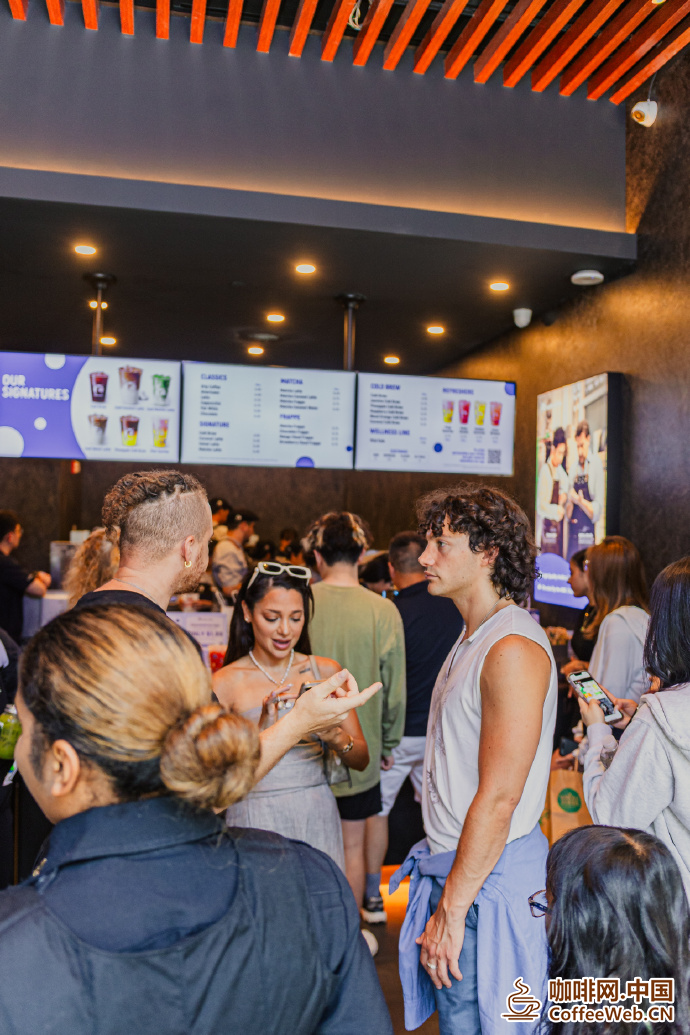
Luckin Coffee's American store.
In addition, Luckin Coffee's supply chain guarantee and management capabilities built through direct coffee bean procurement, cooperation with top suppliers, and self built baking factories have provided comprehensive support for the landing and promotion of its overseas business. Luckin Coffee is deeply connecting China's vast consumer market with high-quality global coffee producing regions, not only blending world coffee culture in China, but also redefining more possibilities for global coffee consumption with Chinese strength.
In January 2026, Brand Finance, a British brand evaluation agency, released the Top 25 Global Catering Brands by Value in 2026. Three Chinese brands made the list, with Luckin Coffee ranking 19th. The brand value increased significantly by 40% year-on-year, reaching $2.4 billion, making it one of the fastest-growing brands on the list. This achievement marks Luckin Coffee's rise from a "Chinese coffee brand" to a core member of the "World Coffee Brand".
Wen/Wang Ziyang
Editor Tang Zheng
Proofreading Zhao Lin