
A cup of coffee has become a daily routine for many people to wake up in the morning. Industry data shows that by 2025, the size of China's coffee market will reach 218.1 billion yuan, with an average annual coffee consumption of 22.24 cups per capita. The number of coffee stores nationwide will reach 215000, and the consumption potential of third – and fourth tier cities will continue to be released. Coffee consumption will become more accessible, daily, and scenario based.
The release of vitality in this segmented market also demands higher quality development from the supply side of the industry. In the context of "consumption drives production and quality leads industry", in recent years, a series of policy directions have pointed out the direction for the intelligent, green, and branded development of the food and beverage industry, from "accelerating the construction of an agricultural powerhouse" to "comprehensive green transformation".
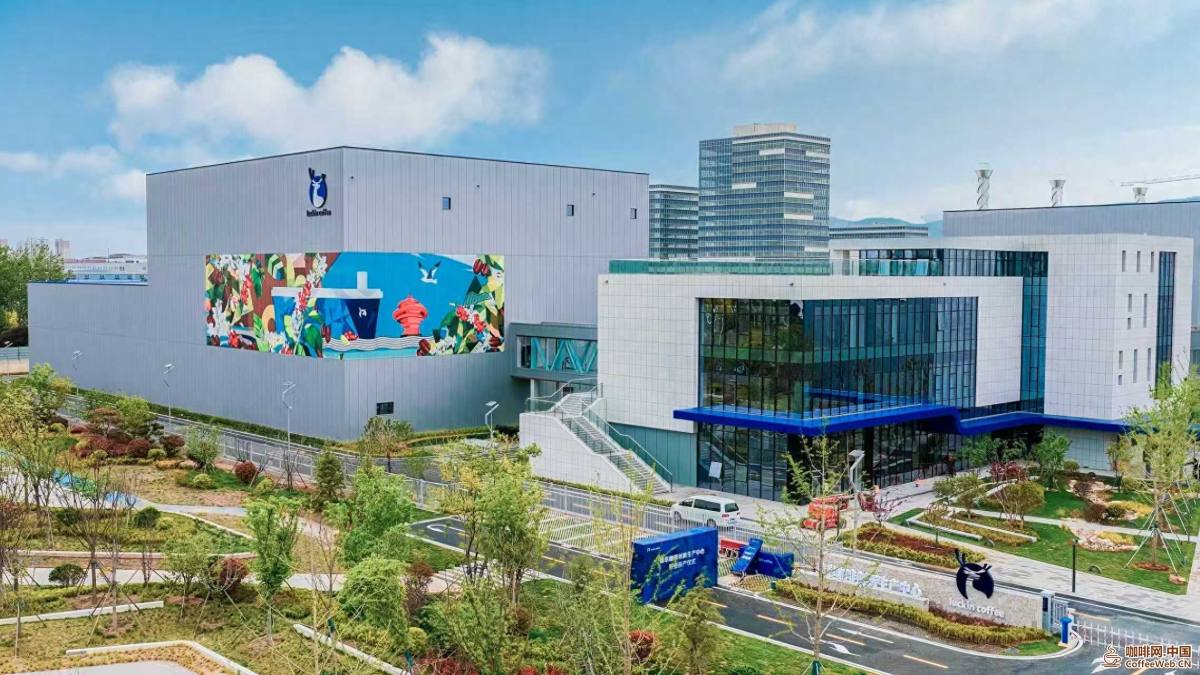
At the same time, how to meet the stable demand of billions of consumers for high-quality coffee through intelligent, green and low-carbon production has become an important foothold for the development of the industry. On April 22nd, Luckin Coffee Innovation Production Center held a groundbreaking ceremony in Chengyang District, Qingdao City. It is reported that this modern factory with a total investment of about 3 billion yuan has officially been put into operation, with an annual baking capacity of over 55000 tons, becoming a key link in the brand's supply chain map.
Luckin Coffee Innovation Production Center. Respondent provided pictures
It is reported that as a key project for green, low-carbon and high-quality development in Shandong Province in 2025, Luckin Qingdao factory covers an area of over 100 acres and adopts a fully automated production mode to achieve full chain automation operation from raw bean processing, coffee bean roasting, packaging to warehousing and logistics. In addition, the factory is equipped with three of the world's largest single unit roasters, as well as the largest capacity in-house roasters that have entered Asia for the first time, effectively meeting the growing demand for high-quality coffee from consumers.
As an important lever for green transformation, the application of intelligent and low-carbon innovative technologies has become the "entry threshold" for modern factories.
The relevant person in charge of the enterprise introduced that from the beginning of the design, the factory followed the China Green Building Samsung certification standard and applied cutting-edge energy-saving and carbon reduction technologies such as flameless regeneration thermal oxidation, effectively reducing the heat consumption in the production process. It also plans to fully deploy distributed photovoltaic power generation systems on the workshop roofs in the future to achieve self use of clean electricity and create a new benchmark for green and sustainable development.
Data shows that in the past decade, China's coffee consumption has grown at an average annual rate of over 15%, and the strong growth trend is driving the "deep evolution" of the Chinese coffee industry chain. Industry experts say that the leading enterprises in the industry are the main engines of regional economic development and industrial upgrading, and their value lies in the deep coupling of the "value elements" of the global supply chain with Qingdao's hub advantages through the integrated integration of "chain owner" enterprises. The operation of the "coffee factory" not only drives the upgrading of consumer experience, but also the aggregation and reconstruction of the industrial chain.
Qingdao, as an important port for domestic import and export trade, is one of the essential destinations for global coffee beans entering China. At present, the coffee industry in Qingdao is in the processing stage, with the import, roasting, and logistics chain of coffee beans gradually taking shape; On the consumer end, there are over 3000 coffee shops, roasting factories, and coffee shops with diverse business formats. Relying on its existing advantages and with the continuous cultivation of brands such as Luckin Coffee, Qingdao has continuously improved its trade hub functions, enhanced its processing and manufacturing capabilities, and enriched its coffee consumption scenarios. A coffee industry chain integrating processing and production, green bean trade distribution, platform trading, research and development baking, and brand sales has accelerated its formation, polishing Qingdao's new business card as the "Coffee City".
It is reported that relying on the international logistics corridor of Qingdao's "sea, land, air, and rail" linkage, Luckin Coffee is using this as a forefront to further deepen its global supply chain layout.
People's Daily reporter Jiao Lei