


At a Glance (China Coffee Network): Since 1 May this year China has applied zero tariffs to all 53 African countries with which it has diplomatic ties, and from 20 July green coffee beans from every such country gained quarantine access — making coffee the second African agricultural product after dried chilli peppers to receive region-wide access. Kenyan beans previously faced an 8% tariff, while Ethiopia has enjoyed zero tariffs since 1 December 2024. During the CIIE, more than 40 buyers held face-to-face talks with Kenyan coffee brands.
At the ninth China International Import Expo (CIIE), the air was thick with coffee. A Kenyan exhibitor had barely set out beans before visitors stopped to ask prices; at the Ethiopian stand, beans took centre stage as staff ground and brewed coffee, inviting passers-by to taste the distinctive flavours of the East African highlands. In the crowd, Zhao Jihui, director of the Foreign Affairs Office of the Baoshan Municipal People’s Government in Yunnan, was warmly inviting Ethiopian diplomats to an upcoming coffee industry event in Baoshan.
Behind these scenes lies a steadily deepening link between China’s coffee consumption market and Africa’s green-bean supply chain. In recent years, beyond the traditional producing regions of South America and Southeast Asia, distinctive, high-quality African beans have broken through quickly, becoming a dynamic new growth point in China–Africa trade.
China’s coffee boom meets African flavours
Policy dividends keep coming

As coffee trade heats up, two major policy moves in succession have cleared the key bottlenecks for African beans entering the Chinese market.
From 1 May this year, China applied zero-tariff treatment across the board to 53 African countries with diplomatic relations. The General Administration of Customs then announced that from 20 July, green coffee beans from all African countries with diplomatic ties would be granted full quarantine access: any such origin meeting the requirements of GACC Announcement No. 68 of 2026 may export beans to China. Coffee became the second African agricultural product, after dried chilli peppers, to receive region-wide access.
Ren Huan, who holds a stake in a coffee plantation in Kenya, sees the two policies as a substantive boost for many African origins exporting to China. Previously, Kenyan beans entering China carried an 8% tariff, while Ethiopian beans had enjoyed zero tariffs since 1 December 2024, giving them a price advantage. With the new zero-tariff policy, Kenya and other African origins now start from the same tariff line in buyers’ calculations.
“The new policy has opened room for origin substitution,” an industry representative said. “More roasters and brand owners, while still buying Ethiopian beans, are putting Kenyan, Ugandan and other African origins on their sourcing lists, adjusting product structures and developing new blends.”

As an early beneficiary of zero-tariff treatment for coffee exports to China, Ethiopia offers a living case study of the policy at work. Aziza Geleta Dessalegn, Deputy Head of Mission at the Ethiopian Embassy in China, told China Report that, supported by zero tariffs and other favourable policies, China has quickly become one of Ethiopia’s most important coffee buyers. In the 2025/26 fiscal year China ranked as Ethiopia’s third-largest coffee export market, up from fifth the previous year and seventh two years earlier.
Market dividends have also fired local enthusiasm for planting expansion, and the domestic coffee chain keeps extending from cultivation through primary processing to deep processing. “This growth momentum will continue into 2027,” she said.
Beyond zero tariffs, clearance has become easier. The same representative noted that the effect is especially visible at Changsha Customs in Hunan, which has opened a green channel for African agricultural exports to China, with rapid response and streamlined inspection that sharply shortens clearance time and lays a foundation for fast bean distribution and consolidation in central China.

Ren’s experience on the ground in Africa is more direct: driven by market demand and policy support, African businesspeople broadly see China as an enormous opportunity and are eager to cooperate.
The CIIE is an important platform for developing countries in Africa to connect with the Chinese market and the wider world. At the expo, Kenyan exhibitor Ndungu Richard Njogu told a China Report reporter that while it was his first CIIE, he had visited China many times over the past decade. His own farm in Kenya grows tea, chilli peppers and avocados alongside coffee, and he was keen to use the expo to meet Chinese buyers and build long-term partnerships.
While African merchants came to the CIIE to seize opportunities, Chinese players along the coffee chain were there looking for quality supply. According to reports, more than 40 buyers held face-to-face talks with Kenyan coffee brands during the expo.
Ye Jian, general manager of Chia Tai (Hainan) Xinglong Coffee Industry Development Co., said China’s net coffee imports continue to grow, and against that huge demand the CIIE has become a core window and key platform for connecting domestic and international markets, sourcing quality imports and opening up global coffee supply chains.
“At this year’s expo we have already met a large number of Chinese and overseas traders — upstream raw-material suppliers, midstream supply-chain firms, downstream channel partners and overseas sourcing resources. Everyone came with clear objectives and a strong willingness to cooperate,” he told the reporter.
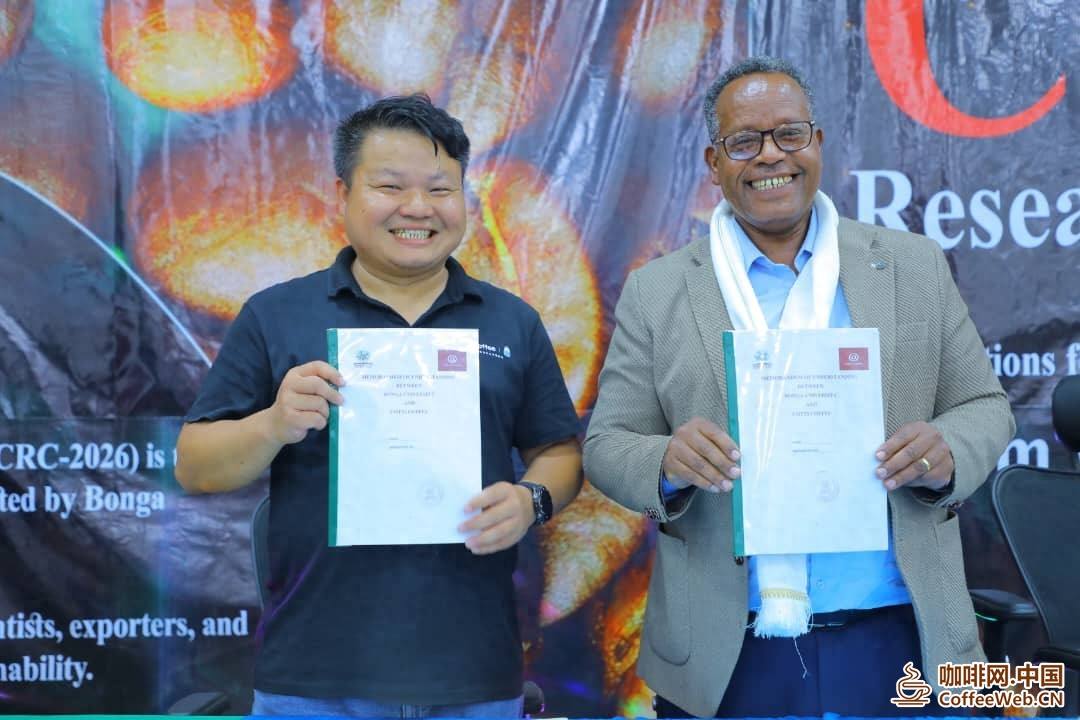
Zhao Jihui travelled to Shanghai for the CIIE to work on chain-level matchmaking: he helped advance a memorandum of understanding on coffee industry cooperation between Nicaragua’s National Commission for Coffee Growing Transformation and Development and the Baoshan Coffee Industry Association, and met diplomatic representatives from several major African coffee origins.
“Baoshan has built a sizeable coffee processing industry and has stable, substantial demand for beans from African origins,” Zhao said. The CIIE, he added, offers an important platform for connecting domestic processing capacity with quality coffee raw materials worldwide.
Reprint Notice & Disclaimer
- This article has been edited and compiled by China Coffee Network and reprinted from China Report (China International Communications Group, via Tencent News), “China–Africa Coffee Trade Rides the Wind”. The copyright of the original text belongs to China Report and the original author. This reprint is intended solely for information sharing within the coffee industry and does not represent the views of this website; all data and opinions are subject to the original article. Our thanks to the original author for creating and sharing it.
- Read the original: China Report (via Tencent News) — “China–Africa Coffee Trade Rides the Wind”
- For matters concerning content licensing, attribution, copyright or otherwise, please contact us promptly and we will verify and cooperate in handling them as soon as possible. We also welcome coffee companies and industry media to exchange ideas and contribute articles.
- Contact China Coffee Network: Tel 400-0000-641 (+86-18941000313) | Email 478203668@qq.com | Address: Jinghong, Xishuangbanna, Yunnan, China
Related Reading
 Indian Brand Third Wave Coffee Reaches 275 Stores, Opens First Uttarakhand Cafe
 Malaysian Coffee Chain Oriental Kopi Expands into Cambodia
 The "Export to China" Coffee Industry International Matchmaking Conference was held in Xiamen
 El Nino Disrupts Brazil’s Coffee Belt, Pointing to a Smaller 2027 Crop
 Speed Matters: From a Single Coffee Bean to a Cup
- A Northern Province That Grows No Coffee Beans Quietly Anchors the Global Coffee Supply Chain



 Liaoning ICP Security No. 21122402000217