


At a Glance (China Coffee Network): At the end of the first ten days of November, a sudden cold snap left the chairs outside the cafes on Kunming's Xunjin Street empty — the city's coffee everyday life is connected to a hundred-billion-yuan industry chain. According to the 2026 Coffee & Beverage Category Development Report by Hongcan Industry Research, by June China had 284,000 coffee and beverage outlets, now spread into 1,989 counties; in two years annual per-capita consumption rose from 16.7 cups to 28.57. The integrated innovation and application of Yunnan's whole coffee industry chain has been selected as one of the first national landmark application-scenario projects: by 2029 Yunnan's specialty rate is planned to exceed 50% and its deep-processing rate 90%, along with a local flavour evaluation system.
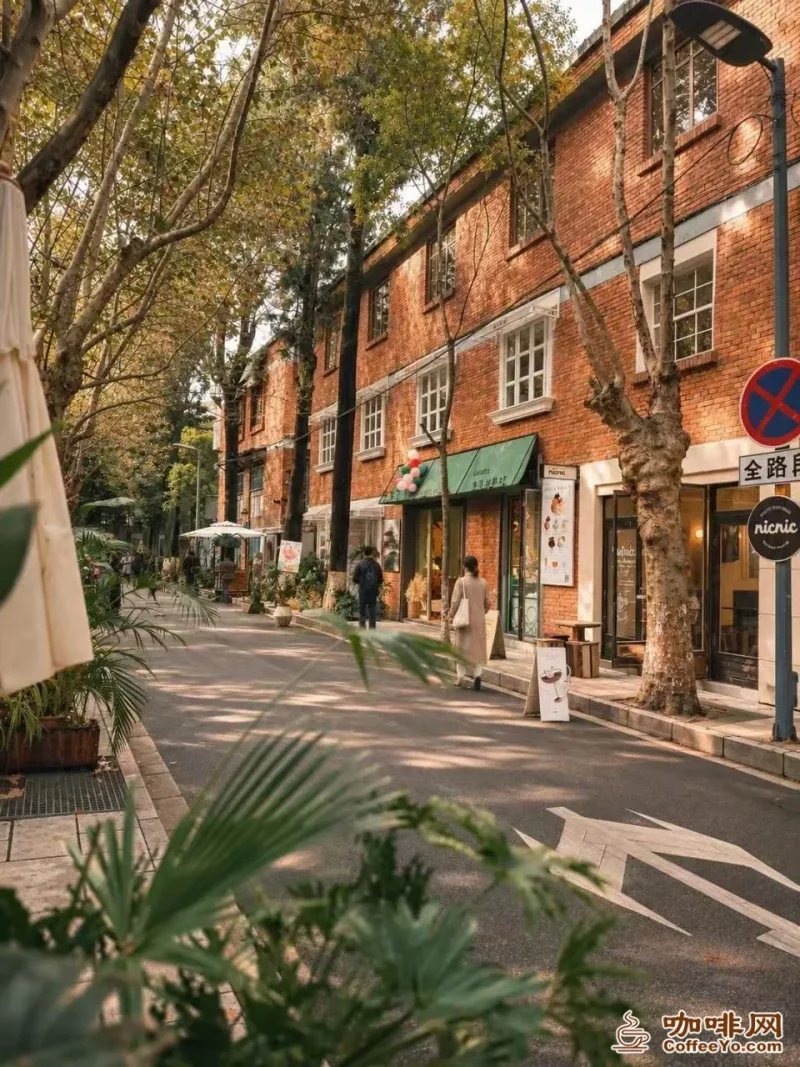
At the end of the first ten days of November, a sudden cold snap brought down some of the plane-tree leaves on Kunming’s Xunjin Street, leaving the chairs outside the cafes empty. On ordinary days you have to grab a seat to drink coffee here; when the weather turns, the street knows first. Coffee on Xunjin Street depends on the weather — but Kunming has another way of drinking it, governed not by the weather but by the time of day.

Coffee whenever you want it
On a working morning, before leaving home, Xiaochen opens Meituan. She picks a shop with plenty of straight coffee on the menu and orders an americano — “cheaper with a coupon than drinking in”. When she is in a hurry she settles for the convenience store downstairs, about five yuan, though “the taste really isn’t much”. After lunch she stops drinking coffee so it won’t disturb her sleep. Hers is not an unusual morning.
For a coffee to be in hand before nine, several things have to hold at once. First, an open door: the lights of the convenience-store grinder are on, fast-food chains have added coffee to breakfast sets, and the self-service machine in the office lobby has been pressed many times before work. Long before specialty cafes open, these catch the first cup of the day for a lot of people.
Then there is a price you don’t have to think twice about. In the first half of this year average spend at coffee outlets held steady at around 25 yuan; new products under 10 yuan made up 11.7%, and half-hour delivery has become routine. The monthly cost of “one cup a day” has been pushed into a range most people can afford.
Finally, there has to be a producing region that can keep up. Yunnan grows 98% of China’s coffee and has done so for more than thirty years. The beans once went out mostly in sacks sold by the ton; today “Baoshan”, “Menglian” and “Pu’er” on a menu are not just flavour descriptors but the closest possible supply chain. What Yunnan has been doing at origin in recent years — building processing plants, setting standards, raising the specialty rate — is precisely about completing that last piece of the puzzle.
Only when all four hold true is coffee genuinely “there whenever you want it”.
At eleven, the shutters go up
Some flavours only reveal themselves when you sit down. At eleven, Cui Coffee on Xunjin Street opens. Barista Xiaohei pitches a tent opposite the shop, sets out camping chairs and tables, runs the grinder empty for a couple of seconds, then sits under the plane trees with his own americano and a book. Around noon the regulars arrive; he knows what they want without asking.
Cui Coffee was here long before Xunjin Street became a social-media hotspot, and more than 80% of its customers are regulars. On weekdays the busiest hours are noon to 1:30 pm and 3 to 5 pm. It sells 50–70 cups a day, mostly americanos; osmanthus cold brew is the summer hit, salted caramel takes over in winter. At around 20 yuan a cup it is cheap for the street. The 9.9-yuan coffee price war has had little effect. “The people who come will always come,” says Xiaohei. What customers buy when they sit down is the barista’s craft and an unhurried half hour under the trees.

Over more than five years Xiaohei has watched Kunming’s coffee fever rise. Most people, he thinks, care about atmosphere — the setting and a good photo matter. But some really know beans: when Baoshan lots became hard to source recently and the shop switched to Menglian, a customer noticed and said “the finish is more acidic”.
A customer being able to taste the difference in finish between beans from two origins would have been hard to imagine ten years ago. Back then Yunnan’s coffee beans had no names of their own.
Four ways of drinking
The orders moving through apps hide a range of choices. On her way to the library, Xiaowen taps out an order for a 9.6-yuan Luckin americano. Seven or eight minutes later she picks it up and walks straight in — perfectly timed. She is 23, a third-year postgraduate, and drinks coffee about every three days to stay alert, at 10–15 yuan a cup and around 150 yuan a month.
As the day moves into afternoon, the reason people lift a cup quietly changes. Ms Sun, 64, began drinking coffee around 2010 and once had a cup almost every day. After 2021 her sleep worsened and life grew busier; now she drinks at most three times a week, at 28–40-plus yuan a cup. She used to like the atmosphere at Maan Coffee; lately she prefers a small shop near home or the office. She keeps freeze-dried coffee at home for convenience, has a few regular cafes for leisurely afternoons, and buys roasted beans direct — just yesterday she picked up 200 yuan of specialty beans.
Evening brings a different rhythm. Mr Li, 55, only started drinking coffee after becoming a ride-hailing driver; a cup at around 10 yuan keeps him going through the evening peak. Between orders he parks at the shop door, puts the cup in the car holder, takes a sip at a red light, and stows it again when the light turns green. Blue-collar and gig workers are becoming a new source of coffee growth, and the sub-10-yuan band is the entry point: convenience-store grinders, petrol-station coffee, platform pickup coupons. For some, coffee is a long habit; for him, it is the cost of staying awake.
Others keep raising the stakes. Koukou, 38, has at least one cup a day: pour-over at home in the morning, a delivery order on the commute, and a slow sit in a favourite cafe while her child is in class. She visits every newly opened hotspot and will wait two hours for a dirty — the first sip explodes with flavour and stays with her all day.
Put together, these people sketch different facets of the coffee consumption curve: some are gradually drinking more often, some deliberately slowing down, others just grabbing a cup in passing. China has 550 million coffee drinkers averaging 28.57 cups a year. But averages hide individual differences: a February 2026 survey by Sunpu Consulting found 58% drink one to five times a week, and only 15% manage a cup every day. The habit has taken root; frequency is still climbing slowly.
Where the beans come from
He once ran physical stores too. At the peak of his own brand he had shops in four Kunming malls, including Henglong and Shuncheng, all of which closed during the 9.9-yuan price wave. He calculated that specialty green beans cost twice as much as chain-brand raw material, which simply could not be sustained. Some held their ground in that price war; others did not. He tells it calmly: over these years coffee has shed its “fashionable, tasteful” label and become an everyday drink of necessity. More people are buying beans to brew pour-over at home, and household consumption is the fastest-growing part of his customer mix.
Besides supplying beans, Feicui Trading trains baristas. Many students open their own shops, starting with beans, equipment and brewing skills from the company. Those owners are, in his eyes, the customers most committed to quality. Fourteen years in, his positioning is clear: “No price war — just good quality.” There will always be people willing to pay a little more for better flavour.
As Yunnan coffee heats up, more players are entering the market, all wanting a share. Afu is not worried: the more entrants, the wider the outlet for quality beans. His core has always been the word “specialty”. And the specialty rate has just been written into a national project document.
On 20 October the National Development and Reform Commission released its first list of 136 landmark major application-scenario projects. Yunnan submitted 13 and three were selected, one of them the “Integrated Innovation and Application of the Whole Coffee Industry Chain” — the only coffee-related project among the 136. Led by Yunnan province, built jointly with Kunshan in Jiangsu and supported technically by Yunnan Agricultural University, it tackles a plain first problem: a fragmented chain and low added value. The same beans sold as raw material versus finished products can differ in value by 10 to 35 times.
Under the plan, by 2029 Yunnan’s specialty-coffee rate should exceed 50% and its deep-processing rate 90%, and a local flavour evaluation system will be built rather than simply adopting European and American cupping standards. The division of labour is explicit: Yunnan handles planting, primary processing, germplasm conservation and flavour R&D; deep processing and trade sit in Kunshan, which roasts about 60% of the country’s green beans. Yunnan Agricultural University contributes more than 1,500 coffee germplasm accessions, 22 independently bred varieties and China’s first dedicated library of coffee fermentation microorganisms.
All thirteen key projects are open to society, with no less than 40% of resources reserved for small and micro businesses. How much of this reaches Kunming’s 20–30 square metre neighbourhood cafes depends on delivery. The dividends of origin do not flow into the cup by themselves.
The extra dozen cups
In two years China’s annual per-capita coffee consumption rose from 16.7 cups to 28.57. Those extra dozen or so cups land, quite literally, in the hands of every coffee drinker.
The coupon Xiaochen compared again and again on Meituan, Xiaohei’s half hour alone under the plane trees, Xiaowen’s 9.6-yuan order, the 200 yuan of specialty beans Ms Sun took home, the two sips Mr Li stole at a red light, the two hours Koukou waited for a dirty, and every bag of beans Afu ships to county-town cafes — a hundred-billion-yuan industry grows upward because these small everyday moments hold it up, cup by cup, while each cup in turn rests on an ever-improving supply chain.
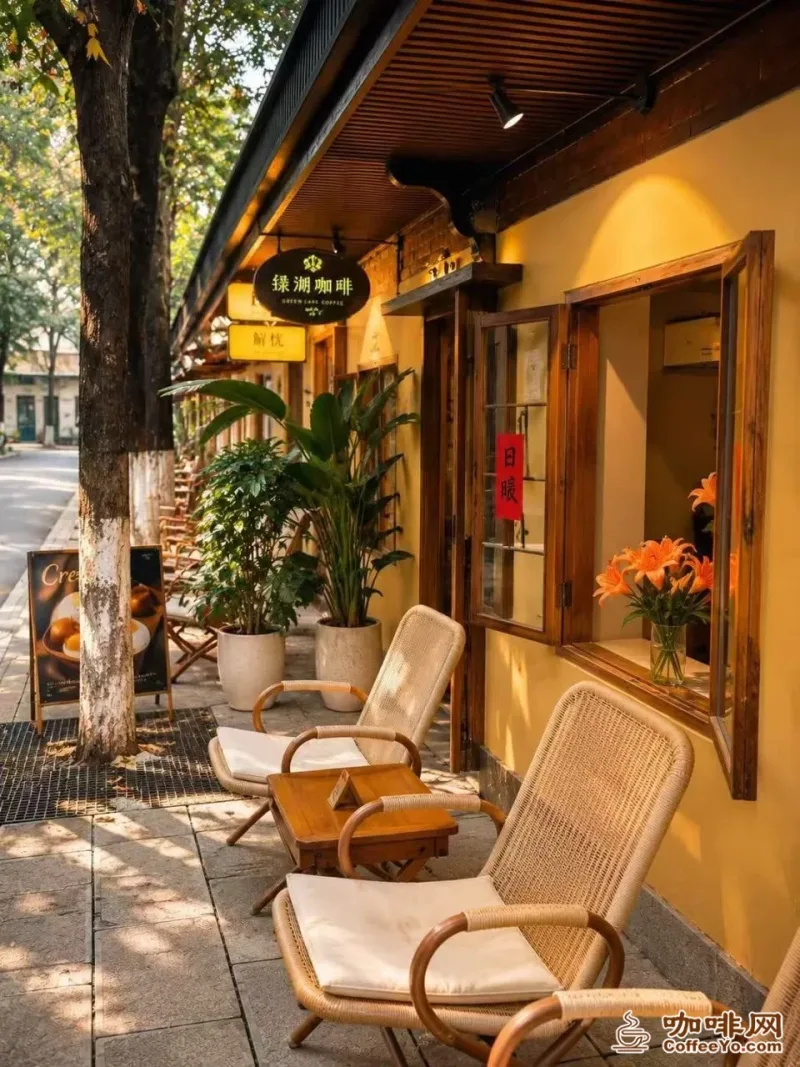
Tomorrow morning someone will again order coffee before leaving home; at eleven the shutters will rise on time, and the chairs under the plane trees will fill again.
Reporting and photographs by Wu Qin, Kaiping News
Reprint Notice & Disclaimer
- This article has been edited and compiled by China Coffee Network and reprinted from Kaiping News, “开屏消费观|昆明的咖啡日常和一条千亿级产业链.” The copyright of the original text belongs to Kaiping News and the original author. This reprint is intended solely for information sharing within the coffee industry and does not represent the views of this website; all data and opinions are subject to the original article. Our thanks to the original author for creating and sharing it.
- Read the original: Kaiping News, “开屏消费观|昆明的咖啡日常和一条千亿级产业链”
- For matters concerning content licensing, attribution, copyright or otherwise, please contact us promptly and we will verify and cooperate in handling them as soon as possible. We also welcome coffee origins, brands and industry media to exchange ideas and contribute articles.
- Contact China Coffee Network: Tel 400-0000-641 (+86-18288016826) | Email 405854472@qq.com
Related Reading
 From a Well-Paid Job to a National Coffee Roasting Champion: A Guangzhou Youth’s Story
- Brazil’s Coffee Industry Upgrades Open New Space for China-Brazil Cooperation
 Pour-Over Coffee Basics: Drippers, Filters and the Fundamentals of Pouring Water
 Don’t Box Yourself In: Head to Huadu and Let Your Coffee Spirits Take Off
 After Four Slow Years in China, Blue Bottle Coffee Picks Up Speed
- How Much APEC Is on the Chinese Dinner Table? Starting with a 9.9-Yuan Cup of Coffee






 Liaoning ICP Security No. 21122402000217