


At a Glance (China Coffee Network):
Xinhua News Agency, Jakarta, July 27 (Reporter Li Fuyu) In Indonesia, coffee has long been woven into daily life. From street-side coffee stalls in Jakarta to specialty cafes in Bali and coffee plantations in the mountains of Sumatra and Java, the rich aroma of coffee can be smelled across this archipelago nation.
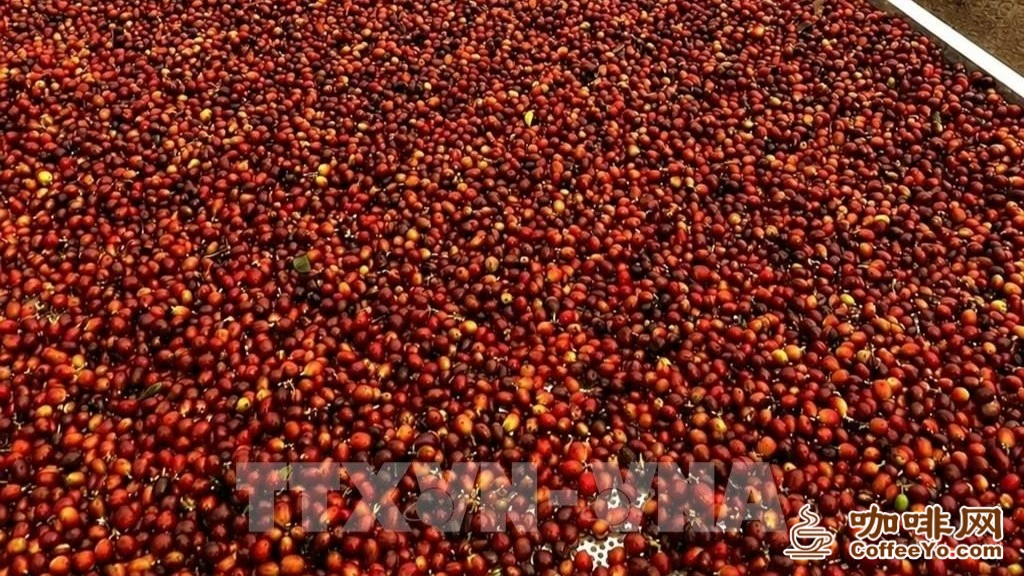
Among Indonesia’s many kinds of coffee, civet coffee is perhaps the most internationally recognizable. It is made from coffee beans excreted by Asian palm civets after they eat coffee cherries; after washing, drying and roasting, it is packaged as one of the world’s most expensive and most controversial coffees.
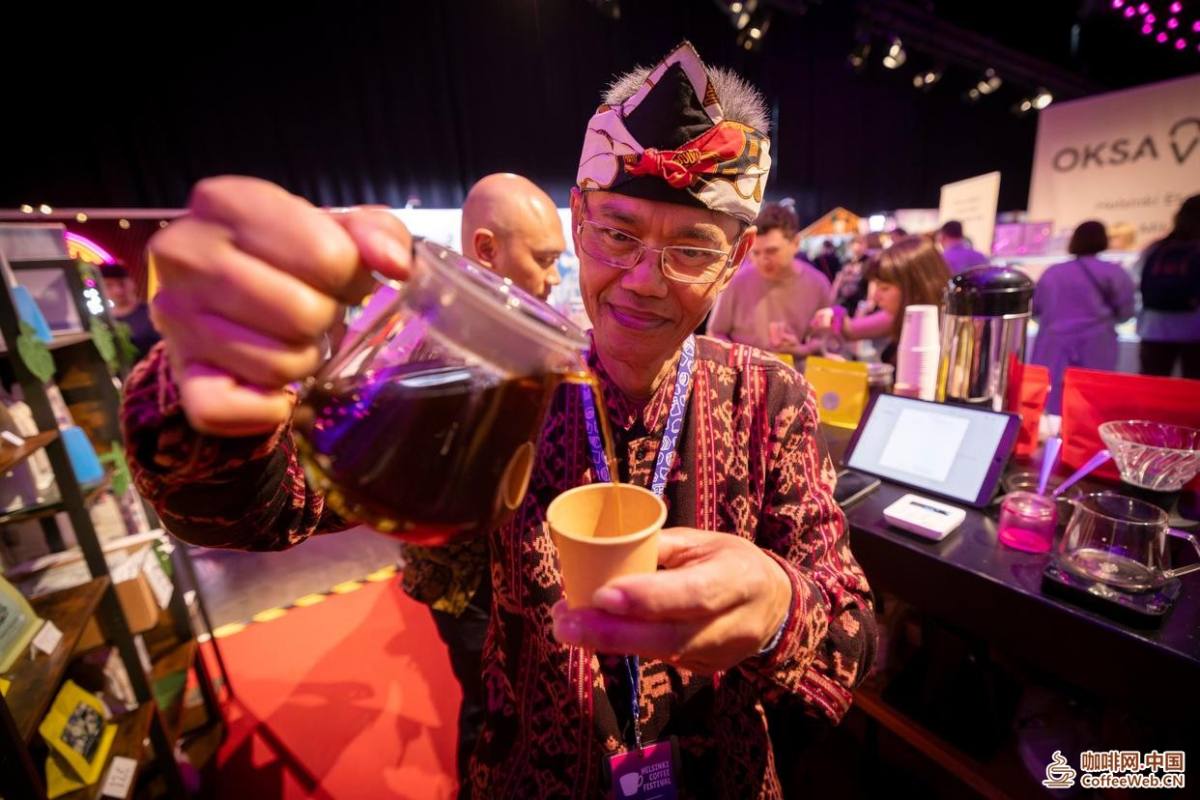
On April 26, 2025, at the 2025 Helsinki Coffee Festival in the Finnish capital, an exhibitor from Indonesia in traditional dress displays coffee products. Photo by Xinhua (Matti Mattikainen)From ‘Poor Man’s Coffee’ to ‘Black Gold Calling Card’
About the origin of civet coffee, a widely known account circulates in Indonesia.During the Dutch colonial period in the 18th century, colonial authorities developed coffee plantations on a large scale in Java, Sumatra and elsewhere. Local farmers were forbidden to pick coffee cherries privately and could only labor for the colonists. Some farmers discovered that civets living in tropical rainforests liked to select the ripe, sweetest coffee cherries to eat, while the coffee beans could not be fully digested and were excreted by the civets. People washed and roasted these beans and, upon drinking, unexpectedly found the coffee tasted softer and smoother, with a markedly reduced bitterness.’Actually, locals first went to pick up those beans because they had no access to the coffee from the plantations,’ Adi Pratama, owner of a coffee shop in southern Jakarta, told reporters. ‘Later this ‘poor man’s coffee’ instead became one of the most expensive coffees in the world — what we call ‘black gold’.’Entering the 21st century, with the rapid expansion of the global specialty coffee market, civet coffee was packaged as a luxury consumer good combining scarcity, exotic flair and status symbolism.Adi says that, depending on vintage and quality, the wholesale price of Indonesian civet coffee is roughly US$300 to US$1,300 per kilogram. Some high-end products roasted and packaged by large brands sell for even more.Research by Indonesia’s agricultural authorities shows that civet coffee exports are relatively limited in scale, yet still generate US$8 million to US$10 million in annual revenue for Indonesia, with a premium capacity far above ordinary coffee.
According to data from Indonesia’s Central Statistics Agency, in 2025 Indonesia’s coffee exports reached about 508,800 tons, up 62.61% year on year; export value was US$2.5 billion, up 54.04%. Belgium became the largest export destination for Indonesian coffee, with the United States, Germany, Egypt and Malaysia among the main export markets.
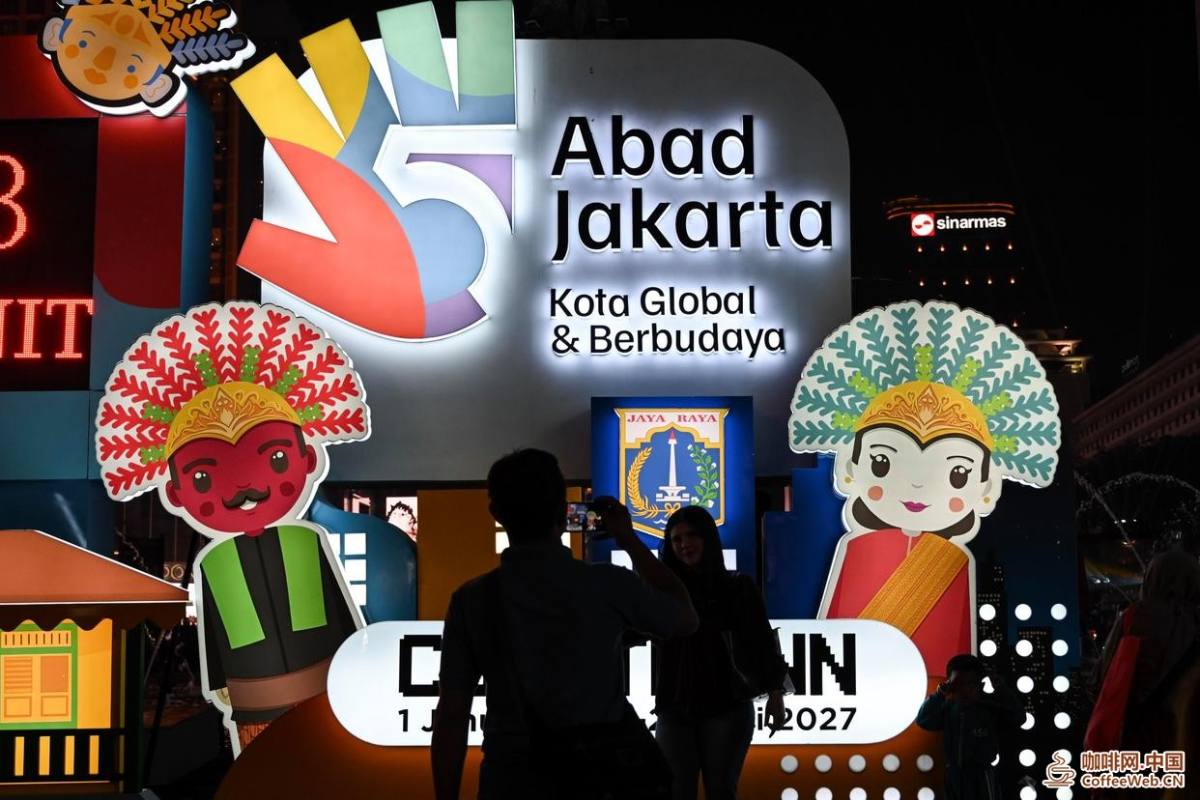
On June 27, 2026, in Jakarta, Indonesia, people pose for photos in front of light decorations. Photo by Xinhua (Wiri)From a Beverage to an Experiential Consumer Product
In the eyes of many international consumers, going to Indonesia to taste civet coffee is more of a novel experience. Compared with standardized, industrially produced coffee, it carries a tropical narrative with a sense of adventure: volcanoes, primeval forests, wild animals and traditional farms together make up overseas consumers’ imagination of Indonesian charm.In the Ubud area of Bali, many coffee estates have developed the civet coffee production process into a tourism program. Visitors can not only tour coffee plantations but also observe civets up close and experience hand-roasting and brewing.Different flavors of coffee sit on wooden tables, and the air is filled with the caramel aroma of roasting. Tourists film videos while listening to staff tell the story of ‘how civets pick ripe coffee cherries’. In the social media era, ‘the first taste of civet coffee’ has become popular content many tourists rush to post. From opening the package and savoring the aroma to the reaction after the first sip, such videos tend to easily attract traffic.Adi says that for many young consumers, civet coffee is no longer just coffee but a kind of experiential consumer product.In recent years, as Indonesia’s specialty coffee market has grown, more and more companies have begun combining civet coffee with tourism experiences and cultural packaging to further build its international fame. Indonesia’s Ministry of Tourism and Creative Economy has also continued to promote ‘coffee tourism’, trying to integrate the coffee industry with rural and eco-tourism. In parts of the mountainous areas of Bali, Yogyakarta and Sumatra, visitors can experience picking, roasting and pour-over brewing at coffee estates, tasting coffee beside rice fields, volcanoes or in rainforests.’When foreign tourists come to these places, they don’t just want a cup of coffee,’ said tourism practitioner Widaya Prasetyo. ‘They also want to feel tropical islands, volcanoes, forests and village life.’
At international expos, diplomatic occasions and tourism promotions, civet coffee often appears alongside Indonesian national dress ‘Batik’, Indonesian spices and traditional Indonesian woodcarving. For many foreign consumers, they may not know Indonesia’s history and culture, yet they have heard of civet coffee. To some extent, the hot sales of Indonesian civet coffee resembles the logic by which Italian pizza ‘went global’: first building global recognition through one concrete consumer product, then gradually extending it into part of the national image.
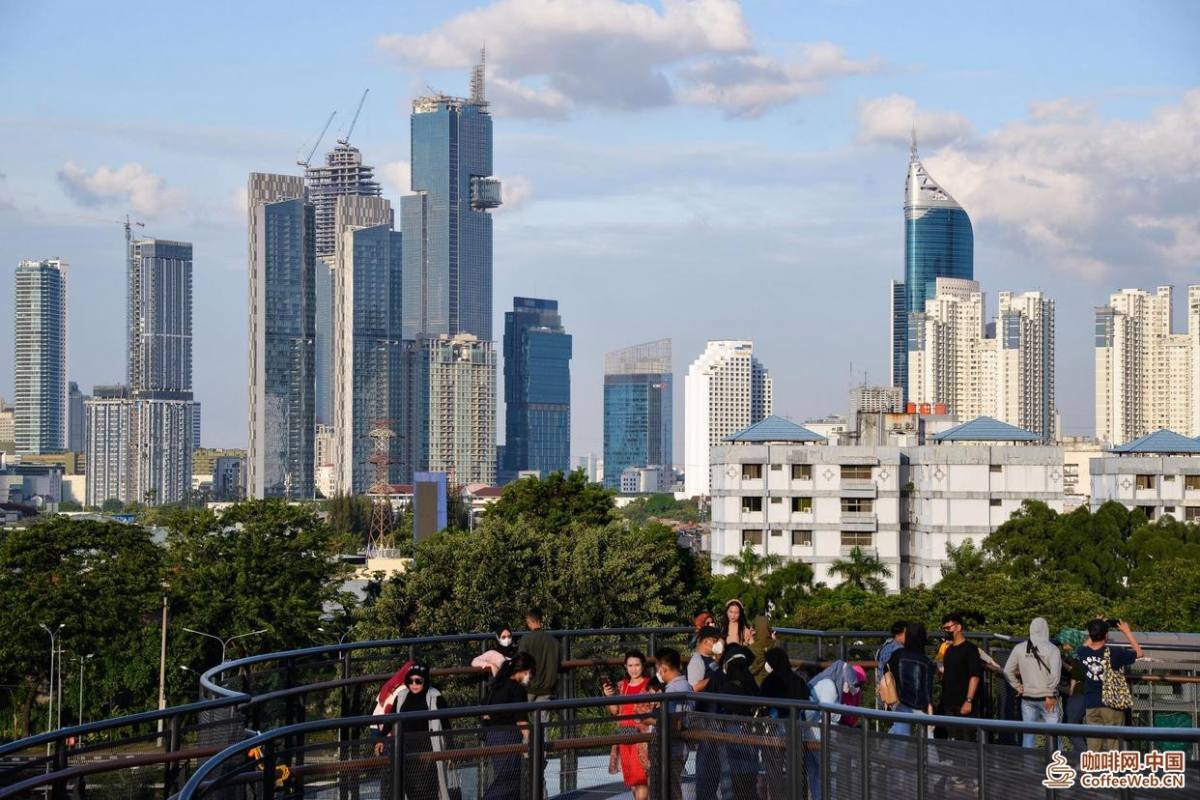
On January 23, 2022, people enjoy the city view from the skywalk in Senayan Park, Jakarta, Indonesia. Photo by Xinhua reporter Xu QinControversy and Transformation
As civet coffee’s fame has kept growing, controversy has followed.Organizations such as World Animal Protection point out that, to pursue output, some merchants keep civets confined for long periods in cramped cages and force-feed them coffee cherries, harming the animals’ health. Some European and American specialty coffee brands have even stopped purchasing civet coffee produced from caged civets. In addition, many counterfeit products have entered the market, and some so-called ‘civet coffee’ is actually ordinary coffee dressed up by marketing concepts.As consumers’ awareness of the difference between ‘wild-collected’ and ‘cage-produced’ keeps rising, some Indonesian coffee practitioners have begun trying to drive industrial transformation; some specialty coffee estates have also started building traceability systems and strengthening geographical indications and eco-certification. Labels such as ‘organic certification’ and ‘animal-friendly’ are gradually becoming important added value for high-end civet coffee.Kuntoro Yusuf, who runs a small civet coffee cooperative in the Yogyakarta Special Region, told reporters that in recent years they have continuously reinforced the concepts of ‘wild collection’ and ‘sustainable production’ to differentiate their products from industrialized ones. ‘Truly good civet coffee should come from the natural environment, not from an assembly line.’Faced with the controversy, more and more Indonesian coffee practitioners are also reflecting: should civet coffee continue to serve as the brightest international calling card of Indonesia’s coffee industry? In fact, besides civet coffee, Indonesia also has several internationally renowned specialty coffee regions such as Sumatra Robusta, Mandheling, Java Arabica and Sulawesi Toraja. For young Indonesian baristas like Adi, they hope foreign consumers remember not only ‘civet coffee’ but also Indonesia’s complex and diverse specialty coffee system.From coffee beans secretly gathered by farmers in colonial times to a high-priced drink in specialty cafes; from an accidental discovery in tropical rainforests to a traffic-generating commodity in the social media era … the story of civet coffee, to some extent, also mirrors how Indonesia, amid the wave of globalization, transforms local traditions and natural resources into cultural influence. In this country made up of over ten thousand islands, what a cup of coffee carries has long been more than taste itself.
Reprint Notice & Disclaimer
- This article has been edited and compiled by China Coffee Network. The information and images therein come from public sources and the copyright belongs to the original author. This reprint is intended solely for information sharing within the coffee industry and does not represent the views of this website; all data and opinions are subject to the original article. Our thanks to the original author for creating and sharing it.
- For matters concerning content licensing, attribution, copyright or otherwise, please contact us promptly and we will verify and cooperate in handling them as soon as possible. We also welcome coffee origins, brands and industry media to exchange ideas and contribute articles.
- Contact China Coffee Network: Tel 400-0000-641 (+86-18288016826) | Email 478203668@qq.com
Related Reading
 How a Small City Hand-Roasts One-Tenth of Global Instant Coffee Capacity
 Indian Brand Third Wave Coffee Reaches 275 Stores, Opens First Uttarakhand Cafe
 Malaysian Coffee Chain Oriental Kopi Expands into Cambodia
 El Nino Disrupts Brazil’s Coffee Belt, Pointing to a Smaller 2027 Crop
 China-Africa Coffee Trade Gathers Momentum
 ‘The Rhythm of Plants: Tea and Coffee Culture’ Exhibition Debuts in Rio de Janeiro, Brazil


 Liaoning ICP Security No. 21122402000217