
Brief (coffeeyo.com): A full-page People’s Daily feature shows how Yunnan is converting its cool climate and booming coffee culture — from the Dianchi Coffee Carnival to snow-mountain cafés and village festivals — into a vibrant summer economy that draws and keeps tourists.
In August, Dianchi Lake is cool with a lake breeze, and the aroma of coffee fills the air.
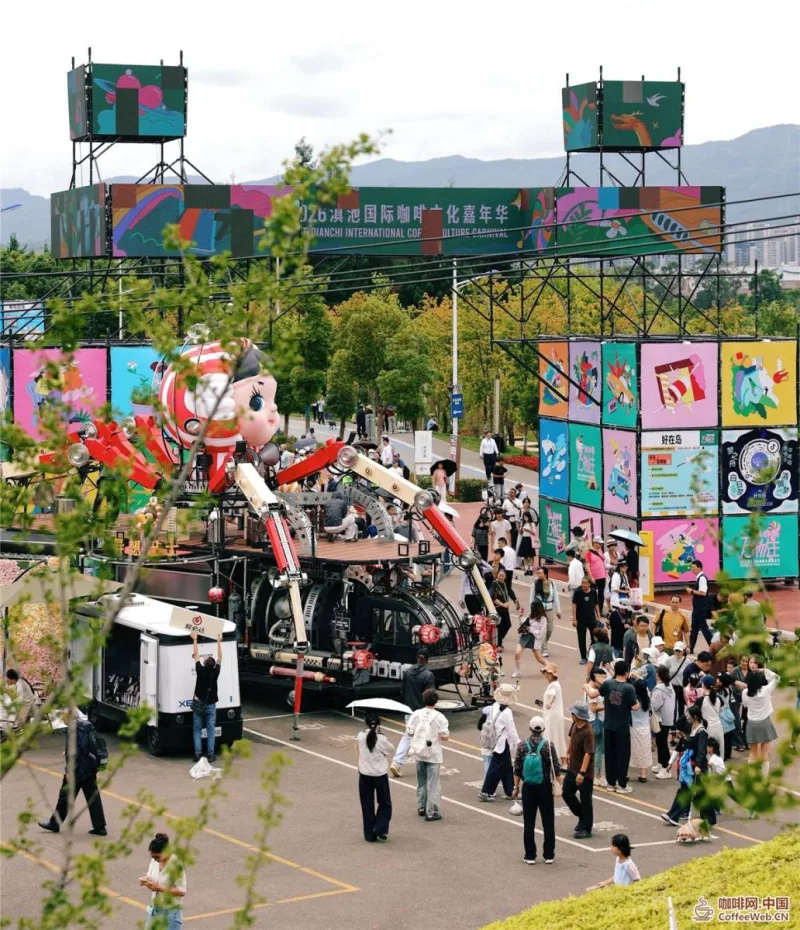
From August 1 to 9, the 2026 Dianchi International Coffee Culture Carnival, themed “Dianchi Coffee Gathers, All Things Thrive,” was held in Kunming, Yunnan Province. More than 200 distinctive coffee vehicles from 52 cities gathered around the lake, with over 300 themed activities and 200-plus music performances taking turns. From coffee tasting to scene check-ins, from ethnic-flavored experiences to lakeside art performances, the various characteristic activities shone brightly; the rich aroma of coffee intertwined with 22-degree coolness, attracting visitors from all directions. This 9-day coffee event is a vivid microcosm of Yunnan’s summer economy.
During this year’s summer travel period, China Railway Kunming Group Co., Ltd. expects to send 27.9 million passengers. Data from multiple platforms shows Yunnan steadily ranks among the top three popular provinces for long-haul summer-escape tourism nationwide, with summer travel bookings up 42.7% year on year. Making good use of “cool resources” to leverage “hot economy,” Yunnan is using a cup of coffee, a spell of coolness and a season of activities to ignite new vitality in its summer economy.
A Cup of Coffee Strings Together New Consumption Scenarios
Coffee is a bright spot in Yunnan’s summer economy this year. Since its founding in 2024, the Dianchi International Coffee Culture Carnival has continuously cultivated the “coffee + Dianchi cultural tourism” characteristic track, and has grown into a landmark coffee-culture event with national influence, oriented toward South and Southeast Asia.
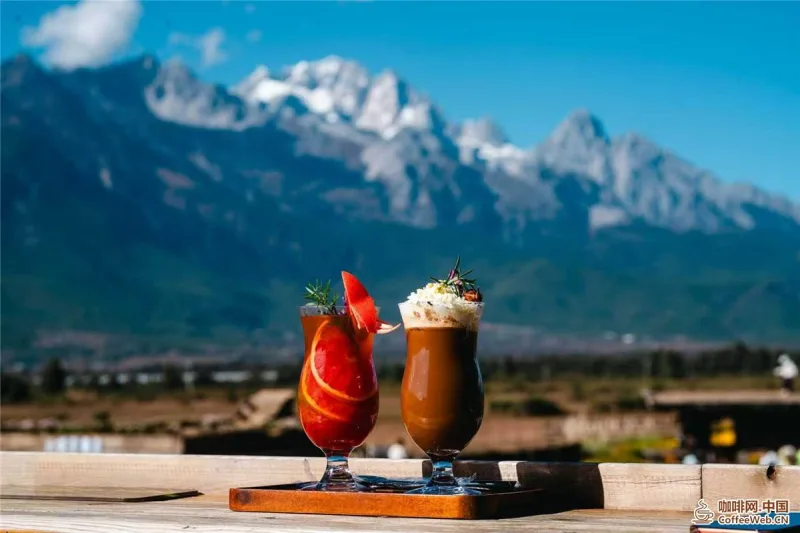
From Dianchi to snow mountains, from canyons to rainforests, coffee is integrating into Yunnan’s summer consumption scenarios in different forms. At the foot of Jade Dragon Snow Mountain in Lijiang, the “a cup of coffee with a view of the snow mountain” characteristic cultural-tourism brand keeps heating up. Lijiang holds a coffee season across the whole area, with one main venue and four sub-venues; Baisha Ancient Town gathers more than 130 cafés, and a coffee-themed museum has become a popular check-in spot for tourists.
Deep in the Nujiang Grand Canyon, cave coffee houses and canyon coffee estates along the G219 beautiful highway are bustling; a pattern of “coffee aroma all along the way, one village one specialty” is taking initial shape. Dehong Dai and Jingpo Autonomous Prefecture, relying on border charm and rural ecology, has created a batch of new coffee-consumption spaces blending natural landscapes and cultural interest in Mangshi, Lianghe County and other places. Lincang City converts its “ever-spring” climate endowment of an average 18.8 degrees Celsius into cultural-tourism appeal, and relying on resources such as ancient tea mountains and Wa villages, launches “tea-coffee” fusion new drinks and real-scene check-in routes. By Fuxian Lake in Yuxi, lakeside influencer coffee clusters adopt an operating model of “coffee + travel photography + sunset concerts”; popular cafés receive over 1,000 visitors a day on holidays.
Cup after cup of coffee connects plateau lakes, snow-mountain canyons and tropical rainforests, and also connects the diverse threads of Yunnan’s summer economy.
A Spell of Coolness Makes a Great Summer Retreat
If coffee is the “flavor” of Yunnan’s summer economy, then coolness is the “base tone” of Yunnan’s summer.
Yunnan’s average July temperature is only 21.9 degrees Celsius, and among the province’s 129 counties (cities, districts), 95 have a summer average temperature between 19 and 24 degrees Celsius. Relying on this unique climatic foundation, various localities have rolled out their “cool cards.”
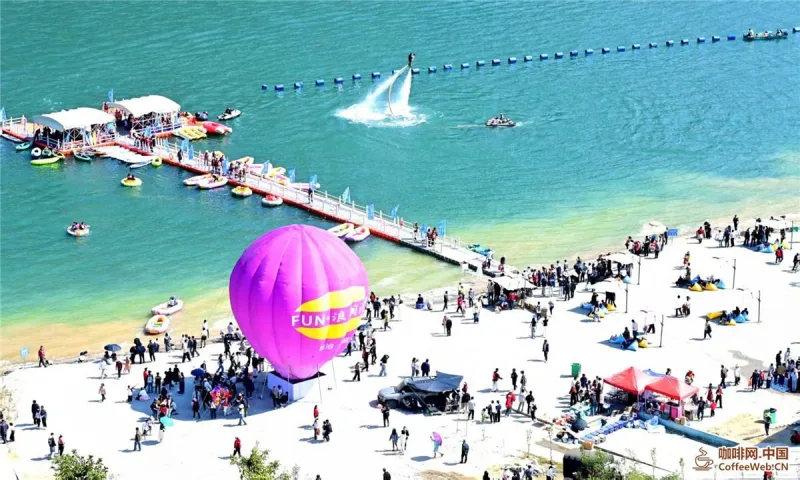
Zhaotong City, known as the “Autumn City,” has an average altitude of about 1,950 meters and a summer average temperature of about 20 degrees Celsius. This year, under the theme “Cool Summer · Fun Zhaotong,” Zhaotong planned and launched 196 summer-escape cultural-tourism activities in 1,064 sessions; ecological scenic areas such as Dashanbao and Xiaocaoba have seen sustained visitor growth, summer sojourn crowds have gradually increased, and forest villages have become popular choices for long-stay visitors.
The hottest month’s average temperature in the Nujiang Grand Canyon is only 22.2 degrees Celsius, with forest coverage of 67.77% and negative-oxygen-ion content consistently above 2,000 per cubic centimeter. Lijiang City, relying on 64.48% forest coverage and a natural summer-refuge condition of 20 degrees Celsius, has built 44 A-level scenic areas; the Lijiang Ancient Town scenic area received 6.089 million visitors in July, nearly 200,000 per day, with summer-refuge visitors exceeding half. Lincang City was evaluated by the National Climate Center of the China Meteorological Administration as “ever-spring across the whole territory, livable in all seasons,” becoming a popular wellness-sojourn destination.
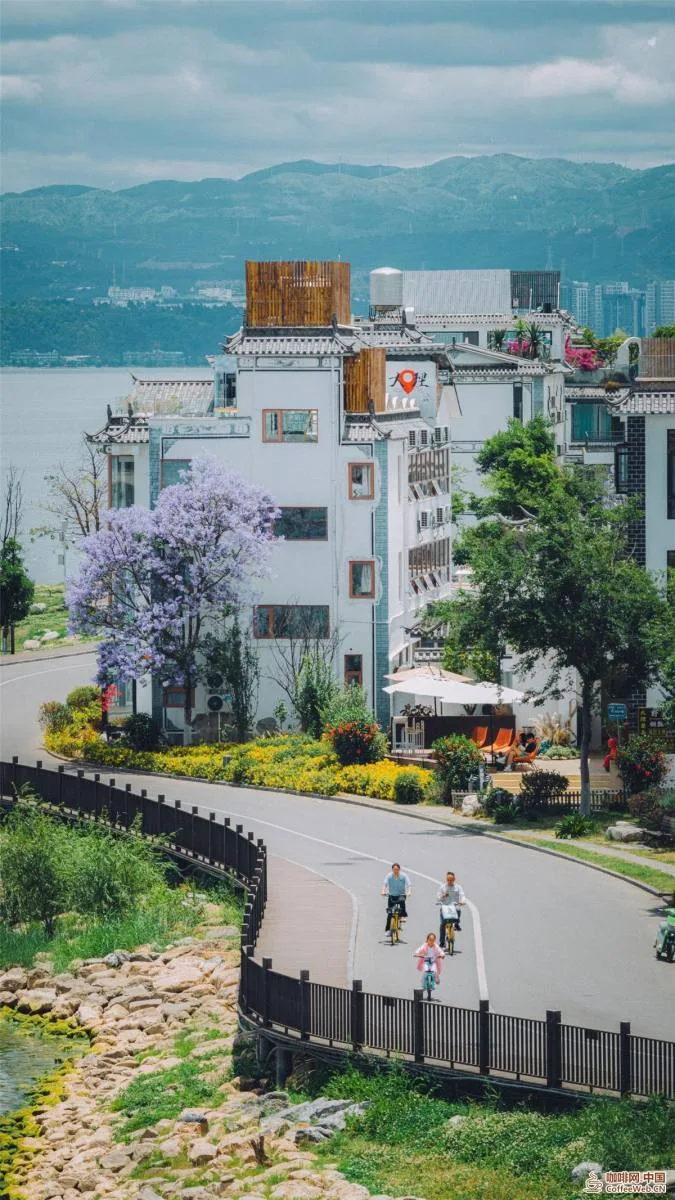
When cool climate meets sojourn demand, “climate resources” become real “economic traffic.” Platform data shows that nationwide this summer, sojourn orders for stays of 15 days or more rose 22% year on year, and Yunnan sojourn orders rose 52% year on year, leading the country in growth. This summer, Dali homestay bookings maintained rapid growth; from July 1 to 13, Dali Station cumulatively ran 889.5 pairs of trains, transporting 931,400 passengers. In Yunnan, tourism is shifting from “rushing through an itinerary” to “living a life.”
A Season of Events Ignites the Holiday Market
With cool climate and rich coffee aroma, there still must be rich activities to keep people.
Kunming played a “combination hand” of “drinking coffee, eating mushrooms, celebrating the Torch Festival, chasing Dian charm.” Beyond the Dianchi International Coffee Culture Carnival, it launched exclusive mushroom-eating season travel routes leveraging the wild-mushroom season, upgraded the Dianchi greenway from a single cycling path into a composite ecological cultural-tourism experience corridor, and precisely issued 10 million yuan of “Caiyun Meiwu” consumption vouchers covering more than 2,000 merchants.
During the Torch Festival, Chuxiong Yi Autonomous Prefecture carried out 15 premium activities, including a solemn and grand fire-worshipping ceremony and a sea of joy formed by a ten-thousand-people left-foot dance; the prefecture simultaneously launched people-benefit policies such as scenic-ticket reductions and accommodation subsidies, achieving the conversion from “visitor flow” to “visitor stay.”
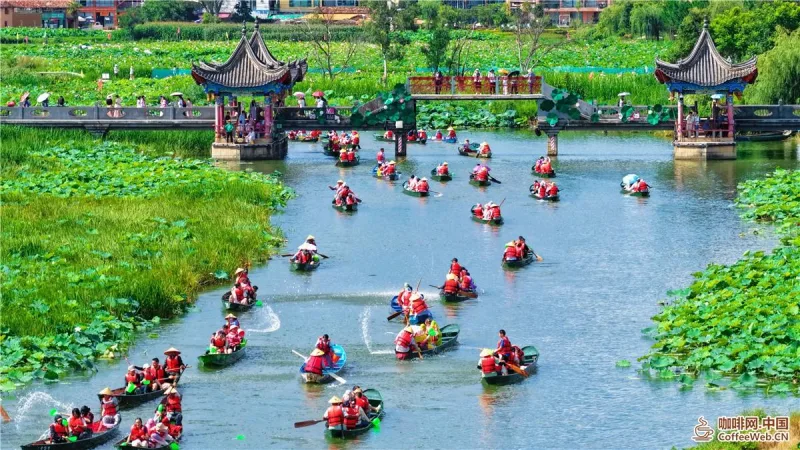
In Qiubei County, Wenshan Zhuang and Miao Autonomous Prefecture, the Flower-Face Festival was extended from a “one-day festival” to a “season of fire,” running from July 18 to August 18, linking the Lotus Festival and Torch Festival, and launching an immersive “smear flower faces every day” experience. Since the activity began, the Puzhehei scenic area’s water paddle-board project has received up to 400-plus visitors a day at peak, the night-tour project has attracted over 200,000 visitors, and driven comprehensive income past 80 million yuan.
Nujiang Lisu Autonomous Prefecture has improved a cultural-tourism activity system of “activities every month, highlights every season, wonderful all year,” and relying on the national intangible-cultural-heritage project of the Nu people’s Fairy Festival, launched 17 activities such as drone light shows and thousand-people bonfires; Lushui City, using a 10-kilometer elite race as a carrier, attracted 6,000 runners into natural scenery and ethnic customs, connecting multiple themed scenes.
Dehong Prefecture extended the national intangible-cultural-heritage project of the Jingpo people’s Munao Zongge from a January ethnic festival into a cultural IP running through the summer. In mid-July, the Yunnan Ethnic Village’s Munao Zongge first sparked the summer fever; then the activity was carried out at the foot of Jade Dragon Snow Mountain, with ten-thousand-people dances and bonfire jumping appearing in succession. During the 10th South Asia Expo, the Dehong exhibition area organized interactive experiences every day; a half-hour immersive song-and-dance let visitors feel the border charm “in one stop.” Dehong’s five counties and cities have Munao Zongge experience activities every day, with cross-regional intangible-heritage joint performances keeping cultural consumption continuously warming.
Yuxi City, relying on Fuxian Lake, Xingyun Lake and Qilu Lake, lays out diverse formats such as water recreation and low-altitude sightseeing. Lijiang’s folk-music season covers June to November; an open street stage by the ancient town’s big water wheel performs regularly, enriching visitors’ nighttime experience and extending their stay.
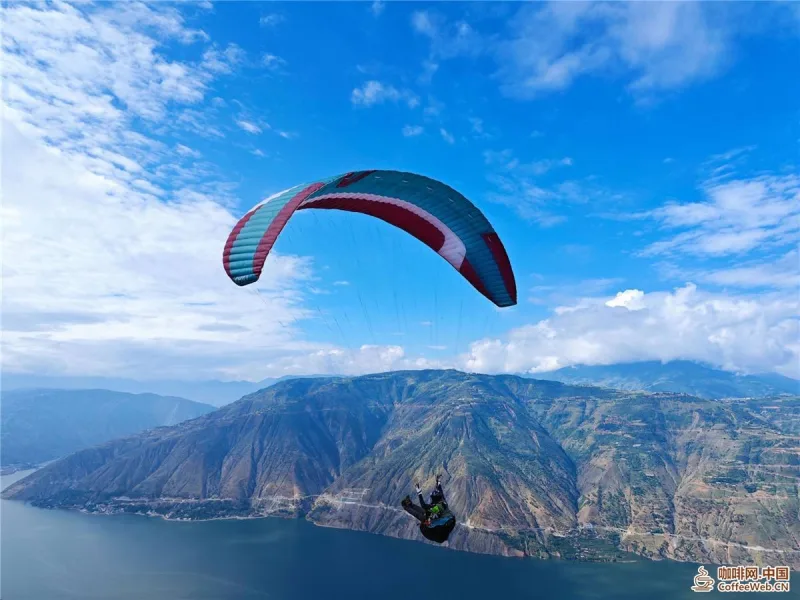
Tourism is one of Yunnan’s most prominent comparative advantages. From the coffee carnival by Dianchi to the endless festivals and events across the whole province, Yunnan is using a cup of coffee, a spell of coolness and a season of activities to bring summer tourists in and keep them. Green mountains and clear waters are being transformed into real income — 824 natural villages have benefited from sojourn living, and more and more people are eating a “tourism meal” at their doorstep. This summer, “a kind of life called Yunnan” is the coffee aroma on tourists’ tongues, the folk songs in their ears and the beautiful scenery before their eyes.
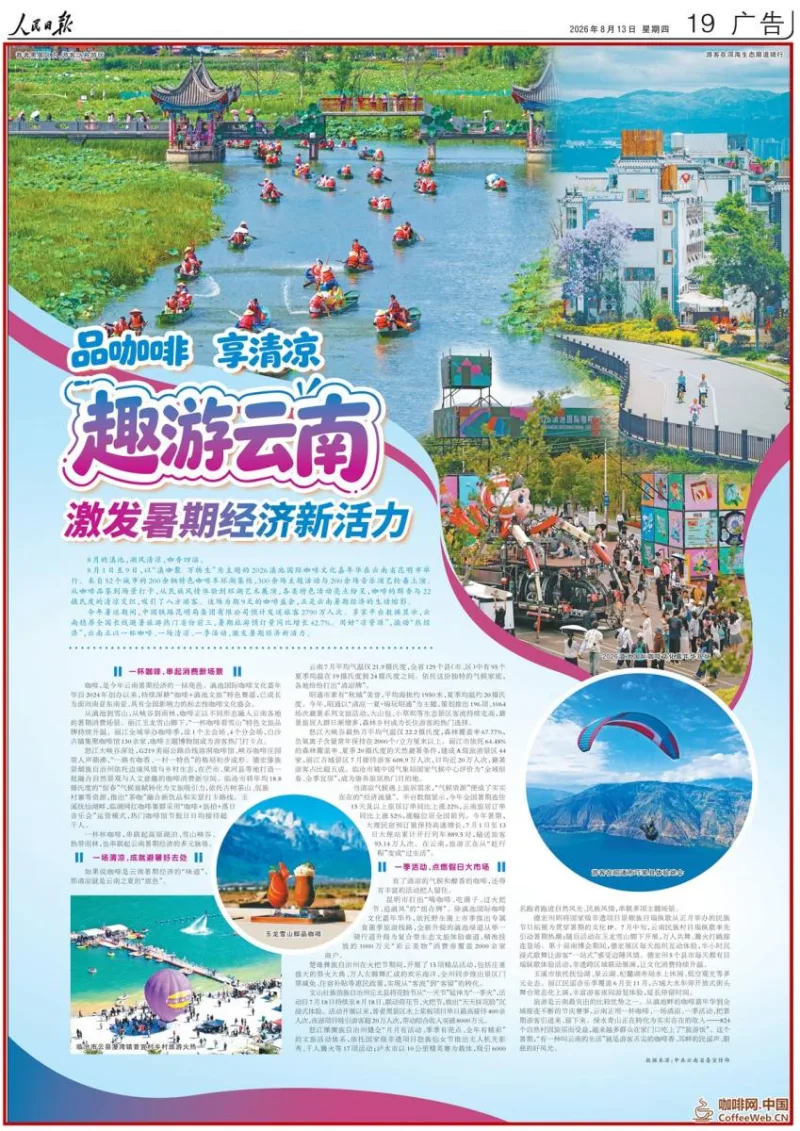
Source: People’s Daily (data source: Publicity Department of the CPC Yunnan Provincial Committee; editor Du Shiyu).
Reprint Note & Disclaimer
- This article is reprinted from Chinese media for information and cultural exchange. The views expressed are those of the original author and do not necessarily reflect the position of coffeeyo.com.
- All trademarks, brand names and logos mentioned belong to their respective owners.
- For cooperation, reprint or correction requests, please contact coffeeyo.com.
Reprint Notice & Disclaimer
- This article has been edited and compiled by China Coffee Network. The information and images therein come from public sources and the copyright belongs to the original author. This reprint is intended solely for information sharing within the coffee industry and does not represent the views of this website; all data and opinions are subject to the original article. Our thanks to the original author for creating and sharing it.
- For matters concerning content licensing, attribution, copyright or otherwise, please contact us promptly and we will verify and cooperate in handling them as soon as possible. We also welcome coffee origins, brands and industry media to exchange ideas and contribute articles.
- Contact China Coffee Network: Tel 400-0000-641 (+86-18288016826) | Email 405854472@qq.com | Address: Jinghong, Xishuangbanna, Yunnan Province / Tieling, Liaoning Province
Related Reading
 Three Decades of Shanghai-Yunnan Collaboration: A Coffee Bean ‘Ferments’ at the Import Expo
 Why Yongde’s Coffee Beans Won Gold in Shanghai – A Taste of ‘Life in Yunnan: 365 Days’
- Yunling Commentary: Yunnan Coffee Turnaround Hinges on Autonomous Pricing
 A ‘Travel Pack’ Reveals Another Possibility for Pu’er Baristas
- Bean in Short Supply: A Taiwan Youth on Yunnan Coffee as a Shared Cross-Strait Stage
- Five Years, Eight Championships: Lincang Coffee Joins the World Stage


 Liaoning ICP Security No. 21122402000217