
Brief (coffeeyo.com): Fresh off its acquisition by Boyu Capital, Starbucks China has been hit by a wave of viral rumors — that Mixue will make its cups and straws, bean suppliers will change, and the “14th-month salary” is gone. The company denied them all, but the churn reflects real anxiety over its joint-venture-era restructuring.
On August 12, after being acquired by Boyu Capital, Starbucks China has been caught in a series of public-opinion storms. Rumors about canceling the “14th-month salary,” paper cups and straws being outsourced to Mixue Bingcheng, and changing coffee-bean suppliers have taken turns trending, sparking wide discussion. Regarding the various rumors, Starbucks China urgently clarified: “We do not comment on market rumors and speculation. At present, all of Starbucks’ businesses are operating normally.”
Why did public opinion concentrate and ferment at this time? Behind the series of rumors is that, after the equity change of Starbucks China, its operating model, supply-chain system and employee incentive mechanism under the joint-venture era are undergoing a round of deep restructuring.
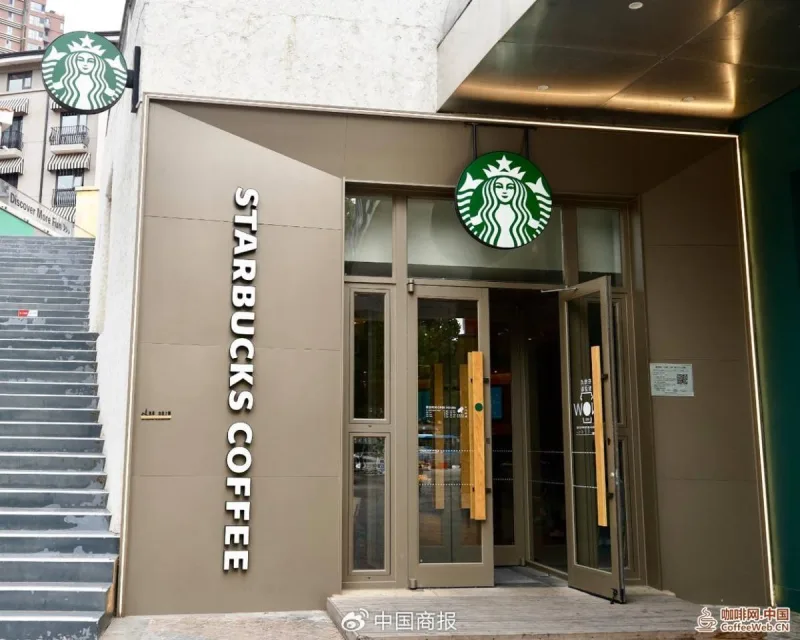
Supply-Chain Localization Sparks Speculation
On August 11, there were reports that after leaving the position of chief procurement officer at Sam’s Club China, Zhang Qing recently joined Boyu Capital and began planning strategies for Starbucks’ supply-chain transformation, including seeking top domestic quality suppliers and accelerating localization. Among these, Starbucks China’s paper cups, straws and matcha powder would all be outsourced to Mixue Bingcheng, and some dairy suppliers would also be changed, to drive down material procurement costs.
On August 12, Starbucks China responded to a China Business News reporter: “Online claims such as ‘Starbucks paper cups and straws may be outsourced to Mixue Bingcheng’ and ‘changing coffee-bean suppliers’ are seriously inaccurate.”
“We have always upheld the concept of sustainable, high-quality development, maintained an open posture, and developed synergistically and mutually with industry supply-chain partners, committed to providing customers with consistently high-quality coffee products and the Starbucks service experience. Please rationally distinguish various online messages and do not casually forward false rumors,” Starbucks China said.
Although the rumor was denied, the topic could ferment so quickly, reflecting from the side the market’s high attention to Starbucks China’s supply-chain reform. Over past years, Starbucks China built a heavy-asset supply-chain system, constructing a coffee innovation industrial park in Jiangsu covering bean roasting, warehousing and logistics. At the same time, it has deeply cultivated Yunnan coffee regions, conducting planting training and procuring local beans, forming a “global procurement + local production” model.
But facing the impact of local brands such as Luckin Coffee, the comprehensive cost per cup of Starbucks products being higher than domestic peers has become industry consensus. Local brands rely on mature domestic supply-chain networks to achieve scale cost reduction in raw materials and packaging, supporting low-price expansion strategies. Moreover, the market widely believes that after entering the joint-venture era, Starbucks China will further advance supply-chain localization, introduce more domestic suppliers, optimize its procurement cost structure and improve profitability.
Analysts told the reporter that supply-chain localization does not equal directly seeking competitors for OEM; the greater possibility is expanding the selection scope of quality domestic suppliers, optimizing the existing supplier matrix, and having more domestic factories participate in bidding for packaging and raw-material categories, thereby optimizing costs. For the public, Starbucks China’s brand positioning is mid-to-high-end coffee; consumers subconsciously equate “localized procurement” with “seeking low-price tea-drink brands for OEM.” The wide spread of this rumor essentially stepped on consumers’ anxiety point about the possible decline in Starbucks China’s product quality.
The “14th-Month Salary” Has Not Been Cancelled
Aside from the OEM matter, recent rumors also claimed that Starbucks China has begun layoffs and reduced labor costs, such as canceling the “14th-month salary,” modifying employee contracts, and changing most employees except store managers to part-time contracts and canceling some paid leave.
The reporter learned from multiple sources that Starbucks China has not canceled the “14th-month salary,” modified employee contracts or canceled some paid leave.
In 2021, Starbucks China officially announced a “14th-month salary” benefit for nearly 40,000 full-time store partners from star baristas to district managers; on top of the original “13th-month salary,” an additional month’s wages would be added as a bonus at fiscal year-end. This compensation system has strong competitiveness in the food-service retail industry, and is also an important chip for Starbucks to attract and retain full-time store employees.
The market’s worry is not entirely groundless. In November 2025, Starbucks announced a strategic cooperation with Boyu Capital; Boyu Capital took up to 60% of the equity of Starbucks China’s joint-venture company, with Starbucks retaining 40%, and Starbucks China’s business formally entered a new stage of joint-venture operation. After the equity closing, the original “Bean Stock” incentive plan faced adjustments, and the optimization plan for employee shareholding benefits will be officially implemented in the new fiscal year starting this October.
On April 8 this year, Starbucks China CEO Liu Wenjuan said the joint-venture company will fully inherit the original employees’ labor contracts, with continuous calculation of seniority, and all existing benefit policies will continue; in the fourth quarter this year a new long-term incentive plan will also be launched, including measures such as “Bean Stock.” She also emphasized that store staff will still be regarded as the core foundation of operations, safeguarding partners’ rights and stability.
Many store employees interpreted the adjustment of equity incentives as an overall reduction of benefits, and coupled with the industry-wide trend of expanding part-time employment in food service, this gave rise to the online rumor of “canceling the 14th-month salary and turning all staff part-time.”
Multiple industry insiders told the reporter that the full-time + part-time mixed employment model in food-service stores is an industry norm; in stores with mismatched peaks and troughs, part-time positions can optimize staffing, but this does not mean wholesale replacement of full-time positions. Starbucks China, which once built its industry reputation on generous benefits, against the backdrop of joint-venture cost reduction, any change in incentive systems easily triggers sensitive sentiment among employee groups, and is also easily amplified and distorted in online dissemination.
Transformation Challenges in the Joint-Venture Era
The continuous trending topics and clarifications are essentially a public-opinion test that Starbucks China faces in its joint-venture transformation cycle. After the $4 billion-valued transaction landed, Boyu Capital took over most of the equity; the market’s expectations of Starbucks China have shifted from the past “slow growth” of a foreign brand to pursuing higher operational efficiency and profit returns.
In recent years, the domestic coffee market has undergone earth-shaking changes. Low-price chain coffee rapidly expanded stores, tea-drink brands crossed over into the coffee segment, and market competition entered a white-hot stage. The number of domestic coffee stores keeps rising, the price band keeps dropping, and competition in the stock market intensifies. Although Starbucks still occupies an important position in the mid-to-high-end coffee market, its store expansion speed and same-store growth are under pressure, cost pressure keeps emerging, and cost reduction and efficiency improvement have become an unavoidable subject.
In the process of reform, the two core areas of manpower and supply chain have become the top priorities. And every step of reform needs to balance three demands: the capital side’s profit demands, store employees’ rights demands, and consumers’ psychological expectations of brand quality.
Many industry observers said Starbucks China’s biggest current challenge is not whether to reform the supply chain or reduce costs, but information transmission during the reform process. Many institutional adjustments are in the planning and transition stage and have not yet officially landed; information leaks during internal circulation, and after secondary processing online, evolves into sensational trending rumors; the enterprise passively clarifies, which instead further amplifies public anxiety.
Starbucks China’s new fiscal year is about to begin, and more institutional adjustments will be implemented successively. How to find a balance among capital demands, employee rights and consumer expectations is a long-term question facing Starbucks China.
Source: China Business News, reporter He Yang (text/photos).
Reprint Note & Disclaimer
- This article is reprinted from Chinese media for information and cultural exchange. The views expressed are those of the original author and do not necessarily reflect the position of coffeeyo.com.
- All trademarks, brand names and logos mentioned belong to their respective owners.
- For cooperation, reprint or correction requests, please contact coffeeyo.com.
Reprint Notice & Disclaimer
- This article has been edited and compiled by China Coffee Network. The information and images therein come from public sources and the copyright belongs to the original author. This reprint is intended solely for information sharing within the coffee industry and does not represent the views of this website; all data and opinions are subject to the original article. Our thanks to the original author for creating and sharing it.
- For matters concerning content licensing, attribution, copyright or otherwise, please contact us promptly and we will verify and cooperate in handling them as soon as possible. We also welcome coffee origins, brands and industry media to exchange ideas and contribute articles.
- Contact China Coffee Network: Tel 400-0000-641 (+86-18288016826) | Email 405854472@qq.com | Address: Jinghong, Xishuangbanna, Yunnan Province / Tieling, Liaoning Province
Related Reading
 A ‘Travel Pack’ Reveals Another Possibility for Pu’er Baristas
 Cangyuan: Yanshuai Town Delivers ‘Tech Nourishment’ to Coffee Fields
- 9.9-Yuan Coffee but a 50,000-Yuan Bike: Jiang Nanchun Fears Not Price but Lack of Soul
- After Just 19 Months in Coffee, He Was Called to Save Heineken
 Guangzhou Haizhu Uses Coffee to Engage Delivery Riders in Party Education
- Laishan Police Safeguard the Coffee Festival with Dedicated Patrols


 Liaoning ICP Security No. 21122402000217