
Brief (coffeeyo.com): A Mixue store in Guangzhou has installed a fully automatic espresso machine, and its freshly ground coffee now sells for just 5 yuan. Behind this seemingly simple move lies a far harder challenge: pushing “freshness” onto a menu served across tens of thousands of stores, while keeping everything stable within a few-yuan price band.
Recently, a Mixue store near the Nanpu Metro Station in Panyu, Guangzhou, added a fully automatic coffee machine to its counter.
Every day after opening, staff must power on the machine and run a self-check to make sure there are enough coffee beans in the hopper. Only when a customer orders coffee does the machine begin grinding beans and extracting on the spot. The workflow now has a few extra steps, and the store carries a kind of aroma that was barely noticeable before.
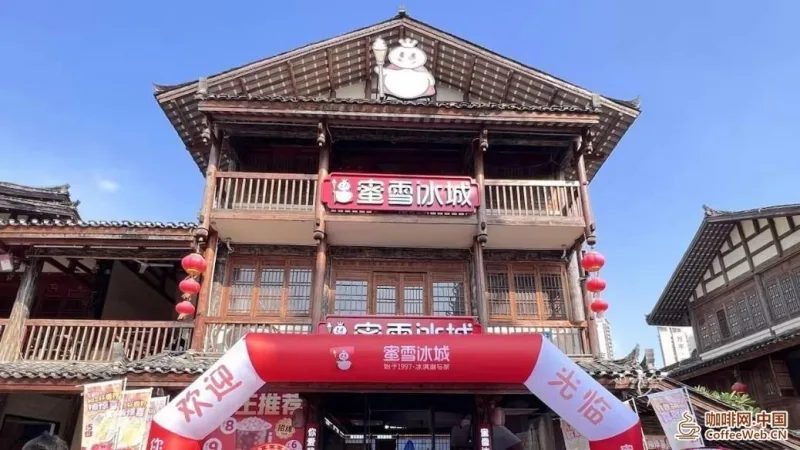
Xiao Lin (a pseudonym), a store employee, says that now whenever someone orders coffee, “the whole store can smell the aroma of freshly ground coffee.”
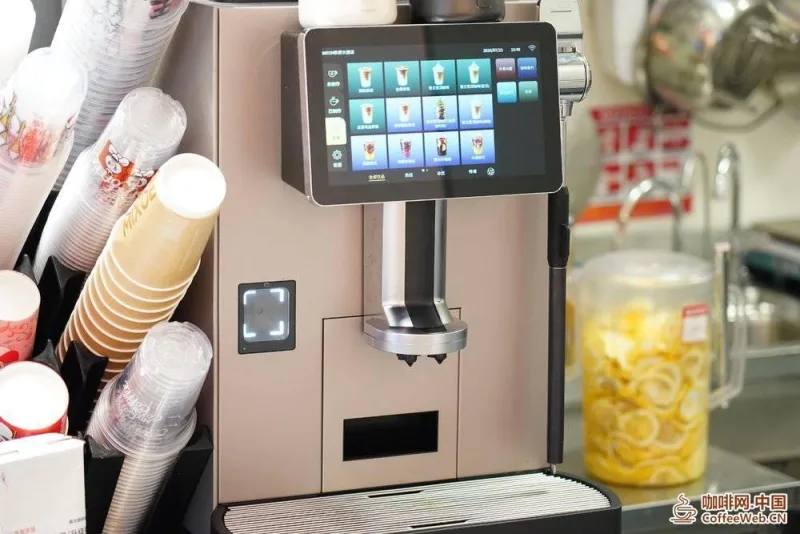
The change also shows up in sales. Before the machine swap, this store sold about 20–30 cups of coffee a day, reaching 40–50 on good days. One month after the new fresh-grind machine was installed, weekday sales rose to around 70 cups, and on holidays it sold 100–160 cups.
Notably, with the fresh-grind machine, a standard iced Americano costs 5 yuan and a concentrated version 6 yuan.
On social platforms, reviews of Mixue’s 5-yuan fresh-ground coffee have also multiplied. Xiao Lin observed that about three weeks after the machine swap, repeat purchases in the store began to rise noticeably.
Fresh-ground coffee is nothing new, and 5 yuan is no longer a novel low price. A single store can make a good cup of fresh-ground coffee without difficulty; the hard part is getting this new process into a network of more than 40,000 stores across China and reproducing it reliably within a price band of just a few yuan.
The more stores there are and the farther they are spread, the more a single machine changes things beyond the counter: coffee beans must turn over faster, fresh milk must reach stores in less time, and the rhythm of equipment, training, logistics and delivery all have to be recalculated.
Coffee is not an isolated upgrade. Over the past year or two, Mixue has adjusted the ingredients of drinks such as its hand-pounded orange, full-cup passion fruit and jasmine green tea. What consumers notice is more direct bean aroma, milk flavor and fruit taste, and a more pronounced tea fragrance; behind the scenes, it is an entire menu whose ingredients and delivery methods are changing together.
So this coffee machine offers a window into Mixue: a company known for its ability to control costs at scale has begun putting more “freshness” into its menu—how much further can quality advance within a few-yuan price band?
Fresh grinding came relatively late, but Mixue chose a harder price band
Rewind ten years, and instant coffee was the choice that better fit Mixue’s price band.
Back then, commercial coffee machines were expensive, and coffee beans, fresh milk and temperature-controlled delivery were all extra costs. The equipment depreciation, ingredients and labor behind a single cup of coffee were hard to squeeze into the few-yuan range Mixue knew so well.
Over the years, as consumers’ coffee-drinking habits, commercial equipment and standardized supply gradually matured, Mixue’s coffee product line went through three changes.
It started with instant, then became “factory pre-grinding plus in-store drip brewing”: the beans were roasted and ground at the factory, then delivered to stores. Today, whole beans enter the stores, and only after an order is placed does the machine begin grinding, pre-wetting and extracting, thereby preserving the bean’s flavor more completely.
What this machine truly changes is when grinding happens: beans go from being ground into powder in advance to being ground only right before the cup is poured.
It looks like merely moving one process from the factory to the counter, yet the difference is easily smelled and tasted. Ordinary consumers may not be able to articulate the origin region or extraction parameters, but whether the coffee is aromatic or just bitter in the mouth is a very direct impression.
Xiao Lin was also among the first to feel the change. She felt that Mixue’s coffee used to taste “rather weak, not very rich,” but after switching to fresh-grind equipment, every time the machine starts working, a distinct coffee aroma drifts through the store. Consumers’ feedback is simpler: “the coffee is more fragrant now.”
Beyond the coffee beans, the other half of the change hides in the lattes.
Whether a milk coffee tastes good depends heavily on how fresh and how rich the milk is. Over the past few years Mixue has been upgrading its milk: early on it used room-temperature milk; in 2026, some stores began rolling out 100% Yue Xian Huo fresh milk.
Fresh grinding and fresh milk are no longer scarce capabilities. What Mixue must face is this: how do these quality experiences, proven at higher price bands, become a stable supply once they arrive in the 5-yuan Americano and roughly 10-yuan milk-coffee range?
Serving a “fresher menu” across tens of thousands of stores
Competition in the tea-drink industry at the ingredient level has long been fierce. Against the pace of its peers, Mixue’s upgrade choices are not aggressive; placed back into its scale, the question becomes different.
In 2020, Mixue’s franchise stores surpassed 10,000. Today, Mixue’s official website shows the brand has more than 49,000 stores; by the end of 2025, the Mixue Group (including its Lucky Cup coffee brand and the Fresh Beer Fu Lu Jia brand) had a global store total of 59,823—in five or six years, a single brand grew from the “ten-thousand-store” level by more than 45,000 stores.
Beyond scale, there is geographic span. Mixue stores are even distributed along the 318 National Highway, in Medog, Tibet, atop Mount Tai, and in border areas such as Suifenhe, with nearly 60% of its stores located in third-tier cities and below.
Synchronizing higher freshness at such volume and span leaves few directly copyable models in the industry. For a product to enter stores nationwide, the ingredients, shelf life, transport inventory and in-store operations must all hold simultaneously.
Brands with fewer stores and higher average tickets can build flavor differentiation around niche-origin ingredients, small-batch purchasing and more complex in-store preparation. Mixue’s core items still sit at 2–9 yuan, and its stores cover a large number of lower-tier cities, so it can only take another path: keeping more of the complexity in R&D, supply and equipment, and compressing store actions to the simplest possible.
The “fresher menu” Mixue now serves, in the hands of consumers, brings some directly perceptible changes: coffee beans are freshly ground, milk coffees begin using fresh milk; the hand-pounded orange switches to a compound orange juice, the full-cup passion fruit upgrades from a single variety to a “golden + purple-skin passion fruit” combination for a richer taste; and the jasmine is scented seven times for a more pronounced aroma.
After the hand-pounded orange was adjusted, some longtime consumers actually felt it “tastes weaker.” The stronger, sweeter taste they had grown used to over time itself became the “original flavor” they recognized. Right after the ingredient change, many consumers were uncomfortable and some would directly ask whether the recipe had been changed. Only after some time did such feedback slowly dwindle.
This is also the special yardstick Mixue’s product innovation must consider: tens of thousands of stores are searching for a larger common denominator of taste, making the experience that most consumers can perceive and are willing to repurchase more stable.
Mixue’s approach is to push steps such as fruit grading and fresh-keeping treatment as far forward as possible to the origin and supply end, leaving stores only with standardized preparation steps. This keeps the fruit fresher while reducing fluctuations caused by employees relying on experience-based judgment.
On the consumer side, all the complex ingredient and technical information ultimately boils down to two simple judgments—does it taste good, and is it worth the price.
A fresher menu means the ten-thousand-store supply chain starts racing against time
Behind a “fresher menu” lies an iteration of a whole set of basic system capabilities. Switching coffee to whole-bean fresh grinding, and the tighter time demands on milk and fruit ingredients, both shrink the time margins between warehousing, delivery and stores.
Some inventories that could once be planned by the month now must be calculated by the day, or even by the hour.
Coffee beans remain a typical example. In the past, Mixue’s coffee beans had a 90-day shelf life. Factories could produce ahead, and warehouses could hold inventory, so even if some link was delayed by a few days there was still buffer.
Now, the beans’ turnaround cycle is being shortened to the extreme. Factory production must stay as close to orders as possible; after roasting, testing and packaging, the beans are shipped out as quickly as possible. Every extra day they sit at the factory is one less day they can be used once they reach the store.
Fresh milk is even tighter on time. In the trial run, fresh milk has only a 19-day shelf life, and from warehouse outbound to store it needs to be kept within about 36 hours. A logistics system that once centered on room-temperature goods must add temperature-controlled warehousing, full cold-chain control and stricter shelf-life management.
Delivery vehicles have been modified accordingly: a single truck carries room-temperature goods and temperature-sensitive ingredients in separate zones, using partitions and independent doors to reduce mutual impact. For more distant areas, forward warehouses and other methods are used to claw back time spent on the road.
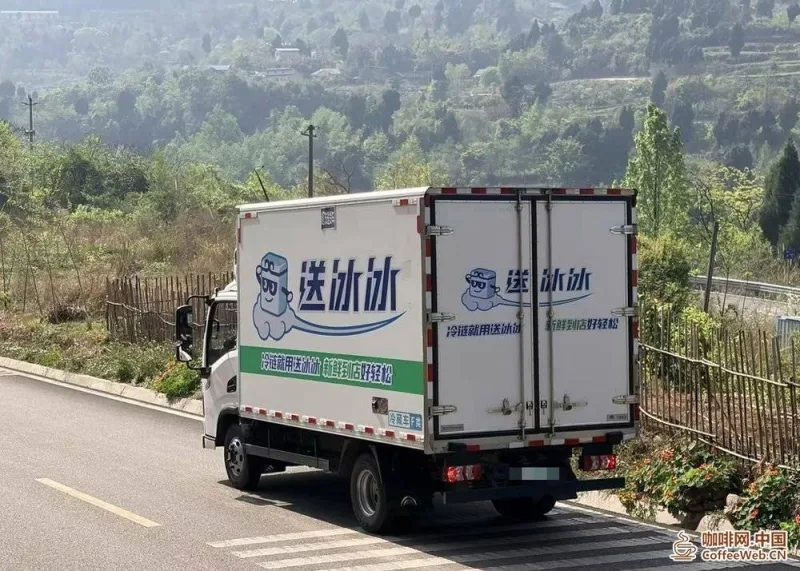
While the supply chain races against time, stores must deal with inventory.
Fresh milk dates are checked daily, coffee bean stock is prepared differently for weekdays and holidays, and temperature-controlled fruit ingredients must be immediately put in place and logged upon arrival. Xiao Lin says that once a pack of coffee beans is opened, it is usually consumed long before it reaches its discard date.
The more a menu emphasizes freshness, the more delivery rhythm must track each store’s actual sales.
To adapt to the turnaround of short-shelf-life materials, Mixue also lowered the overall free-delivery order threshold for stores by nearly 40%. Stores can replenish in smaller batches and higher frequency, reducing inventory and capital occupation.
The last few meters of delivery were also brought into the adjustment. In the past, after the driver moved goods to the tail of the truck, store staff had to carry them inside themselves. Now, under “unload-into-store” service, the driver delivers goods to a designated spot in the store. This service already covers about four-fifths of Mixue’s domestic stores, reducing the time peak-hour staff spend being tied up with carrying goods.
Stores bear the change at the other end. When the new coffee machines first arrived, some franchisees felt operation was more troublesome than before; the fully automatic equipment, however, bakes grinding degree, water temperature, brew ratio, pre-wet and extraction time into the program in advance, so ordinary employees, after training and passing an exam, can complete preparation simply by following the process.
This is quite similar to Mixue’s early practice of “uniformly pounding a cup of lemonade 15 times.”
Tens of thousands of franchise stores cannot ask every employee to have the same experience and touch. The larger the scale, the more in-store operations need to be standardized and lightweighted, while complex things must keep moving backward—into R&D, factories, warehouses, logistics and equipment.
The purchasing volume and supply system brought by scale also leave cost room for some ingredient upgrades. Take passion fruit as an example: after Mixue adjusted the original purple-skin passion fruit to a “golden passion fruit + purple-skin passion fruit” combination, the franchisee order price fell by 12%.
The other side of scale is that even the change of a single bean, a carton of milk or one coffee machine gets amplified into adjustments across production, warehousing, delivery and the franchise system.
This may also be what makes this round of Mixue’s product upgrade more worth discussing than “moving a coffee machine into the store” itself. Fresh-ground coffee has already been educated into maturity by earlier brands, and fresh milk and fresh fruit have long appeared at higher price bands. What Mixue must do today is to keep pushing these quality elements, already recognized by consumers, further into the mass price band, raising consumers’ experience threshold overall. This is clearly a patient relay marathon.
What consumers still see is a menu of a few to around ten yuan: a 5-yuan Americano, a cup of milk coffee, a cup of fruit drink. What is added behind the scenes is faster-turning coffee beans, 19-day fresh milk, zoned temperature-controlled delivery vehicles, a more frequent replenishment rhythm, and new equipment and training standards.
This system must absorb most of the complexity, so that stores and consumers have a chance to feel a simple, good product.
For the quality of a single drink to advance one step, the system behind it may have to take many steps—especially since this supply chain does not only cover urban stores. Mixue’s Mang’ai route pushes this logic to the extreme—Mang’ai sits at the junction of Qinghai, Xinjiang and Tibet, more than 300 kilometers west of Golmud. To deliver to its two local stores, the delivery truck drives all the way from the Lanzhou warehouse to Mang’ai, often returning empty, with a single trip costing thousands or even tens of thousands of yuan.
The farther toward the network’s edge, the more scattered the stores and the more transport eats into shelf life. For a menu to reach these places, warehousing and routes cannot be designed only by national averages. Looking at a single route, one or two stores may not be economical; within the national system, they test whether this supply network can deliver the same product standards to farther places.
For consumers, the most ideal result is precisely not to feel all this complexity. They still just spend a few yuan, order at a familiar store, and then notice: today this cup of coffee smells a little more fragrant than before, the latte’s milk flavor is a little more complete, and the fruit in the fruit tea is a little closer to real fruit.
Source: Huxiu, original link: https://www.huxiu.com/article/4884566.html?f=baijiabaiducom
Reprint Note & Disclaimer
- This article is reprinted from Chinese media for information and cultural exchange. The views expressed are those of the original author and do not necessarily reflect the position of coffeeyo.com.
- All trademarks, brand names and logos mentioned belong to their respective owners.
- For cooperation, reprint or correction requests, please contact coffeeyo.com.
Reprint Notice & Disclaimer
- This article has been edited and compiled by China Coffee Network. The information and images therein come from public sources and the copyright belongs to the original author. This reprint is intended solely for information sharing within the coffee industry and does not represent the views of this website; all data and opinions are subject to the original article. Our thanks to the original author for creating and sharing it.
- For matters concerning content licensing, attribution, copyright or otherwise, please contact us promptly and we will verify and cooperate in handling them as soon as possible. We also welcome coffee origins, brands and industry media to exchange ideas and contribute articles.
- Contact China Coffee Network: Tel 400-0000-641 (+86-18288016826) | Email 405854472@qq.com | Address: Jinghong, Xishuangbanna, Yunnan Province / Tieling, Liaoning Province
Related Reading
- Bean in Short Supply: A Taiwan Youth on Yunnan Coffee as a Shared Cross-Strait Stage
- Five Years, Eight Championships: Lincang Coffee Joins the World Stage
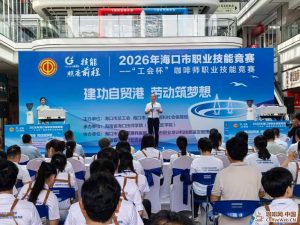
 Haikou ‘Union Cup’ Barista Skills Competition Kicks Off to Empower the Service Sector
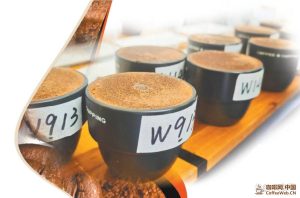
 Yunnan Specialty Coffee Beans Deliver an ‘Excellent’ Report: Path to Value Leap
- Cross-Strait Tides Rise: A Taiwan Youth Farms Coffee in Yunnan, a Cup Bridging Both Sides
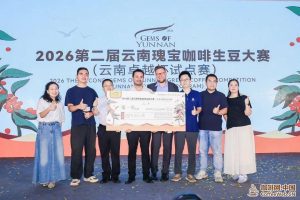
 2026 2nd Yunnan Treasure Coffee Green Bean Competition (Cup of Excellence Pilot) Concludes


 Liaoning ICP Security No. 21122402000217