
Brief (coffeeyo.com): At this year’s Bund Summit in Shanghai, the most striking change was not that AI had grown smarter, but that it had started running errands for people — ordering a daily coffee, hailing rides, even fetching medicine in a pharmacy. AI is shifting from generating content to getting things done.
On 9 September, the Bund Summit opened in Shanghai. More than 300 companies exhibited across 15,000 square metres of floor space. Walking the show, the most immediate impression was not that “AI has got smarter again”, but that it has started running errands for you.
At this time last year, booths competed to show off AI writing poems, drawing pictures and chatting with you. This year everything changed: AI is ordering takeaways, hailing rides, booking hospital appointments and paying bills for people — even bending down to pick up medicine in a pharmacy or moving goods in a warehouse.
One line sums up this year’s shift: AI has moved from “generating content” to “executing tasks”.
1. Say “buy me a coffee every day” — and it actually does
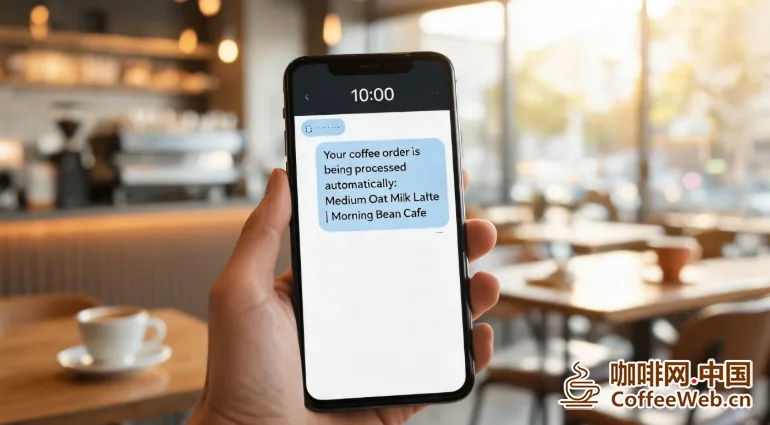
One of the longest queues at the show was at an experience zone called “Coffee Alarm Clock”.
The experience is simple: you tell your phone, “buy me a Starbucks iced Americano at 10 every morning” — and that is it. At 10 the next day, the AI automatically searches, picks a store, places the order and takes it all the way to checkout, waiting only for you to confirm payment.
You do not need to open an app every day, or choose the size, the branch or the pickup time. Say it once, it remembers, and from then on it runs automatically at the set hour.
Behind the feature is “Abao”, Alipay’s AI assistant. Its core capability is called “asynchronous tasks” — you are not chatting with it, you are delegating a job. A chat means you say something and it replies; a task means you set it once and it breaks the job down, executes it and finishes it on its own.
Do not underestimate that distinction. When AI switches from “conversation mode” to “task mode”, the role it plays in your life changes completely — from a tool that answers questions into an assistant that gets things done for you.
2. AI steps out of the phone screen
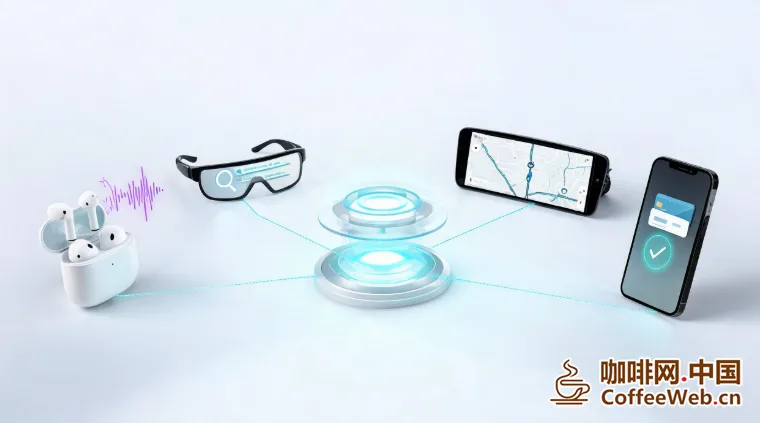
AI that lives only inside a phone can only ever be so useful. Another change worth noting at the Bund Summit is that AI is showing up on all kinds of devices.
Sit in a Li Auto and, without touching a button, simply say “pay my parking”. The in-car AI tells you how long you have been parked and how soon the rate rises, settles the fee for you, and can even time your exit to the 15-minute free window to save you a whole billing period.
Put on Qwen AI glasses and a glance at a product is enough to pay. Look up and ask “what deals are nearby” and the AI finds local dining vouchers for you.
Speak to iFlytek’s AI-agent earbuds and you can top up your phone bill or order a coffee. Even Amap’s quadruped robot dog “Tutu” has teamed up with AI payments to explore sending a robot out to buy things for you.
“Abao” has now completed AI adaptation for more than 10,000 services, covering restaurant ordering, ride-hailing, tourist attractions, government and public services, and has connected with terminals from Li Auto, Qwen glasses, Huawei, Xiaomi, OPPO, vivo and Honor.
What does that mean? It means you no longer need to know which app you are using. You just tell the AI around you what you want, and it finds the right service and completes the whole flow of booking, ordering and paying.
In the past you looked for services; in future services come to you — or, more precisely, your AI assistant goes looking for them on your behalf.
3. Robots are doing real work too
Everything above still belongs to the digital world. The bigger change at the Bund Summit was in the physical one: robots are no longer dancing, doing backflips or showing off tricks, but have walked into real workplaces to do actual jobs.
In a working Guoda Pharmacy store in Shanghai, a robot powered by Ant Lingbo’s “general-purpose brain” is already on duty. With aisles only 80 cm apart and shelves packed with medicines, it navigates the narrow gaps on its own, takes orders, recognises medicine boxes, sorts them and delivers the items to the counter for the pharmacist to check. No rebuilding of shelves, no rewiring — it simply walks into a human workplace and works alongside people.
The same “brain” can be fitted to robots from different makers — what Ant Lingbo calls “one brain, many machines”. It can already drive more than 20 robot brands and form factors, including Unitree, AgiBot and Galbot. On a logistics sorting line, a robot can get to work after collecting just 10 hours of data; on an industrial production line, robots can handle loading and unloading.
Why this matters: in the past, robots had to be trained from scratch for every single scenario, at high cost and over long cycles. Now one brain drives many bodies, and switching scenarios needs only a small amount of data adaptation. The cost of deploying robots is falling sharply.

4. A deeper shift: the beginnings of an agent economy
At the Bund Summit, Zhang Hongjiang, an investment partner at Source Code Capital and a foreign member of the US National Academy of Engineering, offered an observation worth thinking about. He summed up the evolution of AI agents in three stages: from conversation to assistant, from passive to proactive, and from individual to collective.
The first two have already happened — AI has gone from chatting to working, and from answering when asked to acting on its own. The third is just beginning: multiple agents are starting to collaborate with one another.
Han Xinyi, CEO of Ant Group, gave a more concrete timetable: agent-driven commerce will take off within the next six to twelve months. He also raised a question many have not yet noticed — when AI completes a transaction for you, how do you know that transaction is safe?
He proposed several layers of safeguards: first, authorisation, spelling out what the user allows AI to do; second, identity verification — not just “Know Your Customer” (KYC) and “Know Your Business” (KYB), but “Know Your Agent” (KYA); third, capability assessment, so your AI can judge whether a merchant’s AI is trustworthy; and finally, a fund-security system covering anti-fraud and risk control.
Put simply, where you once dealt with a merchant, your AI will deal with the merchant’s AI. The rules that govern transactions between people do not apply to transactions between AIs — that rulebook has not been written yet, but it has to be.
5. What does this mean for ordinary people?
After all that, back to the most practical question: what do these changes mean for ordinary people?
In the short term, the way you deal with AI will change. You used to ask AI a question and it gave you a piece of text. In future you will assign AI a task and it will carry it out for you. That shift is already happening — “Coffee Alarm Clock” is not a concept demo, it is a feature people queued up to try at the Bund Summit.
In the medium term, your relationship with apps will change. Today you switch between a dozen apps every day; in future you may only need to tell one AI assistant “book me a doctor’s appointment”, “hail me a ride” or “pay my electricity bill”, and it will find the right service and get it done. The app interface matters less and less; what matters is what you said and what the AI did.
In the long term, one question is worth watching. When AI carries out tasks for you, who judges whether the job was done correctly and well? If your AI picks a restaurant, is it because it is genuinely the best, or because the assistant has a deal with that restaurant? The KYA (“Know Your Agent”) certification framework Han Xinyi mentioned is, at bottom, an attempt to answer exactly that — but for now it is still at a very early stage.
Technology moves fast; rules move slowly. The capabilities shown at the Bund Summit already offer a glimpse of AI doing real work, but the framework of rules around trust, security and fairness will take time to catch up.
Even so, the direction is clear: AI is moving from “answering questions” to “getting things done for you”. This year’s displays at the Bund Summit may well be the signal of that turning point.
You do not necessarily have to wait for some “AGI” day. When AI can remember that you want an iced Americano at 10 every morning, go and buy it and then wait for you to confirm — that is already different from before.
Reprint Note & Disclaimer
- This article is reprinted from Chinese media for information and cultural exchange. The views expressed are those of the original author and do not necessarily reflect the position of coffeeyo.com.
- All trademarks, brand names and logos mentioned belong to their respective owners.
- For cooperation, reprint or correction requests, please contact coffeeyo.com.
Reprint Notice & Disclaimer
- This article has been edited and compiled by China Coffee Network. The information and images therein come from public sources and the copyright belongs to the original author. This reprint is intended solely for information sharing within the coffee industry and does not represent the views of this website; all data and opinions are subject to the original article. Our thanks to the original author for creating and sharing it.
- For matters concerning content licensing, attribution, copyright or otherwise, please contact us promptly and we will verify and cooperate in handling them as soon as possible. We also welcome coffee origins, brands and industry media to exchange ideas and contribute articles.
- Contact China Coffee Network: Tel 400-0000-641 (+86-18288016826) | Email 405854472@qq.com | Address: Jinghong, Xishuangbanna, Yunnan Province / Tieling, Liaoning Province
Related Reading
 ‘All-Ice’ Coffee Goes Viral! Will the Next Hit Be Your Personal Favorite?
- Hong Kong’s Dyee Coffee Lands in Qianhai, Building a Specialty Pour-Over Outpost
 Ken Yue Coffee Opens Egg-Tart Pop-Up in Hangzhou: Sweet Craft, Reinvented Classics
 World Cup Enters the Breakfast Slot: Can Coffee-Tea Brands Turn Traffic into Orders?
- ICE Agricultural Futures Mostly Rise at Close; Coffee Futures Up 3.28%
- ‘Sleep Cafés’ Become a New Favorite Among Seoul Office Workers




 Liaoning ICP Security No. 21122402000217