
Brief (coffeeyo.com): The 2026 China Tropical Crops (Coffee) Industry Conference opened September 17 at Cuihu Hotel in Kunming under the theme “Coffee Positioning China, Linking the Globe.” Beyond the industry data—Yunnan output at 98% of the national total—the morning landed three concrete things: a standing standardization committee, eight major scientific achievements, and the “Kunming Initiative” on Chinese-style coffee culture.
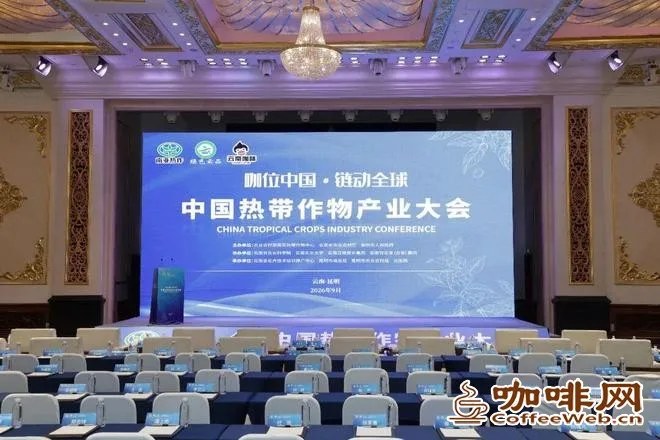
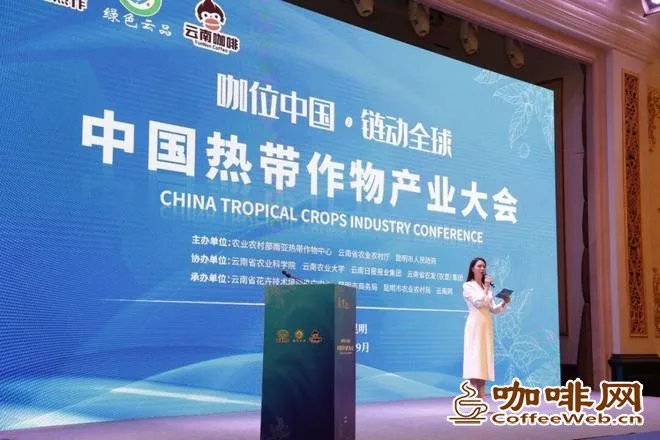
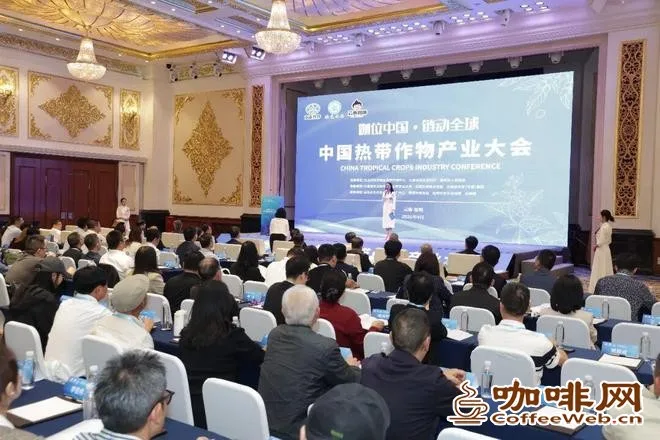
On the morning of September 17, the 2026 China Tropical Crops (Coffee) Industry Conference opened at Cuihu Hotel in Kunming. Under the theme “Coffee Positioning China, Linking the Globe,” it was jointly hosted by the South Subtropical Crops Center of the Ministry of Agriculture and Rural Affairs, the Yunnan Provincial Department of Agriculture and Rural Affairs, and the Kunming Municipal People’s Government.
01
Opening: from industry data to four-region promotions
At the opening, the Ministry of Agriculture and Rural Affairs and the Yunnan Provincial People’s Government delivered keynote speeches in turn and gave a set of industry data: in 2025, Yunnan’s coffee planting area reached 1,518,800 mu with output of 170,700 tons, both over 98% of the national total; during the 14th Five-Year Plan, the specialty rate rose from 8% to 41.7% and the deep-processing rate from 20% to 85%; the whole-chain output value reached 99.5 billion yuan. The speeches also proposed four next-step directions: strengthening germplasm resources, extending the product value chain, raising brand recognition, and improving the mechanism linking farmers to agriculture.
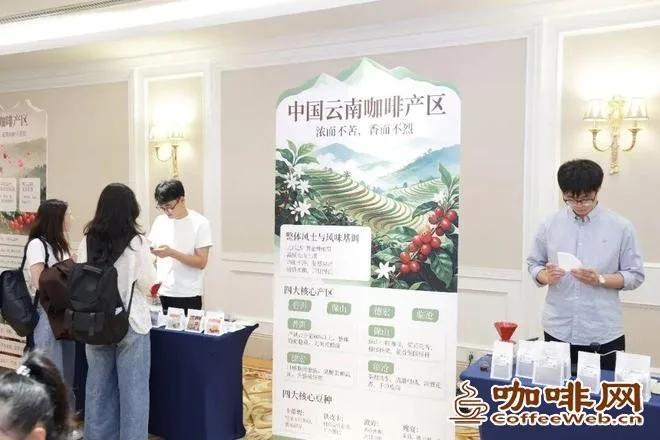
In the subsequent industry-theme promotion session, the Yunnan Provincial Department of Agriculture and Rural Affairs introduced Yunnan coffee’s investment value: the province has formed four deep-processing clusters—Kunming, Baoshan, Pu’er and Dehong—with nearly 100,000 tons of deep-processing capacity, 30% of the national total; Yunnan-bean coverage at specialty cafés in Shanghai, Beijing and Guangdong reached 90%, 80% and 70% respectively; against domestic consumption demand of 370,000 tons, there remains a gap of nearly 200,000 tons. In 2025, Yunnan exported 19,000 tons of coffee worth 860 million yuan, ranking first in the country, with products sold to 43 countries and regions.
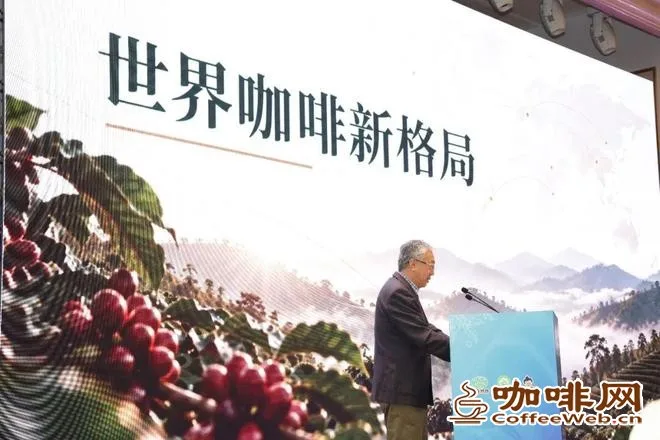
This morning’s promotion was not only about Yunnan. Per the agenda, Kunming, the Guangxi Zhuang Autonomous Region and Hainan Province also each gave coffee-industry theme promotions; on the same stage, the four regions introduced their own coffee industries.
02
Three releases: standards, achievements and “Chinese-style coffee”
The last segment of the opening was the release ceremony, with three items announced in turn.
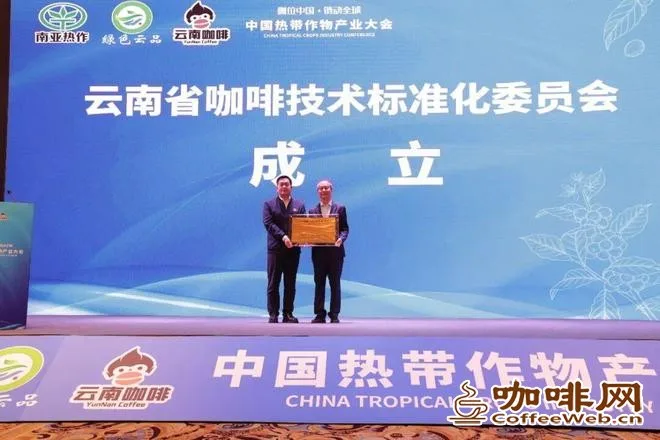
First, the Yunnan Provincial Market Supervision Bureau announced the establishment and unveiling of the Yunnan Provincial Coffee Technical Standardization Committee. Yunnan coffee has long suffered “good and bad at one price,” and the absence of standards is one reason. After the committee’s establishment, a standing body will continuously push forward how to evaluate quality—from planting and processing to the cup—and who evaluates it. For producing regions and downstream purchasers, this means “good” has a chance to be written down more clearly.
Second, the Yunnan Provincial Department of Agriculture and Rural Affairs released eight major scientific and technological achievements in the coffee field. From planting to processing, these achievements spread across different links of the chain—the coffee-garden “tree–shrub–grass” three-dimensional composite planting technique, the coffee fertilizer-and-pesticide reduction and efficiency technique, the coffee fresh-fruit waterless processing technique, the coffee directed-fermentation key technique, and others. The focus of the eight techniques is fairly consistent: the planting link solves the stability and greenness of raw material, while the processing link points to controllable quality and flavor.
Third, the Yunnan Daily Press Group released the “Chinese-style Coffee Culture Communication Influence Report” and the “Kunming Initiative on Chinese-style Coffee Culture Communication.” The report was jointly released by the Yunnan Daily Press Group, the School of Communication of Yunnan Normal University, Yunnan Net, and the Yunnan Coffee Culture Center.
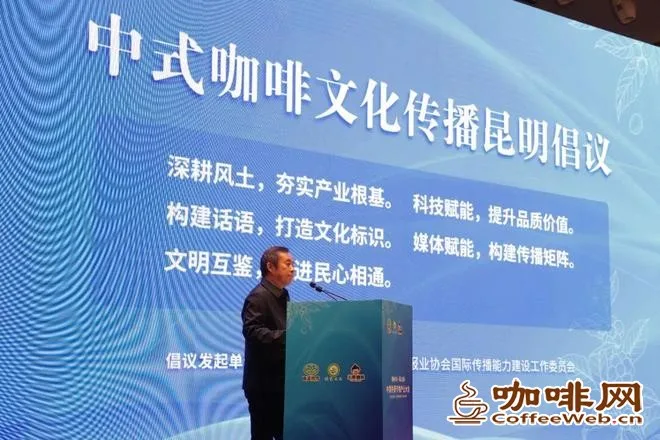
The report evaluates the communication status of Chinese-style coffee along four dimensions—cultural power, communication power, industrial power and international power—and judges that it has completed the “0 to 1” start but is still in an early stage of “high heat, shallow cognition,” with nearly half of respondents “having heard but not understanding.”
The Kunming Initiative released alongside it proposes along five directions—terroir, technology, discourse, media and civilizational mutual learning—with the final line: drive Chinese coffee from “global raw-material warehouse” to “cultural exporter.”
03
Four parallel sub-forums open simultaneously
From 14:30 in the afternoon, four parallel sub-forums ran simultaneously at Cuihu Hotel.
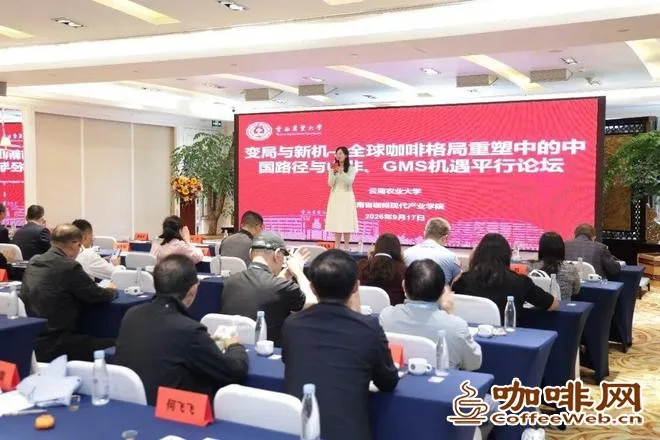
The first, organized by Yunnan Agricultural University, was themed “Changes and New Opportunities—China’s Path and China–Africa and GMS (Greater Mekong Subregion) Opportunities amid the Reshaping of the Global Coffee Landscape.” The forum had two parts: the first focused on market reshaping under global change and new trends in Chinese coffee consumption; the second turned to China–Africa cooperation and the foundation and prospects of Kunming building a GMS coffee trade distribution center.
The second, organized by the Yunnan Academy of Agricultural Sciences, was themed “Standards as Foundation, Technology as Empowerment—The Quality Foundation and Innovation Drive of Chinese Coffee.” Topics centered on the whole-chain standard system, quality-evaluation standardization and mutual certification recognition, also touching AI breeding, germplasm-resource identification and evaluation, and the construction opportunity of the Yunnan branch of the Shanghai FTZ Coffee Trading Center.

The third, organized by the Yunnan Provincial Agricultural Development (State Farm) Group, was themed “From Origin to Brand—The Specialty Leap of Yunnan Coffee.” Topics began with the CoE competition mechanism and Yunnan coffee’s breakthrough on the international track, extended to the path from raw material to specialty, and how e-commerce and new-consumption channels connect origin and market, with the second half a roundtable discussion.

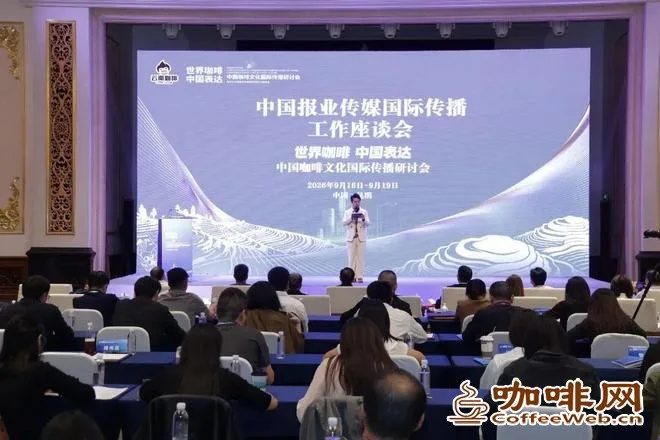
The fourth, organized by the Yunnan Daily Press Group, was themed “World Coffee, Chinese Expression—The International Communication of Chinese Coffee Culture.” Topics centered on the overseas narrative of Chinese coffee culture under media convergence, the construction and going-global of Chinese-style coffee culture, and building an eastern-culture external communication window relying on Yunnan producing regions.
The morning’s speeches and releases concentrated on two things: making Yunnan coffee’s industry data and investment value clear, and landing standards, achievements and discourse onto specific institutions and documents.
The eight characters “Coffee Positioning China, Linking the Globe” took concrete shape in the morning—a standing standardization committee, a batch of scientific achievements in the coffee field, a report on communication status, and an initiative facing the world. The four parallel sub-forums in the afternoon would discuss these matters along four directions: market, technology, brand and culture.
Video source: Yunnan Provincial Department of Agriculture and Rural Affairs

Copyright notice: Do not reprint without permission; sharing to Moments is welcome.
■ Article source: Coffee Salon
■ Photo source: Coffee Salon
■ Infringement contact: weixin@coffeesalon.com
■ Cooperation contact: WeChat cofesalon
Reprint Note & Disclaimer
- This article is reprinted from Chinese media for information and cultural exchange. The views expressed are those of the original author and do not necessarily reflect the position of coffeeyo.com.
- All trademarks, brand names and logos mentioned belong to their respective owners.
- For cooperation, reprint or correction requests, please contact coffeeyo.com.
Reprint Notice & Disclaimer
- This article has been edited and compiled by China Coffee Network. The information and images therein come from public sources and the copyright belongs to the original author. This reprint is intended solely for information sharing within the coffee industry and does not represent the views of this website; all data and opinions are subject to the original article. Our thanks to the original author for creating and sharing it.
- For matters concerning content licensing, attribution, copyright or otherwise, please contact us promptly and we will verify and cooperate in handling them as soon as possible. We also welcome coffee origins, brands and industry media to exchange ideas and contribute articles.
- Contact China Coffee Network: Tel 400-0000-641 (+86-18288016826) | Email 405854472@qq.com | Address: Jinghong, Xishuangbanna, Yunnan Province / Tieling, Liaoning Province
Related Reading
- Bean in Short Supply: A Taiwan Youth on Yunnan Coffee as a Shared Cross-Strait Stage
- Five Years, Eight Championships: Lincang Coffee Joins the World Stage
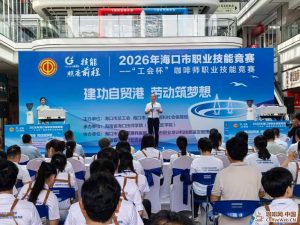
 Haikou ‘Union Cup’ Barista Skills Competition Kicks Off to Empower the Service Sector
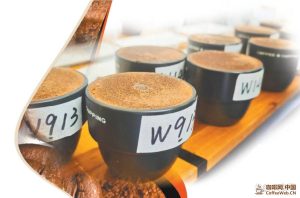
 Yunnan Specialty Coffee Beans Deliver an ‘Excellent’ Report: Path to Value Leap
- Cross-Strait Tides Rise: A Taiwan Youth Farms Coffee in Yunnan, a Cup Bridging Both Sides
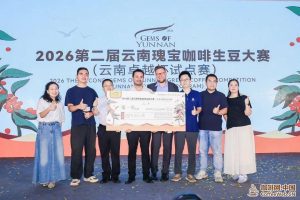
 2026 2nd Yunnan Treasure Coffee Green Bean Competition (Cup of Excellence Pilot) Concludes


 Liaoning ICP Security No. 21122402000217