
At a Glance (China Coffee Network): In Taishan—a centuries-old hometown of overseas Chinese—coffee has grown from a daily habit into a full industry chain spanning planting, “Taishan-made” equipment, deep processing and a booming “Coffee+” consumer market of 300-plus shops.
Opening: When the lingering warmth of a century of overseas-Chinese history meets the fresh aroma of coffee, a flavor story across mountains and seas unfolds. This column will take you to trace Taishan coffee’s past, visit distinctive village cafés, and talk with practitioners along the chain… In every long aftertaste, read Taishan’s unique, gentle vein steeped in sea breeze and nostalgia.
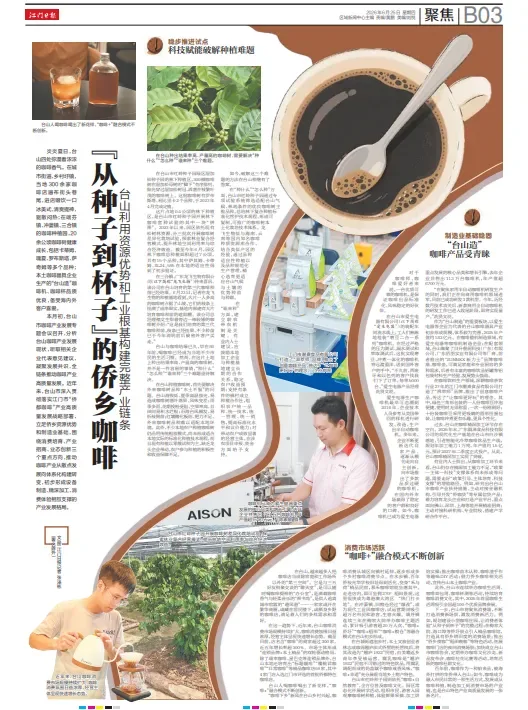

In the scorching summer, Taishan is filled with a strong coffee aroma. In city streets and rural market towns, more than 300 local coffee shops are scattered everywhere; stepping in for a sip of iced Americano refreshes and dispels the stuffiness; in the coffee plantations of Duanfen, Chonglou and Sanhe towns, over 20 hectares of coffee trees grow healthily, including Catimor, Geisha, Robusta, Sachimor and other varieties; locally made coffee-equipment enterprises produce “Taishan-made” coffee machines and cups of excellent quality, beloved by customers at home and abroad.
Earlier this month, Taishan City held a special meeting on coffee-industry development, analyzing the current state of Taishan’s coffee industry, listening to suggestions from enterprise representatives, building consensus for development, and promoting high-quality coffee-industry development across the whole chain. In recent years, Taishan has deeply implemented Jiangmen City’s “Qiaodu (Overseas-Chinese Capital) Coffee” high-quality-development strategy, based on the resources and manufacturing foundation of its hometown of overseas Chinese, focusing on three key directions—consumption cultivation, industry investment and business-format innovation—to shift the coffee industry from scattered development to systematic construction, initially forming an industrial pattern where equipment manufacturing, deep processing and consumption experience support each other.


Steadily Advancing Pilot Projects · Technology Empowers, Solving Planting Difficulties
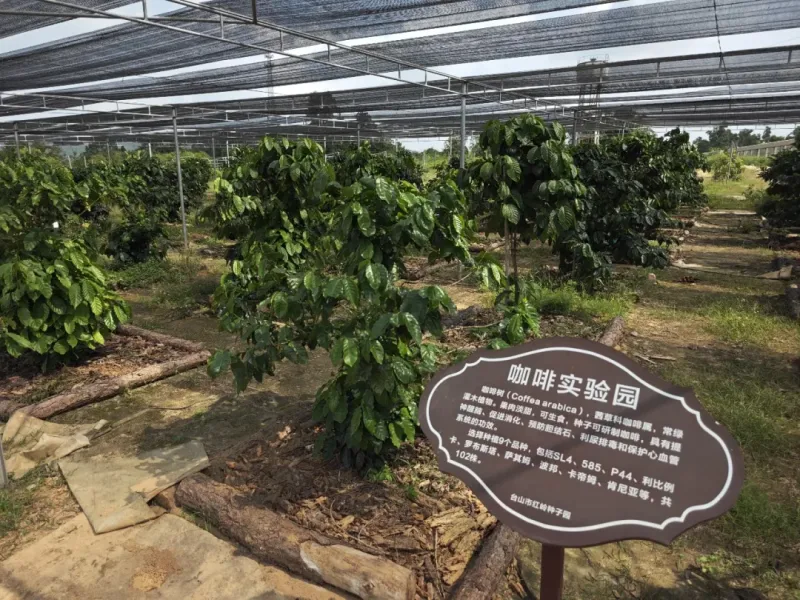
In the understory planting area of the wet-log pine seed orchard in Taishan’s Hongling Seed Garden, 300 coffee trees are neatly arranged “at the feet” of the wet-log pine mother trees; sunlight streams through the pine canopy onto the lush coffee trees. These coffee trees are of two varieties, Robusta and Liberica, planted in April 2023.
This 0.4-hectare understory planting area is one piece of the “puzzle” of Taishan Hongling Seed Garden’s understory coffee intercropping trial. Since 2023, relying on existing pine forest resources, the garden has conducted differentiated coffee cultivation trials in three batches, exploring a forestry composite management model to raise forest-land space utilization and comprehensive economic benefits.
As of this June, the garden’s total understory coffee planting area exceeds 7 hectares, with 15 varieties, among which Sachimor, Catimor, SL24 and 585 have had their local adaptability initially verified.
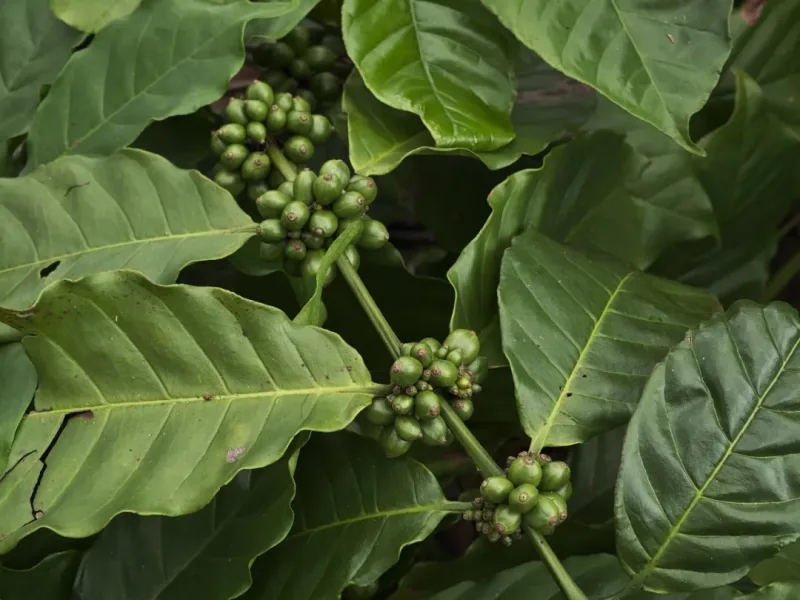
In Sanhe Town, Guangdong Longfei Biotechnology Co., Ltd. (hereinafter “Longfei Bio”) brought good news: the third-generation coffee seedlings it cultivated in Taishan have borne fruit.
On June 23, a reporter saw at Longfei Bio’s planting base that large coffee trees over a person’s height occupy the hillside, their branches hung with strings of fruit; the base has built large shade houses for cultivating coffee seedlings. The company’s general manager Xuan Wensheng pointed to a shorter coffee tree nearby and introduced: “This is our third-generation coffee seedling, already bearing fruit; many seedlings were bought by out-of-province customers around this year’s Qingming.”
Taishan has a long bond with coffee; as early as 80 years ago, drinking coffee had become a daily habit for many local residents. However, growing coffee trees with high fruit-set and yield on this land is not easy; the three difficulties of “what to plant,” “how to plant” and “who plants” urgently need solving.
Planting coffee in Taishan, the first problem is the “acclimatization” of introduced varieties. Taishan has low altitude and hot, strong summer light, easily causing leaf drop and fruit drop and worse flavor; the rainy season brings much rain, hindering pollination and raising empty-fruit rate, and fields easily waterlog and rot roots; coastal typhoons are frequent, easily breaking branches and toppling seedlings; red soil acidifies and compacts with insufficient fertility, making introduced varieties hard to adapt to the local environment. In addition, many local farmers still use traditional extensive methods, no standardized planting technical protocol suited to local reality has been formed, and existing planting is mainly scattered trial plots lacking leading-enterprise drive, so farmers’ enthusiasm and income security for planting are insufficient.
Today, answers to these three difficulties have successively emerged in Taishan.
On “what to plant” and “how to plant,” Taishan Hongling Seed Garden systematically screens excellent main varieties suited to Taishan’s climate and forest conditions through special trials, summarizes standardized management technical protocols for understory composite planting, and forms a replicable, promotable localized cultivation technical system. Longfei Bio plans to cooperate with well-known domestic coffee germplasm resource banks in Hainan and Yunnan, combining experience from similar regions, to carefully breed superior seedlings and populations better adapted to Taishan’s climate and soil through variety-adaptability planting and standardized production management.
On “who plants,” establishing a mechanism linking farmers and agriculture is key. An industry insider suggested encouraging local processing enterprises and planting bases to build long-term cooperation, stabilizing farmers’ income expectations; supporting qualified towns and villages to form planting cooperatives, organizing farmers to unify varieties, technology, management and sales, raising standardization and bargaining power; and giving support in agriculture-project applications and funding to operating entities that significantly drive farmers.

Solid Manufacturing Foundation · “Taishan-Made” Coffee Products Favored
For baristas and coffee lovers, a quality, reliable coffee machine is a good partner ensuring standardized output and stable flavor.
On the assembly line of Aisheng Electric Co., Ltd. (hereinafter “Aisheng Electric”) in Taishan, workers skillfully assemble “grinder-brewer combo series” coffee machines. After strict pressure, leakage and extraction tests, these machines integrating grinding and brewing will travel across the ocean to foreign customers. “Not long ago, customers from Spain and Israel placed orders with us, 5,000 units each,” said Xian Xianwen, product manager of Aisheng Electric.
Aisheng Electric’s coffee-machine production dates back to 2016; technicians referenced samples brought from the U.S. to research and modify, producing semi-automatic machines. Over the years the company has continuously iterated its products, gradually moving from imitation to independent innovation, launching multiple well-built machines that have won stable customer bases and good reputation at home and abroad.
Today, coffee machines have become Aisheng Electric’s key developing core category and growth engine; last year the company sold 113,000 units, with annual output value exceeding 67 million yuan.
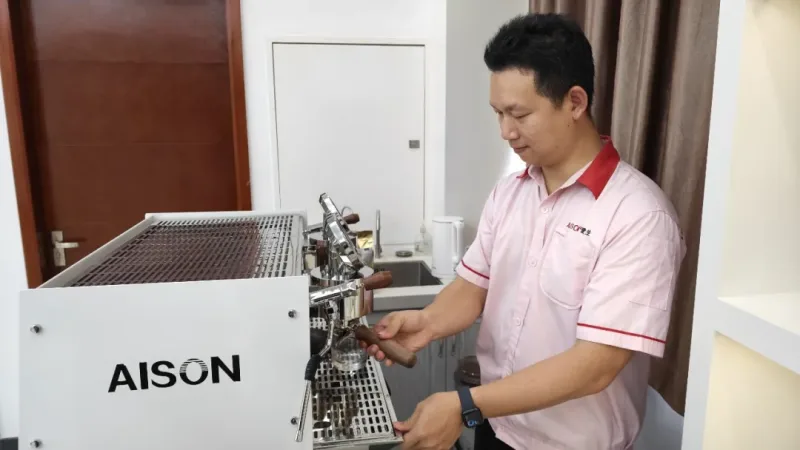
“While focusing on home semi-automatic coffee-machine R&D and production, we are also advancing into the commercial coffee-machine field, having successfully developed three models. This year, after months of technical breakthroughs, the new commercial fully-automatic coffee machine’s R&D has entered the final stage and will soon achieve mass production,” Xian Xianwen said.
As an important part of “Made in Taishan,” the Taishan coffee-equipment industry represented by Aisheng Electric has initially formed scale with a fairly complete system; its 2025 output value was about 183 million yuan.
In the whole-machine manufacturing field, there are coffee-machine makers like Aisheng Electric; in the supporting field, Taishan gathers Rixing Kitchen Tech (Guangdong) Co., Ltd., Guangdong Baipeng Industrial Co., Ltd. and others—the former’s “SUNNEX” brand coffee pots and kettles meet various household and professional-kitchen needs, the latter has rich experience in aluminum packaging such as coffee-drink aluminum cans, with strong momentum.
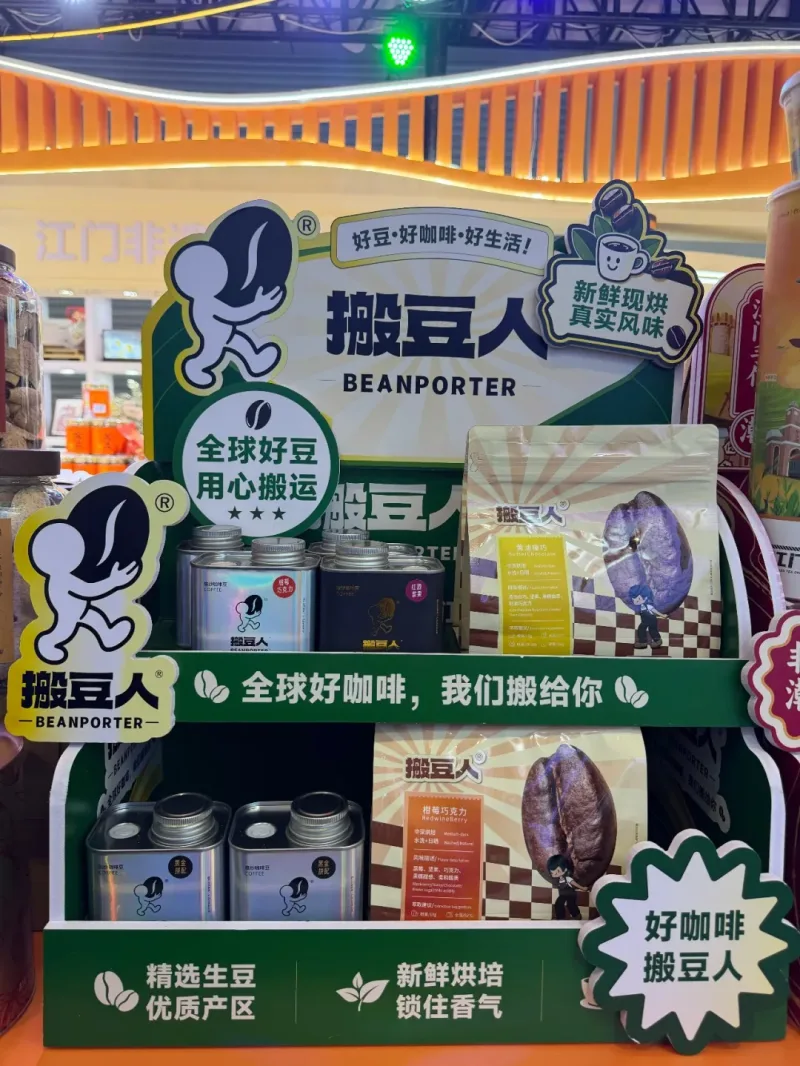
In the coffee-beverage production field, Jiangmen Chaoxi Food Co., Ltd., with 27 years deep in the coffee-tea-drink industry, created the “Ban Dou Ren” (Bean Mover) brand, with the mission “We move the world’s fine coffee to you,” selecting quality global coffee regions, integrating premium coffee resources, and providing high-quality specialty-coffee solutions to cafés, dining brands and consumers through professional roasting and stable quality control.
At the same time, Ban Dou Ren is committed to building a platform connecting coffee people and the coffee industry, covering coffee roasting, product R&D, coffee education, green-bean trade, entrepreneurship empowerment and industry exchange, letting more people gather because of coffee and jointly explore more possibilities of specialty coffee.
In the past, Taishan had a gap in the deep-processing of coffee. At the end of 2025, Guangdong Weilai Food Technology Co., Ltd.’s modern production base landed in Baisha Town, Taishan, introducing an intelligent cold-brew coffee-beverage production line, planned annual processing capacity of 10,000 tonnes and annual output value of about 150 million yuan, expected to officially start production in the second quarter of 2027.
From then on, Taishan’s coffee deep-processing achieved a breakthrough.
An industry insider pointed out that, from the processing perspective, Taishan still has problems such as insufficient deep-processing capacity and an unsupported “policy-subject-technology” system, and needs to follow a value-adding path of “policy guidance, subject cultivation, technology support.” For example, research and issue Taishan coffee-industry support measures, proactively connect with financial institutions to guide the development of exclusive credit products like “Qiaoka Loan”; focus on cultivating leading enterprises and building industry platforms, with precise investment promotion targeting Foshan, Shenzhen and Shanghai; and proactively connect with research institutes and professional colleges to build industry-academia-research cooperation platforms.

Active Consumer Market · “Coffee+” Fusion Models Keep Innovating
In Taishan, more and more people treat coffee shops as a “third space” besides home and workplace. It is a “chat room” to gather with friends, an “office” to drink coffee for a pick-me-up anytime, a “reading corner” full of coffee aroma and soft music, a “haven” to escape the city’s noise… One by one, cafés—whether in busy business districts, hidden under residential buildings, or nestled in the countryside—meet people’s diverse needs and preferences.
Under this trend, in recent years Taishan’s coffee-consumption market has kept expanding, the coffee-consumption atmosphere has grown richer, and business entities show rapid growth.
As of now, merchants with “coffee” in their name exceed 300, with a growth rate over 300% in the past five years.
The market has formed a “chain brands + local specialty” dual-driven pattern; besides chain brands like Luckin and Starbucks, Taishan has also cultivated 59 local specialty cafés such as “Biaoti Liangfei,” “Cherry King Coffee” and “Daily Coffee,” of which 4 stores were selected into Jiangmen’s first batch of Qiaodu-featured coffee shops.
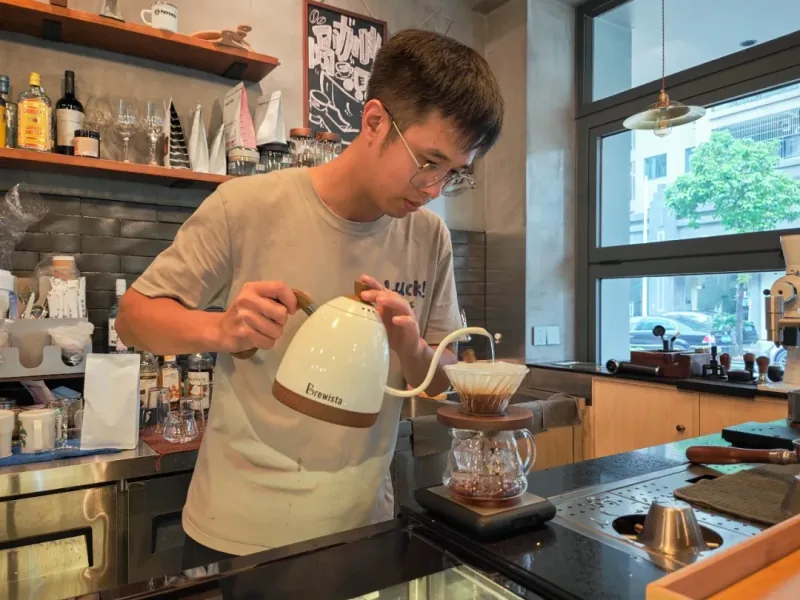
Taishan people drink coffee in new ways; “Coffee+” fusion models keep innovating.
A “coffee to the countryside” trend is rising in Taishan’s villages; coffee consumption extends from urban areas to towns and villages, gradually forming multiple rural coffee-consumption nodes. In Shuibu Town, the century-old overseas-Chinese school Guanghua School’s old site was revitalized into the “He Yu He” boutique homestay, where the Muhe café sits; stepping inside, you get a 270° paddy-field view, quickly becoming a “hot check-in spot” in the Greater Bay Area. In Chonglou Town, an old granary was “drastically remodeled” into a modern industrial-style café, attracting over 10,000 citizens and tourists during trial operation, with booming business. Duanfen Town has held coffee-themed events at Meijia Courtyard for three consecutive years, cumulatively attracting over 200,000 visitors. “Coffee + overseas-Chinese market town,” “Coffee + paddy fields” and “Coffee + granary” fusion models have initially formed in Taishan.
In Taipu Village, Taicheng Street, local cultural-tourism entrepreneur Lin Zhicheng obtained the trusteeship of the Qiaolu French overseas-Chinese villa and transformed it into the “Qiaolu 1922” homestay, operated by U.S.-returned youth Li Minxi. The “fermented-tofu coffee” is a signature drink not to be missed at “Qiaolu 1922”; a cheese foam conditioned with fermented tofu gives the coffee a salty aroma, fully showing local rural-product characteristics through “Coffee + intangible heritage.”
Taishan Hongling Seed Garden relies on “Coffee + natural education” to popularize coffee culture in all aspects. The garden regularly runs study tours, organizing citizens and tourists to enter and observe coffee-tree planting, experience fresh-fruit picking, processing and roasting; launches fun DIY activities like coffee-seedling adoption and coffee-grounds handicrafts; and leverages overseas-Chinese-hometown coffee events to promote Taishan’s local coffee industry.
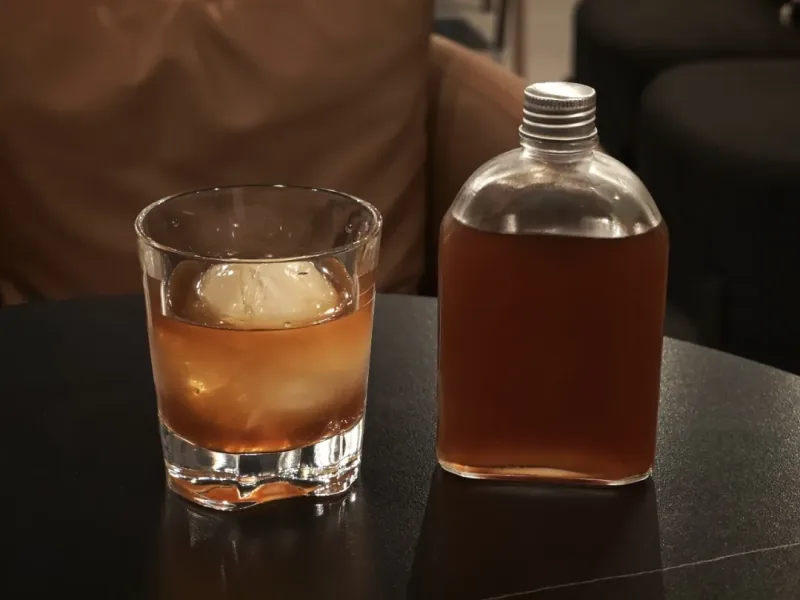
In addition, Taishan City continuously holds coffee-life weeks, coffee-bread weeks, coffee cupping and other events to keep cultivating coffee-consumption culture; among them, the 2025 first Coffee Life Week attracted over 100 quality brands from across the country.
Next, Taishan City will focus on the consumption end, continuously creating new consumption scenes and stimulating new vitality. For example, plan and build small coffee estates so consumers can experience the complete “from seed to cup” process; relying on overseas-Chinese-market-town scenic spots like Meijia Courtyard and Haikou Port to organically embed boutique cafés, creating cultural-tourism consumption scenes with overseas-Chinese-hometown distinctiveness; launch special events like “Qiaoxiang Night Coffee” and “Paddy Evening Coffee” to expand cafés’ nighttime consumption scenes; accelerate the founding of the Taishan Coffee Association, regularly holding coffee-culture salons, new-product launches and latte-art competitions to cultivate an active coffee-community culture.
A century ago, coffee, as an imported product, was brought into Taishan by overseas Chinese working abroad; today, coffee has become a lifestyle integrated into citizens’ daily lives, developing into an industry chain from coffee planting, manufacturing and processing to the consumer market, and is also a new name card for Taishan’s high-quality specialty-industry development.
Reprint Notice & Disclaimer: This article is compiled and edited by China Coffee Network (coffeeyo.com) and reprinted from Jiangmen Daily. The copyright of the original article belongs to Jiangmen Daily. This reprint is for the sharing of coffee industry information only. If there is any infringement, please contact us for removal.
Related Reading
- Bean in Short Supply: A Taiwan Youth on Yunnan Coffee as a Shared Cross-Strait Stage
- Five Years, Eight Championships: Lincang Coffee Joins the World Stage
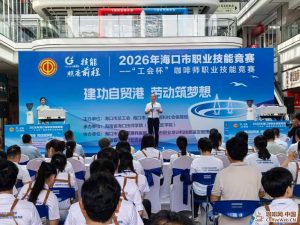
 Haikou ‘Union Cup’ Barista Skills Competition Kicks Off to Empower the Service Sector
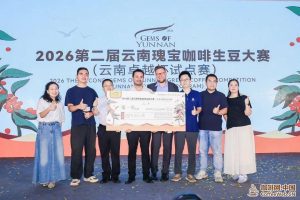
 Yunnan Specialty Coffee Beans Deliver an ‘Excellent’ Report: Path to Value Leap
- Cross-Strait Tides Rise: A Taiwan Youth Farms Coffee in Yunnan, a Cup Bridging Both Sides
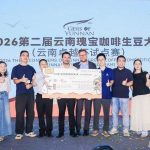 2026 2nd Yunnan Treasure Coffee Green Bean Competition (Cup of Excellence Pilot) Concludes


 Liaoning ICP Security No. 21122402000217