
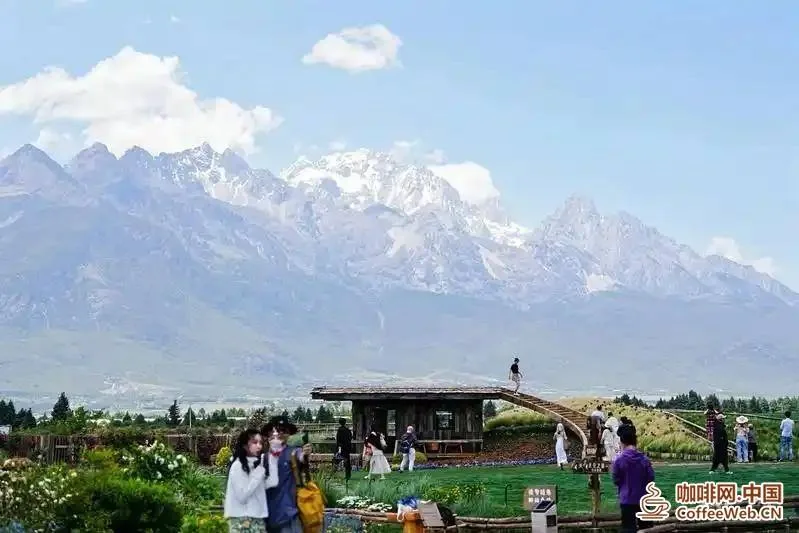
At a Glance (China Coffee Network): At 10 a.m., sunlight spills over the eaves of Lijiang’s Baisha Ancient Town, gilding the towering Jade Dragon Snow Mountain and streaming into an old courtyard café beside the bluestone lane. A barista slowly pours water as steam rises, filling the air with the aroma of freshly ground beans.
Editor’s Note: South of the colorful clouds, the land is magnificent; myriad scenes change with each passing day. From snow-capped plateaus to tropical rainforests, from open ports to industrial parks, from millennia-old cultural veins to innovation frontiers, Yunnan in the new era is painting a brand-new picture of high-quality development—harmony between man and nature, prosperity and stability on the border, ethnic unity and progress, openness, cooperation and win-win outcomes. CNR’s Yunnan channel launches the special series “Vibrant Yunnan: A Myriad of Wonders,” focusing on Yunnan’s practice of Chinese modernization, going deep into the front lines of development and the grassroots, recording the pulse of progress through vivid stories and capturing the spirit of the times through living lenses.
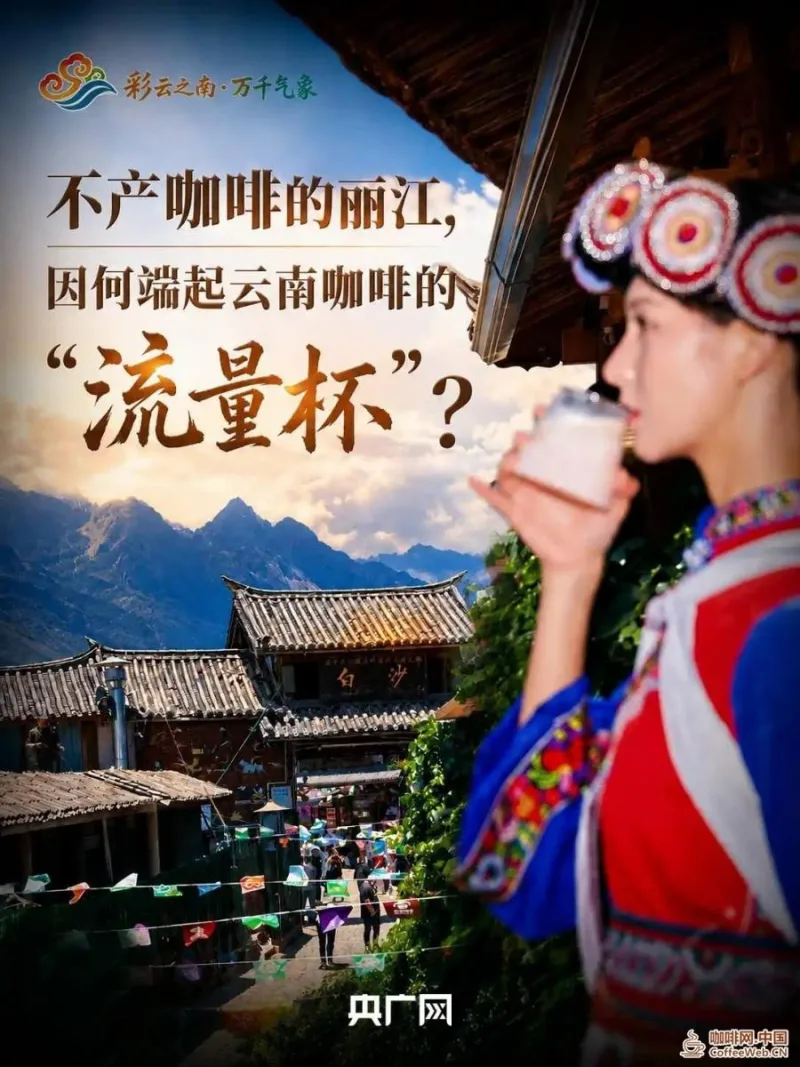
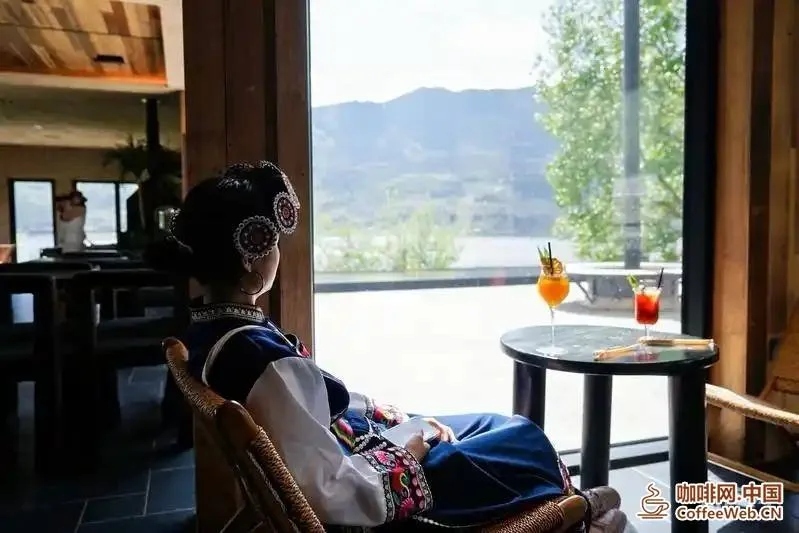
At 10 a.m., sunlight spills over the eaves of Lijiang’s Baisha Ancient Town, gilding the towering Jade Dragon Snow Mountain and streaming into an old courtyard café beside the bluestone-paved lane. A barista slowly pours water as steam rises, filling the air with the aroma of freshly ground beans. A tourist, cup of pour-over in hand, gazes at the snow mountain through the floor-to-ceiling window, now and then raising a phone to capture the view. Scenes like this now play out every day in Lijiang.
This nationally renowned tourist city is not one of Yunnan’s six major coffee core producing regions, and has almost no large-scale coffee plantations. Yet today Lijiang is home to more than 800 coffee businesses, with over 130 cafés gathered in Baisha Ancient Town alone; it has hosted two consecutive Jade Dragon Snow Mountain Coffee Activity Weeks, driving coffee consumption up by 10% to 30%, with annual sales exceeding 400 million yuan, gradually forming a development pattern of “tertiary industry driving secondary, secondary promoting primary.”
How did a city that is not a coffee main producing region become an important window onto Yunnan’s coffee industry?
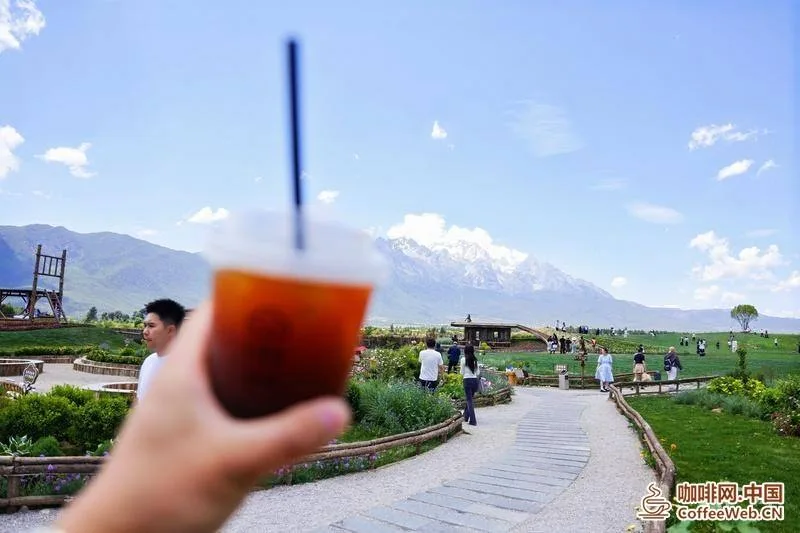
From Selling Scenery to Selling a Lifestyle: One Cup of Coffee Activates New Tourist Consumption
Ninety-eight percent of Yunnan’s coffee comes from six core producing regions—Pu’er, Baoshan, Lincang, Nujiang, Dehong and Xishuangbanna—and Lijiang is not among them.
“The development of China’s coffee industry cannot remain stuck at the raw-material producing-region stage,” said Li Hong, vice president of Yunnan Agricultural University and chief scientist of the Yunnan Coffee Industry Technical System. Looking at the world, Switzerland grows almost no coffee yet is home to Nestlé; the United States grows only a little yet has nurtured world-class coffee brands. Compared with its planting advantages, Lijiang’s greatest asset lies in its triple heritage of world culture, nature and history, as well as its snow-mountain landscape, colorful ethnic culture and huge tourist flow.
This unique resource endowment is steadily being turned into industrial advantage.
“Open the window to see the snow mountain, raise the cup to taste Yunnan coffee.” In Lijiang, coffee is no longer a simple pick-me-up drink, but an important vehicle for tourists to experience “a kind of life called Yunnan.” What visitors drink here is not just a cup of coffee, but a slow life, a sense of ease.
Relying on the natural consumption scenes brought by the snow mountain and the ancient town, Lijiang has become an important showcase window for Yunnan’s specialty coffee.
At Lazy Monkey Jungle Café, more than 60 varieties of Yunnan specialty beans cover multiple producing regions such as Baoshan, Pu’er and Lincang. Over the past decade and more, the owners Chenchen and Xiaoxi have traveled almost all of Yunnan’s major coffee regions, constantly selecting beans of different flavor profiles, bringing Yunnan’s high-quality coffees together before visiting tourists.
“Although Lijiang does not grow coffee, it abounds in a unique coffee slow-life,” said Huang Junjie, Party secretary and director of the Yulong County Culture and Tourism Bureau. The logic behind this is to connect the popularity of the tourist destination with the products of the coffee regions, and to raise the brand value of Yunnan coffee through cultural-tourism traffic.
For many tourists, coming to Lijiang may be their first real encounter with Yunnan specialty coffee.
From One Cup of Coffee to an Entire Industry Chain: How “Traffic” Becomes “Staying Power”
If cultural-tourism resources have brought Lijiang an endless stream of visitors, then how to convert tourist “traffic” into industrial “staying power” is the key to Lijiang’s coffee industry development.
“The tourism circle centered on Lijiang Ancient Town and Yulong County receives a huge number of visitors every year. If this massive cultural-tourism traffic is converted into an increment of industrial development, it will unleash enormous consumption potential,” Li Hong said. Toward this goal, Lijiang has not stopped at selling coffee and scenery, but keeps extending upstream and downstream along the industry chain.
Stepping into the roasting factory store of Impression Manor, a rich, lingering coffee aroma greets you. Roaster Zhang Yang stands by the equipment, carefully observing the beans’ color and real-time temperature changes. “Roasting heat and time are extremely critical; not the slightest slack is allowed,” he said. This enterprise, rooted in Lijiang for 19 years, selects quality beans from main producing regions such as Baoshan, completes deep processing such as roasting, blending and packaging in Lijiang, and has cumulatively produced over 2,000 tonnes of coffee beans, letting more tourists “take Yunnan coffee home.”
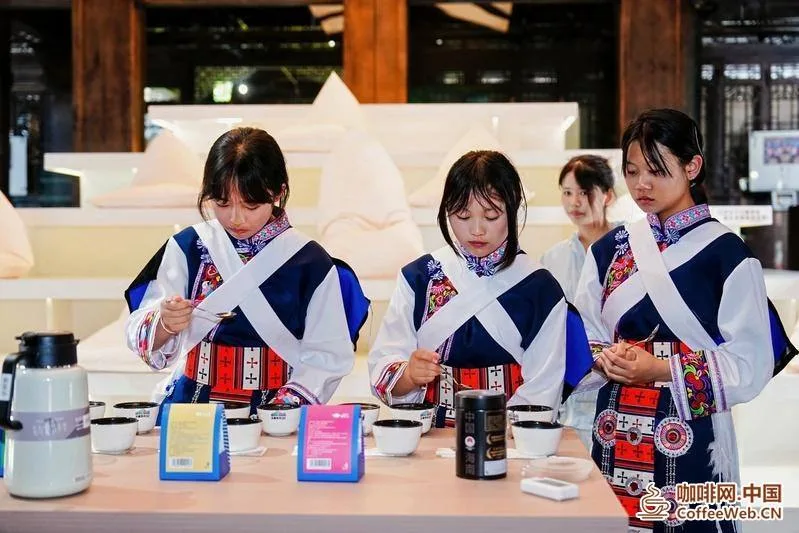
At “Bean Hunter Garden Café” in Shuhe Ancient Town, Zhou Li is guiding trainees in pour-over technique. “Slow down the rhythm in the first half of the brew to draw out the brightest sweetness of Yunnan’s Typica beans,” she said. Since returning home to start a business in 2018, Zhou Li has voluntarily opened low-threshold coffee training courses to help groups such as tour guides master a skill. To date she has trained 573 professional coffee students, scattered across the country and even abroad.
“In the entire coffee industry chain, roasting and brewing craft determine about 60% of the taste quality; good beans must be honed with professional technique,” Zhou Li said.

Today, relying on quality raw materials from Yunnan’s main producing regions and developing roasting, processing, skill training and brand operation, then activating the market through cultural-tourism consumption, Lijiang has gradually formed an industry chain of “primary industry supplying raw materials, secondary raising value, tertiary expanding the market.”
According to Li Guo, president of the Yulong Naxi Autonomous County Coffee Association, the county now has 52 member units of the association and 388 coffee businesses across its territory; the industry chain keeps improving and the industry is moving toward standardization and professionalization.
From a Cultural-Tourism IP to an Industry Window: One Cup of Coffee Opens New Space for Development
The second Lijiang Jade Dragon Snow Mountain Coffee Activity Week, launched in May this year, once again made “one cup of coffee, one view of the snow mountain” a hot topic. The originally five-day event was extended into a whole-summer “super-long coffee season.”
Compared with previous editions, this one placed greater emphasis on industry display and cultural experience. The Baisha Coffee Museum officially opened, with specialty coffees from Yunnan’s six major producing regions appearing alongside Lijiang’s intangible-cultural-heritage items and creative cultural products. Visitors could not only taste champion coffees on the spot, but also learn about the development history of Yunnan coffee and take Yunnan specialty coffee home.
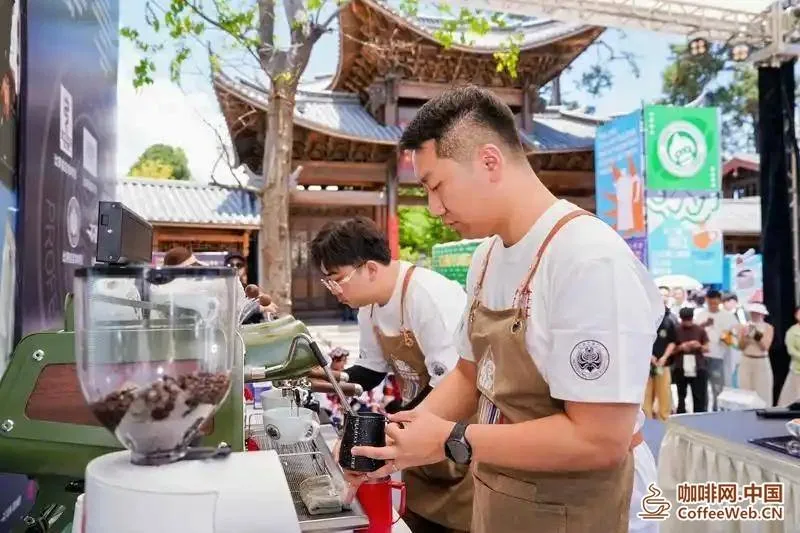
At the Hemeiji intangible-heritage market in Baisha Ancient Town, century-old Sanchuan pottery, Naxi bronze ware, Dongba calligraphy and tie-dye craft set each other off against the coffee booths; modern coffee culture and traditional heritage achieved cross-border fusion, and many foreign tourists marveled that this experience of “drinking coffee, viewing the snow mountain, watching intangible heritage” is truly unique.
The “Yunnan-Vietnam Shared Cup in Lijiang” cultural-exchange activity held during the event also attracted guests from Vietnam, Uganda, Colombia and several other countries. More and more international visitors are getting to know and understand Yunnan coffee through Lijiang.
Today’s Lijiang undertakes not only a coffee-consumption function, but has become an important window for the display, experience, sales and brand communication of Yunnan coffee.
As more and more tourists come to know, understand and take away Yunnan because of one cup of coffee, what Lijiang is exploring is not only a cultural-tourism integration development path, but also an answer to a high-quality-development proposition—how to rely on resource endowments to convert tourism traffic into industrial increment and consumption scenes into brand advantage.
Producer: Penny. Planning: Wei Wenqing. Reporter: Wei Wenqing, Zhao Beibei. Video: Zhao Beibei. Acknowledgement: Yulong County Integrated Media Center.
Reprint Notice & Disclaimer: This article is compiled and edited by China Coffee Network (coffeeyo.com) and reprinted from CNR (China National Radio) Yunnan channel. The copyright of the original article belongs to the original authors. This reprint is for the sharing of coffee industry information only. If there is any infringement, please contact us for removal.
Related Reading
 Three Decades of Shanghai-Yunnan Collaboration: A Coffee Bean ‘Ferments’ at the Import Expo
 Why Yongde’s Coffee Beans Won Gold in Shanghai – A Taste of ‘Life in Yunnan: 365 Days’
- Yunling Commentary: Yunnan Coffee Turnaround Hinges on Autonomous Pricing
 A ‘Travel Pack’ Reveals Another Possibility for Pu’er Baristas
- Bean in Short Supply: A Taiwan Youth on Yunnan Coffee as a Shared Cross-Strait Stage
- Five Years, Eight Championships: Lincang Coffee Joins the World Stage




 Liaoning ICP Security No. 21122402000217