
At a Glance (China Coffee Network): Yangyan Mountain is the highest peak within Hetou Town, Linhai City, Zhejiang Province, rising nearly 800 meters above sea level and named for a rock that resembles a sheep. In the early 1970s, the local township government, driven by poverty to seek change, resolutely brought tea farmers up the mountain and carved out a tea garden. Shrouded in mist and cloud year-round, Yangyan Mountain offers the ideal environment and altitude for growing tea; its selenium-rich soil nourishes leaves that are plump and full, with even, fine white down. Only a small pinch is needed in the cup; the hook-curled leaves, wakened by boiling water, yield a liquor as green as the blue sky, a taste fresh and brisk with a sweet return, and a fragrance that fills the room. It soon earned the praise of “the finest Gouqing south of the Yangtze”.
Yangyan Mountain is the highest peak within Hetou Town, Linhai City, Zhejiang Province, rising nearly 800 meters above sea level and named for a rock that resembles a sheep. In the early 1970s, the local township government, driven by poverty to seek change, resolutely brought tea farmers up the mountain and carved out a tea garden. Shrouded in mist and cloud year-round, Yangyan Mountain offers the ideal environment and altitude for growing tea; its selenium-rich soil nourishes leaves that are plump and full, with even, fine white down. Only a small pinch is needed in the cup; the hook-curled leaves, wakened by boiling water, yield a liquor as green as the blue sky, a taste fresh and brisk with a sweet return, and a fragrance that fills the room. It soon earned the praise of “the finest Gouqing south of the Yangtze”.
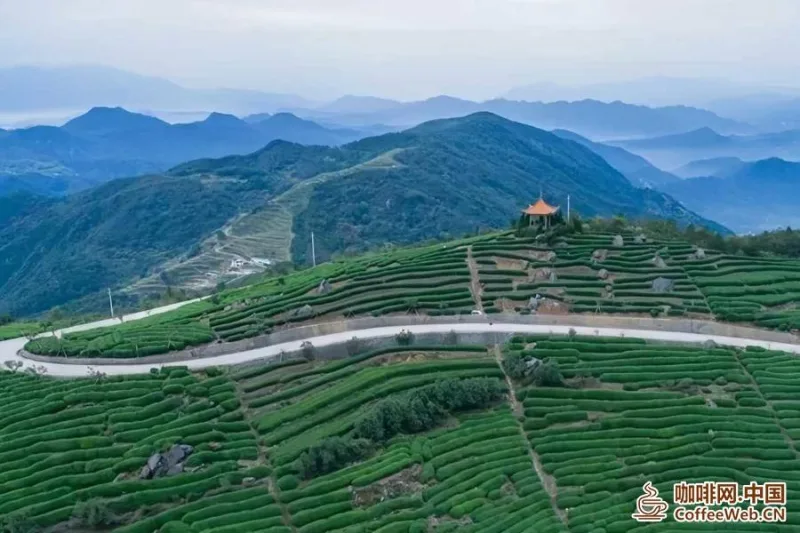
I led several friends from Shanghai up Yangyan Mountain for the tea and the scenery, yet unexpectedly, a few dozen meters short of the summit, I caught a strange fragrance — and in the realm of tea, stumbled upon tea’s rival: coffee.
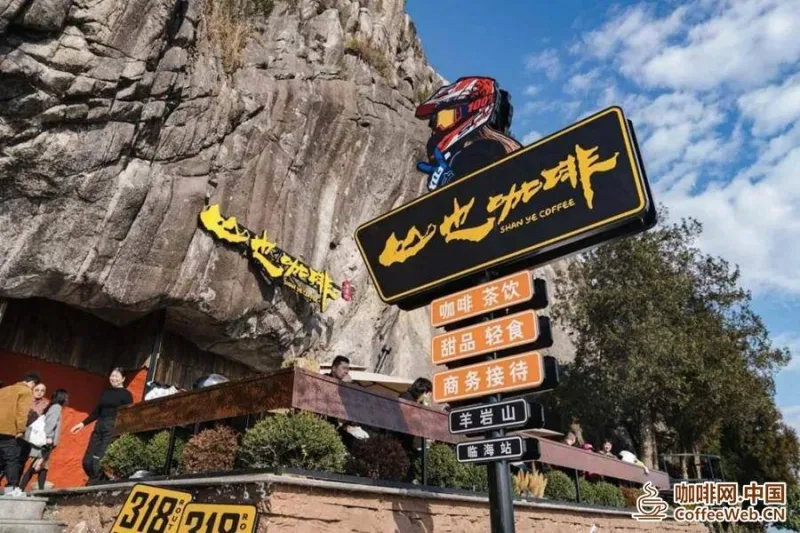
There was originally a natural grotto hidden beside the path: cool and pleasant inside, with ten thousand mu of tea gardens rolling like green waves outside. A cup of tea there would instantly dry the sweat, banish fatigue and restore the spirits, so climbers often used it as a resting spot and called it the “Tea Immortal Cave”. Now, on the huge cliff face, four more eye-catching characters have been newly carved: “Shanye Coffee” — as if a foreign beverage were picking a quarrel with a local specialty!
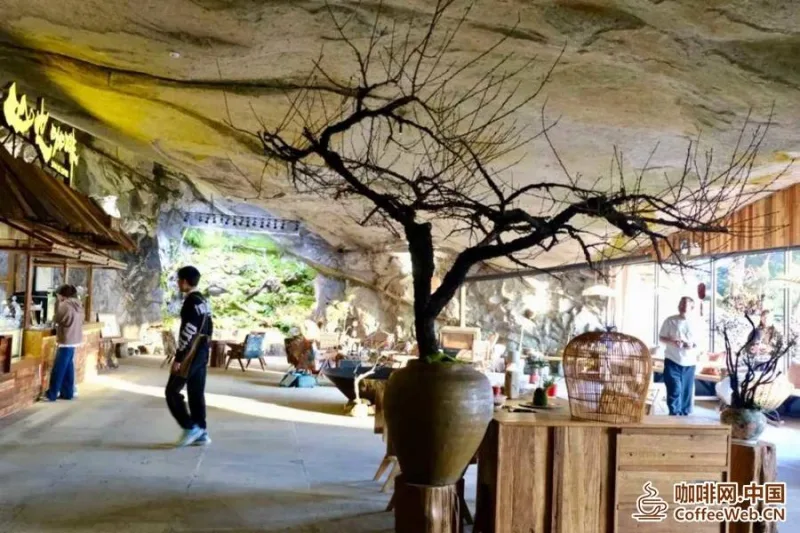
Stepping inside, I found it utterly transformed. A rock-cave space of over 200 square meters had been cleverly divided into three zones: at the deepest end stood a bar, with warm light strips set into the rock wall, pour-over kettles and glass drippers gleaming softly in the glow, and two young women busy at work; the middle was a leisure and reading corner with dozens of lounge chairs, where scores of visitors sat chatting, fancy hand-ground coffees on the wooden tables before them — at one table, several middle-aged men were absorbed in a game of Guandan, oblivious to everything, yet each had a cup of plain tea, perhaps still partial to a traditional fragrant brew; the entrance was a bright viewing and resting area, where the whole curved cliff formed a floor-to-ceiling window frame, turning the layered tea sea and distant mountain cloud-shadows into a flowing scroll. Gauze-thin mist drifted in through the window, as if it too wished to linger a while longer. Just then two mountain sparrows flew in one after the other from outside, circled once, and darted out again, drawing a burst of delighted cries from the crowd.
Chatting with the two owners, I learned that this unusual cafe began with a spontaneous dash into the wild. They are Jin Xiaowei and Yang Zijiang, neither a native of the town, but motorcycle riding companions who have long chased the wind together. Last spring, the two were riding along Yangyan Mountain’s eighteen-bend road and, tired, stopped to rest in this natural grotto. The moment they sat down, the mountain breeze swept away the dust of the journey and the fatigue of the ride dissolved in the cave; they pulled out the coffee drinks they carried to quench their thirst, and found it a special kind of wild delight. That was when the idea suddenly struck them: why not make use of the setting and turn the grotto into a cafe?
They approached Zhu Changcai, head of the tea farm, explained the idea, and won his support at once, without much persuasion. He did not treat coffee as a rival, nor fear the two competing on equal terms; instead he regarded them as boon companions among drinks. The grotto needed little alteration: the walls kept their original rock texture, a natural, warm luster showing through the roughness; no fine carving was needed either, for the stone’s uneven relief and the wall’s grain, like frozen waves, gray-blue flecked with rust-colored stains, made modernity and weathered age blend perfectly here. On New Year’s Day this year, “Shanye Coffee” opened for business. Unexpectedly, a cafe in the tea hills unlocked a whole new poetry for Yangyan Mountain, quickly breaking out to become a one-of-a-kind check-in hidden gem among deep mountains and high cliffs, and swiftly going viral online.
Young people love it most, perhaps treating it as a mountain utopia where, amid the mellow aroma of coffee, they embrace freedom, encounter romance, and let vibrant youth collide head-on with mountain charm and wild delight. Older visitors love it too, sitting quietly in the grotto, watching mist drift over the ridges and the vast green mountains, listening to wind through the woods and birds in the valley — a cup of fragrant tea, half a day of leisure, savoring a calm ease far from the world. Happiest of all are the children, who take the cave for an adventure land full of the unknown, with flickering light specks and grass shadows hidden in the corners, insects softly singing and water dripping — every bit of it a wonder to them.
Among the Shanghai friends who came with me was a heavyweight of the coffee world; slowly sipping a latte, he remarked with feeling: “To have a cup here — that is the ultimate experience.”
What he savored was a state of mind, while I had another reflection: well over a million visitors have climbed Yangyan Mountain, and not a few have rested in this grotto, yet only these two owners could conjure up the bold idea of turning the ordinary into the magical. In that, I suspect, lies not only a distinctive eye and an entrepreneurial mind, but also their attitude toward life — able, in motion, to press fast-forward and ride motorcycles chasing wind and moon, and, at rest, to press pause, sit down, and watch the wind and admire the moon. I composed a short poem in praise:
A stone hall, rock drapes, the mountain rising like a screen; sunset glow steeps into the coffee’s hue, the sun dissolves in tea. A crevice spring softly boils, pine smoke hangs thin and light; it banishes every cloud of the heart, and the dusty world is forgot.
Source: Xinmin Evening News. Author: Jin Yi.
Reprint Notice & Disclaimer: This article is reprinted from Xinmin Evening News. Original reporting by Jin Yi. All rights belong to the original publisher.
Related Reading
 How ‘Sea-Flavored’ Coffee Blooms Across Dongtou
- Health Guide: How to Enjoy Your Coffee the Healthy Way
 ‘The Rhythm of Plants: Tea and Coffee Culture’ Exhibition Debuts in Rio de Janeiro, Brazil
 Study: Regular Coffee and Tea May Lower Dementia Risk, but More Is Not Better
 Frontline Story: A ‘Mobile City Coffee Bar’ Arrives by the Grand Canal
 Yantai’s Wind Tastes of Coffee






 Liaoning ICP Security No. 21122402000217