
Editor’s Note (coffeeyo.com): Reported by Coffee Workshop, XBOT announced the consecutive completion of a Series A round of RMB 200 million and a Series B round of RMB 300–500 million, setting a funding record in the food-and-beverage vertical robotics sector. Its core product is a coffee robot occupying less than 2 m², built with a six-axis robotic arm that can serve a latte with latte art in 46 seconds. It has already deployed 1,600 stores across more than a hundred cities worldwide, with confirmed orders exceeding RMB 300 million in 2026. Founder Tang Mu previously served as General Manager of Tencent’s User Experience Design Center and Vice President of Xiaomi’s ecological chain; angel investors include Allen Zhang, Lin Bin, and Li Wanqiang.
A Cup of Coffee in 46 Seconds: This Robotics Company Just Raised RMB 600 Million
46 seconds — a latte with latte art slides out from the robotic arm, with no human hand ever touching the cup.
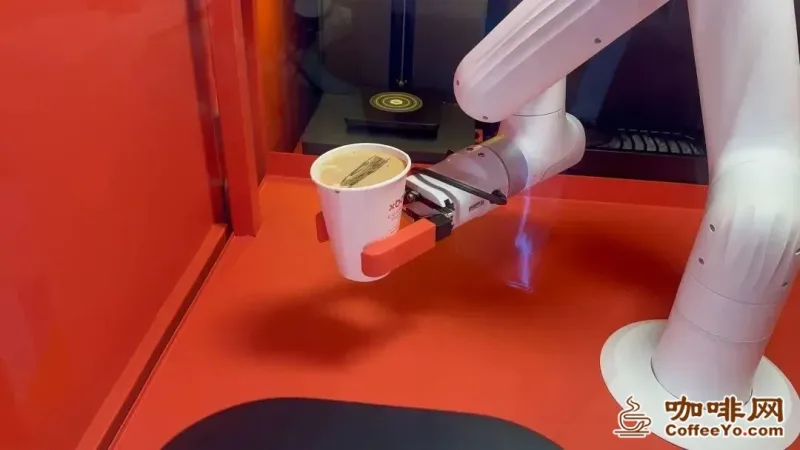
The company behind it is XBOT. Not long ago it announced the consecutive completion of two funding rounds: a Series A of RMB 200 million backed by Hong Kong’s Jankun Capital (GPTX), and a Series B of RMB 300–500 million joined by multiple government funds, USD funds, and strategic investors. Add the earlier angel round — whose backers included Allen Zhang, Lin Bin, Li Wanqiang, Huang Jiangji, and Hong Feng — and this company has drawn attention from day one.
Its product is a self-contained unit occupying less than 2 m², packing in an espresso machine, ice maker, and milk frother, with a six-axis robotic arm handling cup pickup, extraction, milk steaming, and latte art. Its C3 coffee robot can produce 80 cups per hour, run 150 cups on a full charge, and features a 43-inch digital-human “store manager Aibao” on screen that recognizes members and remembers their usual orders. The price is RMB 219,000, with a cheaper Lite series at around RMB 100,000+.
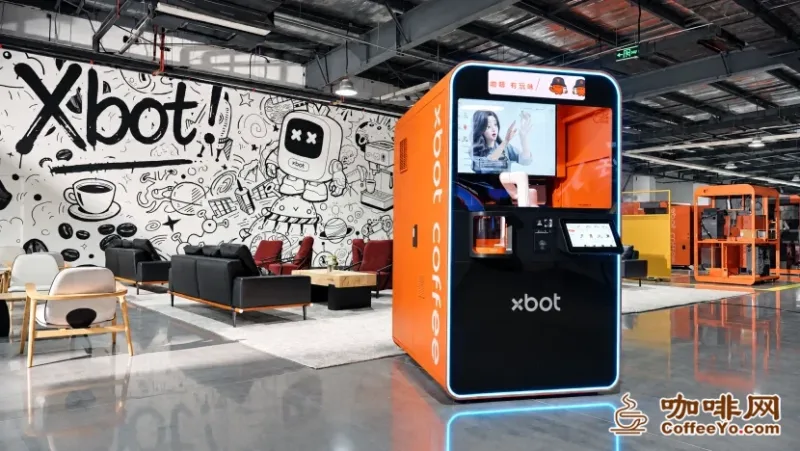
The company says such robot stores have been deployed across more than a hundred cities worldwide, totaling 1,600 locations, with over 5 million cups made cumulatively; confirmed orders since the start of 2026 exceed RMB 300 million, with more than 100 units delivered in the most recent single month.
Founder Tang Mu’s story is often retold because of its sheer range: born in 1977, he studied international accounting at South China University of Technology with a minor in industrial design; he joined Tencent in 2003 and built the User Research and Experience Design Center, where the classic QQ avatars, emoticons, and the “stars-moon-sun” level system were created by him and his team; in 2013 he joined Xiaomi as Vice President of the ecological chain, delivering two hundred-million-unit product lines — the Mi Router and the Mi AI Speaker. At the end of 2022, at age 45, he left to start a coffee-robot venture.
Why coffee? In interviews he frames it almost like a process of elimination: no home use, because of the twin mountains of safety and privacy; no industry, because robotic arms in dark factories already max out efficiency, and a humanoid would only slow the line. That leaves commerce; within commerce, food-and-beverage is the most recession-resistant; within F&B, “drinks” have stronger repeat purchase than “food”; among drinks, bottled water was never his to make — a large, growing, underserved market was coffee.
There was also a trigger he states bluntly: the incident where a barista threw coffee grounds at a customer was seen by many as social news, but what he saw was another layer — stores competing so fiercely they began squeezing labor, one person doing 200% of the work, taking orders, packing, making coffee from morning to night until the person collapsed. “When the productivity tools can’t keep up, the contradiction is bound to erupt.”
This logic distilled into a business model is a single sentence: help customers save money, or help them earn it. He compares the robot to a ride-hailing driver’s car — buy one for a hundred thousand yuan, and you only need to restock it once a day. For a Lite unit placed in a Yiwu mall, the figures he gives are: 200 cups per day, RMB 20 average ticket, over RMB 60,000 monthly revenue, net profit above RMB 30,000, and a payback period of 6 to 8 months, with a designed service life of 5 years.
Unlike many hardware companies, it doesn’t just sell and leave. Beyond the equipment price, franchisees also pay three monthly fees: a materials subscription (coffee beans, dairy), an Agent Token fee (the digital-human store manager service), and a maintenance fee. This RaaS (Robot-as-a-Service) model essentially turns a one-off sale into a long-term take-rate. The team composition also signals what business it wants to be in — the tech lead, Wang Jiali, is a PhD in mechatronics from Harbin Institute of Technology who has worked at CASIC, Sany, and Siasun; the operations side is a “Luckin-style” team that has run high-volume regional chain stores and built standardization systems.
For the coffee industry, the significance of this is not how much money was raised, but that the scenarios it targets do not overlap with legacy chains. Its clients include JD’s Qixian Coffee, as well as luxury stores, furniture stores, 4S dealerships, museums, and ice-and-snow cultural-tourism sites — places with stable foot traffic and low rent but where hiring a barista is uneconomical and a chain store is impractical. Tang Mu’s benchmark is not Luckin but the vending machine: China has roughly 800,000 existing beverage vending machines, and he wants to be their replacement.
This also explains why “46 seconds” is emphasized repeatedly. How many cups you can serve at peak determines how many you sell in a day — pure arithmetic. In a traditional store, a skilled barista steadily tamping, extracting, and steaming milk at 60 to 90 seconds a cup is already a good pace; the machine cuts that to 46 seconds, and won’t get hand tremors after five straight hours of work.
But the coffee business has never been just arithmetic.
What robots can replicate is standardization: the same bean, the same brew ratio, the same milk temperature, with errors controlled to the millimeter. They can even deliver emotional value — order a latte, upload a photo, and the machine reproduces the same latte art, which at trade shows did make quite a few people pull out their phones. What they cannot replicate is “why this bean”: the judgment behind origin, processing method, and roast curve, and the look a person gives you when a guest says “I want something acidic today.”
So the more likely picture is not replacement but stratification. Lobbies of office towers, hospital corridors, mall corners, scenic entrances — these “places with demand but no store” will be filled by machines; while stores willing to charge a premium for a conversation and a specific bean will become more expensive precisely because “there is a person.” The barista profession will not disappear, but will move toward two ends: at one end, standardized operating roles are compressed; at the other, people who understand flavor and communication become scarcer.
By the way, this segment is heating up overall this year. Kayan Technology, which makes commercial fully-automatic coffee machines, also closed a nearly RMB 400 million Series B led by Meituan Longzhu with Gaorong Ventures as co-investor, setting a single-round funding record for the sector. Capital is looking not just at robots, but at “whether the cost structure of a cup of coffee can be taken apart and rebuilt.”
Of course, 1,600 stores is still just a fraction of China’s 300,000-plus coffee outlets. A 6-to-8-month payback is the best-location data; in the real world there are far more machines with halved output, lagging maintenance, and consumers who try once and leave. Tang Mu himself says the industry is ebbing this year — “after the tide goes out, you’ll find many people weren’t wearing pants.”
Reprint Notice and Disclaimer
- This article is edited and compiled by coffeeyo.com, reprinted from Coffee Workshop’s “A Cup of Coffee in 46 Seconds: This Robotics Company Just Raised RMB 600 Million.” The copyright of the original article belongs to Coffee Workshop and the original author. This site reprints it solely for coffee-industry information sharing and does not represent this site’s position; all data and views are subject to the original. We thank the original author for their creation and sharing.
- Original: Coffee Workshop’s “A Cup of Coffee in 46 Seconds: This Robotics Company Just Raised RMB 600 Million”
- For matters involving content authorization, attribution, copyright, or otherwise, please contact this site promptly and we will verify and cooperate in handling it as soon as possible; we also welcome coffee businesses and industry media to exchange and contribute content with us.
- Contact coffeeyo.com: Tel 400-0000-641 (+86-18288016826) | Email 405854472@qq.com | Address: Jinghong City, Xishuangbanna, Yunnan Province
Related Reading
- Bean in Short Supply: A Taiwan Youth on Yunnan Coffee as a Shared Cross-Strait Stage
- Five Years, Eight Championships: Lincang Coffee Joins the World Stage
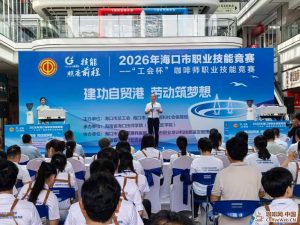
 Haikou ‘Union Cup’ Barista Skills Competition Kicks Off to Empower the Service Sector
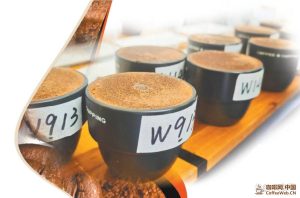
 Yunnan Specialty Coffee Beans Deliver an ‘Excellent’ Report: Path to Value Leap
- Cross-Strait Tides Rise: A Taiwan Youth Farms Coffee in Yunnan, a Cup Bridging Both Sides
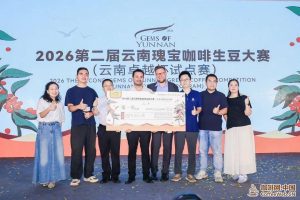
 2026 2nd Yunnan Treasure Coffee Green Bean Competition (Cup of Excellence Pilot) Concludes


 Liaoning ICP Security No. 21122402000217